


When Should You Replace Toyota Hiace Brake Pads and Rotors?
Toyota HiAce
Toyota HiAce•
•40 views
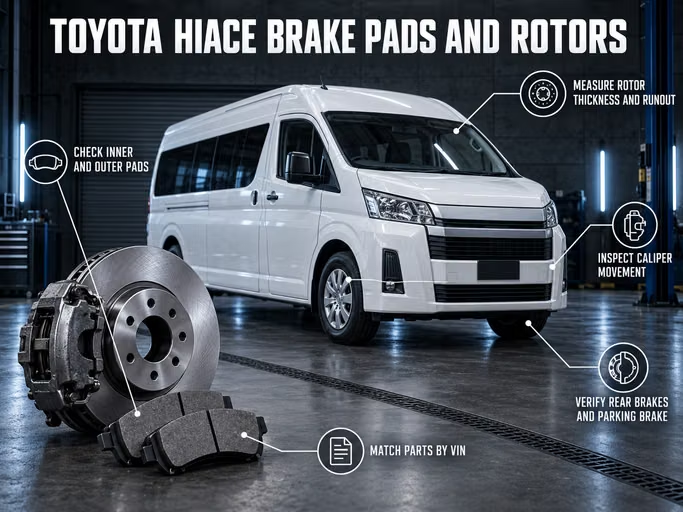
Toyota Hiace brake pads should be replaced according to their remaining friction material and condition. Rotors require replacement when measurements or inspection reveal insufficient thickness, excessive runout, cracks, or serious surface damage. There is no single mileage limit for every version: a loaded delivery van uses its brakes differently from a passenger model driven mainly on highways.
4 Signs of Worn Toyota Hiace Brake Pads and Rotors
A change in sound or braking behaviour calls for measurements rather than an immediate parts order. On a heavy commercial vehicle, both sides of the axle must be compared. Equal thickness when the pads were new does not guarantee that they will wear at the same rate.
- Metal grinding or a persistent high-pitched squeal. A brief sound after the vehicle has stood in damp conditions may disappear after several gentle stops. If it remains, grows louder, or occurs whenever the pedal is pressed, inspect the friction material, wear indicator, rotor, dust shield, and the area for trapped debris.
- Vibration through the pedal, steering wheel, or body. A repeatable pulsation at the same speed may result from rotor runout, uneven rotor thickness, contamination at the hub face, or a suspension fault. Normal ABS operation on a slippery surface is a different condition.
- Pulling under braking or a different response from each side. Brake pads are only one possible cause. Check caliper slide movement, the piston and boots, the brake hose, contaminated friction material, tyre pressures, and suspension components. Carrying a load before the fault is diagnosed is unsafe.
- Longer pedal travel, an overheating smell, or one hot wheel. These symptoms may indicate a sticking component, overheating, a leak, or air in the hydraulic system. Stop the vehicle safely and determine whether it can be moved. Replacing the pads alone may not remove the cause.
Why Both Sides of a Hiace Axle Must Be Checked
The inner pad can wear faster than the outer pad, so a glance through the wheel spokes may suggest more material remains than is actually available. Vehicle mass, load, frequent stops, and restricted caliper slide movement can increase the difference on a Hiace. With the wheel removed, compare both pads, examine the contact pattern, and make sure the mechanism moves freely without tilting.
What Happens If Hiace Pads and Rotors Are Not Replaced
Wear develops gradually, but the consequences do not always increase at the same pace. Once the friction layer is exhausted, a short trip can damage the rotor. An overheated brake can also lose performance precisely when a loaded vehicle needs the greatest reserve.
Stopping distance increases. Thin or overheated friction material is less able to tolerate repeated braking. The driver presses harder, but braking response becomes less predictable.
The rotor surface is damaged. Metal-to-metal contact cuts deep grooves and overheats the rotor. New pads are usually not enough at this stage: the rotors must be measured and often replaced in axle pairs.
The caliper is placed under extra strain. As wear becomes excessive, the piston extends farther, the dust boot receives more heat, and the slides may move out of alignment. The risk of leakage or binding increases.
Braking becomes uneven. A difference in braking force across one axle can make the vehicle pull, accelerate tyre wear, and make an emergency manoeuvre harder to control. Loss of directional stability is particularly undesirable in a tall van.
The repair becomes more expensive. A scheduled pad change develops into work on the rotors, calipers, and related components. Driving with a soft pedal, a leak, or a brake warning light risks far more than the price of replacement parts.
What to Check in Toyota Documentation
Use the procedure and dimensional limits for the specific vehicle. Confirm the VIN, production year, and exact version before taking measurements with suitable tools. The nominal thickness of a new rotor is not a substitute for the minimum permitted thickness of the component installed on that vehicle.
| Component | What to inspect | Reason for repair |
|---|---|---|
| Front brake pads | Remaining friction material on the inner and outer pads, evenness of wear, cracks, contamination, and signs of overheating. | The applicable wear limit has been reached, the lining is damaged, the sides differ significantly, or the wear indicator is contacting the rotor. |
| Front rotors | Thickness at several points, both friction surfaces, lateral runout, cracks, deep grooves, and heat marks. | Thickness is at or below the applicable limit, runout is excessive, or cracks and damage cannot be corrected safely. |
| Rear brakes | The mechanism fitted to the exact version, remaining lining, disc or drum condition, adjustment, and parking brake operation. | The decision depends on the design and values for that version; front brake limits must not be transferred to the rear axle. |
| Calipers and hydraulics | Free movement of the slides and piston, boot condition, absence of leaks, hose condition, and fluid level. | Binding, damaged rubber parts, leakage, or an unstable pedal requires correction before consumable parts are installed. |
| Hub and fasteners | Cleanliness of the mounting face, thread condition, correct rotor installation, and wheel fastening. | Corrosion or contamination beneath the rotor can create runout; fasteners must be tightened using the vehicle procedure. |
A fixed mileage can help schedule an inspection, but it does not determine remaining service life. One Hiace may retain a set of pads for a long period, while another can consume them much sooner because of full loads, short urban routes, extended descents, or a sticking caliper. Base the decision on measurements and diagnostic findings.
How to Avoid Mixing H200 and H300 Parts
The Hiace name covers several generations and many body configurations. Vehicles built in the same year may have been supplied to different markets with different gross weights and equipment. Before ordering, record the VIN, model code, engine, drivetrain, body length and height, seating capacity, and identification plate data. Confirm the part number against the vehicle rather than a component photograph or a broad generation label.
Why a Hiace Squeals or Vibrates During Braking
One symptom can have several causes. Noise alone does not prove that the pads are worn, and vibration does not always mean that a rotor is distorted. Begin with a visual inspection, then measure the brake components and check the tyres, hubs, and suspension where necessary.
| Symptom | Possible cause | Next step |
|---|---|---|
| Brief squeal after standing | A light film of corrosion or moisture on the rotor. | Make several gentle stops in safe conditions. If the sound remains, inspect the brake assembly. |
| Persistent squeal | Wear indicator contact, contamination, glazed friction material, unsuitable parts, or incorrect installation. | Remove the wheel and inspect both pads, the rotor surface, shims, and assembly. |
| Grinding | Exhausted friction material, trapped debris, or contact from a damaged component. | Stop normal operation and arrange immediate diagnosis rather than relying on an external inspection. |
| Pedal pulsation or vibration | Runout, uneven rotor thickness, corrosion between the rotor and hub, hub play, or a suspension fault. | Measure the rotor with a dial indicator and micrometer, clean the mounting faces, and inspect the hub and suspension. |
| Pulling or one hot wheel | A sticking caliper, restricted hose, contaminated pad, tyre difference, or unequal braking force. | Compare temperatures without touching the parts, then inspect the hydraulics and mechanism on both sides of the axle. |
| Soft pedal or brake warning light | Air, a leak, low fluid level, or another brake system fault. | Do not treat this as routine pad wear. Avoid further driving until the system has been checked for safety. |
How to Distinguish Surface Corrosion from a Fault
A thin film can form on a rotor after washing, damp overnight conditions, or a period of standing. It normally clears evenly after a few gentle stops and does not cause continuing pulsation. Deep pitting, a pronounced wear lip, patchy contact, cracks, repeatable vibration, or noise that remains requires inspection and measurement. Do not attempt to remove a serious defect with repeated hard braking.
How Hiace Operating Conditions Affect Brake Wear
Brake life depends on the amount of heat the system must absorb and release. Mileage is only part of the picture on a Hiace. Two otherwise similar vehicles with the same odometer reading can have very different pad reserves and rotor condition.
- Urban delivery routes. Frequent starts and stops create more braking cycles per kilometre. Even a low daily distance can wear the front pads faster than long, steady highway journeys.
- Full loads or passenger service. Higher actual mass converts more energy into heat during every slowdown. A symptom may become less noticeable after unloading, but the previous heat exposure and wear remain.
- Long descents. Holding speed continuously with the brake pedal overheats pads and rotors. Select a safe gear and use engine braking within the transmission guidance so the service brakes retain capacity for controlling speed.
- Dust, sand, and construction sites. Abrasive material reaches exposed surfaces, while contamination around the boots can restrict mechanism movement. Inspect the brakes after difficult routes, but do not direct a strong water jet at hot rotors.
- Extended parking near the coast or in damp conditions. Corrosion develops with time rather than distance. When the vehicle returns to service, check whether the rotor cleans evenly and whether the parking brake releases without delay.
What to Check When Buying a Used Hiace
New-looking pads do not prove that the complete system is healthy. On a lift, inspect both faces of each rotor, caliper movement, hoses, signs of leakage, hubs, the rear brake mechanism, and the parking brake. Follow with a safe unloaded road test and ask about previous overheating or repairs. Worn rotors, painted calipers, or missing records are not an automatic reason to reject the vehicle, but they should be included in the estimate for near-term work.
Brake Inspection and Service Sequence
Plan the work so that dismantling does not reveal incompatible parts or leave the original cause unresolved. A practical sequence includes the following steps:
Record the original symptoms. Note the speed, load, brake temperature, and conditions in which noise, pulling, or vibration occurs.
Identify the vehicle. Confirm the VIN, generation, model code, original market, body configuration, and rear brake design before ordering parts.
Inspect both sides of each axle. Compare the inner and outer pads, rotors, boots, hoses, and evidence of overheating.
Take measurements. Use a micrometer and dial indicator with the correct method, record the results, and compare them with the limits for the exact version.
Remove the underlying cause. Clean and inspect mounting faces, restore the free movement of serviceable components, or replace damaged parts.
Reassemble and test the system. Use the specified parts and service materials, tighten fasteners using the correct procedure, restore a firm pedal, check for leakage, and bed in the components according to their manufacturer instructions.
Common Service Mistakes
- Ordering parts by production year alone, without confirming the VIN, model code, original market, and actual brake design.
- Checking only the outer pad, leaving the inner friction material and piston movement unexamined.
- Installing new pads without measuring the rotors, ignoring minimum thickness, runout, cracks, and the condition of the inner surface.
- Servicing only one side of the axle, creating differences in components and braking force between the left and right wheels.
- Masking noise with lubricant or hard braking, without identifying the source or ruling out dangerous wear.
Conclusion
Service Hiace brakes according to measurements rather than a universal mileage interval. Inspect both pads, the rotors, calipers, and the rear mechanism fitted to the exact version. Before buying, compare the vehicle condition with current listings and include a brake inspection in the selection process.


