


When Should You Change the Transfer Case Oil in a Toyota Hiace?
Toyota HiAce
Toyota HiAce•
•33 views
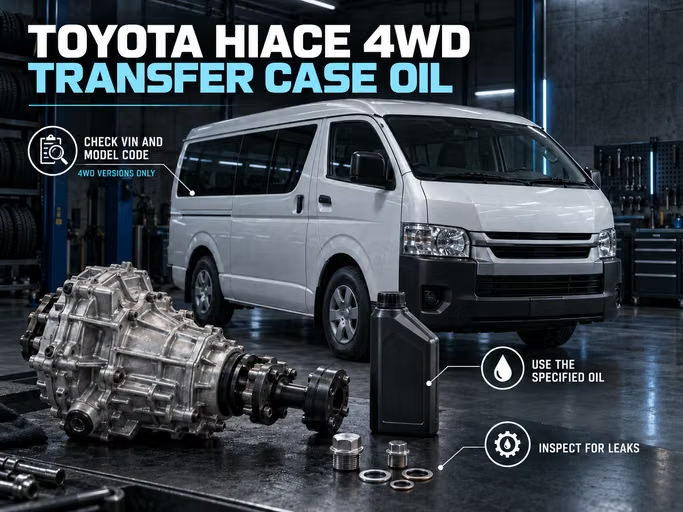
There is no single interval for every Toyota Hiace. Transfer case oil is serviced only when the vehicle has confirmed mechanical four-wheel drive, using the schedule matched to its VIN, model code, model year, and original market. If the Hiace is rear-wheel drive and has no separate transfer case, this service does not apply.
The model name does not identify the driveline layout. Hiace vehicles span different generations, body sizes, engines, and working roles, while imported examples may use configurations absent from the local range. A universal instruction to change the oil at a fixed mileage can therefore refer to another assembly, most often the rear or front differential.
Confirm That a Transfer Case Is Fitted First
Establish the drive type from the vehicle documents and inspect the driveline underneath before ordering oil. A 4WD description in a listing, tailgate badge, or repair order is not enough by itself. The factory model code, actual hardware, and a document covering the correct market must agree.
- Rear-wheel drive is confirmed. This Hiace may have a manual or automatic transmission and a rear differential, but it has no separate transfer case. Each of those assemblies has its own lubricant requirements.
- Factory four-wheel drive is confirmed. Match the VIN and model code to the applicable Toyota documentation, then locate separate entries for the transfer unit, front differential, rear differential, and transmission. Do not combine them into one service operation.
- The vehicle was imported from another market. Its equipment may differ from locally supplied vehicles of the same year. Use documentation for the original destination market rather than the nearest visual match.
- Four-wheel drive was added during a conversion. Toyota’s factory schedule may not cover the substituted assemblies. Obtain the oil specification, reference capacity, level-setting procedure, and interval from the component supplier and the company that performed the conversion.
- The drive type cannot be verified. Do not drain fluid or buy oil by guesswork. Decode the VIN, read the complete model code from the vehicle plate, and have a specialist identify the housings, shafts, and plugs underneath.
How to Verify the Driveline Layout
Begin with the complete model code and VIN rather than engine displacement. Then confirm the production year, original market, transmission type, and drive designation. This order matters on a commercial vehicle because two visually similar vans can use different wheelbases, load ratings, and drivelines.
An underbody inspection should confirm a separate torque-transfer unit and a mechanical route to both axles. Shields may hide the housing, while leaked oil can travel from nearby components. Record the positions of the fill and drain plugs, propeller shafts, breather, and case joints before service begins.
When a Four-Wheel-Drive Hiace Needs an Early Inspection
Even before the scheduled limit, inspect the transfer case after any event that could affect sealing or lubrication. An early oil change is useful only when the cause is addressed as well: fresh fluid cannot repair a damaged seal, bearing, or housing.
- Fresh oil residue appears. Clean the housing and shield, then check both plugs, the case joints, and shaft exits. A second inspection after a short drive helps distinguish an active leak from old residue.
- The vehicle has travelled through water. Moisture entering through a breather or damaged seal changes the appearance and performance of the lubricant. Cloudiness, foam, or a pale emulsion calls for correction of the entry path and complete oil replacement.
- The underbody has suffered an impact. A distorted shield can press against the housing, while damage to a plug or sealing surface can cause a slow loss of level. Check for cracks and leakage before continuing the journey.
- A hum, shudder, or knock appears when torque changes. These symptoms can come from the transfer unit, propeller shaft, differential, universal joints, mounts, or wheel bearings. Locate the source before deciding whether the vehicle needs fluid service or mechanical repair.
- The service history is unknown. A note without a date, mileage, and exact product does not establish what was done. For a used Hiace, identify the assembly, inspect the level and sealing, and then create a documented baseline using the applicable instructions.
How to Establish the Schedule for a Specific Hiace
The toyota.ae page shows current Hiace variants, but a model page is not a maintenance schedule and does not establish whether an individual vehicle has a transfer case. Confirm the interval and fluid from documentation covering the exact configuration.
| Situation | Correct action |
|---|---|
| Rear-wheel drive confirmed | Do not schedule transfer case service; check the transmission and rear-differential requirements separately |
| Factory 4WD confirmed | Locate documentation matched to the VIN, model code, year, and original market |
| Imported vehicle, drive type unclear | Decode its records and confirm the actual underbody layout |
| Converted vehicle | Use documentation for the installed components and information from the conversion specialist |
| No exact document | Do not invent a universal interval or select oil by analogy |
| History unknown | Inspect the level, sealing, and fluid condition, then create a new service record |
An official service document for selected 2005–2006 Hiace model codes illustrates the risk of substitution: it contains a separate Differential oil entry but no universal Transfer case oil entry. A differential schedule must not be treated automatically as a transfer case schedule, and an old document must not be applied to another Hiace.
How to Apply the Interval You Find
If the applicable document specifies both mileage and time in months, use whichever limit arrives first. Count from the last documented service. Record the date, odometer reading, fluid designation, renewed washers, and any leakage in the repair order so the next service is not based on memory.
High ambient temperature, prolonged operation with a load, frequent acceleration on loose surfaces, water exposure, and underbody impacts change operating conditions, but they do not create a new factory interval automatically. Read the severe-service notes for the exact version. If no relevant entry exists, agree an inspection plan with a driveline specialist and record it as preventive advice rather than a Toyota requirement.
Choosing the Oil Without Confusing Driveline Units
The vehicle make and the term 4WD are not an oil specification. For the installed transfer case, verify the fluid type, viscosity grade, performance standard, reference capacity, sealing parts, and plug torque in the applicable documentation. Set the final level by the prescribed method with the vehicle positioned correctly.
- Do not carry the rear-differential requirement over to the transfer case. Both units may use driveline oil, but their specifications, viscosity, and quantity can differ.
- Do not use ATF merely because the unit is next to an automatic transmission. Adjacent housings do not prove that the lubrication circuit is shared or that the fluids are interchangeable.
- Do not choose a thicker oil solely because the climate is hot. Ambient temperature does not cancel the factory requirement; use an alternative only where it is explicitly permitted for that version.
- Do not treat the reference capacity as an exact fill quantity. Some old oil remains inside, vehicle position affects the level, and overfilling can cause foaming or leakage through the breather and seals.
What the Drained Oil and Symptoms Can Reveal
Drained oil provides useful evidence but is not a diagnosis by itself. Fine, even paste on a magnetic plug is assessed differently from large reflective fragments; an overheated odour, water, or visible swarf needs further investigation. Inspect the propeller shafts, universal joints, mounts, front and rear differentials, hubs, and tyres at the same time. A noise that changes under drive, on overrun, or in a bend helps separate the transfer case from neighbouring sources.
| Observation | Possible meaning | Next step |
|---|---|---|
| Oily dust near a plug | Active seepage or residue from previous service | Clean the area and inspect it again after driving |
| Cloudiness or emulsion | Water is probably present | Find the entry path, then replace the oil completely |
| Overheated odour | High temperature or oxidation | Check the level, duty cycle, and unit condition |
| Large metallic particles | Possible gear or bearing wear | Do not stop at a fluid change; inspect the unit internally |
| Hum under drive or on overrun | Transfer case or a neighbouring driveline component | Locate the sound under load |
| Leak after service | Level, washer, thread, or breather needs attention | Stop the leak and reset the level |
Practical Service Checklist
☐ Confirm by VIN and model code that the Hiace has factory mechanical four-wheel drive.
☐ Record the model year, original market, transmission type, mileage, and previous service date.
☐ Open the document for the identified configuration and read every note attached to the schedule.
☐ Identify the transfer case, front differential, and rear differential before ordering fluids.
☐ Inspect the housing, shield, breather, plugs, joints, and seals for leakage or impact damage.
☐ Before draining, confirm that the fill plug can be removed with the correct tool.
☐ Check the drained oil for water, an overheated odour, and large metallic particles.
☐ Use the verified fluid and renew sealing parts where the procedure requires them.
☐ Set the level, tighten the plugs as specified, and recheck for leakage after a road test.
Mistakes to Avoid
- Scheduling transfer case oil replacement for every Hiace. A rear-wheel-drive version has no separate transfer unit, so the proposed service may actually concern another assembly.
- Applying an interval from another generation or market. A matching model name and engine do not guarantee identical housings, schedules, or special-condition notes.
- Ordering fluid without the VIN and model code. This makes it easy to confuse transfer case, transmission, and differential oils.
- Masking a hum with a thicker product. Different oil cannot restore worn gears, bearings, universal joints, or shaft supports.
- Treating an oil change as a completed repair. After leakage, impact, water contamination, or metallic debris, correct the fault and perform a follow-up inspection.
Conclusion
Toyota Hiace transfer case oil is changed according to the schedule for a confirmed four-wheel-drive configuration, not by model name alone. Establish the VIN, model code, original market, and presence of a separate unit before checking the specification, interval, and procedure. Leakage, water, an impact, or a new noise calls for an earlier inspection, but fresh fluid is not a substitute for repair. Toyota Hiace current listings can be reviewed separately; the drive type and service data for each vehicle still require confirmation from its records and actual construction.


