




Body
Prices
Best place to buy


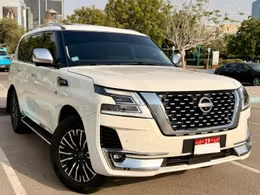
Nissan Patrol SUV 5 dr.
5,000 - 459,000 AED
Best place to buy
Nissan Patrol SUV 3 dr.
31,600 - 285,000 AED
Best place to buy
Nissan Patrol Pickup single cab
54,000 - 80,000 AED
Best place to buy
Car Finance
Under warranty
Swap allowed
Only with video
Only with discount
Export only
5 ads
Be the first to know about new ads
Save your ad search filters, and find the ads you need faster.
1 - 5 ads
out of 5
Nissan Patrol price starts from AED 5,000 and goes up to AED 459,000. Final on-road price may vary slightly based on insurance, registration, and optional accessories.
Nissan Patrol SUV 5 dr.
Best place to buy
Nissan Patrol SUV 3 dr.
Best place to buy
Nissan Patrol Pickup single cab
Best place to buy
Nissan Patrol Automatic
Best place to buy
Nissan Patrol Manual
Best place to buy
Nissan Patrol Petrol
Best place to buy
Nissan Patrol 2009
Nissan Patrol 2005
Nissan Patrol 2026
Best place to buy
Nissan Patrol 2025
Best place to buy
Nissan Patrol 2024
Best place to buy
Nissan Patrol 2023
Best place to buy
Nissan Patrol 2022
Best place to buy
Nissan Patrol 2021
Best place to buy
Nissan Patrol 2020
Best place to buy
Nissan Patrol 2019
Best place to buy
Nissan Patrol 2018
Best place to buy
Nissan Patrol 2017
Best place to buy
Nissan Patrol 2016
Best place to buy
Nissan Patrol 2015
Best place to buy
Nissan Patrol 2014
Best place to buy
Nissan Patrol 2013
Best place to buy
Nissan Patrol 2012
Best place to buy
Nissan Patrol 2011
Best place to buy
Nissan Patrol 2009
Best place to buy
-Nissan Patrol 2008
Best place to buy
Nissan Patrol 2007
Best place to buy
Nissan Patrol 2006
Best place to buy
Nissan Patrol 2005
Best place to buy
-Nissan Patrol 2002
Best place to buy
Nissan Patrol 2000
Best place to buy
Nissan Patrol Kuwait City
Nissan Patrol Sharjah
Best place to buy
Nissan Patrol Abu Dhabi
Best place to buy
Nissan Patrol Dubai
Best place to buy
Nissan Patrol Ras Al Khaimah
Best place to buy
Nissan Patrol Ajman
Best place to buy
Nissan Patrol Riyadh
Best place to buy
Nissan Patrol Umm Al Quwain
Best place to buy
Nissan Patrol Dammam
Best place to buy
Nissan Patrol Muscat
Best place to buy
Nissan Patrol Al Buraymī
Best place to buy
Nissan Patrol Barkā’
Best place to buy
Nissan Patrol Jeddah
Best place to buy
Nissan Patrol Sohar
Best place to buy
Nissan Patrol Kuwait City
Best place to buy
-Nissan Patrol Al Mubarraz
Best place to buy
The chart shows the dynamics of the model's average price on the used market over the past year. This data helps you assess whether the purchase is attractive and forecast the car's future value.
Prices on AUTO.AE may differ from the actual selling price. Data is based on our database of sold vehicles and current listings. For an accurate estimate, use our tool.

Replace Nissan Patrol brake pads and rotors according to inspection and measurement results. One vehicle may spend most of its time cruising on highways; another repeatedly stops in traffic with passengers and luggage on board. Equal mileage does not mean equal wear. Check every pad, both rotor faces and caliper operation. This article covers the Patrol Y61, Y62 and Y63 without assigning one set of dimensions or service limits to them all. Build year, specification and the fitted brake assembly affect parts selection. Safari, NISMO and vehicles with modified brakes also require their own applicability checks. In brief. There is no universal replacement mileage. Assess pads and rotors by wear, damage and the limits for the exact part. Generous lining thickness does not rule out overheating, binding or rotor damage. Identify Your Patrol Before Ordering Parts Prepare the VIN, build year, engine details and previous repair records. Compare catalogue applicability with the calipers and rotors actually fitted. This matters particularly on a used Patrol: a facelift conversion or replacement wheels cannot tell you which brake package is underneath. For pads, check shape, dimensions and mounting. For rotors, check diameter, thickness, height and mounting dimensions. Anti-noise shims, springs and other hardware must suit the assembly. Finding the word Patrol in a listing is not enough to establish compatibility. Y61 and Safari. Confirm the body type, year and fitted assembly; do not select parts from a Y62 catalogue. Y62. Match the engine, year and brake specification, even if the vehicle has been made to resemble a later version. Y63. Use this generation’s own catalogue and service information. NISMO and modified brakes. Verify the actual package; a badge cannot replace a part number. Scheduled Inspection and Condition-Based Replacement Routine maintenance sets inspection points; wear and damage determine replacement. If pads are approaching their limit, ask the workshop when to check them again based on your driving. The amount of friction material left cannot provide an exact remaining distance in kilometres. When Pads and Rotors Need Replacement Replacement becomes necessary when a component reaches its wear limit or has a defect that makes further use unacceptable. Pad lining thickness and rotor thickness need separate assessment. New pads cannot make a rotor serviceable once it has reached its limit. A lining has reached the limit for the fitted package, cracked, separated or become contaminated with oil. A rotor has reached its minimum thickness or its geometry is outside the permitted service tolerance. Inspection reveals dangerous cracks, surface breakdown or damage from severe overheating. Binding has damaged pads or a rotor; the mechanism must be repaired alongside component replacement. Do not wait for metallic grinding: it is already a reason to stop normal use and arrange inspection. If there is strong pulling, a sinking pedal, a leak or smoke from a wheel, stop safely and seek assistance. Do not test faulty brakes by accelerating and braking hard. Key rule. Replace pads as an axle set and rotors as an axle pair. Fit new pads when replacing rotors. First correct a caliper fault, contaminated hub face or any other cause of damage. Measurements to Request from the Workshop Ask for the remaining thickness of every pad and each rotor to be recorded. Brembo’s guidance explains how to compare the lowest measurement with the MIN TH marking. Take readings at several points on the swept surface, clear of the outer lip. Use the limits for the exact component. Why One Visible Outer Pad Is Not Enough Only part of the assembly is usually visible through a wheel. The inner pad may be thinner than the outer one, and the inner rotor face may be more damaged. A quick look through the spokes cannot replace a wheel-off inspection. Ask to see both pads and the inner face of each rotor. Should You Wait for a Dashboard Warning The Y62 has an audible pad wear warning: a high-pitched scraping sound may develop while driving. Have it checked promptly instead of waiting for a dedicated dashboard message. For other generations and replacement pad sets, establish which indicator is actually fitted. Understanding Noise and Vibration Note whether the symptom occurs with cold brakes, after washing, on descents or after repeated stops. Identify whether the shaking is felt in the steering wheel, pedal or body. These observations help the workshop reproduce your complaint, but do not by themselves prove that the rotors need replacement. Why Vibration Can Return with New Rotors Brembo’s noise and vibration guidance calls for checking the complete assembly, including calipers, hardware, hubs and rotor mounting faces. Contamination or a faulty mechanism can undermine a repair. If the symptom returns shortly after replacement, establish the cause before buying another set. Conditions That Shorten Patrol Brake Life frequent stops with a heavily loaded vehicle; repeated deceleration from high speed; long descents and permitted trailer use; binding pistons, caliper slides or pads; extended parking with wet rotors; sand, mud and debris in the brake assemblies; an unsuitable replacement kit or installation errors. Check brake operation after exposure to sand, mud or water. New noise or changed pedal feel needs attention. On long descents, use engine braking as described in your manual; continuously holding the pedal loads the brakes. If overheating occurs, stop safely and let the assemblies cool without spraying them with water. Parking Brake and Post-Repair Checks Inspect the parking mechanism separately from the service brake pads. Where separate parking brake shoes are fitted, replacement of related components may require adjustment and bedding according to the service instructions. After assembly, the workshop checks pedal feel, leaks and braking. Follow the replacement kit manufacturer’s bedding instructions. Workshop Checklist Explain how you use the Patrol: city driving, highways, sand, towing or heavy loads. Bring the previous job sheet. Comparing old and new measurements helps assess the rate of wear and identify a problem before the rotors are damaged. ☐ Provide the VIN, generation, engine and brake modification details. ☐ Describe noise, vibration, pulling and when they occur. ☐ Retain dashboard messages and diagnostic results where available. ☐ Inspect inner and outer pads at every wheel. ☐ Record rotor thickness and the limit for each part number. ☐ For vibration, check runout, thickness variation and hubs. ☐ Check calipers, dust boots, hardware and free pad movement. ☐ Confirm the applicability of replacement parts and fitting hardware. ☐ Check the parking mechanism and fastener tightening. ☐ Obtain inspection results and bedding instructions. Mistakes to Avoid ordering solely from the Patrol name or the appearance of the body; replacing one pad or rotor instead of an axle set; treating a rotor lip as sufficient evidence for replacement without measuring; resurfacing without checking remaining thickness and permitted limits; fitting new components while leaving the cause of binding or vibration; judging the whole brake set from one pad visible through a wheel. Important. Grinding, strong pull, a leak, smoke from a wheel or a clear loss of braking calls for a safe stop and workshop assistance. Follow the vehicle instructions for a red warning. Do not continue driving with faulty brakes or test them at speed. Conclusion Service Nissan Patrol brakes according to the specific vehicle and its use. Replacement decisions require pad and rotor measurements, inspection of both sides of the assembly and caliper checks. Uneven wear or recurring vibration calls for diagnosis of the cause. Keep inspection records to plan maintenance around the vehicle’s condition. If you are choosing a used Nissan Patrol, current listings can help you compare vehicles. Request the brake repair history and recorded measurements before buying. For a vehicle used frequently off-road or for towing, inspection of the inner rotor faces, calipers and parking mechanism is particularly useful.

For Nissan Patrol Y62 models covered by the published regional schedule, differential oil replacement is due every 40,000 km or 24 months, whichever comes first. Confirm that schedule against your vehicle’s documents before servicing. Y61, Y63 and modified assemblies need separate checks. Leaks, water entry or a new hum call for an unscheduled inspection. What Is the Patrol Y62 Service Interval? The Nissan maintenance schedule has a dedicated Y62 differential-oil row on pages M-18–M-19. Replacement is marked at 40,000 km or 24 months, then 80,000 km or 48 months, continuing at the same interval. Intermediate inspections are scheduled every 10,000 km or six months. An I in the table means inspection and correction as necessary; R means replacement. An inspection entry does not prove that the oil was drained and renewed. Establish whether both differentials were serviced. An automatic-transmission fluid change does not record that work. This schedule applies to the Y62 versions covered by the document. The applicable service documents and Nissan’s VIN-specific instructions take priority for the actual year and specification. Do not automatically apply the table to a newer Y63 or a Patrol Safari Y61. On a used vehicle, also establish whether an axle or differential has been replaced with a different assembly. Should Desert Driving Bring Servicing Forward? Tell the workshop about regular towing, sand routes, deep ruts and water crossings. Nissan’s regional document identifies towing and rough, muddy or desert roads as conditions relevant to differential servicing. Off-road use may require additional maintenance; there is no single shorter interval that covers every route. Important. If water contamination is suspected, do not wait for the scheduled mileage. Have the fluid checked and the entry route investigated. A functioning differential lock does not establish that the housing, seals and ventilation remain sound after flooding. What Happens When Differential Oil Is Low or Contaminated? Final-drive gears and differential bearings carry load during acceleration, climbing and towing. Oil protects the contact surfaces and helps remove heat. A low level or water contamination compromises that protection. Continued use can turn a small leak into an assembly repair. Colour alone cannot establish the oil’s remaining useful life. Assess it alongside level, contamination, particle type and symptoms. A light deposit on a magnet needs a different interpretation from large sharp fragments. Fresh fluid cannot restore damaged gear teeth or bearings. When Should You Arrange an Earlier Inspection? • After flooding, a deep water crossing or an impact to a differential housing. • If there are fresh oil traces, drops under the vehicle or oil on an underbody guard. • When a journey is followed by a new noise, vibration or jerking during turns. • When maintenance records are missing or the previously used oil is uncertain. A dusty route alone does not establish that sand entered a sound housing. After demanding off-road use, however, have the seals, ventilation and assembly protection inspected. Topping up a leaking differential without addressing the cause leaves the risk of another low-oil condition. How Do You Choose Front and Rear Differential Oil? The linked Patrol Y62 owner’s manual specifies different fluids for the front and rear differentials. These are examples from that edition: confirm the match to your year, specification and fitted assemblies before buying. This table is not a ready-made fluid selection for a Y61 or Y63. A gear-oil label does not establish interchangeability. The gearbox, transfer unit and differentials have their own requirements. The API category, viscosity and suitability for the actual mechanism must match the documentation. A thicker lubricant does not become correct simply because the climate is hot. Why Does Differential Type Matter? For a Patrol Safari Y61, identify the fitted rear differential first. If it is an LSD, or limited-slip differential, select oil that meets the requirements of its friction elements. A selectable differential-lock switch does not establish that an LSD is installed. Do not add a friction modifier just in case or select fluid from another owner’s vehicle description. A Y63 requires its own VIN-specific selection using documentation for the newer generation. Do not transfer Y62 capacities and fluids based on similar appearance or the shared Patrol name. An aftermarket locking mechanism may also have requirements from its manufacturer. Note. Drained oil volume is not a reliable refill guide because some fluid may already have leaked out. Use the procedure for the fitted differential to determine quantity, level setting, plug seals and tightening torque. Transfer-unit oil is a separate service item. Checklist After an Oil Change ☐ The invoice separately names the front and rear differentials if both were serviced. ☐ The product name, viscosity, specification and quantity are recorded for each unit. ☐ Ventilation, plugs and seals have been checked, and any leak cause addressed. ☐ Unusual metal particles or signs of water have been documented. ☐ The level has been set to the procedure and oil tightness checked after filling. ☐ The date, mileage and next service due are recorded. Will Fresh Oil Stop a Differential Hum? Locate the sound first. Tyres, wheel bearings, the propeller shaft and a differential can all produce noise. Note whether it changes under acceleration, while coasting, during turns or after warming up. For jerking, also check the tyres, selected four-wheel-drive mode and other drivetrain components. An oil change should not replace diagnosis. When browsing current listings for a Nissan Patrol, request service records for both differentials and an underbody inspection. Ask about off-road use and any assembly replacements. A freshly cleaned housing or recently changed oil does not establish that the components are unworn. Stop driving if there is severe grinding, knocking or substantial oil loss, and arrange suitable recovery. Conclusion The regional Y62 schedule gives 40,000 km or 24 months, subject to vehicle applicability. Check the specific requirements for a Y61 or Y63. Select oil separately for each differential, repair leaks and arrange prompt inspection after water exposure or the onset of noise.

The Nissan Patrol transfer case oil change schedule depends on the generation, the unit fitted and how the vehicle is used. A Patrol Safari Y61, a Y62 and the newer Y63 do not share a single set of maintenance requirements. One mileage recommendation for every Patrol cannot replace checking the documentation for the actual vehicle. For a vehicle in the UAE, its use matters: city driving, sand routes, towing and water crossings. Start with the VIN and workshop invoices. A record of an automatic transmission or differential oil change does not confirm that the transfer case was serviced. Here is how to check the schedule and agree the work with a workshop. Key point. Inspection and replacement are different operations. Patrol generation, transfer case type and operating conditions matter; one schedule and one fluid cannot automatically cover every version. Identify the transfer case in your Nissan Patrol The transfer case transmits torque to the axles as part of the four-wheel-drive system. Choosing its fluid requires identifying the unit itself. Ask the workshop to check the VIN, model year, original market and unit identification. This is particularly useful on a used off-roader that has had transmission repairs. Patrol Y61 / Safari / Super Safari. Use the documentation for your specification. A fluid or procedure listed for the Y62 must not be applied to a Safari simply because both are Patrols. Patrol Y62. Confirm the transfer case type. Nissan lists a dedicated fluid for the ATX90A transfer case, separately from the automatic transmission fluid. Patrol Y63. Request current documentation for this generation. The older regional maintenance booklet discussed below does not establish the Y63 schedule. Separate the transfer case, gearbox and differentials The invoice should list the transfer case, gearbox, front differential and rear differential separately. Each has its own fluid and level requirements. An offer to replace all drivetrain oils is useful only when it identifies the units, products and operations included in the price. When an unscheduled inspection is needed Do not wait for the next routine service if a leak, unusual noise or 4WD warning appears. Note when the problem occurs: after driving on sand, when cold, under load or while turning. This helps the workshop distinguish a fault from behaviour associated with the selected four-wheel-drive mode. A hum or vibration. Check the transfer case, propeller shafts, driveshafts and mounts. A noise alone is not enough to justify replacing the unit. Jerking or resistance while turning. Check the selected 4WD mode, surface, tyre sizes, pressures and wear. Use the drive modes as instructed in the manual for your Patrol. Oil on the housing or underbody protection. Identify the source and check the fluid level first. Topping up without fixing the cause is not a repair. An underbody impact or water crossing. Inspect the housing and seals and assess possible contamination. Tell the workshop how deep the water was and how long the vehicle was exposed. Important. With severe impacts, substantial fluid loss or difficulty moving, stop safely and arrange a diagnosis. Fresh fluid cannot repair mechanical damage. Choosing the correct transfer case fluid The official Patrol owner’s manual specifies Genuine NISSAN Transfer Fluid for the ATX90A transfer case. Automatic transmission and differential oils are listed separately in the same section. An ATF label, a matching viscosity or the colour of a fluid does not establish transfer case compatibility. Source: Nissan Patrol owner’s manual, section 9, page 9-3. Apply the ATX90A requirement only after confirming the unit fitted. What the maintenance schedule says Nissan’s 2021 regional maintenance booklet lists normal-use level and leak checks every 10,000 km or six months; for the Y61, replacement is every 40,000 km or 24 months, whichever comes first. Confirm that this booklet applies to your vehicle. An I inspection entry is not an R replacement instruction at every visit. That inspection row does not establish a universal Y62 replacement interval. Ask the workshop to identify the basis for its recommendation and record the next service date or mileage on the invoice. Nissan also notes that off-road sand, mud or water exposure may require more frequent maintenance. Review the normal schedule before applying it to this use. Agree the scope before work starts Confirm the fluid name, applicability and service refill quantity. If the service history is unknown, assess the unit first. An oil change should not take the place of diagnosing a noise, leak or four-wheel-drive fault. Set the level using the procedure for the actual unit. The drained quantity is not a reliable refill target after a leak, and dry capacity is not necessarily the same as a routine service refill. Confirm any required new plug seals and the correct tightening torques. Do not automatically add flushing or additives; their use needs a technical basis. For the Y62, Nissan’s booklet requires a controller reset after transfer fluid replacement. Ask for this to be recorded and for a post-service leak check. Assessing the result of the service Owner’s checklist ☐ Record the VIN, generation, model year and original market. ☐ Confirm the transfer case actually fitted to the vehicle. ☐ Find the applicable schedule and previous service records. ☐ List the transfer case, gearbox and differentials separately. ☐ Agree the fluid, refill quantity and required seals. ☐ Report sand use, towing, water exposure and new symptoms. ☐ For the Y62, confirm that the controller reset is included. ☐ Obtain an invoice showing the date, mileage and fluid name. ☐ Record when the next inspection or replacement is due. Common mistakes Using gearbox or differential oil in the transfer case without confirming compatibility. Assigning one interval to every Patrol without distinguishing Y61, Y62 and Y63. Expecting a fluid change to guarantee a cure for jerking, noise or a 4WD warning. Accepting a general service stamp without a record of the actual unit and work performed. Conclusion Nissan Patrol transfer case maintenance starts by identifying the generation and unit. Check the correct fluid, applicable schedule and operating conditions next. If symptoms are present, diagnose the cause first. A detailed invoice confirms what was done and helps you plan the next visit without guesswork. When browsing current offers for the Nissan Patrol, compare the four-wheel-drive service history. Records showing mileage, fluid names and completed operations are more useful than a general claim that everything has been serviced.
Listings for 2013 Nissan Patrol may include these trims: LE Platinum City, SE Platinum City, Super Safari, and Nismo, among others. The current selection depends on the selected country, model year, and vehicle availability. Use the “Trim” filter to compare the available options.
Mileage should be assessed together with the vehicle’s age, condition, and service history. Compare the mileage with similar vehicles of the same model year, and check the service history and actual condition of the vehicle before buying.
Current 2013 Nissan Patrol listings on AUTO.AE are priced from 28,000 to 77,000 AED. The price depends on the model year, mileage, trim, condition, and regional specifications. These figures are based on active listings and may change.
A private seller may offer a lower price, while a showroom may provide additional services, such as financing, a warranty, or help with insurance. Terms vary, so check the information in the listing, the vehicle documents, and the seller’s details.
Check the vehicle registration card (Mulkiya), the VIN on the vehicle and in the documents, the owner’s details, the service history, and accident records. Also check for any outstanding loan, fines, or other restrictions. It is advisable to arrange an independent inspection before completing the purchase.
Yes. You can arrange an independent technical inspection with the seller at a service centre of your choice. The inspection can help assess the condition of the engine, transmission, bodywork, electronics, and other components.
GCC Specs means that the vehicle was manufactured to specifications for Gulf Cooperation Council markets. These versions are generally designed for local climate conditions. However, GCC Specs alone does not confirm the vehicle’s condition or mean that it has a valid warranty; these points should be checked separately.
Some showrooms offer financing. If available, the terms or an estimated monthly payment may be shown in the listing. The final interest rate and approval depend on the bank, the down payment, and the buyer’s details.


