When Should Nissan Patrol Brake Pads and Rotors Be Replaced?
Nissan Patrol
Nissan Patrol•
•65 views
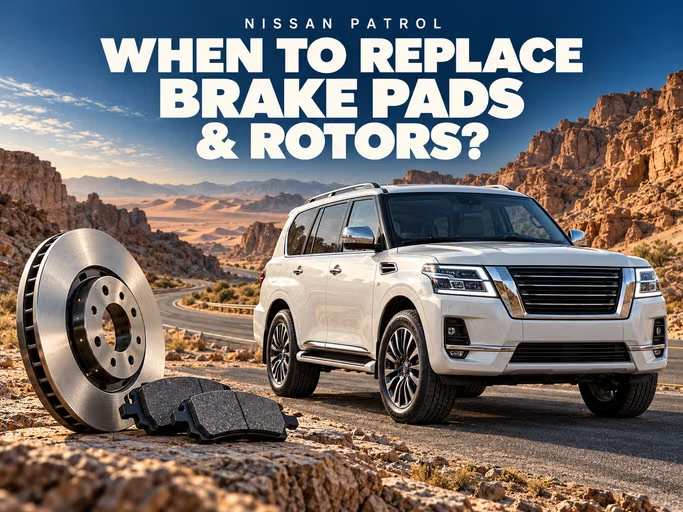
Replace Nissan Patrol brake pads and rotors according to inspection and measurement results. One vehicle may spend most of its time cruising on highways; another repeatedly stops in traffic with passengers and luggage on board. Equal mileage does not mean equal wear. Check every pad, both rotor faces and caliper operation.
This article covers the Patrol Y61, Y62 and Y63 without assigning one set of dimensions or service limits to them all. Build year, specification and the fitted brake assembly affect parts selection. Safari, NISMO and vehicles with modified brakes also require their own applicability checks.
Identify Your Patrol Before Ordering Parts
Prepare the VIN, build year, engine details and previous repair records. Compare catalogue applicability with the calipers and rotors actually fitted. This matters particularly on a used Patrol: a facelift conversion or replacement wheels cannot tell you which brake package is underneath.
For pads, check shape, dimensions and mounting. For rotors, check diameter, thickness, height and mounting dimensions. Anti-noise shims, springs and other hardware must suit the assembly. Finding the word Patrol in a listing is not enough to establish compatibility.
- Y61 and Safari. Confirm the body type, year and fitted assembly; do not select parts from a Y62 catalogue.
- Y62. Match the engine, year and brake specification, even if the vehicle has been made to resemble a later version.
- Y63. Use this generation’s own catalogue and service information.
- NISMO and modified brakes. Verify the actual package; a badge cannot replace a part number.
Scheduled Inspection and Condition-Based Replacement
Routine maintenance sets inspection points; wear and damage determine replacement. If pads are approaching their limit, ask the workshop when to check them again based on your driving. The amount of friction material left cannot provide an exact remaining distance in kilometres.
When Pads and Rotors Need Replacement
Replacement becomes necessary when a component reaches its wear limit or has a defect that makes further use unacceptable. Pad lining thickness and rotor thickness need separate assessment. New pads cannot make a rotor serviceable once it has reached its limit.
- A lining has reached the limit for the fitted package, cracked, separated or become contaminated with oil.
- A rotor has reached its minimum thickness or its geometry is outside the permitted service tolerance.
- Inspection reveals dangerous cracks, surface breakdown or damage from severe overheating.
- Binding has damaged pads or a rotor; the mechanism must be repaired alongside component replacement.
Do not wait for metallic grinding: it is already a reason to stop normal use and arrange inspection. If there is strong pulling, a sinking pedal, a leak or smoke from a wheel, stop safely and seek assistance. Do not test faulty brakes by accelerating and braking hard.
Measurements to Request from the Workshop
Ask for the remaining thickness of every pad and each rotor to be recorded. Brembo’s guidance explains how to compare the lowest measurement with the MIN TH marking. Take readings at several points on the swept surface, clear of the outer lip. Use the limits for the exact component.
| Component | Inspection method | Purpose |
|---|---|---|
| Pads | Measure usable friction material on every inner and outer pad | Find differences, taper wear, cracking, and contamination |
| Brake rotors | Measure thickness at several points without including the outer lip | Compare with the exact part limit and detect thickness variation |
| Runout and hub | Measure rotor runout; check the clean hub face if outside specification | Separate rotor geometry from dirt, corrosion, or hub play |
| Caliper | Inspect pistons, boots, pad fit and hardware; check slides where fitted | Find restricted movement, overheating, and uneven-wear causes |
Why One Visible Outer Pad Is Not Enough
Only part of the assembly is usually visible through a wheel. The inner pad may be thinner than the outer one, and the inner rotor face may be more damaged. A quick look through the spokes cannot replace a wheel-off inspection. Ask to see both pads and the inner face of each rotor.
Should You Wait for a Dashboard Warning
The Y62 has an audible pad wear warning: a high-pitched scraping sound may develop while driving. Have it checked promptly instead of waiting for a dedicated dashboard message. For other generations and replacement pad sets, establish which indicator is actually fitted.
Understanding Noise and Vibration
Note whether the symptom occurs with cold brakes, after washing, on descents or after repeated stops. Identify whether the shaking is felt in the steering wheel, pedal or body. These observations help the workshop reproduce your complaint, but do not by themselves prove that the rotors need replacement.
| Symptom | Possible causes | Next step |
|---|---|---|
| Brief noise after parking | Moisture or surface corrosion on a metallic rotor | Check whether it clears after several safe brake applications |
| Persistent squeal | Wear, contamination, pad vibration or hardware | Remove the wheels and inspect both pads in each caliper |
| Metallic grinding | Critical wear or trapped debris | Stop normal use and inspect both rotor faces |
| Pulsation | Thickness variation, runout, dirty hub, or bearing play | Measure the rotor and hub before buying components |
| Pull or one hot wheel | Binding, hose fault, contamination, tyres, or suspension | Compare brake force and free wheel rotation |
Why Vibration Can Return with New Rotors
Brembo’s noise and vibration guidance calls for checking the complete assembly, including calipers, hardware, hubs and rotor mounting faces. Contamination or a faulty mechanism can undermine a repair. If the symptom returns shortly after replacement, establish the cause before buying another set.
Conditions That Shorten Patrol Brake Life
- frequent stops with a heavily loaded vehicle;
- repeated deceleration from high speed;
- long descents and permitted trailer use;
- binding pistons, caliper slides or pads;
- extended parking with wet rotors;
- sand, mud and debris in the brake assemblies;
- an unsuitable replacement kit or installation errors.
Check brake operation after exposure to sand, mud or water. New noise or changed pedal feel needs attention. On long descents, use engine braking as described in your manual; continuously holding the pedal loads the brakes. If overheating occurs, stop safely and let the assemblies cool without spraying them with water.
Parking Brake and Post-Repair Checks
Inspect the parking mechanism separately from the service brake pads. Where separate parking brake shoes are fitted, replacement of related components may require adjustment and bedding according to the service instructions. After assembly, the workshop checks pedal feel, leaks and braking. Follow the replacement kit manufacturer’s bedding instructions.
Workshop Checklist
Explain how you use the Patrol: city driving, highways, sand, towing or heavy loads. Bring the previous job sheet. Comparing old and new measurements helps assess the rate of wear and identify a problem before the rotors are damaged.
☐ Provide the VIN, generation, engine and brake modification details.
☐ Describe noise, vibration, pulling and when they occur.
☐ Retain dashboard messages and diagnostic results where available.
☐ Inspect inner and outer pads at every wheel.
☐ Record rotor thickness and the limit for each part number.
☐ For vibration, check runout, thickness variation and hubs.
☐ Check calipers, dust boots, hardware and free pad movement.
☐ Confirm the applicability of replacement parts and fitting hardware.
☐ Check the parking mechanism and fastener tightening.
☐ Obtain inspection results and bedding instructions.
Mistakes to Avoid
- ordering solely from the Patrol name or the appearance of the body;
- replacing one pad or rotor instead of an axle set;
- treating a rotor lip as sufficient evidence for replacement without measuring;
- resurfacing without checking remaining thickness and permitted limits;
- fitting new components while leaving the cause of binding or vibration;
- judging the whole brake set from one pad visible through a wheel.
Conclusion
Service Nissan Patrol brakes according to the specific vehicle and its use. Replacement decisions require pad and rotor measurements, inspection of both sides of the assembly and caliper checks. Uneven wear or recurring vibration calls for diagnosis of the cause. Keep inspection records to plan maintenance around the vehicle’s condition.
If you are choosing a used Nissan Patrol, current listings can help you compare vehicles. Request the brake repair history and recorded measurements before buying. For a vehicle used frequently off-road or for towing, inspection of the inner rotor faces, calipers and parking mechanism is particularly useful.