BMW Isetta 250، 1957
BMW Isetta
BMW Isetta•
•23 مشاهدة
رقم الهيكل: 427993
المزاد: مونتيري 2015
تاريخ المزاد: 15 أغسطس 2015
رقم القطعة: F12
35,200 دولار | بيعت
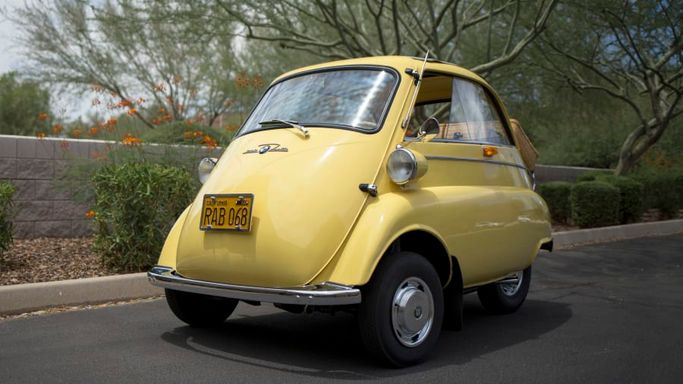
- الهيكل الخارجي: أصفر
- المقصورة الداخلية: كريمي
- محرك BMW ثنائي الأشواط بسعة 250 سم مكعب وقوة 9.5 أحصنة
- ناقل حركة يدوي بأربع سرعات
- باب أمامي واحد يفتح إلى الخارج
- سقف شمسي من القماش
- مقعد داخلي متصل باللون الكريمي
- جُدّد بلونه الأصفر الأصلي
- رمّمه مالكه الألماني السابق
شكّلت Isetta خروجًا جذريًا عن كل ما عرفه عالم السيارات من قبل، وأثارت فور طرحها عام 1953 ضجة فورية بين الصحافة والجمهور على حد سواء. كانت هذه المركبة الصغيرة ذات الشكل الفقاعي ابتكارًا فريدًا تمامًا في عالم القيادة، تقع في مكان ما بين سيارة سياحية فاخرة ودراجة نارية، أو لعل الأدق أنها جمعت بينهما. وبفضل محركها الناري ثنائي الأشواط وهيكلها المغلق بالكامل، وفرت السيارة اقتصادًا في التشغيل (وحجمًا يكاد يكون عمليًا بالقدر نفسه) كالمركبة ذات العجلتين، مع وسائل الراحة التي توفرها السيارة التقليدية ومساحة لراكب إضافي، بل ولراكبين في بعض الحالات.
صُنعت النماذج الأولية الأولى ومركبات الإنتاج في إيطاليا على يد شركة للدراجات البخارية والثلاجات يديرها Renzo Rivolta؛ لكن بحلول عام 1954، أدرك Rivolta أنه رغم وجود طلب على هذه المركبات، فإن شعبيتها ومبيعاتها آخذتان في التراجع. فقرر منح BMW ترخيص إنتاج Isetta، وباعها أدوات التصنيع وكل ما يتصل بها. واتضح أن هذه الصفقة كانت مفيدة لمستقبل السيارة الصغيرة، إذ تمكنت BMW من بيع 22,000 سيارة في أول عام إنتاج كامل لها، وهو عام 1956، بعد تحديث جوانب مختلفة من التصميم العام للسيارة ووظائفها، ما حسّن الأداء والموثوقية بدرجة كبيرة. وتُعد BMW Isetta 250 هذه، من طراز 1957، مثالًا جديرًا بالإعجاب على أشهر سيارة فقاعية في العالم.


تتمتع السيارة، التي يبلغ وزنها نحو 750 رطلًا، بكل القوة اللازمة للتنقل بين سرعات ناقل الحركة الأربع. وبابها الأمامي الوحيد الذي يفتح إلى الخارج ظريف وغريب بقدر ما هو عملي ومريح، كما يمكن إرجاع السقف الشمسي القماشي بسهولة لتوفير تدفق هواء وافر داخل هيكل السيارة ذي الشكل الشبيه بحوض السمك. وقد جُدّد طلاء هذه السيارة الصغيرة الأيقونية بلونه الأصفر الأصلي، وزُيّن بمقصورة داخلية ذات مقعد متصل باللون الكريمي. وستكون إضافة ممتازة إلى أي مجموعة، كما أنها، bonus «صغير»، لا تحتاج إلا إلى مساحة تخزين وعرض محدودة.