When to change Land Rover Defender transmission fluid
Land Rover Defender
Land Rover Defender•
•23 views
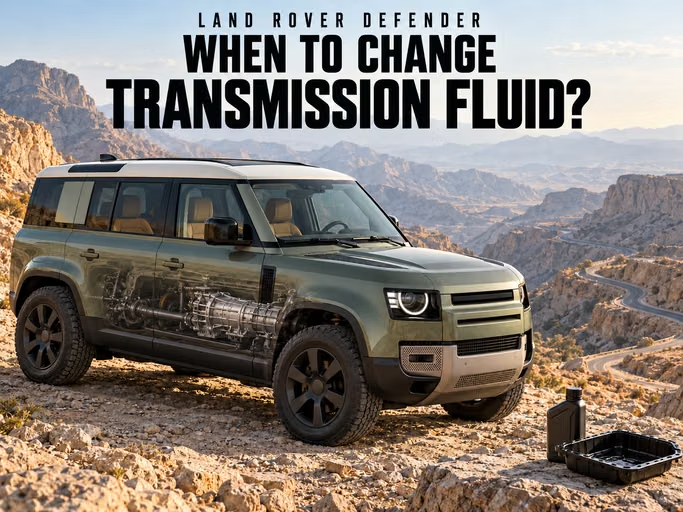
Illustration. The vehicle, service parts and transmission in its installed location are shown conceptually, not as a technical diagram. Select parts and fluid for the specific transmission.
For a Land Rover Defender, the fluid-change plan depends on the transmission fitted and how the vehicle is used. A modern Defender and a classic model have different assemblies, so the model name alone cannot identify the right lubricant. Towing, sand driving and previous maintenance also matter.
This guide explains how to compare ZF advice with the vehicle schedule, what to check before buying fluid and why harsh shifts need diagnosis. It also covers the classic Defender’s manual gearbox and the questions to raise after demanding trips.
Identify your Defender’s transmission first
JLR’s information about the new Defender describes an eight-speed ZF automatic and a two-speed transfer box. This refers to the modern L663 generation. Classic vehicles use other transmissions, while restored or converted examples may no longer have their original powertrain. Establish which vehicle you are servicing before applying a recommendation.
A useful service enquiry includes the VIN, year, engine and transmission designation confirmed by the workshop. First-registration date, selector shape and the number of doors cannot replace that information. This is particularly important after a powertrain replacement: the records need to match the equipment currently installed, not only the original build specification.
At what mileage should automatic fluid be changed?
The ZF TE-ML 11 recommendations give 150,000 km for the listed automatic transmissions, with earlier changes potentially appropriate for high loads, temperatures or an unknown history. This is transmission-maker guidance. Check the factory schedule for the specific Defender separately.
“Filled for life” does not mean a leak or overheating can be ignored, nor does it make service life synonymous with the warranty period. Ask the workshop to show the applicable schedule and explain its proposed interval. A universal mileage figure without reference to the installed transmission does not provide a reliable maintenance plan.
How should heat, towing and off-road use be considered?
ZF’s oil guidance explains that high operating temperatures accelerate oil ageing. Tell the technician about regular towing, prolonged work under load and overheating incidents. Low mileage does not rule out demanding use: several hours of slow progress through sand are poorly represented by kilometres alone. Describe the actual trips rather than simply calling the vehicle a weekend car.
The classic Defender handbook identifies sand, dust, frequent wading, heat, towing and mountain driving as arduous conditions. This calls for closer attention to maintenance, but it does not establish a shorter ATF interval for an L663. Use the documentation applicable to the particular generation and powertrain.
What if the Defender is only used in town?
Urban use alone neither sets nor cancels a fluid-change requirement. Consider mileage, fluid age, service history and the applicable instructions together. An engine oil reminder does not assess ATF condition. Check the invoice after routine servicing: work on the engine does not mean the transmission has also been serviced, even if both are described informally as an oil change.
Which fluid does the Defender transmission need?
For the listed 8HP45, 8HP70 and 8HP76 units, the ZF lubricant table identifies LifeguardFluid 8 and Land Rover reference LR023288. Confirm applicability through the actual assembly and vehicle service information. The number of gears alone cannot identify the correct product.
A “universal ATF” label does not establish compatibility. In its fluid selection guidance, ZF distinguishes “suitable for” or “meets the requirements” from formal approval. Ask to see the product specification and the basis for using it in your transmission. Neither colour nor similar packaging is a reliable selection method.
What about a classic Defender with a manual gearbox?
The Defender LRL 10 02 51 141 handbook specifies Castrol BOT 130M or equivalent for its manual gearbox. This is an example for the version covered by that handbook. It must not automatically be extended to all classic Defenders, including vehicles fitted with a different transmission or altered during a conversion.
| Version or assembly | Selection basis |
|---|---|
| Modern Defender with an automatic | Exact transmission type, VIN information and applicable fluid specification. |
| Classic Defender with a manual | Instructions for that gearbox; do not select ATF by analogy. |
| Converted vehicle | Conversion records and identification of the assembly actually fitted. |
Are there special requirements for hybrids?
Mild-hybrid and plug-in hybrid powertrains have different layouts. The word “hybrid” does not identify an ATF product. Verify the transmission designation and procedure rather than transferring requirements from another version with the same gear count. Work involving high-voltage components requires the appropriate training and competence.
How many litres should you buy?
The capacity table in the same Defender handbook gives approximately 2.4 litres for refilling the manual gearbox and requires the level to be checked. That figure does not apply to the L663 automatic. Even a documented quantity must be read alongside the assembly name and the operation it describes.
For an automatic, dry capacity and service quantity are different. Some fluid remains after draining, while an exchange uses a different amount. Ask the workshop to calculate the quantity for the agreed method and establish the final level using the correct procedure. Replacing only what drained out cannot correct a pre-existing underfill.
5 signs that the transmission needs attention
1. A delay when selecting D or R. Note whether it happens after an overnight stop or when the vehicle is warm. Do not try to hurry engagement with the accelerator: an unexpected movement is especially dangerous near a wall, in a parking space or while connecting a trailer.
2. Rising engine speed without the expected acceleration. If the behaviour differs from normal, avoid repeated hard acceleration to test it. Record the speed, load and circumstances for the technician. If drive is lost, safe stopping and assistance take priority over reaching the next scheduled service.
3. Repeated jolts or shudder. Explain whether they occur when pulling away, changing gear or travelling at a steady speed. Not every impact comes from the fluid: the engine, mountings and other driveline components may need assessment. Treat a promise to cure every vibration with an ATF change cautiously.
4. Fluid beneath the vehicle. A mark on an undertray can be some distance from the source. Stain colour alone cannot reliably identify the assembly or the correct top-up product. The job needs to establish the cause, check the level and confirm that the repair has restored leak-free operation.
5. A transmission or overheating warning. Follow the vehicle’s message and handbook, reduce the load and stop safely when the situation requires it. Arrange assistance if the warning returns or operation is abnormal. A message disappearing after a restart does not establish that the underlying problem has gone away.
Will fresh fluid solve the problem?
New fluid cannot rebuild worn components or eliminate every electrical or mechanical fault. When symptoms are present, useful first steps include retaining fault codes and operating conditions, inspecting the vehicle and conducting a road test if its condition permits. This helps separate routine maintenance from repair work.
If the pan is removed, ask the workshop to document the fluid and any material found inside. Do not diagnose the transmission from a photograph alone: the type of debris and other findings matter. Nevertheless, a description and photographs help explain why the workshop recommends continuing the service or pausing for further investigation.
Should the fluid be changed after wading?
A water crossing alone cannot establish the condition of the fluid. However, deep wading, an extended stop in water or subsequent symptoms warrant checks under the vehicle’s requirements. Describe the depth and circumstances, and ask the workshop to assess sealing and the risk of contamination. Changing differential oil alone does not establish that the main gearbox and transfer box were also checked.
What should the service include?
Distinguish a drain and refill, a service involving pan removal and a more complete fluid exchange. These involve different work and quantities of material. The choice should follow the transmission’s condition and applicable procedure, rather than the type of equipment the workshop happens to own.
1. Assessment before work. The workshop identifies the transmission and reviews its history, symptoms and use. If a fault is suspected, agree the diagnostic steps first. Preserve useful information before clearing codes and avoid starting with a promise that fresh fluid will fix the complaint.
2. Correct parts and fluid. The order should identify the product, filter, seals and required fasteners. ZF’s service-kit information shows different arrangements, including a separate filter or a plastic pan with an integrated filter. Select a kit for the actual transmission, rather than the Defender name alone.
3. The agreed operation. Suitable materials and clean equipment are essential. When the pan is removed, its contents and accessible components can be assessed. If the findings change the plan, the workshop should explain the proposed additional work and obtain the owner’s agreement before proceeding.
4. Final level setting. The vehicle position, fluid temperature and sequence must follow the applicable service procedure. There is no single temperature to prescribe for all Defenders. The final level needs to be checked after the required stages, rather than only immediately after the initial fill.
5. Verification and records. Check for leaks, confirm engagement and assess transmission behaviour. Record the mileage, materials and operations on the invoice. If the original complaint remains, the workshop should explain the next diagnostic step instead of declaring success solely because the fluid has been changed.
Are a machine exchange and flushing compulsory?
Select the method according to the transmission’s condition and procedure. Clarify whether flushing means an exchange with the specified fluid or a separate chemical treatment. The ZF list prohibits additives introduced afterwards. A shudder-fix product should not replace investigation of the fault.
How should you compare prices?
Compare equivalent quotations: ATF product and quantity, filter or pan, consumables, any required diagnosis, level setting and final checks. A starting price for a simple drain is not comparable with a pan service. Also clarify the warranty on the work and how a returning leak or unresolved complaint will be handled.
Owner’s checklist before servicing
☐ Confirm the VIN, powertrain and actual transmission designation.
☐ Review the applicable schedule and previous fluid-change records.
☐ Tell the workshop about towing, sand, water and overheating episodes.
☐ Agree the fluid, parts kit, method and itemised scope of the quotation.
☐ Include level setting, leak checks and operational verification.
☐ Keep the mileage, materials and next maintenance plan in the records.
Common Defender transmission questions
What should you ask before buying a used vehicle?
When comparing current offers, ask about the transmission history as well as mileage: has the fluid been changed, which product was used, has the unit been repaired and are invoices available? A short test drive cannot replace an independent assessment with the vehicle both cold and warm.
Information on landrover.com describes Online Service History for vehicles from 2013 onwards. Request the available record and compare it with workshop invoices. A missing entry does not establish that no work took place outside the system; supporting documents still matter.
Can the fluid be changed at high mileage?
Mileage alone is not a prohibition. Assess the condition, symptoms and previous maintenance first. With a healthy transmission, the aim is to perform an appropriate service; with slipping or severe impacts, the cause needs investigation first. A fluid change cannot guarantee recovery of an already damaged unit.
Should adaptations be reset afterwards?
For an automatic, only when there is a valid reason and applicable procedure. A reset does not replace a level check or fault diagnosis. On a classic Defender with a manual gearbox, it is not part of an ordinary oil change. If it appears automatically on the quotation, ask which assembly and procedure it refers to.
Can you top up with another ATF if the correct one is unavailable?
Do not select a substitute by similar colour, apparent thickness or a “universal” label. First confirm the required product and why the level is low. If compatibility is unknown, arranging assistance and the correct fluid is preferable to experimenting with an expensive assembly.
Conclusion
Correct Defender transmission maintenance begins with identifying the unit and its service requirements. Consider workload and history, verify the fluid and parts kit, and investigate symptoms before treating them as a routine service issue. An understandable quotation and documented result are more useful than a universal interval or a promise to restore smoothness with fluid alone.