


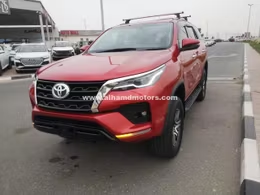

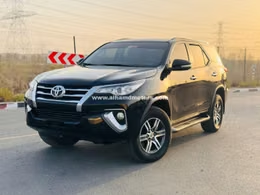
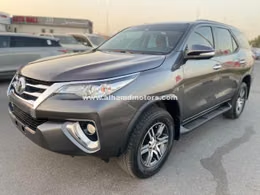
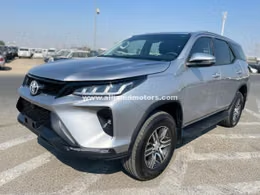

Body
Prices
Best place to buy
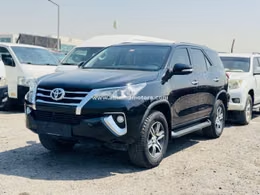
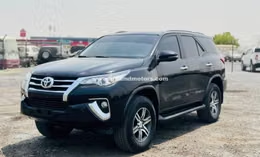
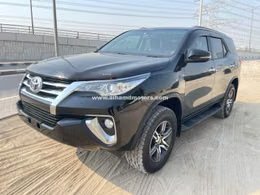
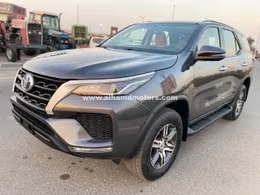
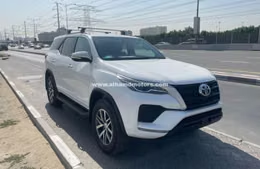
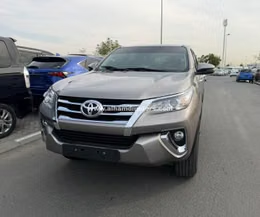
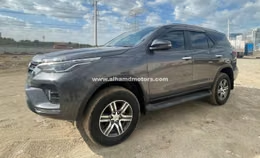
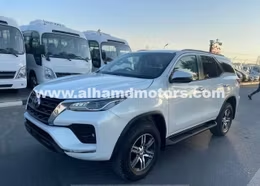
Toyota Fortuner SUV 5 dr.
33,000 - 348,888 AED
Best place to buy
Car Finance
Under warranty
Swap allowed
Only with video
Only with discount
Export only
17 ads
Be the first to know about new ads
Save your ad search filters, and find the ads you need faster.
1 - 17 ads
out of 17
Toyota Fortuner price starts from AED 33,000 and goes up to AED 348,888. Final on-road price may vary slightly based on insurance, registration, and optional accessories.
Toyota Fortuner SUV 5 dr.
Best place to buy
Toyota Fortuner Automatic
Best place to buy
Toyota Fortuner Petrol
Best place to buy
Toyota Fortuner Diesel
Best place to buy
Toyota Fortuner 2026
Best place to buy
Toyota Fortuner 2025
Best place to buy
Toyota Fortuner 2024
Best place to buy
Toyota Fortuner 2023
Best place to buy
Toyota Fortuner 2022
Best place to buy
Toyota Fortuner 2021
Best place to buy
Toyota Fortuner 2020
Best place to buy
Toyota Fortuner 2019
Best place to buy
Toyota Fortuner 2018
Best place to buy
Toyota Fortuner 2017
Best place to buy
Toyota Fortuner 2016
Best place to buy
Toyota Fortuner 2015
Best place to buy
Toyota Fortuner 2014
Best place to buy
Toyota Fortuner 2013
Best place to buy
Toyota Fortuner 2012
Best place to buy
Toyota Fortuner 2008
Best place to buy
Toyota Fortuner Dubai
Best place to buy
Toyota Fortuner Sharjah
Best place to buy
Toyota Fortuner Riyadh
Best place to buy
Toyota Fortuner Muscat
Best place to buy
Toyota Fortuner Dammam
Best place to buy
Toyota Fortuner Abu Dhabi
Best place to buy
Toyota Fortuner Ras Al Khaimah
Best place to buy
Toyota Fortuner Ajman
Best place to buy
Toyota Fortuner Mecca
Best place to buy
Toyota Fortuner Jeddah
Best place to buy
Toyota Fortuner Medina
Best place to buy
Toyota Fortuner Barkā’
Best place to buy
The chart shows the dynamics of the model's average price on the used market over the past year. This data helps you assess whether the purchase is attractive and forecast the car's future value.
Prices on AUTO.AE may differ from the actual selling price. Data is based on our database of sold vehicles and current listings. For an accurate estimate, use our tool.

A practical guide for Dubai buyers: origin, registration, inspection and ownership Buying a Toyota Fortuner in Dubai is not only about choosing a colour, engine or trim. Regional specification affects registration, insurance, repairs and future resale. A lower-priced import is not necessarily a bad car, but the labels American Specs, European Specs or Japanese Specs are no substitute for a transparent history and professional inspection. Below are clear criteria that will help you distinguish GCC Specs and assess the risks before paying a deposit. Left-hand-drive Toyota Fortuner 2025: exterior view of the vehicle from the listing What are GCC Specs on a Fortuner? GCC Specs refers to a vehicle specification intended for one or more Gulf Cooperation Council countries: the UAE, Saudi Arabia, Kuwait, Qatar, Bahrain and Oman. Reliable proof is not a sticker or a seller's wording, but a consistent chain of evidence: the VIN, original market specification, conformity documents, service history and registration records. A Fortuner for the GCC market is homologated for local requirements and receives equipment and settings selected for the region. However, the exact design depends on the model year, engine and destination country. You should therefore not assume that every GCC vehicle automatically has a different radiator, suspension or paint formulation. If a seller claims a special component, ask for an official specification sheet or part number. Key definition: GCC Specs is a documented market specification, not a guarantee that the vehicle has never been in an accident, poorly maintained or badly repaired. Vehicles intended for Gulf countries are commonly associated with the following features: Engine cooling and air conditioning. System performance is selected for the intended market. But condition matters just as much as specification: a blocked condenser, weak fan, worn compressor or old coolant will spoil the summer ownership experience in any vehicle. Parts and diagnostics. Regional configurations are generally easier to service in the UAE because workshops can identify the required parts and software more readily. Imported vehicles may use different electronic modules, lamps, multimedia systems and emissions components. Instruments and equipment. Units of measurement, lighting, interface languages, navigation and radio-frequency spacing depend on the market. These differences do not always affect safety, but every function should be checked before purchase. Warranty and service history. Regional warranty coverage applies only under the original distributor's terms. The word GCC in a listing does not, by itself, prove that the warranty remains valid. Documents and registration. A vehicle originally supplied to the GCC usually has a clearer history. An imported used vehicle may require additional origin and conformity checks. Why are GCC Specs important when buying in Dubai? The main advantage is less uncertainty. For registration in Dubai, RTA checks the required documents, valid insurance and the vehicle's technical condition. For imported used vehicles, the UAE Ministry of Industry and Advanced Technology provides a status check confirming eligibility for registration. Certain hazardous vehicle categories are prohibited, including burnt, flooded, dismantled, scrapped and irreparable vehicles. An administrative check, however, does not replace a structural and mechanical inspection. The key differences between GCC and Non-GCC vehicles are as follows: *Comprehensive Insurance — comprehensive motor insurance that, in addition to third-party liability, may cover damage to the insured vehicle, theft, fire and other risks within the terms of the policy. Left-hand-drive cabin, climate-control system and Fortuner multimedia How can you verify a Fortuner's origin before buying? Use a consistent process rather than relying on a visual guess: Record the complete VIN. Compare the number beneath the windscreen, on the body plate and in every document. A mismatch, signs of tampering or an unreadable marking are reasons to stop the deal. Decode the VIN correctly. The first characters identify the manufacturer and the country or region of manufacture, but they do not prove GCC Specs on their own. The destination market should be confirmed through Toyota documents, a dealer catalogue and reliable vehicle records. Check the history in the country of origin. If the vehicle is connected to North America, obtain Carfax or AutoCheck, locate auction photographs and check title status, mileage records, flood exposure and airbag deployment. For other regions, use the relevant local databases and export documents. Confirm eligibility for registration in the UAE. Check the status of the imported used vehicle and ask RTA in advance for the exact documents required for that VIN. Inspect the body and safety systems. Measure paint thickness and inspect structural members, welds, crumple zones, seat-belt dates, airbags and stored diagnostic faults. A clean exterior does not prove a high-quality repair. Test the cooling system under load. Inspect the radiator and condenser, fans, hoses, expansion tank, coolant and water pump. After the engine is fully warm, leave the air conditioning running at idle and repeat the check during a road test. Obtain an insurance quotation. Send the VIN and vehicle details to several insurers and request written prices for Third-Party Liability and Comprehensive Insurance. Can you buy a Fortuner with American specifications? Technically, you can buy a Non-GCC Fortuner if it was legally imported, is eligible for registration and has passed inspection. However, the description American-spec Fortuner requires particular attention: the Fortuner is not a mainstream official Toyota model in the United States. The wording may refer to a vehicle routed through North America, a North American auction history or simply an inaccurate description by the seller. The VIN and original documents must explain the label. Many vehicles from North American insurance auctions are repaired for export. This does not mean that every such car is unsafe, and no honest percentage can be applied to all imports. What matters is finding out what happened to this particular VIN: a collision, flood, theft recovery, fire, hail damage or an ordinary dealer sale. Walk away if the seller will not provide the VIN before inspection, hides auction photographs, cannot explain the title status or refuses an independent structural and electronic inspection. Pay particular attention to airbags, warning lights, factory seams, wheel alignment and signs of moisture beneath carpets and inside connectors. Practical rule: a newer imported vehicle with an unclear history is not necessarily a better purchase than an older GCC Fortuner with transparent maintenance and a sound body. What should you consider with European and Japanese specifications? European imports may differ in emissions equipment, lighting, navigation maps and part numbers. Japanese domestic-market vehicles are often right-hand drive and may have region-specific multimedia. Origin alone does not make a vehicle bad, but it does require document checks, an insurance quotation and confirmation that the vehicle can be registered in Dubai. The climate question should not be oversimplified either. A European or Japanese vehicle will not necessarily overheat in the UAE, while a neglected GCC Fortuner can certainly suffer from overheating. Actual condition, genuine parts, the quality of previous repairs and the exact factory configuration matter more than the regional label alone. Rear-view camera, multimedia display and climate-control panel Can you register a right-hand-drive Fortuner in the UAE? For ordinary private registration in Dubai, no. Current RTA guidance states that a right-hand-drive vehicle cannot be registered unless it is issued with classic plates. RTA also states that ownership of a right-hand-drive vehicle in Dubai generally cannot be transferred: an already registered vehicle may only be renewed subject to the applicable conditions. Traffic in the UAE keeps to the right, and standard vehicles are left-hand drive. A right-hand-drive Fortuner offered for sale may be intended for export, private land, parts or a special classic category. Such a listing is not necessarily fraudulent, but the vehicle is unsuitable for an ordinary buyer unless RTA confirms a lawful registration route for that specific car. Before paying a deposit: ask for a valid UAE registration certificate or export documents, then verify the VIN and registration eligibility separately. Do not rely on a promise that the steering can simply be converted later. Which Fortuner specifications should you choose? For most Dubai buyers, the default choice should be a left-hand-drive Fortuner with documented GCC Specs, a transparent history and a successful independent inspection. This reduces uncertainty around registration, insurance, repairs and resale. A Non-GCC vehicle is worth considering only when its origin, status, damage, repairs and registration eligibility are fully documented and the price compensates for the additional risk. Compare available options, review the specification stated by each seller and build a shortlist in the Toyota Fortuner section. Final recommendation Choose GCC Specs by default, but always verify the claim. Assess every imported vehicle individually, reject undocumented repairs, confirm insurance terms in advance and do not buy a right-hand-drive Fortuner for ordinary Dubai registration based solely on a seller's assurance. The safest specification is the one supported by matching documents, a clean history and a professional inspection.

The drivetrain determines whether the Toyota Fortuner will be a comfortable city vehicle or a capable tool for sand and mountain terrain. RWD is suited to paved roads, AWD automatically helps distribute torque on slippery surfaces, while selectable 4x4 with low-range gearing is intended for serious off-road use. However, there is an important caveat in the UAE market: official Toyota UAE specifications for the 2026 Fortuner list the model as 4x4, whereas advertisements sometimes label the same type of drivetrain as AWD. Therefore, the choice should be based not on a single filter, but on the transfer-case modes actually fitted to the vehicle. RWD — rear-wheel drive: torque is sent only to the rear wheels; a simple and economical option for city and highway driving. AWD — automatic all-wheel drive: electronics or a coupling engages the second axle when needed; low-range gearing is not implied. 4x4 — selectable four-wheel drive: the driver chooses between H2, H4 and L4; the system is designed for loose and uneven surfaces. The price difference between rear-wheel-drive and four-wheel-drive versions on the used and import markets may reach approximately AED 10,000–20,000. All prices in this article are approximate and based on market data available at the time of writing; the advertised price and the final transaction price may differ. Toyota Fortuner II Facelift 2026: the type of four-wheel-drive system cannot be reliably identified from the exterior — check the controls and VIN. Which Fortuner drivetrain is best for the desert in the UAE? For regular dune driving, the right choice is 4x4 with low-range gearing. On loose sand, traction at both axles is important, while L4 allows the vehicle to move slowly and under control without forcing the transmission to compensate for insufficient grip through constant wheelspin. RWD may cope with firm ground, but its off-road capability is significantly more limited. Conventional AWD without low range is suitable only for easier sections. Many newcomers assume that AWD and 4x4 are the same. For dune bashing and desert expeditions, the wording in an advertisement matters less than the presence of a transfer case, H2/H4/L4 modes and a functioning front-axle engagement system. Before attempting a demanding route, you also need the correct tyre pressure, a shovel, a compressor, suitable recovery points and experience driving on sand. What do H2, H4 and L4 mean? Do not use H4 or L4 for tight turns on dry paved roads. The front and rear wheels follow different paths, and a rigidly connected drivetrain cannot compensate for that difference, causing wind-up, jerking and accelerated wear. Toyota's official guidance on H2/H4/L4 confirms that L4 should be selected after stopping the vehicle and shifting to neutral. Do you need 4x4 if the Fortuner is used only in the city? No — if you are choosing between technically comparable vehicles and are certain that you will not drive in sand, there is no reason to pay extra specifically for off-road capability. In normal conditions on Sheikh Zayed Road, H4 offers no advantage: the Fortuner should remain in H2. A rear-wheel-drive version also has fewer components that require maintenance. However, the official UAE Fortuner range may not offer a choice between RWD and 4x4: both current 2026 petrol versions are specified as 4x4. In that case, assess the engine, trim, condition and price instead of searching for a separate AWD variant that is not confirmed by the specifications. During winter rain, sound tyres, sensible speed and a safe following distance remain the priorities; four-wheel drive does not shorten braking distance. Is the Fortuner's four-wheel-drive system reliable? Yes. Under normal use, the Fortuner's part-time 4x4 system is considered simple and durable: the vehicle runs in H2 most of the time, while the driver engages the front axle and low range when required. However, no system can be promised to last forever. The reliability of a used vehicle depends on regular maintenance, how often it was driven in sand, the condition of its seals and whether the previous owner used the modes correctly. Key inspection points include the front driveshaft boots and joints, axle and transfer-case seals, propeller-shaft connections, wiring and the 4WD engagement actuator. Sand, overheating, impacts to the underside and long periods without using four-wheel drive increase the risk of a seized mechanism or leaks. Rear view of the Fortuner: during an underbody inspection, look for dry axle housings and transfer case, as well as the absence of impacts to the protective panels. How should you check a Fortuner's four-wheel-drive system before buying? Carry out the test on a safe area with a loose surface or at a workshop. Do not drive in circles in H4/L4 on dry paved roads or lift one wheel with a jack: this creates unnecessary load and a risk of the vehicle falling. Testing under load requires a lift, a technician and the procedure specified for the particular trim. Step 1. Verify the specification. Check the VIN, identification plate, service book and controls. The word AWD in an advertisement does not prove that the vehicle has an automatic AWD system. An H2/H4/L4 selector indicates selectable 4x4. Also confirm whether the vehicle has a rear differential lock, DAC or other off-road functions, as equipment varies by market and version. Step 2. Inspect the underside. Look for cracks and traces of grease on the front driveshaft boots, oil leaks around the axles and transfer case, damaged connectors, dents in protective panels, play in the propeller shafts and signs of fresh washing over older dirt. An even, dry film may be acceptable; a wet trail of oil warrants a more detailed inspection. Step 3. Check H2. During a normal test drive, there should be no humming, clicking, vibration under acceleration or binding in turns. Tyres of the same model with similar wear reduce unnecessary load on the drivetrain. Step 4. Engage H4 as instructed. Follow the prescribed procedure on a straight section of loose surface. The indicator may flash while the mechanism completes the shift, then it should remain steadily illuminated. If it continues to flash, a warning appears or the mode fails to engage after brief straight-line movement, computer diagnostics are required. Step 5. Check L4. Come to a complete stop, hold the brake and shift the automatic transmission to N. Engage L4 and wait for a steady indicator. At low speed, the vehicle should respond more strongly to the accelerator and provide more engine braking. Grinding, impacts or failure to engage are serious warning signs. Step 6. Listen to the drivetrain. Check for humming under load and on overrun, repeated clicking with the wheels turned, propeller-shaft vibration and clunks when changing direction. A slight change in sound in H4 may be normal, but crunching and metallic grinding are not. Step 7. Arrange an independent inspection. A specialist can read 4WD/ABS fault codes and inspect the actuators, play, fluids and components on a lift. For a vehicle that has been driven on dunes, this is more valuable than a brief demonstration by the seller. Toyota Fortuner 2026 interior: before buying, locate the 4WD selector and verify the indication for every mode in accordance with the owner's manual. Which drivetrain should you choose? The main practical conclusion: 4x4 is not essential for the city, but it is necessary for serious desert driving. However, AWD and 4x4 labels may be used inconsistently in the UAE market, so the decision should be made only after checking the vehicle's actual drivetrain. A four-wheel-drive version may cost approximately AED 10,000–20,000 more than a comparable rear-wheel-drive vehicle. All prices are approximate and based on market data available at the time of writing. Current price ranges can be checked in the Toyota Fortuner listings, comparing the year, VIN, specification, drivetrain modes and condition.

The EXR, GXR and VXR designations are more than just letters in a listing. They help buyers understand how much comfort, technology and decorative equipment they are getting for their money. However, Toyota Fortuner equipment has varied by model year, engine, destination market and individual dealer. The badge therefore provides a starting point for comparison, but does not replace an inspection of the vehicle. EXR — entry-level trim: practical equipment without most premium features. GXR — mid-level trim: a balance of everyday comfort, equipment and price. **VXR — top-level trim: the most comprehensive package of comfort, interior finish and driver-assistance systems. Choosing a trim can be more difficult than choosing a colour. Wheel size affects ride comfort and tyre prices, the engine determines performance and fuel consumption, while cameras, climate control and upholstery shape everyday usability in the UAE. Below is a clear comparison from the practical version to the best-equipped one, helping buyers avoid paying for features they do not need. Which Fortuner trim is better — GXR, VXR or EXR? There is no universal winner. On most vehicles that follow the trim hierarchy commonly used in the Gulf states, EXR is the entry level, GXR is the mid-range version and VXR is the top trim. However, the same badge does not guarantee the same equipment: a newer GXR may be more convenient than an older VXR, while a well-kept EXR with a transparent history may be a better buy than a richly equipped vehicle rebuilt after an accident. Compare the model year, engine and regional specification first. Then assess safety, climate control, cameras and seats. Only after that should the trim name influence the decision. Following the 2020 facelift, the Fortuner received more modern styling and updated electronics in selected markets, so a newer GXR can often feel more up to date than a pre-facelift VXR. What is the difference between Fortuner EXR and GXR? EXR and GXR most often appeal to buyers seeking a sensible balance between price and usefulness rather than maximum equipment. In the current range, EXR is usually the entry-level version with a 2.7-litre engine, while GXR is the more powerful 4.0-litre V6 version. On imported vehicles and models from other years, however, these names may represent different equipment packages. Buyers should therefore compare not only the badge, but also the engine, model year, VIN specification and option list. 2026 Toyota Fortuner EXR: front three-quarter view. Confirm the model year, engine and actual equipment using the VIN and documents. A smaller wheel diameter can be an advantage on UAE roads. A taller tyre sidewall absorbs joints and uneven surfaces more effectively, while a replacement set of tyres is usually cheaper. Larger wheels make the vehicle look more expensive, but reduce sidewall height and transmit impacts more noticeably into the cabin. Cloth should not automatically be treated as a disadvantage. It heats up less in the sun and is not as slippery. Leather or high-quality synthetic leather is easier to clean after sand, children's crumbs and drinks, but without ventilation the surface quickly becomes hot in summer. In extreme heat, seat ventilation matters more than the prestige of the material itself. Verdict. For work trips, a limited budget and straightforward use, EXR is usually a sensible starting point. For a mix of family and city driving, GXR often provides the best balance. Pay extra for specific features — cameras, climate control, seats and safety — rather than for the letters on the body alone. What does the Fortuner VXR trim include? VXR traditionally sits at the top of the Toyota range and turns the Fortuner from a practical body-on-frame SUV into a more comfortable family vehicle. It is intended for buyers who value a powerful engine, enhanced safety and the most extensive factory equipment. VXR specifications have changed between model years and markets, so every feature listed below must be confirmed on the individual vehicle. Powertrain. VXR is often associated with the more powerful engine in markets where several engines were offered. The current official UAE range includes 2.7-litre and 4.0-litre V6 petrol versions; verify the displacement and output of the individual vehicle against its documents. Exterior equipment. Depending on the model year, features may include 18- or 19-inch alloy wheels, full LED headlights, daytime running lights, headlight washers, a chrome grille, roof rails and side steps. Larger wheels improve the appearance, but increase tyre costs and may make the ride firmer. Cabin. Upper trims commonly feature leather upholstery, power-adjustable front seats, driver's-seat memory, heated and ventilated front seats, keyless entry and three-zone climate control. Ventilation is particularly useful during UAE summers, while seat memory is convenient when two drivers share the vehicle. Multimedia. Depending on the model year, equipment may include a larger touchscreen, Apple CarPlay, Android Auto, additional USB ports, navigation and a premium JBL audio system or an equivalent setup. A HUD — Head-Up Display — projects speed and guidance into the driver's field of view, but it is not available on every version. Safety. Selected regional versions offer adaptive cruise control, blind-spot monitoring, rear cross-traffic alert and Toyota Safety Sense — Toyota's suite of active-safety systems. It may include collision warning, automatic braking and lane-departure control. Confirm availability through the controls, VIN specification and a functional test. Check separately which features are genuinely factory-installed. Used vehicles may have a replacement head unit, aftermarket cameras, reupholstered leather seats or an exterior body kit. Such modifications may resemble the features of an expensive trim, but do not prove that the vehicle is a VXR and can sometimes complicate electrical diagnostics. Factory equipment is easier to establish from the original specification, component markings and vehicle history. During the test drive, assess not only the number of features but also how they work: smooth seat adjustment, the absence of dashboard errors, camera image quality, correct sensor operation, cruise-control speed holding and the absence of unusual noise from large wheels. A high specification is valuable only when all equipment works properly; repairs to uncommon electronics can quickly erase the benefit of an attractive price. Front view of the Fortuner EXR. Check parking sensors, cameras and driver-assistance systems on the individual vehicle. The key UAE test is climate-system performance under load. After the vehicle has been parked in the sun, assess how quickly the first, second and third rows cool down, how effectively the roof-mounted air vents work and whether seat ventilation provides a real benefit. For a family, a properly working air conditioner matters more than a decorative package or expensive audio system. The VXR's larger wheels enhance its appearance, but may reduce ride comfort and increase tyre costs. A panoramic roof, premium audio and decorative elements are matters of personal comfort. Paying extra makes sense when the owner will actually use these features and is prepared for their maintenance. VXR suits drivers who value technology and do not want to compromise on comfort in extreme heat. Its advantage, however, should come from useful features — ventilation, cameras and safety systems — rather than chrome and the trim name alone. Fortuner Prestige or Comfort — which is better for a family? Prestige and Comfort are not permanent factory trim levels in Toyota's current public range. Dealers and sellers may use these names for option packages, special editions or intermediate equipment within a familiar trim. Until the original specification or invoice is available, treat them as marketing descriptions. For a family vehicle, check the functions that affect every journey: Cooling. Strong rear air conditioning, clean filters and effective front-seat ventilation are more useful than decorative trim at temperatures approaching +50°C. Parking. A reversing camera makes manoeuvring easier, while a genuine surround-view system is particularly helpful in tight Dubai and Abu Dhabi car parks. Check image clarity and every viewing angle. Seven seats. The third row is best suited to children or short journeys. Check access with a child seat installed and the amount of luggage space left when the seats are raised. Practical upholstery. Leather and synthetic leather are easier to clean, while cloth heats up less. The right choice depends on where the vehicle is parked, the children's ages and how often the car is used. Safety. Check the number of airbags, ISOFIX mounts — the international rigid child-seat anchorage standard — blind-spot monitoring and Toyota Safety Sense functions, an active-safety suite with collision warning and lane monitoring. The package name does not confirm that the equipment is present. A white Fortuner in a dealer showroom. Vehicles that look alike may differ in multimedia, cameras, upholstery and safety systems. A well-equipped GXR or verified VXR often suits a large family best: the benefits of rear cooling, cameras and easy-to-clean upholstery are noticeable on every school run and on journeys between the emirates. For one driver or a couple, EXR may be more rational, with fewer expensive options, potentially more compliant tyres and the same basic body practicality. Fuel savings from an entry-level trim cannot be assumed. Consumption depends more heavily on the engine, traffic, tyre pressure, load and driving style. Compare vehicles with the same engine under similar operating conditions. For a large family in the UAE, the difference between EXR and VXR is measured not only in dirhams, but also in how comfortable children are on the rear rows during a long journey across the country. Indicative price ranges for 2023–2025 vehicles in the UAE market: All prices are approximate and based on market data available at the time of writing. The actual price depends on the model year, specification, mileage and condition of the vehicle. How to make the best choice EXR. The best option for buyers who need a reliable and comparatively affordable SUV for work, city driving and straightforward journeys. GXR. The best balance of price and comfort for most buyers, provided that the equipment list confirms the required features. VXR. The choice for buyers who want the greatest available power, technology and convenience and are prepared to maintain the additional equipment. Before paying a deposit, photograph the VIN, find the specification for the exact model year, test climate control on every row, cameras, power-adjustment functions and smartphone connectivity, inspect tyre size and age, and request the service and insurance history. This process is more reliable than comparing badges. The option list within the same trim may vary by model year. To view actual vehicles and compare their specifications, open the current Toyota Fortuner listings and verify every description against the documents and the vehicle's actual equipment. Use the official Toyota Fortuner specifications to verify new factory configurations. The public range may be organised by engine rather than by the EXR, GXR and VXR designations.
Listings for Toyota Fortuner may include these trims: EXR, GXR, VXR, and Comfort, among others. The current selection depends on the selected country, model year, and vehicle availability. Use the “Trim” filter to compare the available options.
Mileage should be assessed together with the vehicle’s age, condition, and service history. Compare the mileage with similar vehicles of the same model year, and check the service history and actual condition of the vehicle before buying.
Current Toyota Fortuner listings on AUTO.AE are priced from 33,000 to 348,888 AED. The price depends on the model year, mileage, trim, condition, and regional specifications. These figures are based on active listings and may change.
A private seller may offer a lower price, while a showroom may provide additional services, such as financing, a warranty, or help with insurance. Terms vary, so check the information in the listing, the vehicle documents, and the seller’s details.
Check the vehicle registration card (Mulkiya), the VIN on the vehicle and in the documents, the owner’s details, the service history, and accident records. Also check for any outstanding loan, fines, or other restrictions. It is advisable to arrange an independent inspection before completing the purchase.
Yes. You can arrange an independent technical inspection with the seller at a service centre of your choice. The inspection can help assess the condition of the engine, transmission, bodywork, electronics, and other components.
GCC Specs means that the vehicle was manufactured to specifications for Gulf Cooperation Council markets. These versions are generally designed for local climate conditions. However, GCC Specs alone does not confirm the vehicle’s condition or mean that it has a valid warranty; these points should be checked separately.
Some showrooms offer financing. If available, the terms or an estimated monthly payment may be shown in the listing. The final interest rate and approval depend on the bank, the down payment, and the buyer’s details.


