



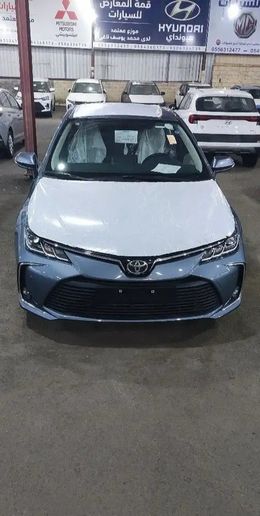

Body
Prices
Best place to buy


Toyota Corolla Sedan
7,500 - 108,815 AED
Best place to buy
Toyota Corolla Hatchback 5 dr.
24,000 - 230,000 AED
Best place to buy
Toyota Corolla Wagon 5 doors
46,776 AED
Best place to buy
3 ads
Be the first to know about new ads
Save your ad search filters, and find the ads you need faster.
1 - 3 ads
out of 3
Toyota Corolla price starts from AED 7,500 and goes up to AED 230,000. Final on-road price may vary slightly based on insurance, registration, and optional accessories.
Toyota Corolla Sedan
Best place to buy
Toyota Corolla Hatchback 5 dr.
Best place to buy
Toyota Corolla Wagon 5 doors
Best place to buy
Toyota Corolla Automatic
Best place to buy
Toyota Corolla Continuously Variable Transmission (CVT)
Best place to buy
Toyota Corolla Manual
Best place to buy
Toyota Corolla Petrol
Best place to buy
Toyota Corolla Hybrid
Best place to buy
Toyota Corolla 2007
Toyota Corolla 2002
Toyota Corolla 2026
Best place to buy
Toyota Corolla 2025
Best place to buy
Toyota Corolla 2024
Best place to buy
Toyota Corolla 2023
Best place to buy
Toyota Corolla 2022
Best place to buy
Toyota Corolla 2021
Best place to buy
Toyota Corolla 2020
Best place to buy
Toyota Corolla 2019
Best place to buy
Toyota Corolla 2018
Best place to buy
Toyota Corolla 2017
Best place to buy
Toyota Corolla 2016
Best place to buy
Toyota Corolla 2015
Best place to buy
Toyota Corolla 2014
Best place to buy
Toyota Corolla 2013
Best place to buy
Toyota Corolla 2012
Best place to buy
Toyota Corolla 2011
Best place to buy
Toyota Corolla 2010
Best place to buy
Toyota Corolla 2008
Best place to buy
Toyota Corolla 2007
Best place to buy
-Toyota Corolla 2006
Best place to buy
Toyota Corolla 2002
Best place to buy
-Toyota Corolla Sharjah
Best place to buy
Toyota Corolla Abu Dhabi
Best place to buy
Toyota Corolla Dubai
Best place to buy
Toyota Corolla Riyadh
Best place to buy
Toyota Corolla Ajman
Best place to buy
Toyota Corolla Barkā’
Best place to buy
Toyota Corolla Al Farwānīyah
Best place to buy
Toyota Corolla Ar Rifā‘
Best place to buy
Toyota Corolla ‘Ibrī
Best place to buy
Toyota Corolla Muscat
Best place to buy
Toyota Corolla Ras Al Khaimah
Best place to buy
Toyota Corolla Jeddah
Best place to buy
Toyota Corolla Dammam
Best place to buy
Toyota Corolla Al Mubarraz
Best place to buy
Toyota Corolla Sayhāt
Best place to buy
Toyota Corolla Al Buraymī
Best place to buy
Toyota Corolla Khamis Mushait
Best place to buy
Toyota Corolla Medina
Best place to buy
Toyota Corolla Alexandria
Best place to buy
Toyota Corolla Mecca
Best place to buy
The chart shows the dynamics of the model's average price on the used market over the past year. This data helps you assess whether the purchase is attractive and forecast the car's future value.
Prices on AUTO.AE may differ from the actual selling price. Data is based on our database of sold vehicles and current listings. For an accurate estimate, use our tool.

The Corolla 1.6 has a lower purchase price, while the Corolla Hybrid 1.8 deserves consideration for regular urban driving. Annual mileage, route and ownership period determine the better fit. This comparison covers UAE models for the 2026 model year: their engines and transmissions, useful test-drive checks, and the conditions under which fuel savings could recover the hybrid premium. Which engines and purchase prices are we comparing? The comparison is between the Corolla 1.6 XLI petrol and Corolla 1.8 XLI HEV. Starting prices published on toyota.ae in October 2026 are AED 76,900 for the petrol model and AED 89,900 for the Corolla Hybrid. The difference is AED 13,000. These are new-car reference prices, rather than used-car valuations or final transaction totals. The figures below come from the official 2026 specification sheets for the Corolla 1.6 and Corolla Hybrid 1.8. Published economy does not guarantee the same result in daily use. Obtain a quotation identifying the exact trim, equipment and every charge. Do not apply these sedan specifications to the Corolla Cross or a different model year. How does the hybrid work, and does it need charging? The Corolla HEV needs no charging station. Its battery receives energy from the engine through a generator and from regenerative braking during deceleration. When conditions permit, it can drive on electric power; the controls manage the contributions automatically. Toyota explains this in its hybrid system overview. Recovering braking energy is useful in traffic with frequent stops. However, the hybrid still uses petrol. Do not expect an entire urban journey on electricity or assume that the engine will switch off at every stop. Operation depends on conditions and the system's state. The power figures also need care: the 1.6 figure describes its engine, while the HEV figure covers the complete system. Do not add the engine and motor's individual maximum outputs; use the published combined rating. Matching 121 hp figures do not establish identical performance without comparable measurements. How does e-CVT differ from a conventional CVT? They are different designs, although both provide continuously variable operation. Toyota's hybrid transmission links the engine, generator and electric motor through power distribution. Its power-split principle uses a planetary mechanism, with component speeds controlled to provide stepless operation. The letter “e” represents a structural difference, rather than an extra mode for the conventional gearbox. When buying used, identify the powertrain through the VIN and documentation. An advertisement saying “automatic” is too vague for maintenance decisions. Do not transfer fluid or servicing recommendations from a petrol CVT to a hybrid e-CVT; use the schedule for that exact version. Test smooth take-off, reversing and acceleration after warm-up. Vibration, warnings or pronounced jolts need investigation. The absence of familiar gear changes alone does not demonstrate a fault; assess operation against the transmission's design. When could fuel savings recover the hybrid premium? Higher mileage and a larger actual consumption difference shorten the payback period. Use your own driving conditions. The published 18.2 and 30.3 km/l convert to approximately 5.5 and 3.3 l/100 km, but neither should be treated as a guaranteed Dubai driving budget. Consider an illustrative scenario: the petrol car uses 7 l/100 km, the hybrid uses 5 l/100 km, and fuel costs AED 3 per litre. These are calculation assumptions, not Corolla test results or the current pump price. At 30,000 km annually, fuel costs would be AED 6,300 and AED 4,500 respectively. Saving AED 1,800 a year would recover the AED 13,000 premium through fuel alone in about 7.2 years. At 50,000 km, the same assumptions produce annual savings of AED 3,000 and approximately 4.3 years to break even. If the consumption advantage were only 1 l/100 km, those periods would double. High mileage therefore helps only alongside real savings on your route. Important. This is a simple fuel-payback calculation. It excludes finance, insurance, servicing, repairs, changing fuel prices and resale value. Add those separately to compare total ownership costs. What should you check in UAE heat and on a used car? Assess the individual vehicle's condition rather than relying on its powertrain's reputation. Request service history and an independent inspection for either version. Include cooling-system condition, air-conditioning performance, leaks and operation after warm-up. A brief circuit around a parking area reveals little about suitability for daily UAE journeys. How should the hybrid battery be assessed? Ask a specialist to check hybrid-system fault codes and traction-battery condition, then provide a written report. The dashboard charge indicator cannot replace that assessment. The 2026 HEV specification identifies a lithium-ion battery; descriptions of earlier Corolla batteries should not be applied automatically. toyota.ae lists hybrid-battery coverage of eight years or 160,000 km, whichever comes first. For the specific car, confirm eligibility, the start date, remaining mileage and conditions with the seller or authorised service centre. A warranty period is not a prediction of exact battery life. What makes a test drive useful? Include urban stops and a stretch of your usual type of highway. Drive both versions with air conditioning operating and a comparable load. Assess acceleration when joining traffic, noise and braking smoothness. For family use, check rear-seat cooling after parking in the sun, rather than judging only the air at the front vents. Which Corolla suits your daily route? Start with the Corolla 1.6 if the purchase budget is tight, annual mileage is modest or ownership will be brief. Include the hybrid when urban journeys are frequent and you expect to keep it long enough to benefit from fuel savings. You can value electric take-off comfort separately; a personal preference does not require an artificially short payback claim. Before deciding, check four points: □ The model year, trim and exact powertrain have been established. □ Complete seller quotations include equipment and additional charges. □ Calculations reflect your mileage, ownership period and realistic consumption. □ A used car has inspection results and confirmed warranty conditions. Compare Corolla current offers on AUTO.AE. Match age, condition and equipment: the difference between a worn car and a well-maintained example cannot be attributed solely to engine type. Conclusion. The Corolla 1.6 reduces the initial outlay. The Corolla Hybrid offers a different urban driving experience and potential fuel savings. Choosing the hybrid becomes convincing when those advantages fit your route, ownership period and the condition of the particular car.

Toyota Corolla brake pads do not have one replacement mileage for every vehicle. Their remaining thickness, wear pattern, and lining condition determine the decision. Rotors require thickness and runout measurements plus inspection of both friction surfaces. Driving pattern, generation, rear brake layout, and a hybrid powertrain can all change service life. Before diagnosis. Confirm the VIN, production year, model code, engine, and original market. Different Corolla generations may use rear discs or drums and either a mechanical or electric parking brake. Parts and wear limits from one version must not be transferred to another without verification. 4 Signs of Toyota Corolla Brake Wear The first change may appear before a warning is shown on the dashboard. Persistent noise, vibration, or a different pedal feel must be assessed as a system because similar symptoms can originate from pads, rotors, calipers, hubs, tyres, or suspension components. Record whether the symptom occurs with cold or warm brakes, under light pressure, or only during stronger deceleration. Grinding or a persistent squeal during braking. A brief sound after washing or damp parking may disappear after several gentle stops. If it repeats, inspect both pads, the wear indicator, rotor surface, dust shield, and the area for trapped sand. Pedal pulsation or steering-wheel vibration. Repeatable vibration at the same speed can result from lateral runout, rotor thickness variation, contamination at the mounting face, or hub play. Tyre and suspension faults must also be ruled out. The vehicle pulls while slowing. Unequal braking force can be caused by a sticking caliper, contaminated friction material, a damaged hose, or different component condition on the left and right. Tyre pressure and wear are part of the same inspection. Longer pedal travel or one hot wheel. A soft pedal, overheating smell, or a clear temperature difference requires immediate diagnosis. Possible causes include a leak, air in the system, a sticking piston, or a parking brake that does not release fully. Why Looking Through the Wheel Is Not Enough The outer pad is easier to see, but the inner pad can wear faster when a slide or piston does not move freely. Wheel spokes also hide part of the rotor surface. A reliable assessment requires removing the wheel, comparing both linings, and inspecting the inner face of the rotor. A left-to-right difference can reveal binding before the vehicle begins to pull noticeably. What Happens When Replacement Is Delayed Brake components do not provide a safe reserve until the next noise appears. Once the friction material approaches its limit, the assembly can deteriorate quickly after stop-and-go driving, a mountain route, or continued use with a binding caliper. Braking becomes less predictable. Overheated or nearly exhausted friction material handles repeated stops poorly, so familiar pedal pressure no longer produces the expected response. The pad damages the rotor. When the working material is gone, the metal backing cuts grooves and rapidly raises temperature. Fitting pads without evaluating the rotors will not correct the problem. The caliper operates outside its normal range. An overextended piston places extra load on the boot and seal. Contaminated slides increase misalignment and uneven wear. The car begins to pull. Unequal performance across one axle reduces stability during emergency braking and may accelerate tyre wear. Repair costs rise. A planned pad replacement can turn into rotor replacement, caliper work, or correction of damaged hub mounting surfaces. What to Measure Before Corolla Brake Replacement Use the inspection procedure and service limits for the exact year and version. Confirm the VIN and actual brake design before dismantling. Measure thickness with suitable tools rather than judging the rotor by the visible wear lip or the appearance of one side. Mileage can determine when to inspect, but it does not prove how much service life remains. Urban driving creates more brake cycles, while limited use can expose rotors to corrosion. The final decision should reflect measurements, the type of damage, and free movement of the mechanism. Fit pads as an axle set, and assess rotors as a pair after comparing their condition so braking force remains balanced. How to Avoid Mixing Parts from Different Corollas The Corolla name covers sedans, hatchbacks, and estates from several generations, while powertrain availability varies by market. Cars built in the same year may still have different rotors, calipers, and rear brakes. Record the VIN, model code, engine, drivetrain, wheel size, and installed hardware. A photograph of a similar component is not a substitute for confirming the part number. What Causes Squeal, Vibration, and Pulling One symptom does not identify one fault. A squeal may come from surface corrosion or contamination, vibration may originate at the rotor, hub, or wheel, and pulling may involve the brakes, tyres, or suspension. Diagnosis starts by reproducing the condition and continues with measurements. When a Film on the Rotor Is Normal A thin film can develop after washing or a damp night. It normally clears evenly after several gentle stops. If patchy contact, deep pitting, a pronounced wear lip, pulsation, or persistent noise remains, inspect and measure the surface. Repeated hard braking is not a repair method. Operating Conditions That Accelerate Corolla Brake Wear Service life depends on the number of stops, temperature, and time parked. Equal mileage therefore does not mean equal condition: an urban saloon, a highway car, and a hybrid that uses regenerative braking place different demands on the friction brakes. Driving style matters as well: early, progressive slowing limits heat, while frequent hard stops raise pad and rotor temperatures more quickly. Dense urban traffic. Frequent stops increase heating cycles. Hard acceleration toward the next signal also consumes brake material without a meaningful time benefit. High temperatures and dust. Sand contaminates exposed surfaces and may restrict mechanism movement. After difficult conditions, inspect boots and slides without cooling hot rotors with a water jet. Long descents. Holding speed continuously with the pedal overheats rotors and linings. Select a suitable range early and use powertrain braking within the guidance for the exact transmission. Hybrid versions. Regenerative deceleration can reduce use of the friction brakes. Mechanical wear may fall, but short trips and humidity can leave the working surfaces less frequently cleaned, so corrosion still requires attention. Parking in damp conditions. A long period of standing can affect rotors and the rear mechanism regardless of mileage. When driving resumes, check that the wheels release evenly and that the surface film clears. What to Check on a Used Corolla Recently fitted pads do not prove that the complete system is healthy. Measure the rotors, compare inner and outer linings, and inspect caliper movement, hoses, hubs, the rear mechanism, and the parking brake. During a safe road test, assess straight-line braking, pedal feel, and vibration without attempting dangerous emergency stops. Ask about overheating and previous caliper work because new consumables may have been installed before sale without correcting the cause of earlier uneven wear. How to Plan Brake Diagnosis and Service A consistent sequence helps identify the cause before new parts are installed and reduces the risk of repeated dismantling. Record measurements for each wheel separately so both sides of an axle can be compared and the values retained for the next inspection: Describe when the symptom occurs. Record speed, temperature, weather, parking time, and the point at which noise or vibration begins. Identify the vehicle. Confirm the VIN, model code, engine, original market, and rear brake layout before ordering components. Inspect both sides of the assembly. Compare the inner and outer pads, both rotor faces, boots, and evidence of overheating. Take measurements. Check thickness at several points and measure runout correctly, then compare the result with the limit for the exact version. Correct the underlying cause. Clean mounting faces and inspect the hub, slides, piston, and hydraulic components. Verify the result after assembly. Restore a firm pedal, rule out leaks, check that the wheels rotate freely, and bed in the parts safely according to their manufacturer instructions. Common Service Mistakes Buying parts by production year alone, without confirming the VIN, original market, and actual brake equipment. Judging wear through the wheel spokes, leaving the inner pad and inner rotor face unexamined. Installing pads on unmeasured rotors, ignoring thickness, runout, cracks, and friction-surface condition. Servicing only one side of the axle, creating a difference in component condition and braking force. Treating the absence of loud noise as proof of safety, without checking pedal feel, wheel temperature, and system warnings. Conclusion Service Corolla brakes according to measurements rather than a universal mileage interval. Inspect both pads, the rotors, calipers, and the rear mechanism fitted to the exact version. Before buying, compare vehicle condition with current listings and make a brake inspection part of the selection process.

For most Toyota Corolla owners, the correct starting point is not a mileage interval but a drivetrain check. Current UAE-market Corolla sedans are front-wheel drive and have no separate rear differential. Rear-unit service applies only to selected Corolla AWD variants sold elsewhere and to certain older four-wheel-drive imports. How Do You Know Whether a Toyota Corolla Has a Serviceable Rear Differential? The Corolla name covers many generations, markets and drivetrain layouts. In a conventional front-wheel-drive car, torque does not travel to the rear wheels, so there is no rear final-drive housing filled with gear oil. The front differential is built into the transmission or transaxle and shares the fluid specified for that assembly. Some Corolla Hybrid AWD models use a separate electric drive at the rear axle. Toyota documentation may still list Rear Differential Oil for these cars, but it adds the essential qualifier if applicable. Older imported Corolla 4WD models can use a mechanical rear differential. These arrangements must not be serviced from one generic instruction. Confirm the VIN, model code and original sales market. Verify any AWD or 4WD description against factory equipment data rather than relying on an advertisement badge. Inspect the rear axle: a front-wheel-drive Corolla has neither a differential housing nor driven half-shafts at the rear wheels. Distinguish an electrified hybrid rear drive from a conventional hypoid differential connected by a propeller shaft. Match the maintenance operation to the exact model year, market and powertrain document. If a workshop proposes a rear differential oil change for a standard UAE Corolla 1.6 or 2.0, ask it to identify the component and its fill plug first. Draining CVT fluid cannot be presented as rear differential service. It is a separate operation, with a different fluid and level-setting procedure. Which Corolla Versions Have No Separate Rear Differential? A sophisticated-looking rear suspension does not prove that a differential is present. A front-wheel-drive Corolla may have a subframe and multiple links, yet the engine still drives only the front transaxle. The rear hubs rotate without drive shafts, leaving no rear gear-oil reservoir to drain or refill. Do not transfer specifications from a Corolla Cross AWD or assume that petrol and hybrid Corolla models share a drivetrain. Two cars from the same model year can have different systems when sold in different countries. For a vehicle imported from North America, Japan or another region, the VIN takes priority over a familiar trim name. An underbody inspection resolves the question quickly. A conventional mechanical rear differential connects to both wheels through half-shafts and usually to the transmission through a propeller shaft. An electrified hybrid rear unit has high-voltage connections and needs no mechanical shaft from the engine. A front-wheel-drive Corolla has neither layout. What Happens If the Wrong Unit Is Serviced—or AWD Oil Is Ignored? The mistake can go in either direction. On a front-wheel-drive Corolla, the owner may pay for an operation that the car cannot require, or a transmission-fluid service may be mislabelled. On an applicable AWD model, the opposite error is possible: a genuine rear unit may be omitted even though its condition is listed in the maintenance schedule. A universal service package can create false confidence by adding a line item that does not correspond to any component on the vehicle. Low fluid in a serviceable rear drive reduces cooling and protection for bearings, gears or electric-drive components, depending on the design. An incorrect specification can affect bearings, seals and gear contact. One bottle is not automatically suitable for every Corolla AWD system. Trying to cure every rear noise with fresh oil delays diagnosis of tyres, wheel bearings, brake shields or an electric-drive fault. When a real leak exists, driving until a loud whine develops can turn a seal repair into an expensive unit repair or replacement. After a wet patch is found, clean the area, check the level by the prescribed method and re-inspect to confirm the source. Airflow can spread fluid across the rear subframe, so a stain near the axle is not proof of differential leakage. It may come from a shock absorber, brake system or corrosion-protection treatment. Do not continue a journey with a confirmed low level, metallic noise, abnormal housing temperature or an AWD warning. A hybrid electric rear drive also requires high-voltage safety procedures. A workshop must not treat it automatically as if it were a conventional live axle. Fresh fluid cannot rebuild pitted bearing races or damaged gear teeth. If a sound developed gradually and remains after correct service, measure play and locate the source. A heavier oil might alter the tone temporarily, but it can also conceal a problem while wear continues. Which Oil Is Correct for a Toyota Corolla Rear Drive? There is no universal Corolla answer. A front-wheel-drive version needs no rear fluid. For a Hybrid AWD model or an older four-wheel-drive car, identify the exact fluid from the VIN, transmission or axle code, and market-specific service data. Do not assign API GL-5 or a popular viscosity merely because the component is described as a differential. Why the Corolla Name Alone Cannot Select the Fluid The letters AWD do not describe the internals. In an older mechanical system, oil protects hypoid gears and bearings. In an electric rear drive module, the fluid may operate around reduction gears, an electric motor and electrical insulation materials. The compatibility requirements can therefore be fundamentally different. Even two mechanical differentials can vary in ratio, materials, plugs and level-setting method. A product must match the complete required specification, not just one viscosity number. Noise-control additives should not be used unless Toyota documentation explicitly permits them. If the only available answer comes from an oil seller's application list, verify it against primary service data and the unit code. A model-year selector may group several regions together. Waiting until the assembly is identified is safer than opening it and experimenting with fluid. Checks to Complete Before Draining Anything Place the car level and provide safe access to the rear axle. Match the VIN, model code, powertrain and factory drive-system designation. Confirm that the housing actually has manufacturer-provided service plugs. Verify that the fill plug can be opened before removing a drain plug. Inspect seals, connectors, breather and subframe; follow high-voltage precautions on a hybrid. After service, check for leaks and reproduce the original noise under the same conditions. Examine drained fluid under good lighting. Fine dark paste after a long interval is different from needle-like swarf, large fragments or a bronze sheen. Interpretation still depends on the design: do not expect an electric drive to use the same magnetic drain plug as a conventional axle unless its procedure says so. For a used Corolla with an unclear history, begin with a diagnostic inspection and photograph the unit identification. When comparing model years and equipment, browsing current listings can show which versions are common locally. An advertisement is only a starting point; the individual car still needs a VIN check and underbody inspection. Why Does a Toyota Corolla Hum at the Rear—and Is Oil Always Responsible? A rear hum often makes drivers suspect a differential even though most Corollas do not have one. Structure-borne noise travels through the floor, so a front drivetrain sound or a wheel bearing can seem to come from under the rear seat. Diagnosis should track how the sound changes with speed, load, steering input and road surface. What to Check Before Authorising a Repair Record the conditions first: road speed, vehicle temperature, acceleration, coasting, and left or right steering input. Then inspect the tyres and rear hubs. On a front-wheel-drive Corolla, these are much more plausible sources of a rear hum than a differential that does not exist. On an AWD version, compare scan data with the moment when the sound appears. If the rear axle is inactive while the hum continues, the drive unit should not automatically be the leading suspect. When noise coincides with electric rear-drive engagement, check fault codes, mounts, sealing and the specified fluid procedure. For an older mechanical 4WD differential, the difference between drive and coast is useful. A whine under power may point toward the loaded tooth face, while coast noise can relate to the opposite face or bearings. These clues guide testing; they do not replace play measurement and fluid inspection. If noise began immediately after service, verify the exact fluid number, quantity, level procedure and plug sealing. If it built up over months, an oil change alone is not a diagnosis. A disciplined sequence costs less than random parts replacement and avoids dismantling a healthy component. Conclusion Current UAE-market Corolla sedans have no rear differential oil to change. For an AWD or older 4WD car, verify the system by VIN, follow its market-specific schedule, and diagnose noise before servicing.
Listings for 2020 Toyota Corolla may include these trims: Elite, Import, Style, and Comfort, among others. The current selection depends on the selected country, model year, and vehicle availability. Use the “Trim” filter to compare the available options.
Mileage should be assessed together with the vehicle’s age, condition, and service history. Compare the mileage with similar vehicles of the same model year, and check the service history and actual condition of the vehicle before buying.
Current 2020 Toyota Corolla listings on AUTO.AE are priced from 23,500 to 73,255 AED. The price depends on the model year, mileage, trim, condition, and regional specifications. These figures are based on active listings and may change.
A private seller may offer a lower price, while a showroom may provide additional services, such as financing, a warranty, or help with insurance. Terms vary, so check the information in the listing, the vehicle documents, and the seller’s details.
Check the vehicle registration card (Mulkiya), the VIN on the vehicle and in the documents, the owner’s details, the service history, and accident records. Also check for any outstanding loan, fines, or other restrictions. It is advisable to arrange an independent inspection before completing the purchase.
Yes. You can arrange an independent technical inspection with the seller at a service centre of your choice. The inspection can help assess the condition of the engine, transmission, bodywork, electronics, and other components.
GCC Specs means that the vehicle was manufactured to specifications for Gulf Cooperation Council markets. These versions are generally designed for local climate conditions. However, GCC Specs alone does not confirm the vehicle’s condition or mean that it has a valid warranty; these points should be checked separately.
Some showrooms offer financing. If available, the terms or an estimated monthly payment may be shown in the listing. The final interest rate and approval depend on the bank, the down payment, and the buyer’s details.


