
Body
Prices
Best place to buy

Nissan Altima Sedan
6,500 - 119,381 AED
Best place to buy
Car Finance
Under warranty
Swap allowed
Only with video
Only with discount
Export only
1 ad
Be the first to know about new ads
Save your ad search filters, and find the ads you need faster.
1 - 1 ad
out of 1
Nissan Altima price starts from AED 6,500 and goes up to AED 119,381. Final on-road price may vary slightly based on insurance, registration, and optional accessories.
Nissan Altima Sedan
Best place to buy
Nissan Altima Continuously Variable Transmission (CVT)
Nissan Altima Continuously Variable Transmission (CVT)
Best place to buy
Nissan Altima Petrol
Best place to buy
Nissan Altima 2026
Best place to buy
Nissan Altima 2025
Best place to buy
Nissan Altima 2024
Best place to buy
Nissan Altima 2023
Best place to buy
Nissan Altima 2022
Best place to buy
Nissan Altima 2021
Best place to buy
Nissan Altima 2020
Best place to buy
Nissan Altima 2019
Best place to buy
Nissan Altima 2018
Best place to buy
Nissan Altima 2017
Best place to buy
Nissan Altima 2016
Best place to buy
Nissan Altima 2015
Best place to buy
Nissan Altima 2014
Best place to buy
Nissan Altima 2013
Best place to buy
Nissan Altima 2012
Best place to buy
Nissan Altima 2011
Best place to buy
Nissan Altima 2010
Best place to buy
Nissan Altima 2008
Best place to buy
Nissan Altima Umm Al Quwain
Nissan Altima Sharjah
Best place to buy
Nissan Altima Ajman
Best place to buy
Nissan Altima Dubai
Best place to buy
Nissan Altima Abu Dhabi
Best place to buy
Nissan Altima Muscat
Best place to buy
Nissan Altima Al Buraymī
Best place to buy
Nissan Altima As Suwayq
Best place to buy
Nissan Altima Barkā’
Best place to buy
Nissan Altima Sohar
Best place to buy
Nissan Altima Al Khābūrah
Best place to buy
Nissan Altima Riyadh
Best place to buy
Nissan Altima Umm Al Quwain
Best place to buy
-Nissan Altima Dammam
Best place to buy
Nissan Altima Jeddah
Best place to buy
Nissan Altima Medina
Best place to buy
Nissan Altima Mecca
Best place to buy
The chart shows the dynamics of the model's average price on the used market over the past year. This data helps you assess whether the purchase is attractive and forecast the car's future value.
Prices on AUTO.AE may differ from the actual selling price. Data is based on our database of sold vehicles and current listings. For an accurate estimate, use our tool.

A Nissan Altima with a continuously variable transmission needs fluid servicing according to the schedule for that particular vehicle. There is no single interval for every generation: transmissions, fluid requirements and service conditions differ. Engine oil and conventional automatic transmission fluid are not suitable substitutes. Start with the VIN, model year and service history. If the car develops judder, delayed engagement or reduced acceleration, arrange diagnosis first. Fresh fluid cannot reverse mechanical wear or replace an investigation into the fault. Important: this article covers Altima models with a CVT. Earlier cars with other transmissions and the Altima Hybrid need separate checks. An “automatic” label in an advertisement does not identify the transmission. 5 signs that the CVT needs checking Compare the car’s behaviour under similar conditions. Tell the workshop whether the symptom occurs when cold, after warming up or in traffic. A description of the driving conditions and the exact warning message are useful. Judder during acceleration. A new, recurring vibration calls for checks of the CVT and other possible sources, including the engine, mounts and drive shafts. The sensation alone cannot establish whether a fluid change will help. Delayed engagement of D or R. If engagement takes noticeably longer than it used to, avoid applying throttle while waiting for the car to move. Note whether it happens after a long stop or every time a range is selected. Rising revs with weaker acceleration. A CVT can hold higher engine speeds during normal acceleration. A new mismatch between revs and response deserves attention, especially if accompanied by judder or a warning. An unfamiliar hum or whine. Assess a changed sound alongside vehicle speed, load and temperature. Tyres, wheel bearings and other components can also be responsible, so noise alone does not identify a transmission fault. A leak, overheating or loss of drive. Follow the vehicle’s instructions. If there is a substantial leak, a sharp deterioration in drive or a stop warning, end the journey safely and arrange an inspection. Why fresh fluid is not always the solution A Nissan bulletin for 2013–2015 Altima L33 models with the QR25 engine describes diagnosis of delayed D/R engagement even when no fault codes are stored. Software checks and inspection of CVT components may be required. Its applicability must be checked; it is not a diagnosis for every Altima. What can go wrong with fluid servicing How to establish the replacement interval Find the maintenance schedule for your vehicle and ask the workshop to confirm the applicable GCC requirements. Distinguish inspection from replacement in the CVT entry: an inspection stamp does not prove that the fluid was changed. Where both distance and time limits apply, use whichever comes first. It is not accurate to present 40,000, 60,000 or 100,000 km as a universal interval for every Altima. Ask the workshop to identify the schedule that applies to your VIN. With an unknown history, assess the transmission and agree a service plan; missing paperwork proves neither good condition nor a need for repairs. Heat and urban driving A Nissan technical bulletin covering the Altima L32 describes reduced performance when CVT temperature protection activates. It identifies overfilling, incorrect fluid and an incorrect coolant mixture as possible reasons for premature activation. Repeated loss of performance in hot weather therefore needs investigation. Tell the workshop about long periods in traffic, frequent short trips and sustained high loads. Ask whether these conditions change the schedule for your version. If an earlier preventive change is proposed, agree the reason and record the next service point. NS-2 or NS-3: identify the transmission first Sources for these examples: 2009 Altima manual (section 9-2); 2013 Altima Sedan manual (section 8-13); 2023 Altima manual (section 8-12). These illustrate specifications; they are not a universal year-based fluid selector. Do not treat NS-3 as an automatic upgrade from NS-2. Avoid mixing fluids or selecting them solely by colour or a “for Nissan” label. Filters, strainers and seals also need to match the transmission code. How to arrange CVT servicing Agree the fluid, replacement parts and service method before work starts. If the car has symptoms, ask for the diagnostic findings to be recorded before codes are cleared. Confirm whether the sump needs removal and which filtering components apply to the transmission. Quantity and replacement method Total transmission capacity and the amount required after an ordinary drain are different figures. The workshop must set the level using the procedure for the specific CVT, including the required temperature check. Simply replacing the drained quantity is insufficient if the starting level was wrong. A machine exchange or cleaning chemicals should not be prescribed solely because the car has high mileage. Choose the method according to the factory procedure and the transmission’s condition. A promise that a fluid change will cure every judder is not a sound basis for servicing. Post-service checklist ☐ The job sheet identifies the VIN and installed CVT. ☐ Initial symptoms and inspection findings are recorded. ☐ Fluid name, specification and quantity are listed. ☐ Replacement parts and completed operations are itemised. ☐ The level has been set correctly and there are no leaks. ☐ Operation has been checked and any remaining issues noted. ☐ Date, mileage and the next service plan are recorded. Mistakes to avoid • Copying another Altima’s interval without checking applicability. • Using conventional ATF instead of the specified CVT fluid. • Treating fluid colour as proof of suitability or remaining life. • Adding treatments or resetting settings without a valid reason. • Expecting fresh fluid to restore worn components. Conclusion Start Nissan Altima CVT servicing by identifying the transmission, its fluid specification and maintenance schedule. A documented history, the correct fluid and an accurately set level matter more than a universal mileage recommendation. New symptoms call for diagnosis before selecting a service method. When browsing current listings, ask for CVT fluid service records. The date, mileage, specification and work carried out help you assess the history of an Altima you are considering.

Coolant replacement in a Nissan Altima should follow the schedule for the specific version, accounting for time and mileage since the previous change. If coolant is disappearing, contaminated or the engine is overheating, establish the cause first. Fresh fluid cannot repair a failed fan, a leak or a circulation fault. At a glance. Identify your Altima’s model year, engine and applicable schedule. Find the last replacement record, select a suitable product and agree on checks after filling. Topping up to the mark is not a complete coolant change. Establishing the replacement interval Nissan’s regional guidance gives a general periodic maintenance interval of 10,000 km or six months, whichever comes first. This is the service interval, not an instruction to replace coolant at every visit. Coolant replacement needs its own entry in the schedule for your vehicle. Information the workshop needs Provide the VIN, model year and engine details. Ask for confirmation of the initial and subsequent replacement intervals if the schedule distinguishes them. The recommendation should state the next replacement date or mileage and explain how it was calculated. The Nissan service page selects recommendations by model, year, engine and time or mileage. If your vehicle details are not available, request the information from a service advisor. The owner’s manual and maintenance schedule must match your particular Altima. Why engine displacement alone is insufficient For the 2023 Altima, Nissan describes 2.5-litre and 2.0 VC-Turbo powertrains. Advice labelled “for any Altima” therefore needs its applicability checked. The model year, engine and specification matter when selecting coolant and establishing filling quantities. Do not automatically transfer another version’s data. Dealing with an unknown service history Check the invoices for the date, mileage, material and operation performed. “Cooling system checked” confirms an inspection, not a coolant replacement. A receipt for one container does not explain how much fluid was drained or what remained in the system. If the previous owner replaced the radiator, pump or hoses, establish what was used to refill the system afterwards. Where records are missing, agree on an assessment and the necessary work. Do not start a new replacement interval from the purchase date without a documented coolant change. When considering a used Altima, compare current offers alongside the maintenance history. Low mileage does not establish coolant age, and a statement that “all consumables were replaced” needs an itemised explanation. Choosing coolant Ask the workshop to name the exact suitable product and confirm its applicability to your engine. Establish whether it is ready to use or requires dilution. Keeping a photograph of the label with the service records will help at the next visit. Colour and concentration GLYSANTIN explains that colour cannot identify coolant chemistry and mixing different formulations can impair protection. Do not select a product solely by matching the colour in the reservoir. Follow the product instructions for ready-mixed coolant. Concentrate requires the specified ratio and suitable water quality. Do not make the mixture stronger “for summer” or dilute a premixed product by guesswork. If the previous fill is unknown, agree on a procedure for restoring the correct coolant. Why clear fluid does not prove serviceability Corrosion inhibitors gradually lose effectiveness even when the fluid looks normal. Appearance can reveal contamination but cannot replace scheduled maintenance. The product name, replacement date and mileage provide a better basis for planning the next service. Symptoms that need diagnosis Watch for a repeatedly falling level, leak traces and changes in engine temperature. Note the circumstances: traffic, highway driving, idling while parked or recent repairs. This describes the problem more accurately than saying that the engine “sometimes runs hot”. Overheating in urban driving HELLA’s diagnostic guidance covers temperature reading accuracy, the fan, airflow through heat exchangers, the thermostat and pump. Replacing coolant without checking these possible causes may leave the problem unresolved. Ask for the inspection findings before buying a radiator or fan. Dirt on a heat exchanger’s outer surface and deposits inside the system require different actions. Vehicle age alone does not establish that every component needs replacing. Checking the level safely Check on level ground after the engine has fully cooled, using the marks and procedure in your version’s manual. If the reservoir is empty, do not simply top it up and resume normal driving: agree on the next steps with the workshop. Repeated coolant loss needs an explanation. Important. Never open a hot cooling system: pressurised liquid and steam can cause burns. If an overheating warning appears, stop safely and follow the vehicle instructions. Do not continue driving when it is unsafe. What a proper replacement includes Agree on the work before servicing starts. The job sheet should identify the material, scope of the operation and additional checks. If the workshop recommends flushing, ask why it is needed and which method will be used. Cleaning and filling the system HELLA’s technical guidance explains that contamination needs suitable cleaning and trapped air can impair circulation. System operation and leak-tightness need checking after filling. Follow the vehicle documentation when choosing the procedure. If an oily film or sediment is found, establish its source first. Adding sealant should not replace diagnosis. Ask how the workshop will confirm the result and whether another check is needed after the engine cools. Fluid quantity and service cost Check filling quantities for the exact engine. Total system capacity and the amount required by a particular replacement method are different figures: some previous fluid may remain inside. Request the actual material quantity on the invoice. Compare quotations against the same list of operations. Diagnosis, leak repair and cleaning should not be hidden beneath the single description “coolant replacement”. An itemised quotation makes it easier to understand the charge and which faults the work addresses. Checks after servicing ☐ The correct VIN and engine are recorded. ☐ The full coolant product name is listed. ☐ Completed operations and materials are itemised. ☐ The workshop has confirmed its final system checks. ☐ The replacement date and mileage are saved. ☐ The next service due date is agreed. If the level keeps falling or a warning returns, contact the workshop with the invoice. Explain when the symptom appeared and how long it has been since servicing. Another top-up without an explanation does not complete the diagnosis. Conclusion For a Nissan Altima, coolant replacement timing should follow the applicable schedule and documented history. Keep the product details, investigate leaks and agree on the work in advance. This helps you maintain the system on time and assess the replacement through specific checks.

Brake fluid needs attention in a Nissan Altima even when the car is driven gently around town. It transfers force through the hydraulic system and gradually deteriorates with age. Maintenance planning must account for both elapsed time and mileage. A familiar pedal feel or clear-looking fluid in the reservoir does not establish that replacement can safely be postponed. Applicability. The figures below come from the regional Nissan maintenance schedule. Match it to your Altima’s VIN, model year and documentation. Confirm the fluid specification and replacement procedure separately for the exact vehicle. When the brakes need checking Scheduled replacement should take place before symptoms appear. If braking behaviour has changed, the first task is to identify the fault. Arrange an inspection if you notice any of these signs: The pedal feels noticeably softer or needs more travel to slow the car. The pedal continues to sink slowly while steady pressure is applied. Braking performance decreases after repeated stops. The brake warning remains on after the parking brake is released. The fluid level falls, or there are signs of leakage around hoses, connections or wheels. If braking performance is lost. Stop safely and arrange recovery. With a leak or a sinking pedal, do not continue driving merely to reach a scheduled fluid change: the cause must first be diagnosed and repaired. Why replace fluid when the brakes still work Glycol-based brake fluid absorbs moisture. As water accumulates, the fluid’s boiling point falls. Under high thermal loads, this reduces the margin against vapour formation. Unlike liquid, vapour compresses readily, making the hydraulic transmission of pedal force less effective. An everyday commute may not expose the problem for a long time. Repeated hard stops or an extended descent place different demands on the system. Waiting for such a situation is a poor way to judge fluid condition: scheduled replacement is preventive maintenance. Fluid colour and reservoir level answer different questions. A normal level says nothing about age, while darkening cannot establish the exact moisture content. A suitable diagnostic test adds information to the service history, but does not cancel a mandatory replacement deadline in the vehicle’s documentation. Which interval applies to the Altima The regional Nissan maintenance schedule gives a reference interval of 40,000 km or 24 months for passenger vehicles under normal conditions, whichever comes first. For high humidity or mountainous use, it specifies 20,000 km or 12 months. Check these figures against the service documentation for the exact Altima before applying them. Count from the last confirmed complete fluid change, rather than the most recent routine service. A record of topping up or replacing pads does not establish when the fluid was renewed throughout the system. If a recently purchased car has no supporting records, arrange an inspection and the necessary maintenance. Choosing the right brake fluid Find the exact specification in your Altima’s manual and cross-check the reservoir information. Do not select a product by model name alone: the year, generation and vehicle specification matter. If the documentation calls for DOT 3, that requirement should be explicitly included in the chosen product’s specifications. A higher DOT number is not, by itself, proof of a suitable substitute. In particular, silicone DOT 5 must not be confused with glycol-based fluids. Use fresh fluid from a sealed container; a bottle opened long ago may already have absorbed moisture. Agree the purchase quantity with the workshop for a complete exchange. Urban use and humid conditions For an Altima, how the distance is covered matters alongside the odometer reading. Long periods parked between short journeys do not stop time-related fluid ageing. Frequent slowing in traffic increases the workload on the brake hardware, so its condition should be assessed together with the hydraulic system. When a shorter interval is needed The cited Nissan schedule identifies high humidity or mountainous driving as reasons for more frequent brake fluid replacement. If the car is kept near the coast, discuss this when selecting the applicable schedule. Summer heat alone should not be used to invent one shorter interval for every vehicle. Before a long trip, check how close the next fluid change is and have any brake concerns assessed. If replacement is already due, complete it before departure. Unusual pedal travel, a leak or a dashboard warning requires diagnosis regardless of the next routine service date. Differences between Altima generations Do not automatically apply the same workshop instructions to an Altima L33 and L34. The bleeding sequence and any diagnostic equipment requirements depend on the installed system. Tell the workshop about previous caliper, hose or hydraulic unit repairs, particularly if pedal symptoms appeared afterwards. What a complete replacement includes Refreshing the reservoir alone leaves old fluid in the lines and brake mechanisms. A complete workshop service should cover the following stages: Identify the VIN, model year, required fluid specification and procedure for the installed brake system. Inspect the reservoir, pipes, hoses and connections, check for leaks and investigate any reported symptoms. Clean the working area, protect painted surfaces and prepare the equipment according to the workshop instructions. Exchange the fluid through the circuits and remove air in the specified sequence without allowing the reservoir to run dry. Check the fluid level, connections, pedal operation and brake function, completing the prescribed final checks. Record the date, mileage, fluid used and completed work on the invoice, then establish the next service deadline. Topping up is different from replacement The level can change gradually as pads wear, but a rapid or recurring drop needs investigation. Filling to the maximum mark without assessing the brakes is inappropriate. If there is a leak, repair it first and restore the system according to the instructions. A scheduled fluid exchange cannot substitute for that repair. Checks before buying a used Altima When browsing current listings for the Nissan Altima, ask the seller for brake maintenance records. Even a well-presented car with low mileage may need a time-based fluid change. ☐ Compare the last complete exchange date and mileage with the current service deadline. ☐ Look for an identified fluid product on the invoice rather than only “brakes serviced”. ☐ Ask about hydraulic repairs and any history of a soft brake pedal. ☐ Arrange an inspection of pads, discs, calipers, hoses and connections. ☐ If the history is unknown, include inspection and any necessary fluid replacement in the first-service budget. Mistakes that delay proper maintenance Following mileage alone while ignoring elapsed months. Treating clear-looking fluid as proof that it remains serviceable. Confusing topping up or pad replacement with a complete fluid exchange. Mixing products without checking the required specification. Trying to fix a sinking pedal with a routine fluid change alone. Conclusion For a Nissan Altima, establish the brake fluid deadline from the applicable schedule, accounting for time, mileage and driving conditions. The correct product and a complete exchange with system checks matter more than how the fluid looks in the reservoir. Keep invoices so the next service is based on a confirmed date, and have any change in braking behaviour diagnosed without waiting for scheduled maintenance.
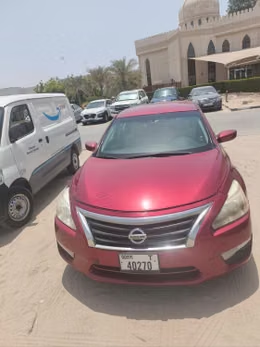
Listings for 2015 Nissan Altima may include these trims: XE, XL, XL-TLS, and XL-Upr, among others. The current selection depends on the selected country, model year, and vehicle availability. Use the “Trim” filter to compare the available options.
Mileage should be assessed together with the vehicle’s age, condition, and service history. Compare the mileage with similar vehicles of the same model year, and check the service history and actual condition of the vehicle before buying.
Current 2015 Nissan Altima listings on AUTO.AE are priced from 8,000 to 22,000 AED. The price depends on the model year, mileage, trim, condition, and regional specifications. These figures are based on active listings and may change.
A private seller may offer a lower price, while a showroom may provide additional services, such as financing, a warranty, or help with insurance. Terms vary, so check the information in the listing, the vehicle documents, and the seller’s details.
Check the vehicle registration card (Mulkiya), the VIN on the vehicle and in the documents, the owner’s details, the service history, and accident records. Also check for any outstanding loan, fines, or other restrictions. It is advisable to arrange an independent inspection before completing the purchase.
Yes. You can arrange an independent technical inspection with the seller at a service centre of your choice. The inspection can help assess the condition of the engine, transmission, bodywork, electronics, and other components.
GCC Specs means that the vehicle was manufactured to specifications for Gulf Cooperation Council markets. These versions are generally designed for local climate conditions. However, GCC Specs alone does not confirm the vehicle’s condition or mean that it has a valid warranty; these points should be checked separately.
Some showrooms offer financing. If available, the terms or an estimated monthly payment may be shown in the listing. The final interest rate and approval depend on the bank, the down payment, and the buyer’s details.


