Nissan Altima: when to change brake fluid
Nissan Altima
Nissan Altima•
•63 views
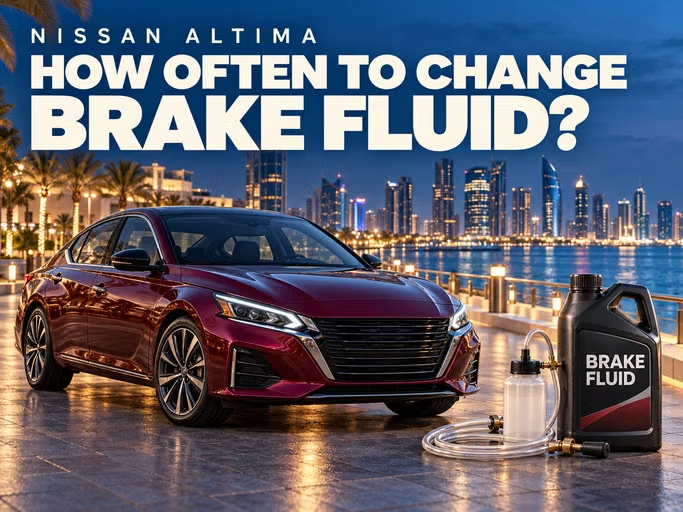
Brake fluid needs attention in a Nissan Altima even when the car is driven gently around town. It transfers force through the hydraulic system and gradually deteriorates with age. Maintenance planning must account for both elapsed time and mileage. A familiar pedal feel or clear-looking fluid in the reservoir does not establish that replacement can safely be postponed.
When the brakes need checking
Scheduled replacement should take place before symptoms appear. If braking behaviour has changed, the first task is to identify the fault. Arrange an inspection if you notice any of these signs:
- The pedal feels noticeably softer or needs more travel to slow the car.
- The pedal continues to sink slowly while steady pressure is applied.
- Braking performance decreases after repeated stops.
- The brake warning remains on after the parking brake is released.
- The fluid level falls, or there are signs of leakage around hoses, connections or wheels.
Why replace fluid when the brakes still work
Glycol-based brake fluid absorbs moisture. As water accumulates, the fluid’s boiling point falls. Under high thermal loads, this reduces the margin against vapour formation. Unlike liquid, vapour compresses readily, making the hydraulic transmission of pedal force less effective.
An everyday commute may not expose the problem for a long time. Repeated hard stops or an extended descent place different demands on the system. Waiting for such a situation is a poor way to judge fluid condition: scheduled replacement is preventive maintenance.
Fluid colour and reservoir level answer different questions. A normal level says nothing about age, while darkening cannot establish the exact moisture content. A suitable diagnostic test adds information to the service history, but does not cancel a mandatory replacement deadline in the vehicle’s documentation.
Which interval applies to the Altima
The regional Nissan maintenance schedule gives a reference interval of 40,000 km or 24 months for passenger vehicles under normal conditions, whichever comes first. For high humidity or mountainous use, it specifies 20,000 km or 12 months. Check these figures against the service documentation for the exact Altima before applying them.
Count from the last confirmed complete fluid change, rather than the most recent routine service. A record of topping up or replacing pads does not establish when the fluid was renewed throughout the system. If a recently purchased car has no supporting records, arrange an inspection and the necessary maintenance.
| Item | Reference | What to check |
|---|---|---|
| Normal conditions | 40,000 km / 24 months | Whichever comes first; schedule applicability. |
| Humidity or mountains | 20,000 km / 12 months | Driving conditions and Altima documentation. |
| Fluid type | Vehicle manual requirement | The product specification before filling. |
| Quantity | Complete fluid exchange | The procedure and any associated repairs. |
Choosing the right brake fluid
Find the exact specification in your Altima’s manual and cross-check the reservoir information. Do not select a product by model name alone: the year, generation and vehicle specification matter. If the documentation calls for DOT 3, that requirement should be explicitly included in the chosen product’s specifications.
A higher DOT number is not, by itself, proof of a suitable substitute. In particular, silicone DOT 5 must not be confused with glycol-based fluids. Use fresh fluid from a sealed container; a bottle opened long ago may already have absorbed moisture. Agree the purchase quantity with the workshop for a complete exchange.
Urban use and humid conditions
For an Altima, how the distance is covered matters alongside the odometer reading. Long periods parked between short journeys do not stop time-related fluid ageing. Frequent slowing in traffic increases the workload on the brake hardware, so its condition should be assessed together with the hydraulic system.
When a shorter interval is needed
The cited Nissan schedule identifies high humidity or mountainous driving as reasons for more frequent brake fluid replacement. If the car is kept near the coast, discuss this when selecting the applicable schedule. Summer heat alone should not be used to invent one shorter interval for every vehicle.
Before a long trip, check how close the next fluid change is and have any brake concerns assessed. If replacement is already due, complete it before departure. Unusual pedal travel, a leak or a dashboard warning requires diagnosis regardless of the next routine service date.
Differences between Altima generations
Do not automatically apply the same workshop instructions to an Altima L33 and L34. The bleeding sequence and any diagnostic equipment requirements depend on the installed system. Tell the workshop about previous caliper, hose or hydraulic unit repairs, particularly if pedal symptoms appeared afterwards.
What a complete replacement includes
Refreshing the reservoir alone leaves old fluid in the lines and brake mechanisms. A complete workshop service should cover the following stages:
- Identify the VIN, model year, required fluid specification and procedure for the installed brake system.
- Inspect the reservoir, pipes, hoses and connections, check for leaks and investigate any reported symptoms.
- Clean the working area, protect painted surfaces and prepare the equipment according to the workshop instructions.
- Exchange the fluid through the circuits and remove air in the specified sequence without allowing the reservoir to run dry.
- Check the fluid level, connections, pedal operation and brake function, completing the prescribed final checks.
- Record the date, mileage, fluid used and completed work on the invoice, then establish the next service deadline.
Topping up is different from replacement
The level can change gradually as pads wear, but a rapid or recurring drop needs investigation. Filling to the maximum mark without assessing the brakes is inappropriate. If there is a leak, repair it first and restore the system according to the instructions. A scheduled fluid exchange cannot substitute for that repair.
Checks before buying a used Altima
When browsing current listings for the Nissan Altima, ask the seller for brake maintenance records. Even a well-presented car with low mileage may need a time-based fluid change.
☐ Compare the last complete exchange date and mileage with the current service deadline.
☐ Look for an identified fluid product on the invoice rather than only “brakes serviced”.
☐ Ask about hydraulic repairs and any history of a soft brake pedal.
☐ Arrange an inspection of pads, discs, calipers, hoses and connections.
☐ If the history is unknown, include inspection and any necessary fluid replacement in the first-service budget.
Mistakes that delay proper maintenance
- Following mileage alone while ignoring elapsed months.
- Treating clear-looking fluid as proof that it remains serviceable.
- Confusing topping up or pad replacement with a complete fluid exchange.
- Mixing products without checking the required specification.
- Trying to fix a sinking pedal with a routine fluid change alone.
Conclusion
For a Nissan Altima, establish the brake fluid deadline from the applicable schedule, accounting for time, mileage and driving conditions. The correct product and a complete exchange with system checks matter more than how the fluid looks in the reservoir. Keep invoices so the next service is based on a confirmed date, and have any change in braking behaviour diagnosed without waiting for scheduled maintenance.