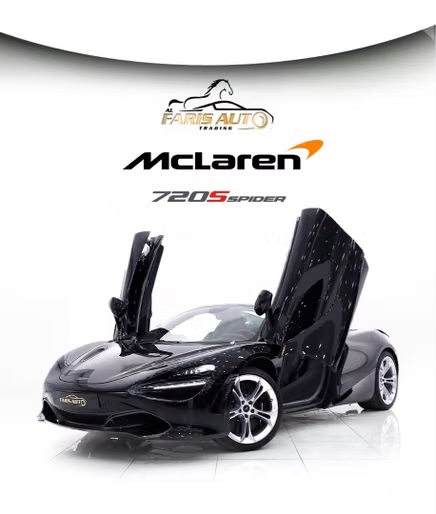
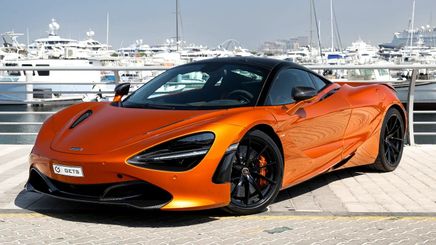
Цена McLaren 720S в ОАЭ составляет 575 000 AED за версию 4.0 720 л.с. Цены одинаковы по всем регионам ОАЭ, включая Дубай, Абу-Даби, Шарджу и другие города. Итоговая стоимость на дороге может незначительно отличаться в зависимости от страховки, регистрации и дополнительных опций.
Цены в объявлениях на AUTO.AE не всегда совпадают с фактической ценой продажи
Цены на AUTO.AE могут отличаться от фактической стоимости продажи. Данные основаны на нашей базе проданных автомобилей и актуальных объявлениях. Для точной оценки воспользуйтесь нашим инструментом.
Плюсы и минусы McLaren 720S
Общий рейтинг
2 отзыва
5
Внешний вид5
Комфорт5
Безопасность5
Ходовые качества5
Надёжность5
Авторы чаще выделяют
Плюсы
Управляемость, Внешний вид, Динамика, Качество сборки
720S я брала в аренду всего на два дня, но этого хватило, чтобы влюбиться и испугаться одновременно. Машина невероятно быстрая, и даже лёгкое нажатие на газ превращает дорогу в аттракцион. В городе это скорее испытание: посадка низкая, клиренс минимальный, каждый бордюр и каждая парковка требуют внимания. Но когда выезжаешь вечером на свободную трассу, всё это забывается — разгон, звук, ощущения в поворотах невозможно сравнить с чем-то ещё.
Стоит только нажать кнопку запуска, и сердце уже бьётся быстрее. Сидишь очень низко, будто прямо на асфальте, и первое время даже непривычно видеть дорогу с такой перспективы. Когда убираешь крышу, ощущения усиливаются: звук мотора сзади заполняет всё вокруг, и простая поездка по городу превращается в событие. Внимание к машине огромное, иногда это напрягает, но чаще улыбаешься от реакции людей. Внутри просторно для суперкара, хотя багажник можно назвать символическим. Управляемость невероятная: любое движение рулём чувствуется сразу, а повороты проходят так легко, что кажется, будто машина предугадывает мысли. На длинных прямых разгон ошеломляющий, и каждый раз ловлю себя на том, что не хочу, чтобы дорога заканчивалась. Это авто, которое даёт эмоции и ощущение праздника, даже если едешь всего несколько километров.
McLaren 720S Spider: What 120 Fault Codes Revealed About a Modified Supercar
A real diagnostic case involving modified ECU software, engine misfires and transmission problems. A 2019 McLaren 720S Spider with 49,357 km arrived at DEIZ GARAGE in Dubai with multiple dashboard warnings and several aftermarket modifications. The vehicle had modified downpipes, intake and exhaust components, and a third-party ECU calibration featuring a pops-and-bangs function. An initial diagnostic scan revealed 120 active and historical fault codes. A separate mechanical inspection identified 16 groups of findings involving the engine, transmission, brakes, suspension and electrical systems. The challenge was to distinguish genuine component faults from secondary electronic warnings and determine how the modified software affected vehicle operation. Why Modified McLaren 720S Cars Require Careful Diagnosis The McLaren 720S is powered by a 4.0-litre twin-turbocharged V8 producing 720 PS and 770 Nm, paired with a seven-speed dual-clutch transmission. Its engine, gearbox and electronic stability systems rely on communication between multiple control modules. When engine software is modified, the original factory calibration no longer provides a complete description of how the vehicle operates. In this case, technicians identified three concerns in the installed ECU software. The ignition timing had been modified, potentially affecting combustion behaviour under load. Knock-sensor processing had also been altered or filtered, raising questions about the engine’s protective responses. Finally, the pops-and-bangs overrun function could increase exhaust temperatures and thermal stress. These findings required investigation but did not establish engine damage. The existing ECU calibration was reviewed and replaced with a single new calibration. However, the aftermarket hardware remained, so the car was not fully returned to factory specification. The available records do not confirm whether all original engine-protection strategies were restored. What the 120 Fault Codes Revealed An Autel MaxiSys MS919 diagnostic scan identified 120 active and historical fault codes across 15 of the vehicle’s 19 control modules. The engine ECU recorded 17 faults, including historical misfires and communication errors. The transmission contained five codes related to input-shaft speed information and clutch temperature. The stability-control system reported 14 faults, while the display modules recorded 26 entries, primarily involving network communication. Body and security systems contained 19 faults. Door modules recorded another 14, parking systems 12, and other vehicle systems 13. More than half of the recorded faults involved communication between electronic modules. This is an important distinction: 120 diagnostic codes do not necessarily indicate 120 independent component failures. One missing engine or transmission message can trigger warnings across several systems that depend on the same information. Key Diagnostic Findings Historical engine misfires were recorded under code P030000, with additional faults P030500, P030600 and P030800identifying cylinders 5, 6 and 8. Transmission codes P2766 and P276564 indicated a problem with the second input-shaft speed signal. The scan also recorded historical clutch overheating under P278700, while active electrical faults included B120296 for the battery sensor and B130701 for the right-door latch. These codes provided diagnostic direction but did not automatically establish which individual components had failed. Engine Misfires and ECU Calibration The inspection identified worn spark plugs, and replacement of all eight was included in the work plan. However, the available repair records do not confirm that the spark-plug replacement was completed. Possible causes of misfires on a twin-turbocharged engine include ignition problems, fuel-delivery irregularities, intake leaks and boost-control faults. McLaren technical guidance identifies intake-system sealing and boost-control checks as relevant diagnostic procedures for this model. For this vehicle, the records did not establish one definitive cause of the historical misfires. The modified ECU software added another consideration. Changes to ignition timing and knock-sensor processing can influence engine behaviour and the control system’s response to abnormal combustion. The workshop therefore reviewed the existing calibration and installed one replacement configuration. This was confirmed work, but the available evidence does not establish that every original protection function was restored or that all historical misfires were permanently resolved. Transmission Faults and Speed-Sensor Replacement The McLaren exhibited intermittent difficulty engaging reverse gear and abnormal transmission behaviour. Diagnostic codes P2766 and P276564 pointed towards the second input-shaft speed signal. The seven-speed dual-clutch transmission depends on accurate shaft-speed information to coordinate gear selection and clutch operation. Following investigation, the transmission speed sensor was replaced. The vehicle subsequently passed its final checks. The scan also contained a historical clutch overheating fault. McLaren’s technical guidance describes protective torque reduction above 105°C and additional intervention above 110°C under specified conditions. These are manufacturer thresholds, not temperatures measured during this diagnostic case. The available records did not establish an internal clutch failure or confirm a specific cooling-system defect. What the Mechanical Inspection Found The inspection identified 16 groups of findings across eight vehicle areas. Brake-related issues included worn pads and a low brake-fluid level. The wheels and tyres showed cracking and damage, while the steering system had rack leakage and component play. Suspension findings included worn arms, bushes, joints and dampers. Engine-related observations involved oil leaks, a possible oil-separator issue, dirty filters and worn spark plugs. Additional findings concerned damaged exterior and carbon-fibre components, passenger-classification fault history and CAN/LIN communication problems. These were inspection findings, not confirmed completed repairs. The available records do not establish that every identified issue was corrected during this visit. Final Results The confirmed work included reviewing the ECU software, installing one replacement calibration, investigating engine and transmission faults, and replacing the transmission speed sensor. An engine warning appeared during an intermediate road test, requiring further attention before completion. The McLaren subsequently passed its final checks. However, no complete post-repair diagnostic scan or final dynamometer report was available. Therefore, it would be inaccurate to claim that all 120 fault codes were permanently resolved or that the vehicle achieved a specific power increase. The confirmed result was completion of the documented software and transmission work, followed by successful final verification. What McLaren Owners Can Learn Modern supercars rely on interconnected electronic systems, which means a single communication problem can produce warnings across several modules. For modified vehicles, the installed ECU calibration and aftermarket hardware must also be considered when interpreting diagnostic results. Transmission symptoms require similar care. An input-shaft speed-signal fault can affect gear selection without automatically establishing internal gearbox damage. The most important distinction is between faults identified, repairs recommended, work completed and results verified. FAQ Why can a McLaren 720S show so many fault codes? Communication problems can generate warnings across several electronic systems. The 120 codes recorded in this case did not establish 120 separate component failures. What caused the engine misfires? Historical misfires affected cylinders 5, 6 and 8. Ignition, fuel supply and intake-system faults were possible explanations, but no definitive cause was established. What transmission repair was completed? The transmission speed sensor was replaced following investigation of input-shaft speed-signal faults and intermittent reverse-gear problems. Was the McLaren returned to factory specification? No. A replacement ECU calibration was installed, but the aftermarket intake and exhaust components remained. Were all 120 errors cleared? The vehicle passed its final checks, but no complete post-repair scan was available to confirm the permanent resolution of every recorded fault. Conclusion This McLaren 720S Spider arrived with extensive electronic fault history, modified engine software and transmission problems. The investigation identified concerns involving ECU calibration, historical misfires and input-shaft speed monitoring. After software work and replacement of the transmission speed sensor, the vehicle successfully completed its final checks. The key lesson is that diagnosing a modified supercar requires separating real mechanical faults from secondary electronic warnings and confirming which repairs were actually completed. Case information: DEIZ GARAGE, Dubai. Vehicle: 2019 McLaren 720S Spider, 49,357 km.
Покупка
McLaren Sabre, 2020
Chassis No.: SBMBC3CA5LW000011 Auction: Monterey 2022 Auction date: August 20, 2022 Lot No.: S63 $3,500,000 | High bid • Exterior: Argentum/Papaya • Interior: Volcano Orange/Black • 100 miles since new • No. 11 of 15 produced by McLaren Special Operations • The most powerful non-hybrid road car McLaren has built to date • Designed and homologated for the U.S. only • Top speed of 218 MPH • Twin turbocharged 4.0L/824 HP V-8 engine • Stealth Inconel exhaust • Rated at 590 lb-ft of torque • Gorilla Glass engine cover • 7-speed dual clutch transmission • Carbon fiber body • Liquid Argentum with Gloss VCF and Liquid Papaya pinstripes • Interwoven visual carbon fiber graphics on side blades • Carbon fiber monocage chassis • Volcano Orange brake calipers with Black McLaren logo • Volcano Orange driver’s seat and Carbon Black passenger seat • Liquid Papaya seat shell pinstripes • Contrasting MSO logos embroidered on headrests • Visual satin carbon fiber interior accents • Brushed Azores air vent bezels, steering wheel paddles, central screen bezel, door strut and release • Diamond-milled 7-spoke wheels in Gloss Black • Liquid Argentum center-lock nuts • Car cover The almost otherworldly McLaren Sabre launched in late 2020 as the most powerful non-hybrid road car produced by the engineering wizards at McLaren to date. One of just 15 produced, yet in fact a truly individual creation built precisely to the specifications of its original owner, this 2020 McLaren Sabre was, and remains, a true “instant icon” that will likely never be duplicated. Not only is it the ultimate McLaren road car, it also quite likely represents the most direct application of race-winning technologies and engineering prowess ever applied to the road, with amazingly purposeful styling and surprising luxury to boot. Based on the foundation of the stunningly fast, track-focused Senna before it, the Sabre takes the hypercar concept to new extremes with its twin-turbocharged 4.0L V-8 powerplant factory-rated at 824 HP—165 more than the Senna and 20 more than even the Elva roadster. However, despite its massive power output, the Sabre is primarily a road car with obvious track capabilities and a somewhat more compliant, road-worthy ride, yet with no performance compromises. In fact, the Sabre holds the distinction of being capable of 218 MPH flat out, one MPH faster than the Senna. Consistent with the exclusive McLaren Special Operations ethos, the Sabre is incredibly rare, with just 15 examples produced in total. Homologation was strictly for the specific requirements of the U.S. market, and when the Sabre was first announced to the public, McLaren advised that all 15 cars were already allocated to the company’s most ardent U.S.-based clients. First sightings of the new Sabre came in the fall of 2020 at California’s private Thermal Club track, where buyers enjoyed the opportunity to drive a wildly camouflaged Sabre development car, with tantalizing images of the new McLaren published throughout the motoring press. Most importantly, these test sessions afforded prospective buyers the almost-unheard of opportunity to give direct feedback from their experience via dedicated video chats with McLaren’s design and engineering teams at the company’s Woking, UK, headquarters, ensuring the Sabre would reflect its buyers’ specific needs and desires. In fact, each of the 15 Sabres features optional paint, trim and interior combinations, with each car built specifically for its new owner. The Sabre’s dramatic body design perfectly matches its lethal, cavalry sword-inspired name, with the stunning new McLaren featuring upright, blade-type front and rear fender extensions, fully skirted doors and rockers, and an upward-sweeping side treatment terminated by upright LED tail lights, a full-width rear wing, and rear air diffusers. Sharing its essential carbon fiber monocage chassis structure with the Senna, the Sabre also features the company’s signature, upward-swinging doors and clamshell-type front and rear hatches evocative of Le Mans-worthy endurance racers. As McLaren’s widest model, the Sabre was aptly described by Car and Driver magazine editors “… with a body that appears to be shrink-wrapped over the mechanical components.” According to a July 2021 interview conducted by Car and Driver with Neil Underwood, MSO's global sales manager, “Sabre was designed with a brief to be a show car for the road.” Continuing, he stated, “Customers wanted the car to look like it arrived from space. I think we delivered.” One of the just 15 Sabres built, this compelling specimen is car No. 11 of the incredibly limited production run by McLaren Special Operations (MSO) and shows just 100 miles. Lurking beneath the Sabre’s Corning Gorilla Glass engine cover is McLaren’s famed proprietary 3.8L V-8 engine, delivering an astounding, factory-rated 824 HP with twin turbochargers, twin intercoolers, DOHC 32-valve architecture, electronic fuel injection and a space-age Stealth Inconel exhaust system. Torque output is factory-rated at 590 lb-ft for incredible response in concert with the Sabre’s race-derived, 7-speed, dual-clutch transmission. The Sabre’s electrifying carbon fiber body is handsomely finished in Liquid Argentum paint, accented by Gloss VCF and Liquid Papaya pinstripes plus interwoven visual carbon fiber graphics to the lower bodyside blades. The driver-focused, yet deceptively luxurious interior of the Sabre is a visual treat with a Volcano Orange driver’s seat and Carbon Black passenger seat, accented by Liquid Papaya contrast pinstripes to the seat shells and contrasting McLaren MSO logos embroidered on the headrests. Visual satin carbon fiber interior accents are handsomely complemented by brushed Azores air vent bezels, steering wheel shift paddles and the central touch-screen screen bezel, down to the door struts and release actuators. Volcano Orange brake calipers proudly carry the Black McLaren marque logo and reside behind stunning, diamond-milled, 7-spoke wheels finished in Gloss Black and fitted with Liquid Argentum center-lock nuts. https://www.mecum.com/lots/520633/2020-mclaren-sabre/
Покупка
McLaren 720S, 2018
Chassis No.: SBM14DCA2JW001080 Auction: Monterey 2023 Auction date: August 19, 2023 Lot No.: F186 $220,000 | Sold • Odometer: 12,768 miles • Engine: V-8 • Transmission: Automatic • Exterior: Onyx Black • Interior: Jet Black • 12,768 miles • Dihedral butterfly doors • 4.0L/710 HP twin-turbocharged V-8 engine • Automatic transmission • Onyx Black exterior • Jet Black Alcantara interior • Bucket seats Succeeding the 650S, the McLaren 720S debuted at the 2017 Geneva Salon as the second offering in its maker’s Super Series. Built from a competition-type central tub structure based on that of the P1 hypercar, the 720S nonetheless marked a nearly complete departure from its predecessor on several key levels in terms of its design and components. Powering the 720S is McLaren’s proprietary twin-turbocharged V-8, updated with a longer stroke for a slight displacement increase and fitted with new twin-scroll turbochargers featuring low-inertia titanium-aluminum alloy turbines. Designated M840T, this potent powerplant develops a factory-rated 710 HP and 568 lb-ft of peak torque, yielding fierce performance with the McLaren’s automatic transmission, including 0-60 MPH acceleration in just 2.8 seconds with a 215 MPH top speed. Updated bodywork was influenced by the P1 and retained the company’s signature vertical-dihedral doors. The deceptively luxurious 720S interior included supportive, competition-type bucket seats, Alcantara and Weir leather upholstery, carbon-fiber trim and Bowers & Wilkins premium audio. In a January 2018 track test, MotorTrend testers were shocked by the performance of the 720S, declaring it was tied for the third-fastest car the magazine had ever tested, besting even the vaunted Porsche 918. MotorTrend Associate Editor Scott Evans’ comments on the experience were particularly telling and entertaining: “Life begins at 70 MPH. Stuff gets real at 100 MPH. The holy stuffing happens in the middle of third. When fourth hits, the world outside blurs. You almost get tunnel vision; it’s like a sci-fi warp effect the scenery blurs so quickly.” Finished in sinister Onyx Black with a Jet Black interior, this 2018 McLaren 720S offers the rare opportunity for a new owner to experience its explosive performance. https://www.mecum.com/lots/1097906/2018-mclaren-720s/
Вопросы и ответы о McLaren 720S (FAQ)
Все актуальные цены смотрите в объявлениях на AUTO.AE. Цены у дилеров могут отличаться в зависимости от скидок, расширенной гарантии и дополнительных опций.
Цена на подержанный 720S (ориентир):
Год
Примерная цена
Валюта
2022
860,000
AED
2019
825,000
AED
2018
632,000
AED
Двигатель
Максимальная скорость (км/ч)
Разгон 0–100 км/ч (сек)
4.0 л V8 Бензин
341
2.9
Реальный расход (л/100 км):
Двигатель
Город
Трасса
Смешанный
4.0 л V8 Бензин
15.7 – 15.8
7.9 – 10.7
10.7 – 13.1
Сколько это стоит в деньгах (пробег 20 000 км/год, бензин 98 — ~4 AED/л):