


How Often Should You Change the Automatic Transmission Fluid in a Toyota Hilux?
Toyota Hilux
Toyota Hilux•
•13 مشاهدة
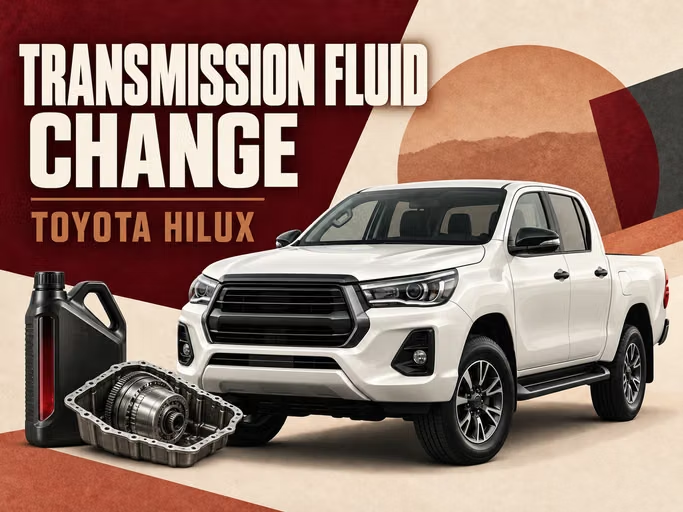
The correct interval for an automatic Toyota Hilux depends on its generation, engine, transmission, and destination market. In Toyota’s English-language service schedule for diesel GUN125/GUN126 models, the first ATF replacement is due at 80,000 km, followed by replacement every 80,000 km. Transmission condition and leaks should still be checked during routine service, and an earlier inspection is sensible after towing, heavy payload use, or sustained driving in sand.
An automatic transmission changes ratios without a driver-operated clutch. ATF supplies hydraulic pressure, lubricates bearings and gearsets, carries heat away, and controls clutch-pack engagement.
5 Signs Your Toyota Hilux ATF Needs Attention
A Hilux is often used as a working pickup, so transmission stress is not measured by mileage alone. Payload, trailers, slow off-road driving, and high ambient temperatures all affect ATF temperature. Each sign below justifies diagnosis, but none proves by itself that the fluid is the only cause.
- Drive engages after a noticeable delay. If the pickup hesitates after D or R is selected, check the fluid level, leaks, and actual hydraulic pressure. A persistent delay is particularly risky while maneuvering with a trailer or on a slope.
- Gear changes have become abrupt. A repeatable jolt from a warm transmission may result from an incorrect level, valve-body contamination, a solenoid fault, or worn mounts. Record the operating mode and temperature, then read fault codes before replacing parts.
- Oil-like marks appear beneath the vehicle. Inspect the pan, drain and overflow plugs, and ATF cooler pipes. Once the leak is repaired, set the level with the vehicle level and within the temperature window specified for that transmission.
- A hot or burnt odor follows demanding use. Towing, soft sand, and a long climb with cargo raise thermal load. A sharp smell combined with slipping or changed shift behavior calls for a safe stop and transmission inspection.
- A drivetrain warning appears. Fail-safe operation, restricted gear selection, or a warning lamp should not be addressed by simply clearing codes. Save the codes and the operating data recorded when the control unit detected the fault.
Why One Jolt Does Not Automatically Mean the ATF Is Worn Out
A single jolt after startup, battery disconnection, or a rapid load change may be related to control adaptation. Compare cold and fully warm operation, inspect the mounts and propeller shaft, and then diagnose the system. New fluid may temporarily alter shift feel without correcting a mechanical or electrical defect.
What Can Happen When Hilux ATF Service Is Delayed?
In a pickup transmission, ATF serves as hydraulic medium, lubricant, and coolant at the same time. When the fluid overheats, its level is incorrect, or wear material accumulates, several functions deteriorate together.
- Heat resistance declines. A depleted additive package controls oxidation less effectively, so the fluid ages faster under sustained load.
- Hydraulic pressure becomes less consistent. Deposits in passages and valves interfere with clutch control, delaying shifts or making them harsher.
- Clutch slip lasts longer. The more time clutch packs spend matching speeds, the more heat is generated and the faster the ATF degrades.
- The pump and torque converter suffer. Low level, foaming, or a restricted filter can impair fluid delivery and lubrication of loaded parts.
- Repair costs rise. Metal debris, persistent slipping, and fail-safe operation may indicate internal damage that cannot be corrected by fluid replacement alone.
Toyota Hilux ATF Inspection and Replacement Schedule
There is no single interval for every Hilux generation. Toyota’s official service plan for diesel GUN125/GUN126 models calls for the first ATF replacement at 80,000 km and subsequent replacement every 80,000 km. The owner’s manual still requires the specification and procedure for the exact transmission, and describes listed capacity as a reference value.
| Parameter | Reference for GUN125/GUN126 | When to inspect earlier |
|---|---|---|
| First ATF replacement | 80,000 km | After overheating, a leak, or changed shift behavior |
| Later replacements | Every 80,000 km | With frequent towing or heavy payload use |
| High-load operation | Does not replace the factory schedule | Low-speed work, sand, a trailer, constant payload |
| Fluid type | Toyota Genuine ATF WS | Confirm by VIN and transmission code |
| Level check | Procedure for the specific transmission | Vehicle level and fluid at the specified temperature |
Source: English-language Toyota information for the Hilux; the manual for the relevant year and specification can be located at toyota.ae. The stated interval applies to automatic diesel GUN125/GUN126 models. Petrol, earlier, and other regional versions require separate confirmation.
Adjusting the Interval to Match Pickup Use
- Normal driving without payload. If the vehicle is serviced consistently, rarely tows, and spends most of its time on paved roads, follow the schedule for its exact variant and inspect for leaks at every service.
- Frequent cargo in the bed. Extra mass increases torque-converter work and heat during acceleration. With regular payload use, assess ATF condition and cooler lines before the maximum mileage is reached.
- Towing and prolonged low-speed use. A trailer, traffic congestion, or slow off-road work can create considerable heat while adding little distance to the odometer. Calendar time and actual load matter as much as mileage.
- Sand, water crossings, and dust. After a demanding route, look for leaks and damaged cooler pipes. If the pickup crossed water, inspect the breathers and rule out moisture entry into drivetrain units.
Which Fluid Should Be Used in a Hilux Automatic Transmission?
For six-speed AC60E/AC60F automatic transmissions, the Hilux manual specifies Toyota Genuine ATF WS. Toyota warns that another fluid type may reduce shift quality, cause vibration or transmission lock-up, and ultimately damage the unit. The model name alone is insufficient: verify the specification by VIN, transmission code, and the manual for the destination market.
For Hilux models with 1GD-FTV and 2GD-FTV diesel engines, the six-speed automatic has a reference total capacity of about 9.3 L. This is not the amount used in a normal drain-and-fill because a substantial quantity remains in the torque converter and passages. Determine the refill amount from the service operation, measured drain quantity, and specified level-setting procedure.
Drain-and-Fill or Full Fluid Exchange
A plug drain renews only part of the ATF, but it also lets the technician inspect odor, contamination, and debris. Machine exchange replaces a larger share of the fluid, yet requires a healthy transmission, correct connections, and controlled temperature. On a Hilux with unknown history, diagnose the unit and inspect the pan before choosing a service method.
Why Can a Hilux Shift More Harshly on Aged ATF?
Aged or overheated fluid can alter circuit filling time and clutch application. Similar jolts, however, may come from propeller-shaft play, worn mounts, valve-body contamination, a faulty solenoid, or incorrect adaptations. Base the decision on inspection of the complete drivetrain rather than ATF mileage alone.
| Problem | What changes | What the driver notices |
|---|---|---|
| Overheating | ATF oxidizes faster and removes less heat. | Odor, altered shifts, warning indication. |
| Low level | The pump draws air and pressure fluctuates. | Delayed D/R, noise, slipping. |
| Excess ATF | The fluid foams and transmits pressure poorly. | Irregular operation, breather discharge, leaks. |
| Deposits | Particles interfere with valves and solenoids. | Jolts, delays, transmission codes. |
| Incorrect fluid | Friction properties do not match calibration. | Vibration, harsh shifts, accelerated wear. |
| Mechanical wear | Clutches, pump, or torque converter are damaged. | Persistent slipping, debris, fail-safe mode. |
Practical Checklist Before Service
- Confirm the exact variant. Record the VIN, engine code, transmission code, and drive type. Different Hilux years use different automatic transmissions and capacities.
- Review the history. Note the date and mileage of the previous service, fluid product, service method, overheating events, and trailer use.
- Scan before clearing data. Save fault codes and freeze-frame information before disconnecting the battery or erasing transmission data.
- Inspect the pan and cooling circuit. Check plugs, seals, and ATF pipes; repair leaks before the final level adjustment.
- Prepare the correct materials. The fluid must explicitly state compatibility with Toyota ATF WS, while the filter, gaskets, and seals should be selected by VIN.
- Verify the completed work. Confirm there are no leaks or warnings and that D and R engage consistently with the transmission cold and fully warm.
When assessing a used pickup, compare the VIN and claimed version with the Toyota Hilux catalog, then compare transmission condition with vehicle use and documented maintenance.
Mistakes to Avoid
- Applying one interval to every Hilux. Generation, engine, transmission, and destination market change the requirements, so another variant’s data cannot be copied automatically.
- Adding the total reference capacity after a simple drain. The drained quantity is much smaller than the unit’s total volume; excess ATF can foam and disrupt operation.
- Choosing fluid by color. A red appearance does not confirm the required specification. Check the approval, packaging, and application for the exact transmission.
- Treating new ATF as a cure for every jolt. The fault may be in the propeller shaft, mounts, electrical system, or valve body.
- Using a machine flush without diagnosis. With unknown service history, inspect the transmission and pan first rather than concealing existing wear.
Conclusion
For automatic diesel Toyota Hilux GUN125/GUN126 models, Toyota’s practical reference is a first ATF replacement at 80,000 km followed by replacement every 80,000 km. Inspect earlier when the pickup regularly tows, carries heavy loads, crawls at low speed, or drives in sand. AC60E/AC60F transmissions use Toyota Genuine ATF WS, while the exact refill quantity and procedure must be confirmed by VIN.


