


Which engines and transmissions does the Toyota Highlander use
Toyota Highlander
Toyota Highlander•
•6 views
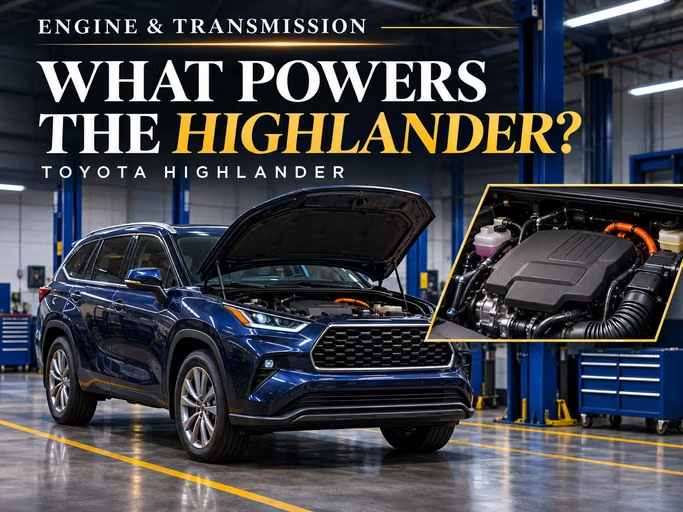
Article illustration. The vehicle and engine bay are illustrative; the actual layout and equipment depend on the Highlander version.
The fourth-generation Toyota Highlander can be found with a 2.5-litre hybrid powertrain, a naturally aspirated 3.5-litre V6 or a 2.4-litre turbocharged petrol engine. The hybrid uses an e-CVT, while the petrol versions discussed here have an eight-speed automatic. An advertisement describing the transmission simply as “automatic” therefore does not establish which powertrain is fitted or how it should be maintained.
e-CVT means electronically controlled continuously variable transmission. The Highlander Hybrid uses a planetary mechanism and electric motors rather than a belt. V6 means six cylinders arranged in two banks forming a V.
This guide focuses on the XU70 generation. On toyota.ae, the 2026 Highlander is presented with a four-cylinder 2.5-litre hybrid system, e-CVT and all-wheel drive. Other engines need to be considered against the particular vehicle’s model year and original specification. Grand Highlander is a separate model: its specifications should not be transferred to the regular Highlander.
XU70 identifies the fourth generation of the Highlander.
Which engine and transmission combinations are available
Start by identifying the engine code. Advertised displacement is rounded, and a power figure may describe either the petrol engine or the complete hybrid system. Before arranging an inspection, compare the VIN, model year and information in the variant catalogue.
VIN means Vehicle Identification Number, the individual identifier assigned to a vehicle.
- 2.5 Hybrid — A25A-FXS. An inline four-cylinder petrol engine works with the electrical system and e-CVT. The local 2026 Highlander specification lists 240 hp for the powertrain.
A25A-FXS is the engine’s factory code. hp means mechanical horsepower, a unit of power.
- 3.5 V6 — 2GR-FKS. A naturally aspirated six-cylinder engine paired with an eight-speed automatic. Toyota’s description of the 2020 Highlander includes a 295 hp version; this is not a universal output for every 3.5-litre Highlander.
2GR-FKS is the engine’s factory code.
- 2.4 Turbo — T24A-FTS. A turbocharged four-cylinder engine with an eight-speed automatic. The version described by Toyota produces 265 hp and approximately 420 Nm. It is a separate petrol configuration, not another name for the 2.5 hybrid.
T24A-FTS is the engine’s factory code. Turbo denotes turbocharging. Nm means newton-metre, a unit of torque.
These combinations do not cover every regional variant. Reference catalogues also contain a 2.0 Turbo Highlander. If considering one, investigate it separately: a similar body does not establish an identical engine, control calibration or consumable specification.
PS means metric horsepower; kW means kilowatt. The hp and PS figures differ numerically for the same power output.
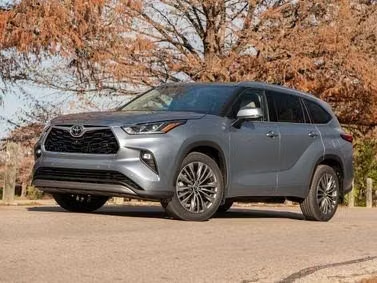
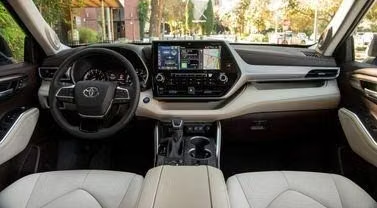
Highlander XU70 exterior and interior. Equipment shown may differ. Photos: model catalogue
How does the A25A-FXS hybrid engine work
The A25A-FXS is a naturally aspirated 2,487 cc engine with four cylinders, 16 valves and D-4S combined fuel injection. The Toyota technical specification lists a 14:1 compression ratio, VVT-iE intake timing and VVT-i exhaust timing. These describe the engine’s construction; they do not mean that every vehicle carrying the A25A-FXS code has the same total powertrain output.
D-4S combines direct injection into the cylinders with port injection into the intake passages. VVT-i means Variable Valve Timing-intelligent; VVT-iE uses an electric timing actuator. cc means cubic centimetres, a unit of engine displacement.
The hybrid system coordinates the petrol engine and electric motors. During deceleration, some energy can be recovered into the traction battery. This is a full hybrid, or HEV, that does not need a charging station. EV mode allows electric driving when conditions permit, but it does not turn the Highlander into a plug-in hybrid with an extended electric range.
HEV means Hybrid Electric Vehicle. EV means Electric Vehicle; here, EV mode refers to electric-only driving when conditions permit.
On the all-wheel-drive hybrid, a separate electric motor drives the rear axle. Its AWD arrangement therefore differs from the mechanical driveline of a petrol version. When buying, establish the actual configuration and check the system’s operation rather than relying only on an AWD badge.
AWD means All-Wheel Drive.
Is the e-CVT a belt-driven continuously variable transmission
The Highlander Hybrid uses a planetary hybrid transmission. It connects the petrol engine with the electric machines and provides a continuously variable transmission ratio. It does not contain the adjustable pulley pair and drive belt associated with a conventional mechanical CVT.
CVT means Continuously Variable Transmission; the abbreviation alone does not identify its specific construction.
There are two practical consequences. Advice about replacing a CVT drive belt does not apply to this construction. Also, the letters CVT are insufficient for selecting transmission fluid. The installed unit’s specification matters more than a similar description on a fluid container.
During acceleration, engine speed can rise and remain steady without the familiar sequence of stepped gear changes. That alone does not demonstrate slipping. New vibration, warnings, unusual noise or worsening acceleration still warrant investigation: not every symptom should be dismissed as normal hybrid behaviour.
How does the 3.5 V6 differ from the 2.4 Turbo
The 2GR-FKS V6 appeals to buyers who prefer a naturally aspirated engine and the familiar operation of a stepped automatic. It has six cylinders and combined fuel injection. Its eight-speed transmission changes between fixed ratios, producing a different acceleration experience from the e-CVT.
The 2.4 Turbo has fewer cylinders, but boost allows substantial torque. Toyota’s description of the 265 hp version specifies 310 lb-ft, equivalent to approximately 420 Nm. Smaller displacement therefore does not automatically mean weaker pulling performance. Vehicle weight, drivetrain and the particular calibration also matter.
lb-ft means pound-foot, a unit of torque; 1 lb-ft is approximately 1.356 Nm.
During a test drive, assess accelerator response, smooth engagement of D and R, shifts after warming up, and acceleration without harsh jolts. For a turbocharged vehicle, ask the workshop to assess cooling-system condition and the integrity of the boost-air path. These checks help evaluate the individual car; they are not a claim that each component is a recurring Highlander failure.
D means Drive, for forward travel; R means Reverse.
How much fuel does the hybrid use
The 2026 Highlander specification.pdf?MOD=AJPERES) lists 19.3 km/l. This converts to approximately 5.18 l/100 km by dividing 100 by 19.3. It is a published specification figure, not a promise of the same consumption on every journey.
Use your own driving pattern to estimate the budget. For example, the difference between 6 and 9 l/100 km over 20,000 km a year is 600 litres. This is an illustrative calculation, not a measured hybrid-versus-V6 comparison. Multiply 600 by the current price per litre to calculate the corresponding fuel-cost difference.
Urban stops provide opportunities for energy recovery, while sustained high-speed driving produces a different operating pattern. Air conditioning, loading, short journeys and tyre pressures also affect the result. Compare vehicles over similar routes and several full-tank measurements rather than relying on a single dashboard reading.
How should engine and transmission reliability be assessed
There is no single verified distance to overhaul that applies to every Highlander. A reference estimate of engine life cannot account for overheating, repair quality or continued use with an unresolved fault. A seller’s assurance of another 300,000 trouble-free kilometres does not replace inspection.
Before buying, request a cold start, diagnostic scan and underside inspection. The engine should be checked for oil and coolant traces, running quality and a history of fluid top-ups. A hybrid also needs an assessment of its traction battery, battery cooling and stored faults. For an automatic transmission, cold and fully warmed behaviour, leakage and documented maintenance matter.
Compare powertrain families using the technical data for the specific variant. A reported fault on another model with a related engine does not establish that the Highlander being inspected has that fault. Check service campaign applicability against the VIN and the vehicle’s documents.
Which consumables need servicing and how are intervals chosen
Build the maintenance plan around the actual engine, transmission and operating conditions. Inspection, cleaning and replacement are different operations with different costs. The job sheet should identify the material, quantity and work performed so that the next workshop can understand what was done.
What matters when changing engine oil and filters
Replace the engine oil and oil filter together under the applicable schedule. Obtain viscosity and capacity from the vehicle handbook: a general engine-family entry is not a substitute for the specific Highlander’s refill data. The engine oil selection guidance also emphasises the manufacturer’s specification. Hot weather alone is not sufficient justification for choosing a thicker oil outside the approved requirements.
Requirements depend on the engine and model year. The checked owner’s manuals specify the following combinations:
- 2.5 Hybrid A25A-FXS — SAE 0W-16, ILSAC GF-6B; 2024 Highlander Hybrid owner’s manual, pp. 496–497.
SAE identifies the viscosity grade; ILSAC identifies an oil performance standard. In 0W-20, the first part describes low-temperature properties and 20 describes high-temperature viscosity. Do not treat GF-6A and GF-6B as interchangeable without checking the required viscosity.
- 3.5 V6 2GR-FKS — SAE 0W-20, ILSAC GF-5; 2020 Highlander owner’s manual, pp. 495–496.
- 2.4 Turbo T24A-FTS — SAE 0W-20, ILSAC GF-6A; 2023 Highlander owner’s manual, pp. 475–476.
For the base-oil type, a fully synthetic multigrade engine oil meeting the specified viscosity and performance category can be used. A “synthetic” label alone does not establish suitability. These figures apply to the cited manuals; check the individual vehicle’s requirements for a different model year or market specification.
Inspect the engine air filter with regard to dust exposure and housing condition. The cabin filter serves the ventilation system, not the engine. The hybrid also has a traction-battery cooling air intake that must not be obstructed by belongings; inspect and clean its specified filter as instructed. Do not automatically add a fuel-filter replacement to every service without confirming the maintenance requirement and assembly design.
When should transmission fluid, coolant and spark plugs be serviced
Check the separate requirements for the e-CVT and eight-speed automatic, including fluid, level-setting conditions and replacement procedure. Do not transfer an interval from one transmission to the other or present an oil change as a cure for every shift complaint. Diagnose abnormal behaviour before deciding what work is needed.
The 2025 Highlander Hybrid maintenance guide lists engine and inverter cooling circuits separately. Their initial coolant replacement points can differ. The document applies to its stated version; its intervals should not automatically be adopted for another market specification. Select coolant by the required formulation, not colour alone.
All three petrol engines discussed here use spark plugs, including the hybrid: four on the inline engines and six on the V6. Select them by application and replace them under the relevant schedule. Brake fluid belongs to whole-vehicle maintenance; regenerative braking does not remove the need for its inspection and scheduled replacement.
Hybrid servicing. Switch the vehicle fully off before work and ensure the READY indicator is extinguished. A silent vehicle left in READY can start its engine automatically. High-voltage components must be handled by a suitably trained specialist.
READY indicates that the hybrid system is ready to drive; it does not mean the petrol engine is running continuously.
Conclusion
Choosing a Highlander starts with identifying the exact engine and transmission combination. The 2.5 hybrid’s e-CVT has its own construction and servicing requirements, while the 3.5 V6 and 2.4 Turbo use stepped automatics and feel different on the road. Compare figures for the same specification, verify maintenance history and budget for the consumables actually due.
When reviewing current offers, compare inspection findings alongside price and power. A sound vehicle with documented maintenance provides a stronger basis for a purchase than an engine family’s general reputation without evidence for the individual car.


