


Does a Toyota Highlander Need Transfer Case Oil Changes?
Toyota Highlander
Toyota Highlander•
•15 просмотров
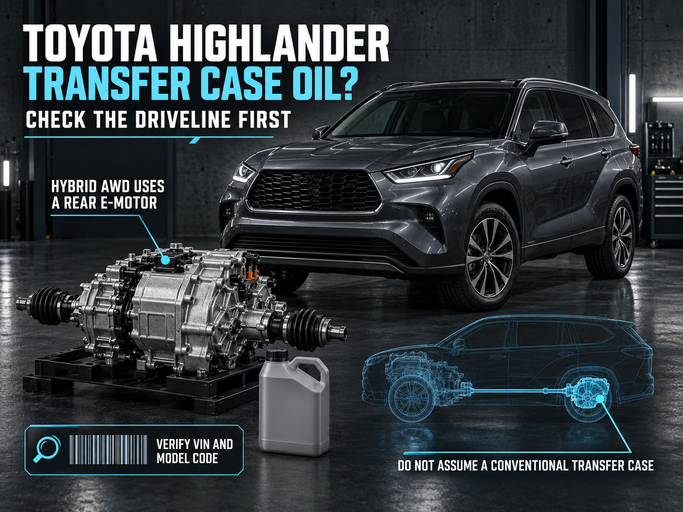
There is no single answer for every Toyota Highlander. The current UAE Highlander Hybrid 2026 uses a 2.5-litre hybrid powertrain, eCVT, and AWD, with a separate electric motor driving the rear axle. That layout must not be serviced as conventional mechanical AWD with a transfer case. Imported petrol AWD versions, however, may use different hardware.
First establish the generation, model year, original market, powertrain, and actual AWD design. Only then can you determine whether a separate torque-transfer unit exists, which fluid it needs, and whether scheduled replacement applies. The Highlander name and an AWD badge are not fluid specifications.
Identify the AWD System First
Before ordering fluid, match the VIN, complete model code, model year, and original market to the physical layout. An underbody inspection should show whether the axles are linked by a propeller shaft or the rear wheels are driven by an electric module. These systems require different service decisions.
- Current UAE Highlander Hybrid 2026. The official model page specifies a 2.5-litre hybrid powertrain, eCVT, and AWD. Its rear drive is produced by a separate electric motor, so a generic “transfer case oil change” does not apply.
- Imported front-wheel-drive version. It may have transmission fluid and a final drive, but there is no mechanical unit distributing torque between the axles. Do not add transfer case service to the repair order.
- Imported petrol AWD version. This vehicle may transmit torque to the rear mechanically. Find the exact documentation from the VIN and model code, then check the torque-transfer unit and rear differential separately.
- Highlander Hybrid from another year or market. Do not apply current UAE information automatically. Verify any change in generation, electric drive housing, and service procedure for the exact configuration.
- Converted vehicle or unclear origin. Do not drain fluid by guesswork. Record the complete model-code plate and have a specialist identify the eCVT, rear electric drive, mechanical shafts, differentials, and plugs.
How Hybrid AWD Differs From a Mechanical Transfer Case
In conventional mechanical AWD, power passes from the transmission to both axles through a torque-transfer unit and propeller shaft. In the Highlander Hybrid, a separate rear electric motor drives the rear wheels when required. AWD therefore does not by itself prove that a conventional transfer case exists or needs a separate interval.
The rear electric drive is still a real assembly with a housing, reduction gears, seals, and its own requirements. It must not be declared maintenance-free without checking the exact document, but transfer case oil for another version must not be poured into it by analogy.
When the Driveline Needs an Unscheduled Inspection
Unusual noise or fluid residue requires inspection even when no separate transfer case is fitted. Diagnose the assembly that is actually present: the front hybrid transaxle, rear electric drive, mechanical AWD gear unit, or a neighbouring component. A fluid change must not replace fault-finding.
- Fresh leakage appears. Clean the housing and shield, then inspect plugs, joints, breathers, and shaft exits. A second check after a short drive usually identifies the source more clearly.
- The vehicle has travelled through deep water. Moisture entering through a breather or damaged seal can cause cloudiness, foam, or emulsion. Correct the entry path and service the affected housing.
- The underbody has been struck. A distorted shield may contact the housing, while a damaged plug or crack can reduce the fluid level. Check for leakage and structural damage before further driving.
- A hum, vibration, or knock appears when torque changes. Possible sources include the eCVT, rear electric module, propeller shaft on a mechanical version, driveshafts, wheel bearings, or tyres. Locate the symptom in several operating states first.
- Service history is unknown. A note without a date, mileage, and exact product does not confirm what was done. Establish a new baseline only after identifying the assemblies, checking the level, and correcting leakage.
What the Official Highlander 2026 Information Confirms
According to toyota.ae, the Highlander Hybrid 2026 uses a 2.5-litre hybrid powertrain, eCVT, and AWD. Toyota’s official fourth-generation technical description explains that hybrid AWD uses a separate rear electric motor. This version must not be serviced using a universal mechanical transfer case schedule.
| Version | Correct action |
|---|---|
| Current UAE Highlander Hybrid 2026 | Check the eCVT and rear electric drive separately; do not schedule a conventional transfer case oil change |
| Imported front-wheel-drive version | Do not add service for a transfer unit that is not fitted |
| Imported petrol AWD version | Confirm the mechanical gear unit and use exact VIN-matched information |
| Hybrid from another year or market | Verify the construction and procedure for that exact configuration |
| Converted vehicle | Follow documentation for the components actually installed |
| No exact document | Do not invent an interval or select fluid from another version |
Establish the exact procedure from the VIN, complete model code, model year, and original market. If the specific manual for the vehicle cannot be found, do not invent a universal interval or carry a specification over from a petrol AWD or another hybrid version.
What to Service on the Current Highlander Hybrid
Build the maintenance plan around the assemblies actually fitted. For the hybrid version, check the engine, front hybrid transaxle, and rear electric drive separately. The fluid designation, level method, reference capacity, and interval for one housing must not be applied to another.
Heat, sand, urban congestion, sustained loads, and water exposure may justify closer inspection, but they cannot turn electric AWD into a mechanical transfer case. Read severe-service notes only for the exact version. When a matching document is unavailable, record workshop advice as preventive guidance rather than a Toyota factory interval.
Avoiding Confusion Between Fluids
Select fluid from the factory identity of the assembly. Then verify its type, viscosity and performance standard, level-setting method, sealing parts, and plug torque. Reference capacity helps with preparation, but the prescribed procedure establishes the final level.
- Do not put ordinary gear oil into the eCVT. A hybrid transaxle contains electrical components and requires the fluid specified for the exact version.
- Do not treat the rear electric drive as an ordinary rear differential or transfer case. Its housing and lubrication requirements must be established separately.
- Do not apply petrol Highlander AWD information to a Highlander Hybrid. A shared body name does not mean the torque follows the same path.
- Do not use the container capacity as the fill quantity. Residual fluid, temperature, and vehicle position affect the level, while overfilling can cause foaming and leakage.
Assessing Noise and Fluid Traces
Fluid on a shield may have travelled from a housing above it, while a hum can originate from tyres or wheel bearings. Record how the sound changes with road speed, drive torque, steering, and braking. After cleaning, inspect the front transaxle, rear drive unit, shafts, driveshafts, mounts, and housing breathers again.
| Observation | Possible meaning | Next step |
|---|---|---|
| Fluid on a shield | The source is above it or residue remains from previous work | Clean and inspect again after driving |
| Cloudiness or emulsion | Water may have entered the housing | Find the entry path and service the affected unit |
| Overheated odour | High temperature or oxidation | Check the level, duty cycle, and housing ventilation |
| Large metallic particles | Possible reduction-gear or bearing wear | Do not stop at fluid replacement; inspect internally |
| Hum follows road speed | Tyres, wheel bearings, driveshafts, or reduction gears may be involved | Locate the sound in several driving states |
| Leak after service | Level, seal, thread, or breather error | Stop the leak and verify the level again |
Practical Inspection Checklist
☐ Record the VIN, complete model code, model year, and original market.
☐ Confirm whether the powertrain is hybrid or petrol and identify the transmission.
☐ Determine whether rear-axle torque is delivered electrically or mechanically.
☐ Identify every housing and its plugs before ordering fluid.
☐ Do not combine the eCVT, rear electric drive, and mechanical transfer unit.
☐ Inspect shields, joints, breathers, and seals for leakage or impact evidence.
☐ If a serviceable housing is confirmed, loosen its fill plug before the drain plug.
☐ Use only the verified fluid and sealing parts required by the procedure.
☐ After the work, check the level, sealing, and result of a short road test.
Mistakes to Avoid
- Scheduling transfer case oil service for every Highlander AWD. Hybrid electric drive and mechanical AWD use different hardware.
- Treating a rear electric motor as proof that no service is ever required. Check the requirements for the exact electric drive module.
- Copying an interval from a petrol version, another market, or another generation. A shared model name does not identify the assembly.
- Trying to mask a hum with thicker oil. Fluid cannot restore bearings, mounts, splines, reduction gears, or an electric module.
- Stopping at a fluid change after water, impact, or leakage. Correct the source first, restore the proper level, and perform a follow-up check.
Conclusion
For the current Toyota Highlander Hybrid AWD, check the front hybrid transaxle and rear electric drive rather than scheduling a conventional mechanical transfer case oil change. An imported petrol AWD version may use different hardware, so decide only after checking the VIN, model code, and actual torque path. Leakage, water, impact, or a new noise calls for diagnosis of the specific unit. Current offers for Toyota Highlander can assist with vehicle selection, but they do not replace verification of its driveline and service data.


