1988 Audi 200 Turbo Quattro 'Nardò 6000' Speed Record Car
Audi Quattro I Facelift
Audi Quattro I Facelift•
•119 views
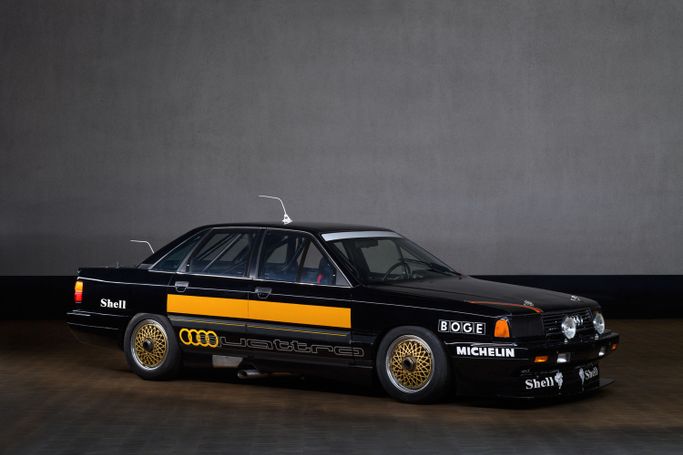
Chassis No.: N6000/1
€235,750 EUR | Sold
- Unique factory works car
- Dr. Ferdinand Piëch's project
- Former car of Audi's 1988 speed record team
- The first of only three built, and the sole survivor
- Acquired from Audi by Dr. Sigi Brunn (one of its drivers)
- Acquired from Dr. Sigi Brunn by the vendor
- Unique Audi works car
- Dr. Ferdinand Piëch's project
- Part of Audi's speed record-breaking team of 1988
- The first of only three ever built, the sole survivor of the three
- Purchased from Audi by Dr. Sigi Brunn (one of its drivers)
- Purchased from Dr. Sigi Brunn by the vendor
1988 Audi 200 Turbo Quattro “Nardò 6000” Speed Record Car
Chassis no. N6000/1
Eager to build on the outstanding success of its pioneering five-cylinder, four-wheel-drive Quattro rally cars, Audi took up a new challenge in 1988: to break the speed records held by Mercedes' experimental C111 Diesel prototype since 1978. Three Audi 200 Quattros were selected and specially prepared for this project, conceived by Audi CEO Dr. Ferdinand Piëch.
Featuring lightweight Kevlar aerodynamic appendages at the front and rear (which reduced the drag coefficient to 0.27) and an aluminium roof and doors, these cars were equipped with a turbocharged and catalysed 2.2-litre inline five-cylinder engine that, in record-breaking trim, produced a maximum of 650 hp. Two of the cars received 20-valve engines, but the third—the subject of this sale—has a 25-valve cylinder head, as confirmed by former Head of Engine Technology Ulrich Baretzky. The car offered here is therefore unique. The cars were also fitted with a safety roll cage and plastic side windows, while the wheels were made of magnesium alloy.
The Nardò speedway in southern Italy (formerly FIAT's test track) was chosen for the assault on the 500 km and 1,000 km records held by the C111 at 320.78 km/h and 318.30 km/h respectively. Audi's Quattro all-wheel-drive system had already made its mark in international rallying, and the aim of the Nardò attempt was to demonstrate its ability to withstand sustained exertion at very high speeds on the road.
Audi's Head of Development, van Basshuysen, directed operations at the 12.65 km speedway from 1 to 4 April 1988. A team of 13 drivers (mostly German) had been recruited for these record attempts, which were supported by Michelin, Shell, Boge and Emitec. An extra-large 340-litre fuel tank was installed to reduce the number of refuelling stops, which took only 25 seconds thanks to an aviation-style quick-fill system.


To speed up wheel changes, the cars were equipped with an integrated pneumatic jacking system; the wheels themselves were secured by a single large nut, tightened and loosened with a pneumatic tool. A tyre-pressure monitoring system was installed to improve safety. The drivers were in constant radio contact with the pits, and the cars' essential functions were recorded by telemetry.
Two speed records were broken: 500 km at 324.509 km/h and 1,000 km at 326.403 km/h. Unfortunately, the attempt had to be abandoned when a puncture caused a crash (chassis no. N6000/2). Audi had also been engaged in other record attempts at the time, including the 30,000 km record. Audi later sold the three record cars; two were destroyed, making this car, chassis number 1, the sole survivor.
One of the record drivers, Dr. Siegfried “Sigi” Brunn, known as “Germany's fastest dentist,” had begun averaging 350 km/h after just three warm-up laps! Dr. Brunn bought the car from Audi after the successful attempt. The current owner bought the Audi directly from Sigi Brunn. Some spare parts (wheels, new body panels, suspension) are available by separate negotiation after the sale, on request. Out of use since the 1990s, this car is one of the most important cars in the marque's history to be offered for public sale in recent years.
1988 Audi 200 Turbo Quattro 'Nardò 6000' Speed Record Car
Chassis no. N6000/1
Capitalising on the outstanding success of its pioneering, five-cylinder, four-wheel-drive Quattro rally cars, Audi took up a new challenge in 1988: to break the speed records held by Mercedes-Benz's diesel-powered C111 experimental prototype since 1978. Three identical Audi 200 Quattro saloons were selected and specially prepared for the project, which was the brainchild of Audi CEO, Dr. Ferdinand Piëch.


Featuring lightweight Kevlar aerodynamic modifications to the front and rear bodywork (lowering the drag coefficient to 0.27 Cd) and an aluminium roof and doors, these cars were powered by Audi's 2.2-litre inline five-cylinder engine, which in turbocharged and catalysed record-breaker form produced a maximum of 650bhp. Two of the cars were built with 20-valve engines while the other one—that offered here—had a 25-valve engine, as confirmed by Audi Sport's former Head of Engine Technology, Ulrich Baretzky. The car on offer is therefore unique. There was also a built-in roll cage and plastic side windows, while the wheels were of lightweight magnesium.
The Nardò Ring in southern Italy (formerly FIAT's test track) was chosen for the attempts on the 500km and 1,000km records, held by the C111 at 320.78km/h and 318.30km/h respectively. Audi's Quattro all-wheel-drive system had already proven itself in international rallying, and the aim of the Nardò exercise was to demonstrate its ability to sustain continuous loads at very high speeds on the road.
Audi's Head of Development Richard van Basshuysen directed proceedings at the 12.65km circular track, which took place from 1st to 4th April 1988. A team of 13 (mainly German) drivers had been recruited for the record attempt, while sponsorship came from Michelin, Shell, Boge, and Emitec. An extra-large (340-litre) fuel tank was installed, minimising the number of stops, which took only 25 seconds to replenish thanks to an aerospace quick-filler. To speed up wheel changes, the cars were equipped with a built-in, pneumatically operated jacking system, while the wheels themselves were secured by a single large-diameter nut, locked/unlocked by a pneumatic gun.
A tyre pressure-monitoring system was used for increased safety. Drivers were in radio contact with the pits at all times, and the cars' vital functions were telemetrically monitored.
Two speed records were broken: 500km at 324.509km/h and 1,000km at 326.403km/h. Unfortunately, the attempt had to be abandoned when a puncture caused a crash (chassis N6000/2). Audi had been on course to break other records including the 30,000km mark at the time. Audi later sold the three record-breaking cars; two have since been destroyed, making this example, chassis number '1', the sole survivor.
One of the record-breaking drivers team was Dr Siegfried 'Sigi' Brunn, known as 'Germany's fastest dentist', who had begun averaging 350km/h after only three warm-up laps! Dr Brunn purchased this car from Audi following the successful record attempt. The current owner bought the Audi directly from Sigi Brunn. Some spare parts (wheels, new body panels, suspension) are available via separate negotiation after the sale if required. Not run since the 1990s, this car is one of the most important pieces of Audi's history to be offered for sale in recent years.
Cost
968,433 AED