When to change transmission fluid in a Nissan Patrol
Nissan Patrol
Nissan Patrol•
•57 views
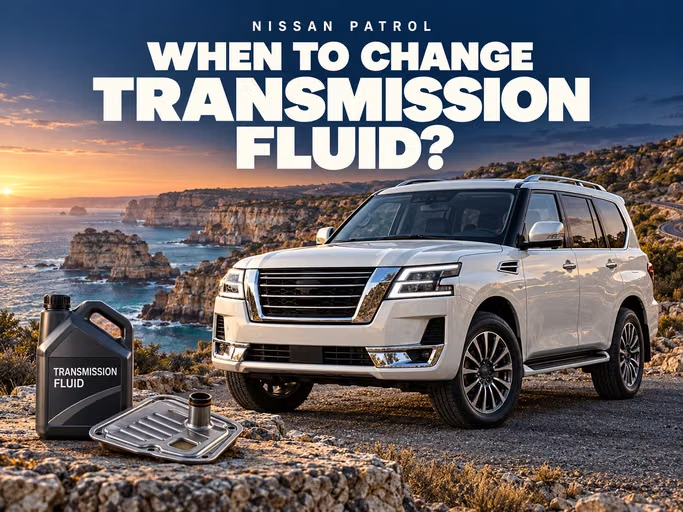
The automatic transmission fluid service requirements for a Nissan Patrol depend on its exact specification and operating conditions. There is no single change interval for every Patrol: several automatic transmissions have been fitted, and requirements for the Y61, Y62 and new Y63 cannot be transferred between them.
Before servicing, confirm the VIN, production year and transmission type. If delayed engagement, slipping or a leak has already developed, diagnosis comes first. A fluid change may form part of the repair, but cannot resolve every cause of a fault.
5 signs that the transmission needs checking
Watch for new changes in how the vehicle operates. Tell the workshop whether a symptom follows a cold start, occurs in traffic or when towing, or develops after driving on sand. Compare behaviour in the same driving modes.
1. Harsh shifts. A recurring jolt during acceleration or deceleration needs investigation. Possible causes include fluid level, transmission control, hydraulic operation and wear. Driving feel alone cannot establish a diagnosis.
2. Delayed engagement of D or R. If the vehicle takes noticeably longer than usual to move after selecting a position, do not press the accelerator to force engagement. Note whether the transmission is cold or warm when this happens.
3. Vibration during acceleration. Shudder may originate in the transmission, but also in the engine, mounts, propeller shafts or other driveline components. A fluid change may achieve nothing unless the source is identified.
4. Rising revs without the expected acceleration. New slipping or loss of drive requires diagnosis. Avoid putting further load on the transmission, particularly on sand or while towing.
5. A leak or temperature warning. Keep the exact message. Reduce load and follow the vehicle’s instructions. With a substantial leak, loss of drive or an instruction to stop, stop in a safe place.
What a fluid inspection can reveal
A burnt smell, unusual deposits and metal particles need assessment alongside diagnostic findings. Colour alone indicates neither the remaining service life nor the correct specification. Clean-looking fluid cannot establish the maintenance history.
What fluid problems can cause
| Problem | Possible consequence | What to check |
|---|---|---|
| Low level | Disrupted fluid supply and heat removal | Leaks and the specified level check |
| Overfilling | Foaming and unstable hydraulic operation | Checking conditions and temperature |
| Incorrect fluid | Properties unsuitable for this transmission | Exact product and specification |
| Contamination | Malfunction and evidence of wear | Pan, filter and transmission condition |
Establishing the service requirements
Check the service documentation for the VIN, distinguishing fluid inspections from required changes. Where both mileage and calendar limits apply, use whichever comes first. A routine service entry does not prove that the transmission fluid was changed.
One factory Patrol 5.6 V8 maintenance schedule describes the automatic transmission fluid as maintenance-free. This is a provision of that particular schedule, rather than a rule for every Patrol. An unknown history, leak or overheating episode still warrants assessment.
Sand, towing and heavy loads
Tell the workshop about regular dune driving, towing and sustained loads in hot weather. Establish which severe-use requirements apply. If an earlier preventive fluid change is proposed, ask for the reason and have the agreed due point recorded.
Why the transmission must be identified first
| Patrol version | What matters |
|---|---|
| Y61 and Safari with an automatic | Year, engine and exact transmission; do not use Y62 requirements |
| Y62 | Different versions exist; later 4.0 V6 and 5.6 V8 models use a seven-speed automatic |
| Y63 with 3.8 V6 or 3.5 twin-turbo V6 | Nine-speed automatic; confirm its fluid requirements separately |
The seven-speed transmission for both Y62 engine versions is confirmed in the 2022 Patrol description. This does not cover every early Y62.
The new generation’s nine-speed transmission appears in Nissan’s specifications. Do not select Y63 fluid using a recommendation for the previous V8.
Which fluid to use
The Patrol Y62 owner’s manual specifies Genuine NISSAN Matic S ATF for the seven-speed automatic described and prohibits mixing with other fluids. This requirement applies to that transmission; confirm Y61 and Y63 specifications separately.
Select the filter or strainer, seals and fasteners by transmission code. The drained quantity differs from the transmission’s total capacity. Verify the final level using the service procedure, rather than relying on the number of fluid containers purchased.
Planning the fluid change
Agree the fluid, parts and replacement method before work begins. Where symptoms are present, first read fault codes and check the level and leaks, followed by further investigation where necessary. Establish exactly what work will be done on the filter and oil pan.
Drain and refill or machine servicing
A normal drain may leave some fluid in the torque converter and lines. This does not make machine flushing compulsory for every Patrol. Choose the method according to transmission design, condition and the applicable procedure. An unknown history alone justifies neither flushing nor refusing to service the unit.
Checklist after servicing
☐ The work order identifies the VIN and installed transmission type.
☐ Symptoms and inspection findings before work are recorded.
☐ The exact fluid product, specification and quantity are listed.
☐ Replacement parts and completed operations are itemised.
☐ The level meets the specified procedure and there are no leaks.
☐ Operation is checked and unresolved issues are recorded.
☐ The date, mileage and next inspection or change plan are retained.
Mistakes to avoid
- Transferring intervals and fluid specifications between Y61, Y62 and Y63.
- Choosing fluid by colour or a general “for Nissan” label.
- Mixing fluids without the manufacturer’s permission.
- Using additives or resetting adaptations without a justified reason.
- Expecting fresh fluid to reverse mechanical wear.
Conclusion
Nissan Patrol transmission servicing starts with identifying the unit and its maintenance requirements. Consider the load and documented history, use the specified fluid and follow the level-check procedure. New jolts, delays and leaks need their cause investigated.
When comparing current listings, request transmission service records. The date, mileage, fluid name and work carried out help establish the vehicle’s history.