


When to change brake fluid in a Lexus ES
Lexus ES
Lexus ES•
•14 views
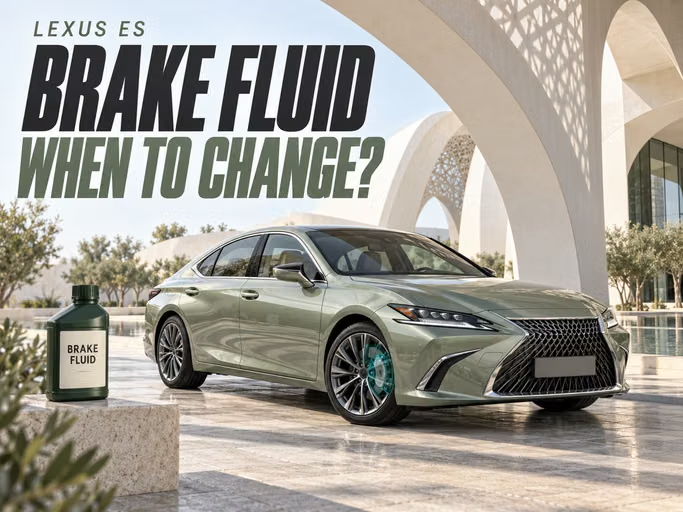
The reviewed Lexus ES 350 and ES 300h manuals specify brake fluid replacement every 40,000 km or 24 months, whichever comes first. The hybrid version also requires this service. Confirm the schedule in your vehicle’s service booklet: the ES name does not establish one plan for every generation and specification.
When the brakes need an unscheduled inspection
Pay attention to normal pedal feel and how the vehicle slows down. If either changes, do not wait for the next routine service. Tell the technician whether the symptom occurs from cold, in traffic or after a descent. Arrange an inspection for these signs:
- A softer pedal or noticeably increased pedal travel.
- A pedal that gradually sinks under steady pressure.
- Reduced stopping performance after repeated braking.
- A brake-system warning or warning buzzer.
- A rapidly falling reservoir level or visible signs of a leak.
Why low mileage does not remove the need for replacement
Technical information on hella.com explains that glycol-based brake fluid absorbs moisture. This lowers its boiling point; intense heat can then produce compressible vapour. A clean appearance does not establish that the fluid retains the properties it needs.
An ES parked for much of the week may reach the time limit before the mileage limit. Keep the service date alongside the odometer reading. Even if the pads were replaced recently, look for a separate fluid-change entry on the invoice: these are different jobs.
Start with an inspection if maintenance records are incomplete. Ask the workshop to explain the findings and agree any necessary work. After a complete change, retain the product name, date and mileage so that another workshop or future owner can follow the vehicle’s service history.
Published intervals for the ES 350 and ES 300h
Page 362 of the ES 350 manual published through lexus.ae specifies brake fluid inspection every 10,000 km or 6 months and replacement every 40,000 km or 24 months. Use whichever limit arrives first. I means inspection and R means replacement.
Page 394 of the ES 300h manual gives the same interval. Confirm the service scope when booking: a “fluids checked” entry does not establish a complete change. For another generation or market specification, the workshop should match the schedule to the VIN and account for operating conditions.
| Reviewed ES schedules | Reference | What to check |
|---|---|---|
| Fluid inspection | 10,000 km / 6 months | Whichever comes first. |
| Complete replacement | 40,000 km / 24 months | Whichever comes first. |
| Fluid selection | Specification below | Your version’s requirements. |
| Unknown history | Workshop diagnosis | Condition and required work. |
Choosing brake fluid for a Lexus ES
The Brakes section on page 458 of the ES 350 manual lists SAE J1703 / FMVSS No. 116 DOT 3 and SAE J1704 / FMVSS No. 116 DOT 4. Start with your ES documentation, then compare the requirements with the product label and technical data sheet.
Agree the product and quantity for a complete procedure with the workshop. A general “for Lexus” label does not confirm suitability for your version, and reservoir volume does not establish the amount used throughout the circuits. Ask for the product to be recorded on the invoice to preserve an accurate service history.
Urban driving and longer journeys in the GCC
Daily ES journeys may combine congestion, frequent stops and faster roads. Tell the workshop about routes, loads and any altered braking after heat builds up. An earlier service should follow the applicable plan and condition assessment, rather than an arbitrary adjustment for hot weather.
Before a journey with long descents
Find the last fluid-change record in advance. If the deadline is approaching or unknown, leave time for inspection before departure. Report top-ups, leaks and unusual pedal travel. Resolve any fault found before making the journey.
Normal braking returning after cooling does not remove the need for diagnosis. If the symptom recurs, find its cause before the next demanding journey. Stop somewhere safe if braking clearly deteriorates; do not continue the route with a sinking pedal.
Points for owners of the hybrid ES 300h
Regenerative braking does not remove the need for fluid servicing: replacement is explicitly included in the ES 300h schedule. Page 517 of the hybrid manual also lists DOT 3 / SAE J1703 and DOT 4 / SAE J1704. The workshop should follow the repair procedure for your exact version.
What a complete change should include
Agree the scope before work starts. Extracting fluid from the reservoir renews only its contents. To make a complete replacement order clear, discuss these stages:
- Identify the ES version and required fluid specification.
- Inspect the hydraulics and investigate any low level.
- Agree the product, service scope and price.
- Replace the fluid and remove air using the repair instructions.
- Check for leaks and verify the level and brake operation.
- Record the date, mileage, product and next deadline.
Understanding changes in reservoir level
Page 403 of the ES 300h maintenance section links a slight reduction to pad wear or a high fluid level in the pressure accumulator. Frequent refilling can indicate a serious problem. Check the level under the conditions specified for your version and investigate the reason for fluid loss.
Checking the maintenance history of a used ES
When reviewing current offers for the Lexus ES, request brake-service records. Compare a claim that servicing was recently completed with the actual work performed. New pads or a low odometer reading do not establish that the fluid is fresh. Before buying:
☐ Match the vehicle VIN to its service records.
☐ Find the date and mileage of the last complete fluid change.
☐ Confirm the product name and specification.
☐ Ask about top-ups, leaks and previous brake repairs.
☐ Arrange an independent inspection if the history is incomplete.
Mistakes to avoid
- Applying requirements from another ES generation without checking.
- Treating regenerative braking as a substitute for hydraulic brake servicing.
- Judging fluid condition solely by colour and vehicle mileage.
- Counting a top-up or reservoir-only change as complete replacement.
- Ignoring altered pedal travel after the work.
Conclusion
For the reviewed ES 350 and ES 300h, the replacement interval is 40,000 km or 24 months. Confirm that the schedule applies, select fluid using your vehicle’s documents and agree a full procedure. Retaining the invoice helps with future maintenance planning; leaks and altered braking need attention regardless of the routine deadline.


