


When to change the coolant in a Lexus ES
Lexus ES
Lexus ES•
•21 views
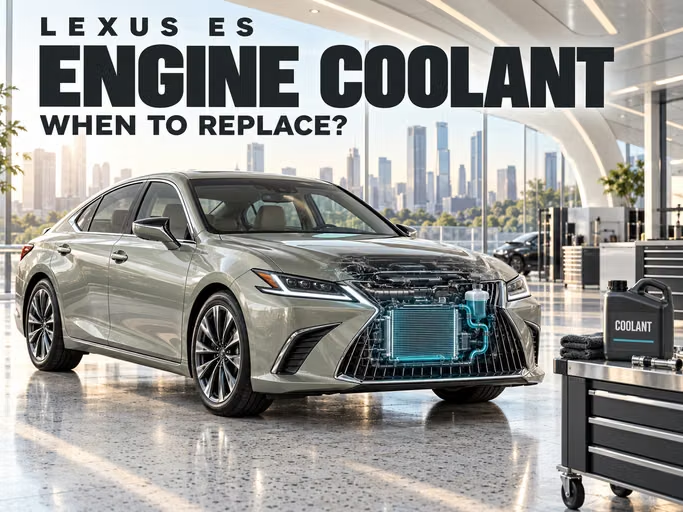
The coolant replacement interval for a Lexus ES depends on its generation, engine and applicable service documentation. This article provides a reference for petrol ES 200, ES 250 and ES 350 models, alongside questions that ES 300h hybrid owners should check separately. Falling coolant levels or overheating require investigation regardless of the mileage remaining before scheduled maintenance.
Finding the correct coolant replacement interval
The ES 350, ES 250 and ES 200 owner’s manual, publication OM33G45E, specifies an initial coolant change at 160,000 km and subsequent changes every 80,000 km on page 363. This schedule covers the versions described in that document; it is not a universal rule for every Lexus ES. Match the manual to your vehicle before using these figures.
First and subsequent replacements
The relevant schedule note states mileage without a separate limit in years. Do not attach an arbitrary five-year or ten-year deadline to it. Check the service booklet and local maintenance plan using the VIN for any applicable calendar requirements. Where both time and distance limits apply, follow whichever comes first.
Ask the workshop to record the next replacement on the job sheet, including the service from which that interval is measured. A level inspection, top-up and complete replacement are different operations. Evidence of a workshop visit alone does not establish that the coolant was renewed.
When previous servicing cannot be confirmed
For a used ES, request records showing the replacement date, mileage and coolant product. Ask whether the radiator, pump or hoses were replaced and whether overheating accompanied the repair. If records are unavailable, agree on an inspection and further servicing that will establish a clear starting point for future maintenance.
In UAE driving conditions, tell the technician about extended idling, frequent congested journeys and use on dusty roads. This helps shape the inspection. Do not automatically halve every interval because of hot weather: the maintenance plan should reflect the particular vehicle and its operating conditions.
Choosing the correct coolant
The cited manual specifies Toyota Super Long Life Coolant or an equivalent ethylene glycol product with long-life hybrid organic acid technology, without silicates, amines, nitrites or borates. A vehicle brand name on the container is insufficient; check the complete product description.
Why colour is not enough
Colour is easy to remember, but it does not replace a compatibility check. A label saying “for Asian vehicles” does not describe every requirement of a particular cooling system either. If the existing fluid is unknown, do not select a product for mixing by appearance; discuss the next steps with the workshop first.
Retain a label photograph and record the product name in the service paperwork. This makes a suitable top-up easier to discuss at the next visit. Start the specification check again for an older ES or a different powertrain; the requirements for one version should not be applied to the entire range.
Premixed coolant and the quantity required
The technical guidance on coolant composition explains that excessive concentrate impairs heat transfer. Follow the label for premixed fluid and use the specified dilution for concentrate. Hot weather does not mean the system needs undiluted concentrate or ordinary water in place of coolant.
Before purchasing supplies, confirm the quantity for your engine and the planned replacement method. Total system capacity may differ from the amount needed after draining. The quotation should make clear whether you are paying for premixed coolant or concentrate, and the final invoice should record how much product was used.
What owners of different ES versions should check
The guidance on selecting technical documentation ties manual selection to accurate vehicle identification and the model code. For an ES 300h hybrid, clarify servicing for engine and power electronics cooling separately. A petrol model’s schedule does not establish the replacement intervals for both hybrid circuits.
| Version | What to clarify | What to retain |
|---|---|---|
| ES 200 / 250 / 350 | Applicable manual and schedule | Product and next replacement |
| ES 300h | Engine and power electronics cooling | Work completed on each circuit |
| Another ES generation | Its own fluid and interval requirements | Documentation for that version |
| ES without records | Replacement, top-up or repair history | New records after servicing |
Monitoring coolant levels
Check the level after the vehicle has cooled, on level ground, using the markings on the correct reservoir. Use consistent conditions when comparing readings. If the level changes, record the date and mileage; a photograph helps show the technician the difference without relying on memory.
On a hybrid, first identify the reservoirs from its own manual. Do not touch high-voltage components or inspect close to moving parts with the powertrain switched on. If the level falls repeatedly, tell the workshop how often you have topped up and how much you added. These details are more useful than another unrecorded refill.
When a coolant change will not solve the problem
The cooling system diagnostic guidance covers the fan, radiator, thermostat, pump and temperature reading accuracy. Describe when the symptom appears: in traffic, at speed, after parking or following a recent repair. This helps identify the cause instead of limiting the response to a coolant change.
Dust on heat exchangers, a leak and restricted circulation require different work. Do not automatically include a new radiator or pump solely because of the vehicle’s mileage. Where repairs are necessary, match parts using the VIN, engine and catalogue number; an ES mention in an advertisement does not establish compatibility.
What servicing should include
Agree on the product, circuit, replacement method and final checks before work begins. If flushing is proposed, ask why it is needed and whether the method suits the system. Oil traces or substantial sediment call for investigation of the contamination source. Fresh coolant cannot fix the fault that caused it.
Bleeding and checking after cooling
The guidance on filling a cooling system explains that air pockets impair circulation and may cause overheating. After replacement, the workshop should complete the vehicle-specific bleeding procedure and check for leaks. For a hybrid, confirm which operations were completed on each circuit included in the work order.
Find out when to recheck the cold level and whom to contact if it is incorrect. Continued fluid loss or a temperature warning after servicing warrants contact with the workshop. Do not assume every change is normal settling after replacement without checking the cause.
Questions before buying a Lexus ES
When browsing current offers, compare documented maintenance histories as well as mileage and equipment. Ask which coolant was used, when it was replaced and whether overheating occurred. For an ES 300h, request a separate explanation of work completed on hybrid system cooling.
Checklist after servicing
☐ The work order identifies the ES version and circuit serviced.
☐ The replacement date and mileage are recorded.
☐ The coolant name and quantity used are documented.
☐ Bleeding and leak checks have been completed.
☐ You know when to check the level after cooling.
☐ The next replacement follows the applicable schedule.
Conclusion
For a Lexus ES, begin by identifying the exact version and confirming its maintenance schedule. Keep the product and service details, and clarify each circuit serviced on a hybrid. Seek diagnosis for coolant loss or overheating even when the next scheduled replacement is still some way off.


