


When to change the coolant in a Hyundai Staria
Hyundai Staria
Hyundai Staria•
•36 views
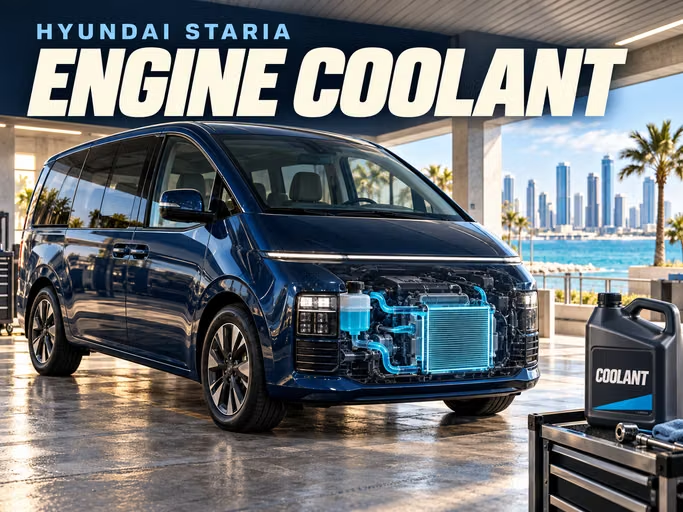
A Hyundai Staria can have different intervals for its first coolant change and later replacements. The odometer alone is therefore not enough: establish the model year, engine and service history. If the MPV is used for transfers, tell the workshop about extended idling while waiting for passengers. Coolant loss or overheating needs diagnosis even when the next scheduled change is still some way off.
When to replace the coolant in a Staria
According to information published on hyundai-uae.com, the general coolant replacement guideline is two years or 40,000 km. This page provides brand-wide advice rather than an individual schedule for every Staria. Check the interval for your vehicle against its manual and the local maintenance plan identified by VIN.
The first change and subsequent replacements
The 2025 Staria US4 maintenance schedule specifies an initial change at 195,000 km or 120 months for the petrol and diesel versions it covers. Subsequent changes are every 30,000 km or 24 months. Follow whichever limit comes first in each case. The longer initial interval does not restart after a coolant change.
This is an example from a specific manual edition, not a universal rule for every model year and powertrain. If the workshop recommends another interval, ask it to confirm the applicable schedule and record the next replacement date or mileage. A cooling system inspection entry does not establish that the fluid was replaced.
What to consider for transfer work
If your Staria spends long periods idling, describe this to the technician: annual mileage does not capture all engine running time. Discuss inspections and maintenance that suit the operating conditions. Do not independently halve the replacement interval simply because of the heat; a change should be supported by the documentation or inspection findings.
For a vehicle with an unclear history, request invoices showing the date, mileage and coolant product. A top-up, hose replacement and full coolant change are different jobs. If records are missing, agree on an inspection and further servicing. Even low mileage does not cancel the time limit.
Choosing the coolant and quantity
The 2025 Staria US4 fluid specifications call for phosphate-based ethylene glycol coolant for an aluminium radiator. Listed system capacities are 9.3 litres for the Smartstream G3.5 and 9.6 litres for the 2.2 VGT diesel. These figures apply to the versions described; the actual replacement quantity depends on how much fluid can be drained.
Start with the engine and specification
The Staria specification page lists a Smartstream G3.5 MPI petrol version. Check your engine in the vehicle documents rather than relying on seating capacity or body appearance. Ask the workshop to identify the exact coolant and confirm that it meets the requirements. A “for Hyundai” label on the container is insufficient.
Colour does not confirm compatibility: similar-looking fluids can have different chemistry. If the previous product is unknown, discuss the changeover to a suitable coolant before work starts. Keep a label photograph and invoice so the fluid does not have to be identified by appearance at the next service.
Premixed coolant and concentrate
The coolant composition guidance explains that excessive concentrate impairs heat transfer. Use premixed coolant as instructed on its label, and dilute concentrate to meet the vehicle requirements for water quality and proportions. Hot weather is not a reason to use neat concentrate or routinely replace coolant with plain water.
Before paying, check whether the quoted quantity refers to ready-to-use mixture or concentrate. They are different product quantities. Total system capacity also differs from the amount used in a particular service operation. For a Staria with another powertrain, use the appropriate documentation; do not automatically apply the stated figures to a Hybrid.
When diagnosis should come first
Level loss, sediment, an oily film or rising temperature requires investigation. Fresh coolant alone cannot fix a leak or restricted circulation. If symptoms began after a repair, give the workshop the previous job sheet: it helps to know which connections and components have already been disturbed.
| Situation | What it means for servicing | What to do |
|---|---|---|
| The replacement interval is reached | Planned work is due | Confirm the product and scope |
| The level falls again | The cause of the loss remains | Check the system for leaks |
| Sediment or an oily film appears | The contamination source needs investigation | Agree on diagnosis and cleaning |
| The engine overheats | The journey cannot continue normally | Stop safely and arrange assistance |
Monitoring the coolant level
The Staria level-check instructions specify a reading between MIN and MAX with the engine cool. Park on level ground and compare readings under the same conditions. A dated photograph helps track a change; comparing a hot engine reading with a cold one does not.
Repeated top-ups call for a system inspection. Record how much fluid was added and how often. Keep hands, clothing and tools away from the fan: it can start when the engine is not running. Do not open a hot cooling system to speed up a level check.
When temperature rises while waiting
Tell the technician whether the engine heats up only while stationary, while driving or with the air conditioning running. The cooling system diagnostic guide covers the fan, radiator airflow, thermostat, pump and temperature reading accuracy. The workshop can use the symptoms to determine its sequence of checks.
If an overheating warning appears, stop in a safe place and follow the vehicle manual. Do not continue the route relying on another top-up. For repairs, select the radiator, pump or thermostat by VIN, engine and catalogue reference; the Staria name in a parts description does not guarantee compatibility.
What a coolant change should include
Agree on the product, replacement procedure and final checks before work begins. Ask for the actual quantity and mixture to be recorded on the job sheet. If flushing is proposed, ask why: oil or substantial sediment also requires investigation of the contamination source. Otherwise the problem may return after refilling.
Bleeding and checking after cooling
The cooling system bleeding guidance explains how air pockets impair circulation and can cause overheating. Filling should be followed by the Staria-specific bleeding procedure and a leak check. The reservoir level immediately after filling does not establish that servicing is complete.
Ask when the workshop recommends checking the cold level again. New leaks, continued fluid loss or a temperature warning require a return visit. Do not regard these symptoms as normal simply because the coolant was changed recently.
Checks before buying a Staria
When browsing current offers, request the coolant replacement and cooling system repair history. If the MPV was used for passenger transport, ask about its operating pattern and service records. Enquire about overheating and why any radiator or hoses were replaced. Fresh coolant without documentation does not establish system health.
Checklist after servicing
☐ The work order identifies the Staria version and the circuit serviced.
☐ The replacement date and mileage are recorded.
☐ The coolant name and quantity are listed.
☐ Air removal and final checks have been completed.
☐ You know when to check the level after cooling.
☐ The next replacement follows the confirmed schedule.
Conclusion
For a Hyundai Staria, distinguish the first coolant change from subsequent replacements and match the fluid requirements and quantity to the engine. Record the product, date, mileage and next service deadline. Investigate recurring level loss or overheating first: a routine fluid change cannot replace a necessary repair.


