




























نوع الجسم
الأسعار
أفضل مكان للشراء

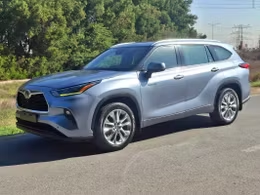
Toyota Highlander دفع رباعي 5 أبواب
30,000 - 210,000 AED
أفضل مكان للشراء
تمويل السيارة
مع الضمان
التبادل ممكن
فقط مع فيديو
فقط مع خصومات
للتصدير فقط
154 إعلانا
كن أول من يعرف عن الإعلانات الجديدة
احفظ فلاتر بحثك لكي تجد الإعلانات التي تحتاجها بشكل أسرع.
يبدأ سعر Toyota Highlander من 30,000 AED ويصل إلى 210,000 AED. قد تختلف التكلفة النهائية على الطريق قليلاً حسب التأمين والتسجيل والملحقات الاختيارية.
Toyota Highlander دفع رباعي 5 أبواب
أفضل مكان للشراء
Toyota Highlander ناقل حركة متغير باستمرار
أفضل مكان للشراء
Toyota Highlander أوتوماتيك
أفضل مكان للشراء
Toyota Highlander هجين
أفضل مكان للشراء
Toyota Highlander بنزين
أفضل مكان للشراء
Toyota Highlander 2008
Toyota Highlander 2026
أفضل مكان للشراء
Toyota Highlander 2025
أفضل مكان للشراء
Toyota Highlander 2024
أفضل مكان للشراء
Toyota Highlander 2023
أفضل مكان للشراء
Toyota Highlander 2022
أفضل مكان للشراء
Toyota Highlander 2021
أفضل مكان للشراء
Toyota Highlander 2020
أفضل مكان للشراء
Toyota Highlander 2019
أفضل مكان للشراء
Toyota Highlander 2018
أفضل مكان للشراء
Toyota Highlander 2017
أفضل مكان للشراء
Toyota Highlander 2016
أفضل مكان للشراء
Toyota Highlander 2015
أفضل مكان للشراء
Toyota Highlander 2014
أفضل مكان للشراء
Toyota Highlander 2013
أفضل مكان للشراء
Toyota Highlander 2012
أفضل مكان للشراء
Toyota Highlander 2010
أفضل مكان للشراء
Toyota Highlander 2009
أفضل مكان للشراء
Toyota Highlander 2008
أفضل مكان للشراء
-Toyota Highlander بريدة
Toyota Highlander المدينة المنورة
Toyota Highlander الشارقة
أفضل مكان للشراء
Toyota Highlander دبي
أفضل مكان للشراء
Toyota Highlander صحار
أفضل مكان للشراء
Toyota Highlander المسكات عنب طيب الشذا
أفضل مكان للشراء
Toyota Highlander الرياض
أفضل مكان للشراء
Toyota Highlander جدة
أفضل مكان للشراء
Toyota Highlander أبوظبي
أفضل مكان للشراء
Toyota Highlander بريدة
أفضل مكان للشراء
-Toyota Highlander المدينة المنورة
أفضل مكان للشراء
Toyota Highlander الدمام
أفضل مكان للشراء
يوضح الرسم البياني ديناميكيات متوسط سعر الطراز في سوق السيارات المستعملة خلال العام الماضي. تساعدك هذه البيانات على تقييم جدوى الشراء وتوقع القيمة المستقبلية للسيارة.
قد تختلف الأسعار على AUTO.AE عن تكلفة البيع الفعلية. تستند البيانات إلى قاعدة بياناتنا من السيارات المباعة والإعلانات الحالية. للحصول على تقييم دقيق، استخدم أداتنا.

There is no single spark-plug replacement point for every Toyota Highlander generation. The current 2026 Highlander Hybrid for the UAE has a 2.5-litre four-cylinder petrol engine and therefore uses four spark plugs. Earlier V6 versions use six, while imported Highlanders with a four-cylinder turbo engine use four. Identify the model year, destination market, powertrain and engine code first. Then confirm the interval and specification from the VIN and the documents for that exact vehicle. Inspect the ignition system earlier if there are misfires, an uneven start, loss of power or a flashing Check Engine light. Important. A Highlander Hybrid still uses spark plugs. The electric motor assists vehicle movement but does not replace the petrol engine’s ignition system. These petrol versions do not use glow plugs. How many spark plugs different Highlander versions use Cylinder count determines quantity, but it does not identify the correct part. Plugs with the same quantity can still differ in thread size, seat design, heat range, resistance and electrode construction. When to inspect the plugs before scheduled replacement A worn plug requires more voltage to create a spark. A weakness can therefore appear under load before it is obvious at idle: the engine may start confidently yet hesitate during acceleration or on an incline. Symptoms on a petrol engine extended cranking or uneven running during the first seconds after starting; idle vibration, especially when the air conditioner is switched on; loss of response during acceleration, overtaking or climbing; P0300 or P0301-P0306 faults and a flashing Check Engine light; higher fuel consumption on the same route and under the same load. What to consider on a Highlander Hybrid The hybrid’s petrol engine starts automatically and may run in short cycles. Electric drive can partly mask a mild misfire, so the driver may not notice it immediately. Stored codes, freeze-frame data, cold-start behaviour and the transition into combined powertrain operation are more useful evidence. None of these symptoms proves that a spark plug is faulty. Similar behaviour can come from an ignition coil, injector, intake leak, intake deposits, low 12-volt battery voltage or a mechanical cylinder problem. How the Highlander ignition system works Current four-cylinder hybrid Each cylinder has one plug and one individual ignition coil. The control system coordinates the spark with fuel injection and hybrid operation. An enlarged gap or damaged insulator may be most noticeable during an automatic petrol-engine start or when engine load rises. Turbo versions and earlier V6 engines The four-cylinder turbo engine also uses one plug per cylinder, but its specification must not be transferred to the naturally aspirated hybrid engine. A V6 has two cylinder banks and six plugs; access to the rear bank may require additional removal work. Confirm quantity, part type and procedure for the exact variant. What shortens spark-plug service life Remove sand and dust from the top of the engine and the plug wells before lifting the coils. Remove the plugs only after the aluminium cylinder head has cooled. Apply thread compounds only when the component manufacturer gives a direct instruction. What can happen if replacement is delayed An enlarged gap increases the electrical load on the ignition coil. Misfires under load can develop into continuous rough running. Unburned fuel can overheat the catalytic converter. Repeated starting attempts add load to the starter and 12-volt battery. Heavy deposits can make safe plug removal more difficult. On a hybrid, a mild misfire may remain unnoticed between short engine-running cycles. A new set can foul quickly if a mixture, oil or compression fault remains. Critical warning. If the Check Engine light flashes and the engine vibrates strongly or loses noticeable power, reduce the load and stop safely. Driving with active misfires can damage the catalytic converter. Toyota Highlander maintenance guidance and specifications According to the information presented on toyota.ae, the 2026 Highlander Hybrid for the UAE uses a 2.5-litre four-cylinder petrol engine. An official Toyota overview separately describes the 2.4-litre four-cylinder turbo version and its change from the previous 3.5-litre V6. These powertrains must not share one plug specification or service schedule. No universal interval applies to every Highlander. Confirm the replacement point, part number, gap and tightening torque from the VIN, engine code and documents for the exact vehicle. If a direct manual for the required year and market is unavailable, the word “manual” is not a substitute for checking the parts catalogue and vehicle data. How to use the table Record the VIN, model year, destination market and engine code first. Use cylinder count only to establish quantity, not the part specification. Do not transfer specifications among the 2.5-litre hybrid, 2.4-litre turbo and 3.5-litre V6. For a hybrid, check the petrol-engine data rather than relying only on the Hybrid badge. When history is unknown, begin with diagnosis and inspection of the installed set. How to choose the correct set Thread diameter and reach, seat type, heat range, resistance, electrode material and terminal design must all match. A photograph, socket size or matching displacement does not confirm compatibility. Checking a used Highlander A replacement record should show the date, mileage, part numbers and workshop invoice. When comparing current listings, check the engine variant, cold-start behaviour, stored faults and operation under load separately. Recently installed plugs without records do not confirm the condition of the coils, injectors or cylinders. What a removed spark plug can reveal Inspection helps compare cylinders but does not replace measurements and diagnosis. The same deposit colour can accompany different faults, so plug traces must be compared with fault codes, fuel trims and compression. Diagnosing a fault Save the DTCs and freeze-frame data before clearing the memory. Then confirm the engine variant, compare cylinders and inspect the coils, power supply and plugs. Replace the set after excluding faults that could quickly damage the new components. Diagnostic sequence Read the DTCs and save freeze-frame data before clearing the memory. Record temperature, engine speed, load and when the symptom appears. Confirm the engine and correct cylinder numbering. Inspect the connectors, ignition coils, boots and plug wells. Compare the plugs without mixing up their original locations. If a plug does not explain the fault, check the injector, mixture and compression. After repairs, perform a verification start or road test and scan again. Checklist before service ☐ Record the VIN, production year, market and engine code. ☐ Confirm the quantity and catalogue specification of the plugs. ☐ Save DTCs and freeze-frame data before disconnecting power. ☐ Allow the engine to cool and remove sand from the work area. ☐ Prepare the correct spark-plug socket and extension. ☐ Confirm the gap and tightening torque for the exact engine. ☐ Do not apply thread compounds without a direct manufacturer instruction. ☐ Inspect the ignition coils, boots and connectors. ☐ After assembly, confirm smooth operation and no new codes. Mistakes to avoid Ordering plugs using only the descriptions “Highlander 2.5” or “Highlander 3.5”. Transferring a part specification among hybrid, turbo and V6 engines. Treating one interval as mandatory for every generation and market. Adjusting a fine electrode without approval for the exact plug type. Cleaning worn plugs and treating this as complete replacement. Replacing parts after an active fault without checking coils and injectors. Clearing codes before saving the original conditions. Removing plugs from a hot aluminium cylinder head. Tightening plugs without torque control. Frequently asked questions about Toyota Highlander spark plugs How many spark plugs are fitted to a 2.5-litre Highlander Hybrid The current four-cylinder version uses four spark plugs, one per cylinder. Confirm the exact specification from the VIN and vehicle data. How many spark plugs does a V6 Highlander use A six-cylinder engine uses six plugs. The specification still depends on the generation and exact V6 variant. Does a Highlander Hybrid have spark plugs Yes. The electric motor does not replace the petrol engine’s ignition system. Selection requires the year, market, VIN and engine code. Can the replacement point be determined from mileage alone No. Time, operating pattern, engine type and the confirmed date of the previous service all matter. Diagnose earlier if symptoms appear. Should all spark plugs be replaced as a set During scheduled service, a matching set for that engine is normally fitted. If one new plug quickly becomes contaminated, investigate that cylinder first. Does a P030X code always mean a faulty spark plug No. An ignition coil, injector, wiring fault, intake leak or compression loss can create the same code. The code helps localise the issue but is not a complete diagnosis. Can the vehicle be driven with a flashing Check Engine light Normal driving under load should not continue. Active misfires can overheat the catalytic converter, so stop safely and arrange diagnosis. Should the plugs be replaced immediately after buying a used Highlander Not automatically. Review the records, cold start, stored faults and installed parts first. If the history is unknown, base the decision on diagnosis. Conclusion The current 2.5-litre Toyota Highlander Hybrid uses four spark plugs, while earlier V6 versions use six. Quantity alone does not provide a part specification or universal replacement point. Determine the interval, gap and tightening torque from the VIN, engine and documents for the exact vehicle. When misfires occur, assess the plug together with the ignition coil, injector, mixture and compression; on a hybrid, also account for automatic petrol-engine starts.

The Toyota Highlander fuel-filter service point cannot be determined from the model name or mileage alone. Engines, injection systems, in-tank module contents and destination markets have changed across generations, while the current UAE Highlander is a hybrid. Identify the vehicle by VIN and model code before consulting the schedule for its powertrain. If the service history is incomplete, test fuel quality, pressure and pump electrical load before deciding to open the module. Important. Do not transfer a service interval from another Highlander. Hybrid, conventional petrol and imported versions can differ in both scheduled work and module contents. Signs of a Clogged Fuel Filter on a Toyota Highlander Loaded filter media can restrict delivery, but no single symptom proves that the filter is blocked. A worn pump, weak electrical supply, an intake leak, injectors, sensors or a hybrid-system fault can create similar behaviour. Diagnosis should reproduce the driver's complaint and compare hydraulic, electrical and control-system data in the same operating state. ● The engine takes a long time to start after standing. On a non-hybrid version, pressure may be building too slowly or decaying too quickly. On a hybrid, first establish that the system has requested the petrol engine to start, then check the pump, check valve, injectors and auxiliary electrical supply. ● A hesitation appears during acceleration or on a climb. Delivery may remain adequate at light load and then lag behind demand. Intake and exhaust restriction, ignition, throttle control and the high-pressure stage, where fitted, must be checked at the same time. ● An unfamiliar hum comes from the tank. Higher noise can result from filter resistance, a low fuel level, heat or internal motor wear. Interpret the sound with voltage, current and pressure rather than treating it as proof by itself. ● Hesitation or a warning begins after refuelling. Water and sediment can load the filter layer quickly. Take a sample before ordering parts, inspect the tank and decide whether the lines and injectors also require cleaning. ● Power drops only after a long drive in hot conditions. The cause may be a temperature-sensitive pump or supply fault rather than permanent blockage. Record fuel level, ambient conditions, driving time and the moment the symptom begins. On a hybrid Highlander, petrol-engine operation depends on traction-battery charge, temperature and requested power. The observation that the engine did not start immediately is therefore not a filter diagnosis. Testing needs a repeatable condition in which the control system commands engine operation. Why Symptoms Can Be Intermittent on a Hybrid Highlander Electric assistance can mask a small loss of fuel-delivery reserve during gentle driving. As battery charge falls, road speed rises or a climb continues, the petrol engine carries more of the load. Restriction can then become obvious even though the next short journey feels normal. To separate a fuel fault from normal hybrid strategy, record the engine-start request, load, fuel trims, pressure and pump command together. If the deviation appears only after heat builds, repeat the electrical and delivery checks with the pump warm. What Happens If You Do Not Replace the Fuel Filter on a Toyota Highlander? As contamination accumulates, the delivery margin becomes smaller. The vehicle may behave normally in town yet lose response during sustained demand. Delayed diagnosis adds load to the pump and makes the cause harder to isolate. Preventive replacement without measurements, however, will not correct a poor connection, a faulty regulator or debris that remains inside the tank. Available flow declines. Pressure can look acceptable at low demand and then stop following the engine's requirement during stronger acceleration. Fuel-trim values move away from normal. The control system compensates until its usable range is exceeded and a fault is stored. Interpret the code with freeze-frame data and measured pressure. Pump workload rises. Restriction increases electrical and thermal stress, while normal wear further reduces output. Measure voltage and current at the same time as delivery. An unstable low-pressure supply affects the next stage. Where a separate high-pressure circuit is used, poor feed from the tank can imitate failure downstream. Testing should begin at the fuel source. Severe restriction can cause major power loss, an engine shutdown or a no-start condition. On a hybrid this may also trigger warnings and reduced-power operation, so stop safely and preserve diagnostic data before clearing memory. Fuel-system and hybrid safety. Before opening the system, relieve pressure by the specified method, remove flames and sparks, provide ventilation and switch the vehicle fully off so it cannot remain in READY. Which Fuel Filter Does Toyota Recommend for a Toyota Highlander? According to the information presented on toyota.ae, the 2026 UAE Highlander Hybrid uses a 2.5-litre four-cylinder hybrid powertrain, eCVT and AWD. This information does not define filter construction for other generations or markets. Toyota specifies the component for the exact variant, so confirm the VIN, model code, engine and fuel-module contents before ordering. There is no universal filter or common interval for every Highlander. Why 2026 Highlander Hybrid Data Does Not Apply to Every Generation The current specification confirms only the powertrain sold by Toyota in the UAE today. It does not describe the fuel module used by earlier Highlander generations, conventional petrol versions or vehicles imported from other markets. A shared model name or engine capacity does not establish the same pump, filter or service requirement. Scheduled work comes from documentation for the exact VIN. An inspection entry is not automatically a replacement instruction, while the absence of a separate line does not prove unlimited life after water or sediment contamination. Open the system outside the schedule only for confirmed restriction, contaminated fuel or module repair. Record pressure, current and fuel-trim values before dismantling and repeat the measurements in a comparable state after assembly. This shows whether the original cause has been removed and helps prevent replacement of a sound assembly because several symptoms happened to overlap. How to Choose a Fuel Filter for a Toyota Highlander Part selection requires the VIN, model code, engine designation, model year and destination market. Highlander vehicles with a similar appearance can differ in pump, controller, connector, level sender, tank cover and package contents. A generic 'fits Highlander' description is not enough. ● Identify the powertrain before searching. Hybrid and conventional petrol versions may use different modules, pump capacity and control logic. ● Confirm the catalogue package. The inlet strainer, filter housing, pump, regulator, level sender and seal may be supplied separately or as part of a larger assembly. ● Compare part references rather than appearance. Similar shapes do not confirm outlet direction, terminal count, sender range or designed flow capacity. ● Check package contents before opening the tank. Prepare a new seal, required fasteners and specified single-use items so the system is not reassembled with a compressed old ring. ● Order the module after diagnosis. Test pressure under load, pump supply and current, residual pressure and fuel condition first. These results distinguish restriction from an electrical or control fault. Clogged Fuel Filter and Toyota Highlander Engine Problems A diagnostic sequence is more reliable than an assumption based on one code. Record the complaint conditions, fuel level, temperature, READY state, petrol-engine engagement and most recent refuelling. Then compare pressure, pump electrical values and engine-control data. The filter becomes a justified suspect only when several observations point to restricted delivery. Checks to Complete Before Replacement ● Establish the exact variant. Record the VIN, model code, engine, hybrid-system type and destination market. Model year alone is insufficient. ● Review service history. Find the date and reason the tank was last opened, previous part numbers and any record of contaminated fuel. ● Preserve codes and freeze frames. Engine speed, load, temperature, fuel trims and hybrid-system state help reproduce the deviation. ● Assess fuel quality. A tank sample can reveal water and sediment; clean affected components instead of installing a new filter into the same contamination. ● Measure pressure under real load. A test without petrol-engine operation or only at idle can miss the drop that occurs on a climb or during acceleration. ● Compare pump supply, current and delivery. A poor ground, terminal resistance or incorrect command can look like filter restriction. ● Test pressure retention. Rapid decay after the engine stops may involve a valve, regulator or injector rather than loaded filter media. ● Prepare a safe work area. Relieve pressure by the specified method, remove ignition sources and switch the hybrid system fully off so the vehicle cannot remain in READY. Common Toyota Highlander Fuel Filter Service Mistakes ● Assigning one interval to every Highlander. Generations, powertrains and destination markets can use different operations and module contents. ● Treating delayed petrol-engine engagement as proof of blockage. On a hybrid, the control strategy determines when the engine starts. ● Ordering a part from a photograph. Visual similarity does not confirm connectors, regulator, level sender or delivery capacity. ● Confusing the inlet strainer with the fine filter. Servicing one element does not mean the complete filtration section has been replaced. ● Replacing the high-pressure pump before checking tank supply. A shortage on the low side can create similar deviations downstream. ● Cleaning disposable media with solvent or compressed air. This damages the structure and cannot restore designed efficiency. ● Leaving water or sediment in the tank. The new element will load quickly and the original symptoms will return. Confirm the Toyota Highlander maintenance requirement and fuel-module contents by VIN, powertrain, model year and destination market. When history is incomplete, begin with fuel quality, pressure and pump supply. Current listings illustrate how widely Highlander generations and powertrains vary, while part compatibility still depends on the catalogue for the individual vehicle.

Cabin-filter condition has a noticeable effect on climate-system performance in a Toyota Highlander: a three-row interior needs steady airflow, especially after the vehicle has stood in the sun. Inspect the element using more than mileage. Ventilation operating time, dusty routes, odour and the cooling speed of different cabin zones also matter. Important. Toyota’s official local-market section lists Highlander as a hybrid model, while the used-car market also includes other model years and specifications. Never transfer an access layout, filter dimensions or installation procedure from one version to another without confirming the VIN, model year and original market. Signs That the Highlander Cabin Filter Needs Inspection Contamination develops gradually, so a driver may become accustomed to weaker ventilation. For a fair comparison, keep the temperature, air-distribution setting and blower speed unchanged. Observe the system after a cold start, in a heat-soaked cabin, and while switching between fresh-air and recirculation modes. • Airflow at the front vents is lower than it used to be. Output should remain steady at a medium blower setting. If sound increases without a similar rise in air volume, the filter may have accumulated a dense dust layer. • The second and third rows take longer to cool. The filter is not the only possible cause, but restricted total airflow is easy to notice in a large cabin. Also confirm vent positions and rear-zone settings where fitted. • The windscreen clears more slowly. Reduced airflow weakens demisting. Damp mats, an incorrect recirculation setting and a dirty inner glass surface can produce a similar result. • A dusty or damp odour appears when ventilation starts. Filter media can retain contamination and moisture, although the outside-air intake, evaporator or drain may be the true source. • A fresh dust layer quickly returns to the dashboard. Inspect the filter edges, seal and seating. Even a new element performs poorly if its frame is crushed or its dimensions do not match the housing. Begin the check with the windows and doors closed. Select a medium blower speed, direct air through the centre vents and compare left- and right-side output. Then move distribution through the footwell and windscreen settings. A large difference limited to one direction points more towards an air door or duct, while uniformly weak delivery makes filter inspection a logical first step. Do not judge a removed element by colour alone. Separate the pleats gently, hold the filter against the light and look for damp patches, leaves, sand, tears and distorted edges. A contamination stripe along one side may indicate bypass at a gap, while water marks require the source of moisture to be identified. Record the result together with the date, mileage and recent driving conditions. Over time, this history shows how quickly the filter becomes loaded in that individual Highlander. It also separates a one-off dusty journey from continuous exposure caused by daily routes and long air-conditioning operating hours. Why Operating Conditions Matter More Than One Interval Equal mileage does not mean equal filter life. One vehicle may cover long distances on open roads, while another spends hours in slow traffic with the climate system running continuously. The second vehicle processes more air per kilometre, so an odometer-only replacement rule gives an incomplete picture. An additional inspection is sensible after a sand-laden wind, travel near construction sites, extended parking under trees or unpaved-road use. A dry and undamaged element does not automatically need to be discarded after every dusty trip. Base the decision on pleat loading, airflow resistance, moisture and the requirements for the exact vehicle. Do not try to restore disposable media with water or a powerful compressed-air jet. The surface may look lighter afterwards, but fibres and pleats can be damaged while fine particles remain embedded. If the element has lost its shape, become damp or clearly restricts output, replace it after confirming compatibility. What a Blocked Toyota Highlander Cabin Filter Can Cause The cabin filter does not supply air to the engine; it is a separate climate-system component. Its main purpose is to capture particles before outside air enters the passenger compartment. Once the pleats are loaded, the blower must work against higher resistance and the driver often compensates by selecting a higher speed. Vent airflow decreases. The climate system may take longer to control temperature, particularly in the rear of a three-row cabin. Blower noise becomes more noticeable. Higher settings are used more often even though actual airflow does not rise in proportion to the sound. Windscreen demisting loses effectiveness. Condensation takes longer to clear, so the fault should not be masked by permanent maximum blower speed. Contamination bypasses the media. An edge gap or folded frame allows dust to reach the housing and internal climate-system surfaces. Odour becomes more persistent. Dust-loaded or damp media may retain a smell, but replacement cannot clean the evaporator or condensate drain. Weak airflow should not be blamed on the filter automatically. If a correctly matched new element does not change system behaviour, inspect the outside-air intake, air-door operation, blower, accessible ducts and evaporator condition. This sequence avoids replacing serviceable components while leaving the actual restriction unresolved. How to Select a Cabin Filter for Toyota Highlander The Highlander name alone is not enough for ordering a filter. Different generations, hybrid and petrol versions, and vehicles imported from several regions can all be present in the market. Start with the VIN and production date, then confirm the part number, frame dimensions, seal design and compatibility with the climate system fitted to that specification. How to Use the Toyota Highlander Hybrid Manual An official 2026 Toyota Highlander Hybrid manual is available. It applies to equipment for that model year and may describe options not installed in every vehicle. For another year or original market, use the documentation supplied for that version and confirm the service part number separately by VIN. Before installation, compare the replacement with the removed element for length, width, height and seal position. A small visual difference can matter: a low filter leaves a bypass gap, while an element that is too tall becomes crushed when the cover closes. It should sit squarely without severe bending or force on the latch. Remove loose debris from the accessible section of the housing without pushing it towards the blower wheel. Avoid leaving moisture inside with a wet cloth. Before closing the cover, confirm that no pleat is trapped, the seal sits evenly around the perimeter and the latch engages with normal effort. How to Choose the Media and Install the Element • Standard particulate filter. Captures sand, pollen and larger particles with moderate resistance to airflow. • Activated-carbon filter. An added layer may partly reduce outside odours but cannot remove contamination from the evaporator or ducts. • Multilayer filter. May retain finer particles more effectively when its dimensions and resistance are suitable for the vehicle’s system. An AIR FLOW arrow shows the direction in which air passes through the media, while UP identifies the top of the element. The two markings are not interchangeable. Do not copy arrow position from a photograph of another Toyota; compare the label with the instructions for the specific Highlander and with the orientation of a correctly installed old filter. After assembly, test low, medium and high blower speeds in sequence. Low speed makes a whistle around the cover easier to hear, medium is useful for judging even delivery, and high can reveal vibration from a poorly secured frame. Then switch through fresh air, recirculation, footwell and windscreen modes. Do not assess only the temperature at the front vents. Check every available cabin zone and confirm that distribution behaves predictably. A new filter cannot repair a faulty air door or weak blower, so a lack of improvement is a reason to continue diagnosis rather than install another element. Why an Odour Appears When the Highlander Climate System Starts The filter media itself can retain a smell, but the source is often elsewhere. Leaves and sand near the outside-air intake hold moisture, deposits may build up on the evaporator, and poor condensate drainage allows dampness to return. The timing of the odour is therefore more useful than an assumption about one component. If the smell is present only in fresh-air mode, inspect the intake area first. If it remains the same during recirculation, continue farther along the internal air path. Dampness during the first seconds after start-up more often points to moisture in the housing or on the evaporator, while a constant dusty smell may come from saturated media. Do not use an air freshener to confirm a repair. It merely masks a weak smell and makes comparison harder. Test the system without additional fragrance, first with the air conditioner off and then with cooling operating. A symptom that returns after several journeys means the issue extends beyond a filter replacement. What to Diagnose After Filter Replacement • Inspect the outside-air intake. Remove leaves, sand and small debris without pushing them deeper into the system. • Check drainage and signs of moisture. Recurring dampness or water in the housing must be corrected or the new filter will become wet again. • Compare fresh air and recirculation. A difference between the modes helps show whether the odour enters from outside or develops internally. • Test every air-distribution setting. Uneven output limited to one mode may involve an air door rather than the filter. • Review the result after several journeys. If symptoms return, inspect the evaporator, blower and accessible ducts. Common Highlander Cabin-Filter Service Mistakes • Buying by model name alone. Highlander versions from different years and markets can use different housings and filter numbers. • Treating any dark colour as proof of immediate replacement. Pleat loading, resistance, moisture, damage and the exact vehicle requirements all matter. • Confusing AIR FLOW with UP. Incorrect orientation can distort the frame, reduce sealing and create noise. • Washing disposable media. Water damages the fibre structure, while forceful air cannot restore original performance. • Promising that a new filter will remove every odour. If the symptom remains, contamination or moisture elsewhere in the climate system must be investigated. Conclusion. Service the Highlander cabin filter using both the correct documentation and its actual condition, not one universal mileage figure. Confirm the part by VIN, monitor airflow across all rows and continue diagnosis if odour or weak delivery remains. Current listings help compare Toyota Highlander model years and specifications before choosing a vehicle, but they do not replace checks of equipment and maintenance history.
قد تشمل إعلانات Toyota Highlander الفئات التالية: GLE، VXR، Premium، وLimited، وغيرها. تعتمد القائمة الحالية على الدولة المختارة وسنة الصنع وتوفر السيارات. استخدم فلتر «الفئة» لمقارنة الخيارات المتاحة.
ينبغي تقييم المسافة المقطوعة إلى جانب عمر السيارة وحالتها وسجل صيانتها. قارن المسافة المقطوعة بسيارات مماثلة من سنة الصنع نفسها، وتحقق من سجل الصيانة والحالة الفعلية للسيارة قبل الشراء.
تتراوح أسعار الإعلانات الحالية لسيارة Toyota Highlander على AUTO.AE من ٣٠٬٠٠٠ إلى ٢١٠٬٠٠٠ AED. يعتمد السعر على سنة الصنع والمسافة المقطوعة والفئة والحالة والمواصفات الإقليمية. تستند هذه البيانات إلى الإعلانات النشطة وقد تتغير.
قد يعرض البائع الخاص سعراً أقل، بينما قد يقدم معرض السيارات خدمات إضافية مثل التمويل أو الضمان أو المساعدة في التأمين. تختلف الشروط، لذا تحقّق من معلومات الإعلان ووثائق السيارة وبيانات البائع.
تحقّق من بطاقة تسجيل المركبة «الملكية» (Mulkiya)، ومن تطابق رقم الهيكل (VIN) على السيارة وفي الوثائق، وبيانات المالك، وسجل الصيانة، وسجل الحوادث. وتأكد أيضاً من عدم وجود قرض قائم أو مخالفات أو قيود أخرى على السيارة. ويُفضّل إجراء فحص مستقل قبل إتمام الصفقة.
نعم. يمكنك الاتفاق مع البائع على إجراء فحص فني مستقل في مركز خدمة من اختيارك. يساعد الفحص على تقييم حالة المحرك وناقل الحركة والهيكل والأنظمة الإلكترونية والمكوّنات الأخرى.
يعني مصطلح GCC Specs أن السيارة صُنعت وفق المواصفات المعتمدة لأسواق دول مجلس التعاون الخليجي. وعادةً ما تكون هذه الإصدارات مصممة لتناسب الظروف المناخية المحلية. لكن GCC Specs بحد ذاتها لا تثبت حالة السيارة ولا تعني وجود ضمان ساري؛ لذا يجب التحقق من حالة السيارة والضمان بشكل منفصل.
تقدم بعض معارض السيارات خيارات تمويل. وعند توفرها، قد تُذكر الشروط أو قيمة القسط الشهري التقديرية في الإعلان. تعتمد نسبة الفائدة النهائية والموافقة على البنك والدفعة الأولى وبيانات المشتري.


