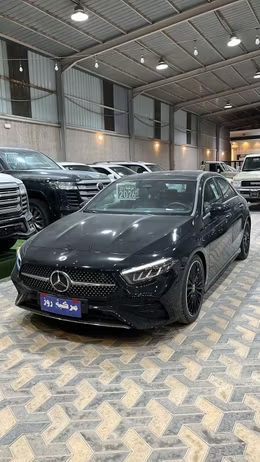
Mercedes-Benz A-Class 200 عملية فيس ليفت IV (W177)
رمادي
•
مقود يسار
1.3 لتر، 163 حصان، بنزين
دفع أمامي
ناقل حركة يدوي آلي
سيدان
مواصفات الخليج
Crypto Accepted | Mercedes-Benz A-Class A 200 (GCC Specs) - 2026
Mercedes-Benz A 200
Model: 2026
GCC Specifications
Brand New
Exterior Color: Mountain Grey
Interior Color: Red
⋙ Cryptocurrency payments are accepted
Local Agency Warranty
2 Years International Warranty
2026
0 كم
155,000 AED
التمييز باللون
طريق رائع لجذب انتباه الآخرين إلى عرضكم، حيث سيكون أكثر بروزاً في نتائج البحث.
Mercedes-Benz A-Class 200 عملية فيس ليفت IV (W177)
أبيض
•
مقود يسار
1.3 لتر، 163 حصان، بنزين
دفع أمامي
ناقل حركة يدوي آلي
سيدان
مواصفات الخليج
Crypto Accepted | Mercedes-Benz A-Class A 200 (GCC Specs) - 2026
Mercedes-Benz A 200
Model: 2026
GCC Specifications
Brand New
Exterior Color: White
Interior Color: Red
⋙ Cryptocurrency payments are accepted
Local Agency Warranty
2 Years International Warranty
2026
0 كم
155,000 AED
التمييز باللون
طريق رائع لجذب انتباه الآخرين إلى عرضكم، حيث سيكون أكثر بروزاً في نتائج البحث.
أسعار فئات Mercedes-Benz A-Class في دول مجلس التعاون الخليجي (GCC)
يبدأ سعر Mercedes-Benz A-Class من 24,900 AED ويصل إلى 233,401 AED. قد تختلف التكلفة النهائية على الطريق قليلاً حسب التأمين والتسجيل والملحقات الاختيارية.
يوضح الرسم البياني ديناميكيات متوسط سعر الطراز في سوق السيارات المستعملة خلال العام الماضي. تساعدك هذه البيانات على تقييم جدوى الشراء وتوقع القيمة المستقبلية للسيارة.
قد تختلف الأسعار على AUTO.AE عن تكلفة البيع الفعلية. تستند البيانات إلى قاعدة بياناتنا من السيارات المباعة والإعلانات الحالية. للحصول على تقييم دقيق، استخدم أداتنا.
When Should Mercedes-Benz A-Class Brake Pads and Rotors Be Replaced?
Replace Mercedes-Benz A-Class brake pads and rotors according to inspection and measurement results. A car used in stop-start traffic has a different braking workload from one driven mainly on open roads. Equal mileage therefore does not mean equal lining thickness, and apparently healthy pads do not rule out rotor damage. This article explains when workshop attention is needed and what to check before replacing parts. It focuses on modern A-Class hatchbacks and saloons; earlier generations require their own service data. Select the brake kit using the VIN and the components actually fitted. In brief. There is no universal replacement mileage. Assess pads and rotors by wear, damage and the limits for the exact part. Generous lining thickness does not rule out overheating, binding or rotor damage. Identify the A-Class Version First The A-Class name and production year are not enough to order parts. Different generations, engines and brake packages use different rotors, pads and calipers. AMG Line styling also does not establish that a car has the brakes fitted to a Mercedes-AMG A 35 or A 45. Record the VIN, full model designation and equipment codes before ordering. The workshop should compare the parts catalogue with markings on the installed components, especially if a previous owner changed the brake kit. Wheel diameter and caliper colour do not establish compatibility. Conventional petrol and diesel models. Confirm the generation, engine and factory brake specification. A 250 e. Check plug-in hybrid parts applicability and account for regenerative braking. Mercedes-AMG A 35 and A 45. Use data for the exact variant and fitted brake package. Modified vehicles. Match the manufacturer and part numbers of the rotors, calipers and pads. Why A 250 e Rotors Still Need Inspection During regeneration, the electric motor helps slow the car and returns energy to the battery. This changes the workload of the friction brakes but does not remove their servicing needs. On an A 250 e, check corrosion, both rotor friction surfaces and free pad movement as well as remaining lining thickness. A thick lining alone does not establish that the assembly is healthy. When the Components Actually Need Replacement In the September 2021 edition of the A-Class Sedan manual, a brake-pad check message means the wear limit has been reached and a qualified workshop should be consulted. Use the appropriate documentation for your own vehicle. Compare rotor and lining measurements with the limits for the exact brake assembly. The friction material has reached its specified limit, is damaged or is contaminated. A pad-wear message requires prompt workshop attention. Rotor thickness has reached its minimum, or geometry remains outside specification after the hub and installation have been checked. Cracks, substantial surface damage or heat damage make the component unsafe to retain. Uneven wear accompanies a caliper or mounting fault that has already damaged the pad or rotor. A wear sensor does not measure rotor thickness or replace inspection of every pad. The absence of a warning does not confirm that the brakes are healthy. Arrange a prompt inspection for a wear message; if grinding, strong pull or reduced braking occurs, stop the journey safely. Key rule. Replace pads as an axle set and rotors as an axle pair. Fit new pads when replacing rotors. First correct a caliper fault, contaminated hub face or any other cause of damage. What to Check After Removing the Wheels The wheel spokes reveal only part of the assembly. With the wheels removed, inspect both rotor faces and every pad, recording results by wheel. Measure a metallic rotor at several points away from its outer lip and compare the results with its MIN TH marking and exact component service data. Check Free Pad and Caliper Movement Uneven wear calls for a cause to be identified. On a floating caliper, inspect the slides, piston and boots; on a fixed multi-piston caliper, check piston operation on both sides. Pad fit and retaining hardware matter in either design. Replacing pads without correcting binding can quickly lead to renewed overheating and uneven wear. Inspect Both Rotor Faces The inboard surface can be more damaged than the outboard face visible through the wheel. Inspect it for corrosion, deep scoring and cracks. An outer lip does not reveal the exact remaining thickness. Resurfacing depends on the manufacturer’s requirements and the finished dimension; it cannot restore a rotor that has reached its wear limit. How to Investigate Noise and Vibration Record when the noise occurs: after overnight parking, after washing, under light braking or following heavy use. Brief moisture-related noise differs from persistent grinding. If vibration occurs, note whether it is felt through the steering wheel, pedal or body and report this to the technician. Why a New Rotor May Not Cure Pulsation Repeat vibration can result from transferred pad material, thickness variation, corrosion between rotor and hub, bearing play, or uneven wheel-fastener torque. A new rotor mounted against a contaminated face can develop runout again. Confirm the cause with a micrometer and dial indicator rather than pedal feel alone. Conditions That Accelerate A-Class Brake Wear frequent stops in dense urban traffic; repeated hard braking from high speed; long descents with continuous brake-pedal pressure; binding pads, caliper pistons or slides; extended parking with wet rotors and corrosion of the swept surfaces; oil or other contamination on friction surfaces; incorrect parts and errors during previous servicing. Record thickness at each wheel during servicing so changes in wear rate are easier to identify. After washing, dry the brakes as directed in the vehicle instructions when conditions allow safe driving. Significant overheating requires inspection of the whole assembly; do not spray water onto hot rotors. Account for the Parking Brake and Bedding Process Before rear-pad work, confirm the procedure for the fitted parking brake. Move an electric actuator into its service position where the repair instructions require it; do not force the piston back without the necessary preparation. After assembly, check pedal feel, leaks and parking-brake operation. Bed new components in according to their manufacturer’s instructions. Diagnosis and Service Checklist Use this checklist to agree the work with a workshop and confirm that the cause of wear has been addressed. Repair requires suitable equipment, the correct variant-specific data and the prescribed service procedure. ☐ Confirm the VIN, generation, model variant and installed brake package. ☐ Record noise, vibration, pull, overheating and the conditions in which they occur. ☐ Read brake-system messages and retain diagnostic information before dismantling. ☐ Remove the wheels and measure the inner and outer pads in every caliper. ☐ Measure rotor thickness at several points and compare it with the exact part limit. ☐ Check thickness variation, runout, hub cleanliness, and bearing play. ☐ Check pistons, boots, hardware and slides where the design includes them. ☐ Select pads, rotors, sensors, and single-use hardware by VIN and installed assembly. ☐ Assemble the system using the specified fastener torques and tightening sequence. ☐ Verify pedal feel and absence of leaks before a safe test and the bedding process. Mistakes to Avoid selecting a kit from the A-Class name, AMG Line styling or wheel size alone; replacing an individual pad or rotor instead of an axle set; judging a rotor without measurement and an inboard inspection; installing new components before correcting hub corrosion or restricted caliper movement; clearing warnings before repair and final verification are complete; conducting a road test with leakage, an unsafe pedal, or an overheated wheel. Important. Grinding, strong pull, a leak, smoke from a wheel or a clear loss of braking calls for a safe stop and workshop assistance. Follow the vehicle instructions for a red warning. Do not continue driving with faulty brakes or test them at speed. Conclusion Replace Mercedes-Benz A-Class brakes according to component condition. Check every pad, both rotor faces and caliper operation, then compare measurements with the limits for the fitted kit. On the A 250 e, look beyond lining thickness: regeneration does not protect rotors from corrosion. Correct faults before fitting replacement axle sets. If you are choosing a used A-Class, current listings can help you compare versions. Before buying, request the brake service history and recorded measurements. A lift inspection reveals areas hidden in photographs, while a safe road test after the initial checks can help identify pull and vibration.
How Often Should You Change Differential Oil in a Mercedes-Benz A-Class?
The Mercedes-Benz A-Class differential oil schedule depends on the drivetrain and the assembly fitted. A front-wheel-drive model has no rear differential, while a 4MATIC requires separate attention to its rear unit. AMG A 45 versions add further differences. Identify the vehicle specification and applicable maintenance schedule before deciding when to change the oil. When Is an Oil Change or Differential Inspection Due? There is no single interval that can safely be applied to every A-Class generation, gearbox and AMG version without checking applicability. Ask the workshop to use the VIN, or vehicle identification number, to identify serviceable assemblies and their schedules. Where both mileage and time limits apply, account for both. Read the itemised work order rather than relying on a transmission-oil-change entry. That description may refer to the dual-clutch transmission, known as a DCT. It does not, by itself, confirm that a 4MATIC rear differential was serviced. Any initial running-in change required for the specific variant should also be recorded separately. If maintenance history is incomplete, identify the drivetrain, check for leakage and assess the assembly before agreeing on work and a future schedule. Quiet operation does not establish that oil was changed on time. Likewise, a generic mileage recommendation in an advert is not a substitute for the manufacturer’s applicable requirements. • Oil around a 4MATIC rear differential calls for a leak investigation and level check. • After flooding or deep-water exposure, assess whether water could have entered the assemblies. • A new hum, jerking or drivetrain warning warrants diagnosis before the next routine service. • Following differential repair or replacement, confirm filling and follow-up requirements for the fitted unit. Identify the Assemblies in Your A-Class In a front-wheel-drive A-Class, the front differential forms part of the transmission assembly. Its servicing requirements depend on the gearbox type and identification code. A rear-differential oil change cannot be assigned to a car without that assembly, and a 4MATIC rear-unit approval should not be transferred to its front drivetrain. A 4MATIC adds a drive path to the rear axle and a rear differential. When preparing a work order, clarify which operations apply to the gearbox, power take-off unit and rear assembly. The words transmission oil on several containers do not establish that one product is suitable for every filling point. Even within the 4MATIC range, the model name is insufficient. The regular rear differentials in series 176 and 177 have different oil requirements. On an AMG A 45 with the M139 engine, the TWIN rear unit has separate requirements for its gearsets and clutches. It cannot be serviced using a generic all-wheel-drive A-Class recipe. Important. AMG Line identifies an equipment or styling specification; it does not establish that the car has Mercedes-AMG A 35 or A 45 drivetrain assemblies. Check the VIN, engine code and unit identification, particularly if the transmission or rear assembly has previously been replaced. What Are the Risks of Low or Contaminated Oil? Oil protects loaded gear teeth and bearings and helps carry heat away. Leakage, water entry or an unsuitable formulation changes their operating conditions. Controlled clutches also depend on specified friction characteristics. Matching viscosity alone therefore does not establish that two fluids are interchangeable. Dark colour alone cannot reliably establish how much useful oil life remains. The workshop should assess level, contamination, particle type and assembly behaviour together. A simple fluid change cannot repair damaged components: first establish why contamination developed or oil was lost. Account for Heat and Demanding Use For a vehicle used in the UAE, describe actual conditions to the workshop: frequent hard acceleration, sustained load, circuit use and engine modifications. High ambient temperature adds thermal demand, but does not create a universal shortened interval or authorise switching to thicker oil. AMG A-Class driving modes and temperature displays are described in the owner’s manual supplement issued by Mercedes-AMG in January 2023. Use the edition applicable to your vehicle. Engine or transmission temperature readings should not be treated as direct measurements of rear-differential oil temperature. Dust on the housing does not prove that it has entered the assembly. Seal condition, ventilation and impact damage matter more. Following flooding, do not wait for noise before arranging an assessment: a dry cabin and clean underbody do not establish that the drivetrain fluids are free from water. How Do You Select the Oil for Your A-Class? The official Mercedes-Benz Sheet 231.1 distinguishes compact-model rear differentials by series and construction. The relevant A-Class entries are summarised below. They guide an applicability check; they are not a substitute for identifying the assembly rather than relying on a model name or registration year. In Sheet 231.1, both 235.62 and 235.15 are associated with 75W-85, yet they remain different approval sheets. The listed viscosity is 75W-80 for 235.63 and 75W-70 for 235.64. These designations are not a better-to-worse ranking: each formulation is selected for a particular application. Once the required approval is established, check the exact product in the current approved-fluid list. A seller’s suitable-for-Mercedes-Benz description does not replace that check. Select fluids for the gearbox and front drivetrain separately; the table above concerns rear assemblies. Mistakes to Avoid During Servicing • Ordering oil using only an A 180, A 200, A 250 or AMG designation without identifying the drivetrain and unit. • Treating a DCT fluid change as evidence that the rear differential was serviced. • Combining the TWIN gearset and clutch service into a single operation with one fluid. • Adding friction modifiers or choosing a thicker formulation to disguise noise. Note. A service-fill quantity can differ from the capacity of a dry assembly. Drained volume is also an unreliable guide after a leak. Set the level using the procedure for the specific unit, observing the prescribed vehicle position, temperature and other conditions where specified. Checklist Before Collecting the Car ☐ The work order identifies the actual assemblies and operations completed. ☐ The approval, product and quantity are recorded for each filling point. ☐ Any TWIN gearset and clutch work is recorded separately. ☐ Oil tightness, seals and plugs have been checked, and any leak cause addressed. ☐ Unusual particles or evidence of water have been assessed and documented. ☐ The date, mileage and next due operation follow the applicable schedule. Keep the detailed invoice with the vehicle history. It enables the next workshop to see which assemblies have been serviced and which still need attention. A general maintenance stamp or a receipt for several litres of oil does not provide the same information. Will Fresh Oil Cure a Hum or Jerking? On a front-wheel-drive A-Class, a rear-end hum cannot come from an absent rear differential. Investigate other potential sources, including tyres and wheel bearings. Even on a 4MATIC, noise does not automatically identify a differential fault. Note whether it changes with speed, power application, steering or warm-up. Jerking during acceleration can involve the gearbox, driveshafts, mounts or all-wheel-drive control. On an AMG with controlled clutches, fault codes and the relevant control systems also need assessment. An oil change alone cannot establish mechanical health or resolve every electronic fault. If low oil level was responsible, repairing the leak and refilling correctly restores lubrication conditions. Already damaged bearings or gear teeth do not recover. Stop driving if there is severe grinding, knocking or substantial oil loss, and arrange recovery using the instructions for the vehicle. When browsing current listings for an A-Class, compare the advertised drivetrain with the VIN and documents. For a 4MATIC, request rear-unit maintenance records separately from DCT history. For an AMG A 45, ask about modifications, circuit use and drivetrain repairs. Fresh fluid is useful history, but does not replace a pre-purchase inspection. Conclusion A-Class differential maintenance starts with drivetrain identification. Check the rear-unit schedule for a 4MATIC and both fluid requirements for an M139 TWIN assembly. Select oil by approval, retain service records and diagnose noise before assuming a change will cure it.
Mercedes-Benz A-Class
When to Change Transfer Case Oil
Start by checking the drive type on your Mercedes-Benz A-Class. A front-wheel-drive car has no unit sending torque to the rear wheels. On a 4MATIC version, servicing depends on the transmission design: in the compact system with 7G-DCT, the power take-off unit receives lubricant from the gearbox oil circuit. A separate “transfer case oil change” therefore does not apply to every A-Class. The workshop should identify the installed assembly and explain the operation specified for it. One mileage interval for the entire model range is not a reliable guide. Key point. Establish whether 4MATIC is fitted and how the PTU is lubricated. A shared DCT circuit changes the work required: a separate transfer case oil-change charge needs an explanation from the workshop. Does Your A-Class Have a Separate Transfer Case Mercedes-Benz’s 2017 technical description of its compact car family identifies the power take-off unit, or PTU, as integrated into the 7G-DCT and sharing its oil circuit. It directs torque towards the rear axle. This explains why maintenance of that unit is linked to the gearbox, even though it is often called a transfer case. Front-wheel drive. No all-wheel-drive transfer unit oil change is needed because that unit is not fitted. The gearbox still needs servicing to its own schedule. 4MATIC with 7G-DCT. Confirm the gearbox code and lubrication arrangement from the VIN. Where the circuit is shared, agree on the DCT service, including specified filters and level checks. Other gearboxes and AMG versions. Establish the exact derivative for W177, the V177 saloon, A 35 and A 45. Neither the 4MATIC badge nor the number of gears identifies every serviceable assembly. Distinguishing the Power Take Off from the Rear Differential The PTU is on the gearbox side and sends torque rearwards through the propeller shaft. The rear differential and rear-axle engagement mechanism form another part of the system. Ask the workshop to name each assembly in the estimate: work on the rear differential does not establish that the front power take-off was serviced. When to Investigate an All Wheel Drive Problem Before the visit, record when the symptom occurs: under acceleration, while coasting, when turning or after warm-up. Note any recent tyre or fluid changes. This helps the technician investigate likely causes without attributing every vibration to the transfer unit. A leak at the front of the driveline. Locate the source and check the level using the gearbox-specific procedure. In a shared circuit, oil loss affects more than the PTU alone. Judder when turning. Check tyre compatibility, pressures and wear first, then investigate the all-wheel-drive system and other chassis components. Humming or vibration at speed. Include wheel bearings, driveshafts, the propeller shaft and mountings in the assessment. An oil change does not establish that these parts are sound. A transmission warning or reduced drive. Record the message and the circumstances. Use the instructions for the particular vehicle and the diagnostic findings to determine the next steps. Important. With substantial oil loss, severe jolts or loss of drive, stop in a safe place and arrange an assessment. Do not attempt to remedy a mechanical fault by adding an unidentified fluid. Choosing Fluid for an A-Class 4MATIC Transmission Mercedes-Benz sheet 231.1 lists the following DCT gearbox approvals on page 10. These are gearbox applications, not a universal fluid table for every 4MATIC component. Confirm applicability to the intended operation using the assembly code. Source: sheet 231.1, page 10. Only the named gearboxes and model series are covered here. Other transmissions and separate circuits need their own checks; a DCT approval does not automatically apply to the rear differential. Establishing the Service Interval Request the VIN-specific service sheet and its additional operations. For a design with a shared oil circuit, use the specified service requirements for the relevant DCT. If a separate PTU oil change is proposed, ask which circuit is being serviced and which factory procedure applies. Check mileage and time limits along with the previous replacement record. The approval sheet helps select fluid but does not set an interval. The absence of a separate “transfer case” entry does not mean that gearbox oil servicing can be omitted. For use in the UAE, describe sustained driving in hot weather, dense urban traffic and performance use. Where history is missing, begin with an inspection and a review of the records. A recommendation to shorten the interval should have a basis in operating conditions or assembly condition. What to Agree Before the Oil Change The job order should identify the complete product name, required approval and intended operation. Colour, viscosity or an ATF label alone cannot establish suitability. Check the current approved-product list for the relevant Mercedes-Benz sheet. Confirm the quantity for the service change. A dry gearbox’s total capacity is not automatically the amount needed after routine draining. Agree on the specified filters and sealing parts, and the level-setting procedure. Follow the manufacturer’s conditions, including temperature where required. Ask why flushing, additives or an adaptation reset are needed if they are proposed. These operations should not be added to every oil change automatically. Checking the Service Outcome Owner Checklist ☐ Record the VIN, model year and exact A-Class derivative. ☐ Confirm front-wheel drive or the presence of 4MATIC. ☐ Establish the gearbox code and PTU lubrication arrangement. ☐ Check the schedule and previous replacement records. ☐ Agree on the fluid, quantity, filters and sealing parts. ☐ Describe symptoms and recent transmission work. ☐ Obtain an invoice with the date, mileage and completed operations. ☐ Confirm the findings from the leak check and road test. ☐ Record when the next service is due. Common Servicing Mistakes Ordering a transfer case service for a front-wheel-drive car without checking its specification. Buying “universal 4MATIC oil” without a gearbox code and a confirmed approval for the intended circuit. Paying twice for the same change under “DCT oil” and “transfer case oil” without establishing the separate work involved. Expecting an oil change to cure every jolt. Tyres, transmission controls or mechanical components may be responsible. Conclusion On the A-Class, transfer case oil servicing starts with the drive type and gearbox design. Front-wheel-drive cars do not need this operation. Where a 4MATIC PTU shares the DCT oil circuit, check the gearbox service requirements and account separately for other all-wheel-drive units. A detailed job order helps prevent missed or duplicated work. When reviewing current offers for the Mercedes-Benz A-Class, check transmission records as well as routine service stamps. The documented work should match the actual drive system and installed gearbox.
أسئلة وأجوبة حول Mercedes-Benz A-Class (FAQs)
قد تشمل إعلانات Mercedes-Benz A-Class الفئات التالية: A 200 L، A 200 Sport، A 180 L، وA 200 Comfort، وغيرها. تعتمد القائمة الحالية على الدولة المختارة وسنة الصنع وتوفر السيارات. استخدم فلتر «الفئة» لمقارنة الخيارات المتاحة.
ينبغي تقييم المسافة المقطوعة إلى جانب عمر السيارة وحالتها وسجل صيانتها. قارن المسافة المقطوعة بسيارات مماثلة من سنة الصنع نفسها، وتحقق من سجل الصيانة والحالة الفعلية للسيارة قبل الشراء.
تتراوح أسعار الإعلانات الحالية لسيارة Mercedes-Benz A-Class على AUTO.AE من ٢٤٬٩٠٠ إلى ٢٣١٬١٢٣ AED. يعتمد السعر على سنة الصنع والمسافة المقطوعة والفئة والحالة والمواصفات الإقليمية. تستند هذه البيانات إلى الإعلانات النشطة وقد تتغير.
قد يعرض البائع الخاص سعراً أقل، بينما قد يقدم معرض السيارات خدمات إضافية مثل التمويل أو الضمان أو المساعدة في التأمين. تختلف الشروط، لذا تحقّق من معلومات الإعلان ووثائق السيارة وبيانات البائع.
تحقّق من بطاقة تسجيل المركبة «الملكية» (Mulkiya)، ومن تطابق رقم الهيكل (VIN) على السيارة وفي الوثائق، وبيانات المالك، وسجل الصيانة، وسجل الحوادث. وتأكد أيضاً من عدم وجود قرض قائم أو مخالفات أو قيود أخرى على السيارة. ويُفضّل إجراء فحص مستقل قبل إتمام الصفقة.
نعم. يمكنك الاتفاق مع البائع على إجراء فحص فني مستقل في مركز خدمة من اختيارك. يساعد الفحص على تقييم حالة المحرك وناقل الحركة والهيكل والأنظمة الإلكترونية والمكوّنات الأخرى.
يعني مصطلح GCC Specs أن السيارة صُنعت وفق المواصفات المعتمدة لأسواق دول مجلس التعاون الخليجي. وعادةً ما تكون هذه الإصدارات مصممة لتناسب الظروف المناخية المحلية. لكن GCC Specs بحد ذاتها لا تثبت حالة السيارة ولا تعني وجود ضمان ساري؛ لذا يجب التحقق من حالة السيارة والضمان بشكل منفصل.
تقدم بعض معارض السيارات خيارات تمويل. وعند توفرها، قد تُذكر الشروط أو قيمة القسط الشهري التقديرية في الإعلان. تعتمد نسبة الفائدة النهائية والموافقة على البنك والدفعة الأولى وبيانات المشتري.