














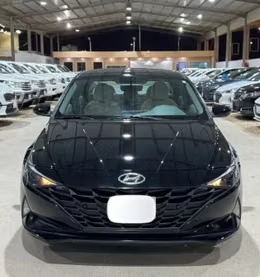



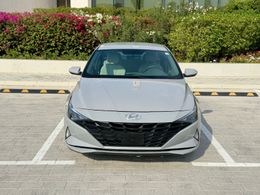

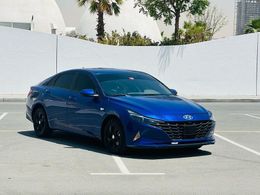
نوع الجسم
الأسعار
أفضل مكان للشراء

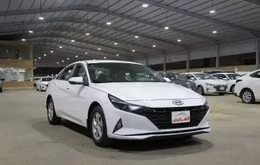
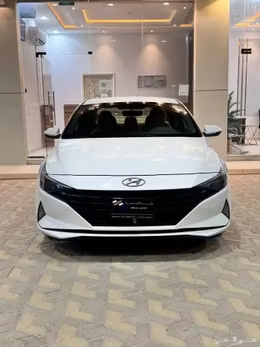
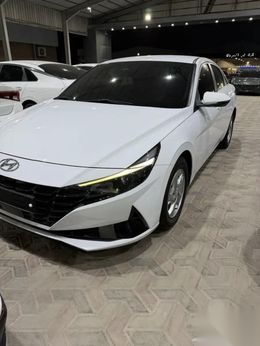
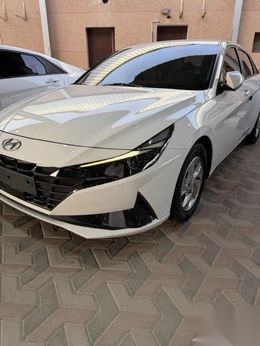
Hyundai Elantra كوبيه
17,000 AED
-
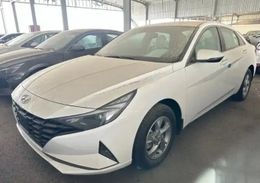
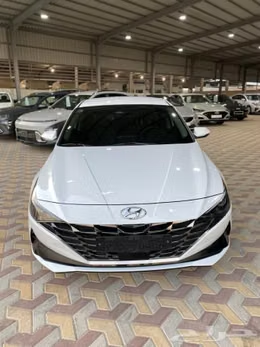
Hyundai Elantra سيدان
12,500 - 803,054 AED
أفضل مكان للشراء
Hyundai Elantra كوبيه
17,000 AED
أفضل مكان للشراء
-Hyundai Elantra هاتشباك 5 أبواب
21,000 AED
أفضل مكان للشراء
تمويل السيارة
مع الضمان
التبادل ممكن
فقط مع فيديو
فقط مع خصومات
للتصدير فقط
22 إعلان
كن أول من يعرف عن الإعلانات الجديدة
احفظ فلاتر بحثك لكي تجد الإعلانات التي تحتاجها بشكل أسرع.
1 - 22 إعلان
من أصل 22
يبدأ سعر Hyundai Elantra من 12,500 AED ويصل إلى 803,054 AED. قد تختلف التكلفة النهائية على الطريق قليلاً حسب التأمين والتسجيل والملحقات الاختيارية.
Hyundai Elantra كوبيه
Hyundai Elantra سيدان
أفضل مكان للشراء
Hyundai Elantra كوبيه
أفضل مكان للشراء
-Hyundai Elantra هاتشباك 5 أبواب
أفضل مكان للشراء
Hyundai Elantra يدوي
Hyundai Elantra أوتوماتيك
أفضل مكان للشراء
Hyundai Elantra ناقل حركة يدوي آلي
أفضل مكان للشراء
Hyundai Elantra ناقل حركة متغير باستمرار
أفضل مكان للشراء
Hyundai Elantra يدوي
أفضل مكان للشراء
-Hyundai Elantra بنزين
أفضل مكان للشراء
Hyundai Elantra هجين
أفضل مكان للشراء
Hyundai Elantra 2015
Hyundai Elantra 2026
أفضل مكان للشراء
Hyundai Elantra 2025
أفضل مكان للشراء
Hyundai Elantra 2024
أفضل مكان للشراء
Hyundai Elantra 2023
أفضل مكان للشراء
Hyundai Elantra 2022
أفضل مكان للشراء
Hyundai Elantra 2021
أفضل مكان للشراء
Hyundai Elantra 2020
أفضل مكان للشراء
Hyundai Elantra 2019
أفضل مكان للشراء
Hyundai Elantra 2018
أفضل مكان للشراء
Hyundai Elantra 2017
أفضل مكان للشراء
Hyundai Elantra 2016
أفضل مكان للشراء
Hyundai Elantra 2015
أفضل مكان للشراء
-Hyundai Elantra 2014
أفضل مكان للشراء
Hyundai Elantra 2013
أفضل مكان للشراء
Hyundai Elantra 2012
أفضل مكان للشراء
Hyundai Elantra عجمان
أفضل مكان للشراء
Hyundai Elantra الشارقة
أفضل مكان للشراء
Hyundai Elantra دبي
أفضل مكان للشراء
Hyundai Elantra المسكات عنب طيب الشذا
أفضل مكان للشراء
Hyundai Elantra جدة
أفضل مكان للشراء
Hyundai Elantra الرياض
أفضل مكان للشراء
Hyundai Elantra البريمي
أفضل مكان للشراء
Hyundai Elantra الجبيل
أفضل مكان للشراء
Hyundai Elantra الدمام
أفضل مكان للشراء
Hyundai Elantra بركاء
أفضل مكان للشراء
Hyundai Elantra خميس مشيط
أفضل مكان للشراء
Hyundai Elantra حفر الباطن
أفضل مكان للشراء
Hyundai Elantra المدينة المنورة
أفضل مكان للشراء
Hyundai Elantra مكة المكرمة
أفضل مكان للشراء
يوضح الرسم البياني ديناميكيات متوسط سعر الطراز في سوق السيارات المستعملة خلال العام الماضي. تساعدك هذه البيانات على تقييم جدوى الشراء وتوقع القيمة المستقبلية للسيارة.
قد تختلف الأسعار على AUTO.AE عن تكلفة البيع الفعلية. تستند البيانات إلى قاعدة بياناتنا من السيارات المباعة والإعلانات الحالية. للحصول على تقييم دقيق، استخدم أداتنا.

The Hyundai Elantra does not have one plug replacement interval for every engine. The conventional petrol 1.6, Smartstream engines, turbo versions and hybrid require their own schedule checks. The model name or engine capacity alone is not enough to select an interval. Petrol Elantras use spark plugs; diesel versions use glow plugs. Their functions, fault symptoms and testing methods differ. This guide explains how to identify your version, plan servicing and investigate rough running. Before ordering a set, confirm the VIN, model year, engine code and service history. If the engine has been replaced, compare its actual identification with the vehicle records. Identify the engine first “Elantra 1.6” can describe several powertrains. The petrol 1.6 D-CVVT differs from the Smartstream G1.6, while the hybrid 1.6 GDI differs from a turbo engine. D-CVVT refers to variable valve timing; it does not mean diesel. Standard and performance versions The four-cylinder petrol engines listed use one spark plug per cylinder. Matching quantities do not make sets interchangeable. Elantra N and N Line must also be distinguished: they have different engines, and sporty exterior trim cannot replace a VIN check. Hybrid and diesel versions The electric motor in an Elantra Hybrid does not remove the petrol engine’s servicing needs. It still requires spark plugs. Silence under the bonnet does not guarantee the vehicle is switched off: the engine can start automatically. Earlier Elantra generations included diesels such as the 1.6 CRDi U2. These require a separate discussion of glow plugs. Their place in the model’s history does not mean a modern Elantra with similar bodywork has a diesel engine. The table separates the main variants but does not replace a fitment catalogue. Check the individual vehicle documentation for older generations and other engines. Spark plug replacement intervals The Hyundai Elantra CN7 2025 manual gives the following normal-use intervals with unleaded petrol. Apply them only after confirming the engine, model year and regional specification. This table does not set an interval for every Elantra. A Smartstream entry cannot be transferred to an older MPI, an Elantra N or a hybrid simply because the engine capacity matches. Check their schedules separately. When replacement should be earlier For severe use, Hyundai specifies more frequent spark plug replacement depending on condition. Relevant patterns include repeated short trips, extensive idling, heavy traffic and frequent stop-and-go driving. With such use, do not wait for the maximum mileage if rough running develops. Agree an inspection and replacement plan with the workshop using the applicable schedule. Arbitrarily halving every interval is not a substitute for the manufacturer’s requirements. When the service history is missing When browsing current offers for the Hyundai Elantra, ask for evidence of the last plug replacement: its date, mileage and part numbers. A general “service completed” entry does not establish that the plugs were changed. Without records, start by confirming the engine version, stored faults and ignition condition. If the installed set is unsuitable or replacement is overdue, plan to renew it even if the car still feels smooth. Signs of wear and fault diagnosis Inspect the plugs when idle becomes uneven, starting becomes difficult, acceleration falters or misfires occur. These symptoms do not prove a plug fault: coils, injectors, intake air leaks and mechanical problems can cause similar behaviour. If the engine warning flashes and the engine misfires severely, stop accelerating and pull over safely. Prolonged misfiring can damage the catalytic converter. Arrange transport to a workshop if severe rough running continues. Selecting a replacement set Check the original part number and approved alternatives, heat range, thread dimensions, threaded reach and seat type. The gap and tightening specification must suit the exact engine and component. There are no universal values for the entire Elantra range. An “iridium” label neither confirms fitment nor authorises a longer interval. A more expensive electrode material cannot correct unsuitable dimensions or heat range. Be particularly careful when selecting parts for turbo and hybrid engines. Why new plugs may not solve the problem If oil leakage, an incorrect mixture or a damaged coil caused the fault, new plugs may foul again or continue misfiring. Keep removed plugs in cylinder order: differences can guide diagnosis, but deposit colour alone does not establish the cause. Glow plugs in a diesel Elantra A diesel glow plug helps create suitable ignition conditions at startup. It does not produce a spark like a petrol plug. Where post-glow is used, heating continues after starting to help the engine run steadily while warming up. When to investigate Difficult starting after parking, uneven running immediately after startup, smoke and glow-circuit faults warrant inspection. Warm weather can make a fault less obvious. However, prolonged cranking can also involve the battery, fuel supply or compression. The petrol replacement intervals above do not apply to diesel glow plugs. Check the schedule for the specific CRDi; if it gives no routine replacement interval, use diagnostic findings to decide. Do not assign one mileage to all diesel Elantras without identifying the engine. Test the supply and plugs together NGK’s guidance describes resistance testing for glow plugs. Compare readings with the requirements for the particular component. Do not connect a plug directly to the battery simply to watch its tip glow: this test can damage the heater. The workshop should also assess wiring, connections, supply and the controller. A fault in one channel does not always mean the plug has failed. An unresolved control fault can damage a replacement set again. Selection and careful removal Replacement requires the correct operating voltage, heater length and type, thread and control-system compatibility. DENSO’s fault-finding and installation guidance also highlights damage causes and correct fitting. Do not keep increasing force on a seized plug. Preparation and allowable removal torque depend on the repair procedure. If breakage is a concern, use a workshop with appropriate equipment. Check that the tip is complete after removal. Decide between one plug and a full set after assessing the other elements and the cause of failure. A set may be justified where wear is widespread, but supply and control problems must be corrected first. Checks for spark plug replacement ☐ Confirm the engine, part numbers and plug quantity. ☐ Switch the vehicle off and prevent accidental starting. ☐ Allow the petrol engine to cool before working. ☐ Clean the wells and inspect the coils and boots. ☐ Prepare a suitable plug socket and tightening specifications. Start each plug squarely and tighten it to the requirements for that engine and component. Excessive torque risks shell and thread damage; insufficient torque compromises sealing and heat transfer. Do not lubricate threads without an explicit manufacturer instruction. Do not bend fine electrodes with ordinary tools. Wire brushing and rough gap checking can damage a plug. Inspect any dropped component carefully: a ceramic insulator crack may not be immediately obvious. For an Elantra Hybrid, follow the safe shutdown procedure for its hybrid system. Do not start work merely because the petrol engine has stopped. High-voltage components require separate training and precautions. Frequently asked questions Should coils be replaced with the plugs Not automatically. Test coils and replace them when a fault is confirmed. During scheduled plug replacement, inspect boots, connectors and insulation, and resolve any oil or water contamination in the wells. Can replacement wait if the engine feels smooth A lack of symptoms does not cancel scheduled replacement. Wear may become noticeable only under load. Keep the part numbers and mileage after servicing, check starting and engine operation, and confirm that any rough-running fault has been resolved. Conclusion Choose Hyundai Elantra plugs and replacement timing by the exact engine, rather than capacity or exterior appearance. Petrol versions and the hybrid need spark plugs; a diesel needs separate glow-system assessment. When rough running develops, establish the cause before choosing replacement parts.

There is no single fuel-filter replacement interval for every Hyundai Elantra generation and engine. In the Hyundai schedule reviewed for the petrol Elantra CN7, the filter is described as maintenance-free, with qualifications concerning fuel quality and operating problems. Start with the schedule for your version and arrange diagnosis if symptoms appear. Here is how to decide when a workshop visit is needed and avoid confusing the filter with other fuel-system components. Important. The petrol filter and fuel tank air filter are different components. Check the exact maintenance item, vehicle specification and schedule notes. Symptoms that call for a check Restricted fuel delivery can become noticeable during starting or under load. The way a car behaves does not reliably distinguish a contaminated filter from a pump, ignition or other system fault. Before visiting a workshop, record when the problem began, how much fuel was in the tank and any recent repair work. • Starting takes longer. Note whether this happens after an overnight stop or after a brief stop with a warm engine. Slow cranking also calls for battery and starting-system checks. • Power drops during acceleration. Record whether engine speed changes and any messages appear on the dashboard. Do not deliberately reproduce the fault while overtaking. • The engine runs unevenly. Vibration and unstable engine speed can have causes beyond the fuel system. The conditions in which they occur and stored fault codes matter. • The car jerks while driving. Explain whether the jolt occurs during acceleration, when releasing the accelerator or during a gear change. The technician must distinguish engine behaviour from transmission operation. • A problem follows refuelling. Keep the receipt and note the quantity added. This connection helps direct the investigation, but does not by itself prove filter blockage. Higher consumption, noise near the tank or a Check Engine light alone is not a diagnosis. Do not clear codes before inspection. If the engine stalls while driving, stop safely and arrange assistance; do not postpone the check until the next routine service. Why the generation and engine matter This article primarily concerns the petrol Elantra. Registration year, engine displacement and trim name do not establish every detail of the fuel system. The workshop needs the VIN, production date and engine code to select parts. A CN7 schedule should not automatically be applied to an earlier car or a different powertrain. Previous repairs matter too. Tell the technician if the pump, tank or complete module has been replaced, and provide the invoice. Even a new component listed as suitable in a catalogue needs comparison with the assembly actually fitted, particularly after non-standard modifications. A photograph of a similar part does not establish compatibility. Why a confirmed blockage needs attention Bosch lists impaired fuel delivery, reduced engine performance and engine stalling among the possible consequences of a clogged fuel filter. This explains why a confirmed fault should be corrected. Those symptoms still do not identify the filter as the culprit without checking the other system components. Fuel delivery may be insufficient under load. An engine can run smoothly at a standstill yet lose power during acceleration. An idle-only check may not reproduce the complaint. Difficult starts may recur. Prolonged cranking does not clean the filter and uses battery charge. The engine may stall. If the car has already stalled while driving, discuss safe transport to the workshop before further use. A new component may become contaminated again. Where fuel contamination is confirmed, its source and the condition of the tank need attention. Guesswork increases repair costs. A filter change will not repair faulty pump wiring, and replacing the complete module will not cure every cause of hesitation. Safety. Pressure may remain after the engine is switched off. Do not disconnect fuel lines to test the system yourself. If there is a leak or a strong fuel smell, stop in a safe place, switch off the engine and arrange assistance. When to replace the Elantra fuel filter The 2025 Hyundai Elantra CN7 manual describes the fuel filter as maintenance-free in the schedule for the relevant specification. Hyundai nevertheless recommends periodic inspection with regard to fuel quality and prompt replacement for filter-related fuel-delivery problems. This does not establish a fixed mileage interval for every Elantra. How to read the schedule correctly The same table contains a separate Fuel tank air filter entry. This is not the filter that cleans petrol supplied to the engine. Its interval must not be transferred to the fuel filter. When agreeing on service work, ask the workshop to identify the exact operation and show it in the document applicable to your vehicle. An inspection requirement in your Elantra schedule does not mean mandatory replacement at every workshop visit. Equally, the absence of scheduled replacement does not guarantee that a component will remain sound for the life of the car. Difficult starting, hesitation and loss of power call for identifying the cause before deciding what to replace. Heat and dust affect operating conditions, but do not by themselves establish a petrol-filter replacement interval. Do not apply the air-filter or oil-filter interval to the fuel filter. For a car without service history, checking the documents and system is more useful than buying a complete module in advance. What to buy: strainer, filter or module The pump inlet strainer, fine fuel filter and complete fuel module are different items. Tank ventilation components are a separate category. Use the catalogue and repair information for your Elantra to determine which elements can be replaced individually. The assembly on the cover illustrates the topic and is not a parts-ordering reference. • Select the part number using the VIN. Check the engine, production date and fitment restrictions, not simply the Elantra name on the product page. • Confirm what the package contains. A listing may describe a pump, filter housing, strainer or complete module. These descriptions do not mean the same thing. • Ask why the entire assembly needs replacing. The workshop should explain the confirmed fault and whether a separate replacement component is available under the repair procedure. • Allow for seals and fasteners. The estimate should include required consumables, access work and a leak check after reassembly. • Keep purchase records. The part number and supplier details will help with checking what was supplied and any later workshop enquiries. How to assess the proposed repair Diagnosis includes reading fault codes, checking pump power and measuring fuel-delivery parameters using the procedure for the fitted engine. With direct injection, the low- and high-pressure circuits require separate consideration. Ask for measured values and allowable limits rather than only a verdict of “poor pressure”. After repair, check for leaks, starting performance and operation under the original complaint conditions. Checklist before visiting a workshop Prepare a short description of the problem and the vehicle details. Agree on the diagnostic work and final estimate before ordering parts. This helps you understand the checks and labour you are paying for and avoid another repair for the same complaint. ☐ Prepare the VIN, production date and engine details. ☐ Confirm the applicable schedule and filter design. ☐ Record the conditions of difficult starts, hesitation or jerking. ☐ Keep the refuelling receipt and fault messages. ☐ Obtain measurements and an explanation of the cause. ☐ Agree on part numbers, seals and the work included. ☐ Confirm there are no leaks and the original symptom is resolved. ☐ Keep the invoice with the date, mileage and parts fitted. Common mistakes to avoid • Setting one interval for all Elantras. Different generations and engines require their own schedule to be checked. • Confusing the fuel tank air filter with the petrol filter. Similar names do not mean identical functions. • Treating every jolt as evidence of blockage. Ignition, intake or transmission faults are other possibilities. • Ordering a pump because of noise alone. Sound without parameter checks does not establish pump failure. • Ignoring contamination in the tank. A new component does not remove the source of foreign particles. • Using additives instead of diagnosis. They do not test pump power, connections or pressure. • Choosing a module by appearance. Similar housings can have different connectors and fitment. Conclusion Service the Hyundai Elantra fuel filter according to the schedule for its specification and the condition of the system. For the CN7, maintenance-free does not promise indefinite trouble-free operation, and the tank air-filter interval must not be applied to the petrol filter. When reviewing current offers, ask about the car’s service history and supporting records. If symptoms are present, start with diagnosis and select parts after establishing the cause.

If you keep turning up the blower in your Hyundai Elantra, start by checking the cabin air filter. A clogged element can restrict airflow, but it does not explain every air conditioning problem. Replacement depends on the schedule for your particular vehicle and its operating conditions. Regular driving on dusty roads calls for more frequent inspection. Scope. The technical example is the Elantra CN7, using its 2025 owner’s manual. Confirm the schedule and part by VIN for MD, AD and other versions. The cover depicts a CN7; the illustrated filter is not a part-number reference. When to plan a replacement Find the correct filter entry Hyundai documentation uses the terms Cabin air filter and Climate control air filter for the passenger compartment ventilation filter. Do not confuse these with Air cleaner filter, which refers to the engine intake filter. When booking a service, name the required job in full so that a vague “air filter replacement” entry does not cause confusion on the invoice. The 2025 Elantra CN7 manual recommends replacing the cabin filter according to the maintenance schedule, with more frequent checks in dusty conditions. Confirm the specific interval for your Elantra in its service booklet and VIN-based maintenance information. Where both time and mileage limits are given, use whichever is reached first. A dusty route matters more than average mileage Two Elantras with identical odometer readings may have very different working lives. One mainly uses clean urban roads; the other passes construction sites and dusty access roads every day. The CN7 severe-use schedule calls for more frequent cabin filter replacement according to condition, including in heavy dust. That entry does not specify one shortened mileage interval. A practical approach is to include a filter inspection in the next service after a sustained period of such driving, then agree future checks with the workshop. If you have bought a used car, request a separate record of the last cabin filter replacement. Missing history is a reason to inspect the element rather than guess its remaining life from the odometer. Changes in airflow worth investigating • The airflow is weaker at the same blower speed with the vents open. • A whistle or unfamiliar noise near the glove box appears after replacement. • A musty smell repeatedly appears when ventilation starts. Check these symptoms with the car stationary and the settings unchanged. Automatic climate control may adjust blower speed by itself, so a fixed manual speed and air distribution mode make comparison easier. Note the recirculation setting too: changing it between checks makes the before-and-after result harder to interpret. Important. A sudden drop in airflow warrants a system check rather than waiting for the next scheduled service. Strong airflow with inadequate cooling also needs diagnosis: a filter replacement does not resolve every air conditioning fault. How to choose the correct filter Confirm fitment for your Elantra first A listing labelled “for Elantra” is not enough to make a purchase. Establish the generation, production year and VIN-based application. Take particular care when the registration year differs from the build year or the seller groups several generations together. MD, AD or CN7 narrows the search, but the catalogue application for the actual vehicle is the final check. Keep the correct part number in the service history. The old filter is useful for comparison, but do not assume it is an authoritative reference: a previous owner may have fitted the wrong element. Check thickness, frame shape and sealing edges as well as length and width. Particle or activated carbon filter A particle filter captures particulate matter. An activated carbon version also reduces certain odours and gaseous pollutants, as described in the MANN-FILTER guide. For driving in dense traffic, that may be a useful addition if the chosen version fits the car. Carbon does not guarantee the absence of every smell or remove the need for climate system maintenance. Do not judge service life by colour alone: fresh activated carbon media may already look dark. When inspecting, consider accumulated debris, damage, moisture and the condition of the pleats. Before fitting a new filter, examine its packaging and the part itself. A distorted frame or torn material is a reason to select an undamaged replacement. The filter must match the housing design. Do not trim its edges or leave the cover unsecured to accommodate an unsuitable part. If the replacement will not seat as its instructions describe, stop and recheck the part number. Applying more force is not a substitute for correct fitment. Replacement and the final check In the CN7 covered by the cited manual, the filter sits behind the glove box. Empty the glove box and switch off ventilation and the ignition before starting. Check how its stops and attachments are released for your production year: access through the glove box does not mean that every Elantra uses the same dismantling sequence. Remove the element carefully and clear accessible debris from the housing without pushing it further into the duct. Distinguish AIR FLOW from UP markings. As FRAM explains, the first indicates air movement and the second identifies the upper side. Match the markings to the instructions for the particular element and housing, then check seating and cover engagement. As DENSO explains, odours may originate on damp internal surfaces of the climate system. A new filter does not clean the evaporator. If the smell soon returns, tell the workshop whether it starts immediately and fades during the journey. That observation is more useful in finding the cause than adding another air freshener. After-service checklist ☐ The filter cover is secured and the glove box operates normally. ☐ Airflow has been compared before and after using identical settings. ☐ No new whistle or unusual noise is present. ☐ The date, odometer reading and part number are recorded. If you are choosing an Elantra, browse current offers on AUTO.AE. During inspection, test ventilation at several blower speeds and request the service records. A clean interior alone does not establish that the filter has been replaced. Conclusion Replace the Hyundai Elantra cabin filter according to the schedule for your vehicle, with more frequent checks in dusty use. Accurate selection and correct installation matter more than visual similarity. If weak airflow, odours or inadequate cooling remain after replacement, continue investigating the climate system.
قد تشمل إعلانات Hyundai Elantra موديل 2022 الفئات التالية: Active، SE، Comfort، وLuxe، وغيرها. تعتمد القائمة الحالية على الدولة المختارة وسنة الصنع وتوفر السيارات. استخدم فلتر «الفئة» لمقارنة الخيارات المتاحة.
ينبغي تقييم المسافة المقطوعة إلى جانب عمر السيارة وحالتها وسجل صيانتها. قارن المسافة المقطوعة بسيارات مماثلة من سنة الصنع نفسها، وتحقق من سجل الصيانة والحالة الفعلية للسيارة قبل الشراء.
تتراوح أسعار الإعلانات الحالية لسيارة Hyundai Elantra موديل 2022 على AUTO.AE من ٤٢٬١١٢ إلى ٧٣٬٤٥٠ AED. يعتمد السعر على سنة الصنع والمسافة المقطوعة والفئة والحالة والمواصفات الإقليمية. تستند هذه البيانات إلى الإعلانات النشطة وقد تتغير.
قد يعرض البائع الخاص سعراً أقل، بينما قد يقدم معرض السيارات خدمات إضافية مثل التمويل أو الضمان أو المساعدة في التأمين. تختلف الشروط، لذا تحقّق من معلومات الإعلان ووثائق السيارة وبيانات البائع.
تحقّق من بطاقة تسجيل المركبة «الملكية» (Mulkiya)، ومن تطابق رقم الهيكل (VIN) على السيارة وفي الوثائق، وبيانات المالك، وسجل الصيانة، وسجل الحوادث. وتأكد أيضاً من عدم وجود قرض قائم أو مخالفات أو قيود أخرى على السيارة. ويُفضّل إجراء فحص مستقل قبل إتمام الصفقة.
نعم. يمكنك الاتفاق مع البائع على إجراء فحص فني مستقل في مركز خدمة من اختيارك. يساعد الفحص على تقييم حالة المحرك وناقل الحركة والهيكل والأنظمة الإلكترونية والمكوّنات الأخرى.
يعني مصطلح GCC Specs أن السيارة صُنعت وفق المواصفات المعتمدة لأسواق دول مجلس التعاون الخليجي. وعادةً ما تكون هذه الإصدارات مصممة لتناسب الظروف المناخية المحلية. لكن GCC Specs بحد ذاتها لا تثبت حالة السيارة ولا تعني وجود ضمان ساري؛ لذا يجب التحقق من حالة السيارة والضمان بشكل منفصل.
تقدم بعض معارض السيارات خيارات تمويل. وعند توفرها، قد تُذكر الشروط أو قيمة القسط الشهري التقديرية في الإعلان. تعتمد نسبة الفائدة النهائية والموافقة على البنك والدفعة الأولى وبيانات المشتري.


