Mercedes-Benz E-Class brake fluid replacement
Mercedes-Benz E-Class
Mercedes-Benz E-Class•
•32 مشاهدة
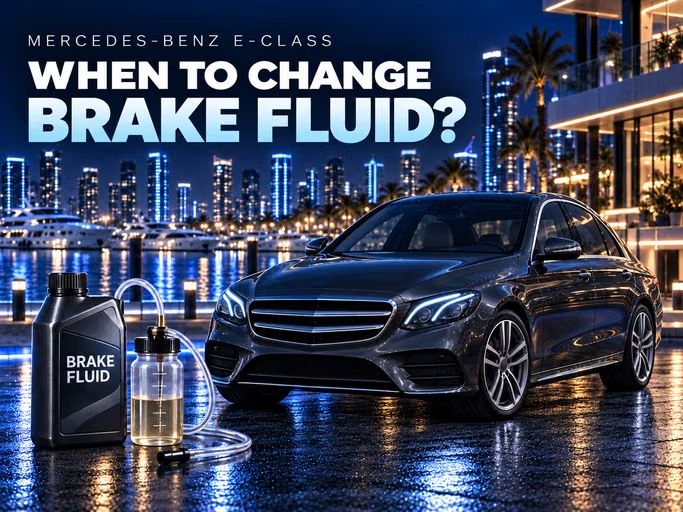
Plan Mercedes-Benz E-Class brake fluid replacement around a two-year service cycle, checking the schedule for the individual car. Low mileage is no reason to postpone a time-based service. A sinking pedal, a leak or a clear loss of braking performance calls for diagnosis first.
Signs that the brakes need attention
Describe any change precisely: when it started, whether the brakes were hot and how the pedal behaved. Arrange an inspection if:
- The pedal travels farther before the car starts to slow down.
- The pedal gradually sinks while steady pressure is maintained.
- Normal pedal pressure becomes insufficient after repeated hard braking.
- The reservoir level drops or wet traces appear near connections or wheels.
- A low brake fluid message or brake system warning appears.
Why age matters more than fluid appearance
Brake fluid transmits pressure from the pedal to the wheel brakes. It absorbs moisture over time, lowering its boiling point. Under intense heat, vapour pockets can form and interfere with pressure transmission. Healthy pads and discs therefore do not mean that fluid servicing can be skipped.
An E-Class used only occasionally still needs attention to elapsed time. Clear fluid in the reservoir does not prove that it is fresh or has an adequate boiling margin. A condition check can support diagnosis, but it does not override the replacement schedule for the car.
Topping up and replacement serve different purposes. The level can change as pads wear, while a rapid fall requires a leak inspection. Repeatedly filling the reservoir conceals the cause and does not renew the fluid at the wheel brakes.
Replacement timing and Mercedes-Benz approval
Mercedes-Benz includes brake fluid exchange in its Service B description, with subsequent visits approximately every two years or at the specified mileage. This is a planning reference; confirm the applicable E-Class schedule using the VIN and service records. An entry stating only “service completed” does not establish that the fluid was replaced.
The 2017 model-year E-Class W213 sedan manual specifies MB-Freigabe or MB-Approval 331.0 in the brake fluid section on printed page 347. This requirement applies to the vehicle described there and should not be extended to every E-Class version without checking.
| What to check | Reference | How to apply it |
|---|---|---|
| Timing | Approximately two years in the Service B cycle | Confirm time and mileage requirements for the car. |
| Specification | MB-Approval 331.0 for the stated W213 | Check version requirements and product approval. |
| History | Evidence of a full replacement | Distinguish exchange from inspection or topping up. |
| Quantity | Defined by the repair procedure | Do not calculate the amount from reservoir capacity alone. |
What to look for on the container
Start with the approval required by the vehicle documentation, then verify the approval of the particular product. A DOT designation identifies a fluid class but does not replace Mercedes-Benz requirements. A marketing statement such as “suitable for” is also different from an official approval.
Use fresh fluid from a sealed container for servicing. An open bottle with an unknown storage history is a poor choice for the next replacement. Ask the workshop to establish the quantity required in advance: reservoir capacity is not the amount needed for a complete exchange.
Operating an E-Class in the UAE
Hot weather makes brake condition especially relevant, but does not by itself establish a different fluid replacement interval. Regular inspections matter for daily use, and an additional check is sensible before a route with long descents. This is a practical precaution for the driving conditions, not a separate manufacturer schedule.
Urban journeys and long descents
With frequent stops, monitor pad wear and the condition of discs and hoses. On a descent, use the transmission modes permitted by the manual to avoid holding the brake pedal continuously. Choose an appropriate speed before the descent, allowing for the load in the car.
If braking deteriorates when hot, cooling down alone does not prove that the system is sound. The cause may be the fluid, overheated friction components or another fault. Grinding, vibration and pulling under braking also warrant inspection rather than automatically prescribing a fluid change alone.
Different generations hybrids and AMG versions
For W212, W213 and W214 cars, the E-Class name alone is insufficient to select a procedure. The year, brake equipment and powertrain matter. Regenerative braking on a hybrid does not remove the need to service the hydraulic system. AMG versions require their own applicable instructions, including bleeding procedures and any diagnostic functions.
What a complete replacement involves
When agreeing the work, confirm that fluid will be renewed throughout the circuits covered by the prescribed procedure. Extracting the contents of the reservoir is not a full exchange. The repair instructions determine equipment pressure, the working sequence and whether a diagnostic tool is required.
- Identify the version by VIN and check the previous service date.
- Inspect for leaks and wear, and investigate dashboard messages.
- Resolve identified faults and prepare fluid with the required approval.
- Exchange the fluid and remove air using the instructions for the fitted system.
- Check the level, leak tightness and pedal operation before a controlled road test.
- Record the date, mileage, product used and operations completed.
Can a general workshop handle the job
A universal bleeding sequence does not account for every E-Class brake configuration. The job requires suitable equipment, repair information and a way to verify the result. If these are unavailable, choose a workshop experienced with your generation. The owner’s manual explains requirements but does not replace workshop instructions.
Checking the service history of a used E-Class
When reviewing current listings, compare the claimed service history with records for the individual car. Before buying, check the following:
☐ The date and mileage of the last full fluid replacement are documented.
☐ The invoice identifies the product and its confirmed approval.
☐ Any hydraulic work since the last service is known.
☐ The reservoir, accessible connections and areas near the wheels have been inspected.
☐ Dashboard messages and the owner’s braking concerns have been investigated.
Mistakes to avoid
- Relying on mileage alone and ignoring the replacement date.
- Treating a reset service reminder as proof that the work was done.
- Buying fluid solely by its colour or DOT marking.
- Calling a small reservoir extraction a complete replacement.
- Continuing to drive with a falling level and relying on top-ups.
Conclusion
Start E-Class brake fluid servicing by checking the last replacement date and the requirements for your version. The two-year reference helps with planning; approval 331.0 is confirmed here for the 2017 model-year W213 sedan. A complete exchange ends with system checks and a service record. Signs of a fault require attention before the next scheduled service.