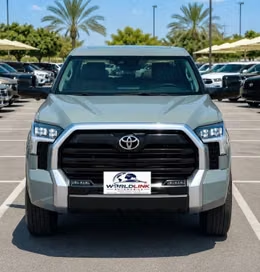
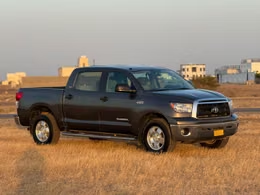
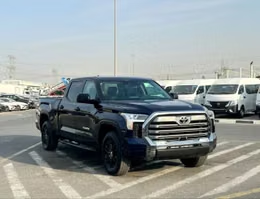
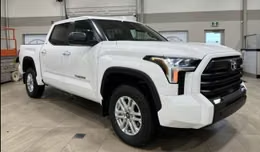
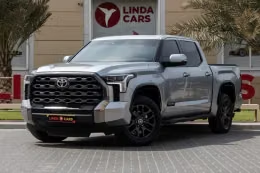
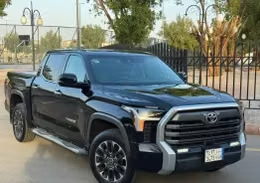
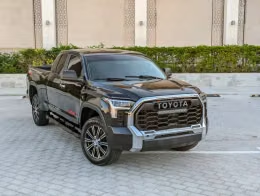
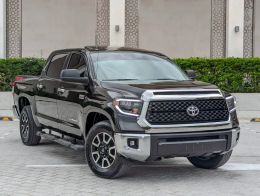
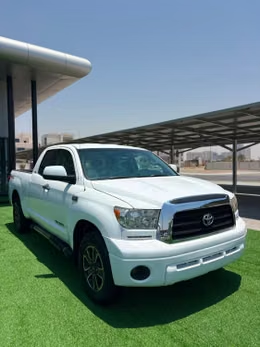
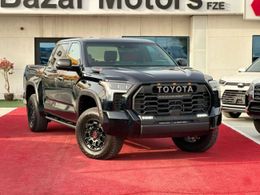
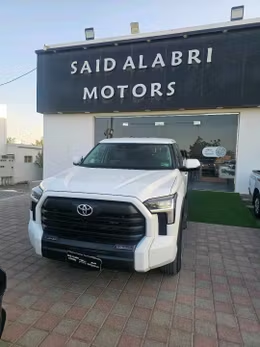
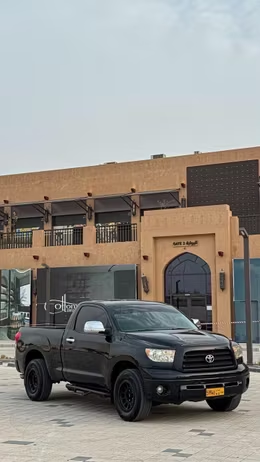
Цена Toyota Tundra начинается от 30 000 AED и достигает 440 333 AED. Итоговая стоимость на дороге может незначительно отличаться в зависимости от страховки, регистрации и дополнительных аксессуаров.
На графике — динамика средней цены модели на вторичном рынке за последний год. Эти данные помогут вам оценить выгодность покупки и спрогнозировать будущую стоимость авто.
Цены на AUTO.AE могут отличаться от фактической стоимости продажи. Данные основаны на нашей базе проданных автомобилей и актуальных объявлениях. Для точной оценки воспользуйтесь нашим инструментом.
When Should Toyota Tundra Brake Pads and Rotors Be Replaced?
Toyota Tundra brake pads and rotors do not share one dependable replacement mileage. A full-size pickup may spend most of its time unladen, tow a trailer, carry cargo, make repeated urban stops, or remain parked for long periods. Each pattern changes brake temperature, mechanical load, and the way friction surfaces age. Replacement should therefore follow inspection and measurement rather than a calendar entry. A useful assessment covers both pads in every caliper, both faces of each rotor, piston and slide movement, the hub mounting surface, and the truck's behaviour under braking. This sequence matters on a heavy vehicle. Fresh pads will not cure a binding mechanism, and a new rotor can develop repeat vibration if it is installed against corrosion or debris. In brief. Replace a component when its measured condition is outside the limit for the exact truck, or when cracking, overheating, contamination, or a mechanical fault makes continued service unsafe. Mileage triggers inspection; it does not replace measurement. Identify the Generation and Configuration First Tundra brake dimensions, calipers, electronic systems, and part numbers vary by model year. The current model range includes the petrol i-FORCE and hybrid i-FORCE MAX powertrains, as shown on the current Tundra page. Earlier-generation trucks, imported vehicles, and modified pickups require separate identification rather than a parts choice based on body shape. Before ordering anything, record the VIN, complete model code, model year, original specification, powertrain, drivetrain, and wheel size. Then compare the calipers, carriers, rotors, and sensors actually installed. A shared model name does not guarantee a shared brake package. 2022-and-newer Tundra. Confirm petrol or hybrid powertrain and the factory brake package. 2007–2021 Tundra. Do not transfer dimensions or service procedures from the current generation. Imported truck. Check the original market, model-code label, and VIN-specific information. Modified pickup. Larger wheels, spacers, suspension changes, and aftermarket brakes alter parts selection and diagnostic assumptions. How i-FORCE MAX Changes the Assessment The hybrid Tundra blends regenerative deceleration with its friction brakes. During gentle driving, the traction motor may provide part of the braking effort, so pad thickness can decrease more slowly. The mechanical brakes are still required during stronger deceleration, at low speed, while stopping, and whenever the system limits regenerative braking. Slow pad wear does not prove that a rotor is healthy. When the friction brakes operate less often, moisture and parking marks may remain on the swept faces for longer. On the hybrid, inspect both remaining lining and the uniformity of contact around each rotor. When Pads and Rotors Need Replacement The 2026 Tundra Warranty and Maintenance Guide available from the official manuals and warranties page includes recurring inspection of brake linings, pads, and discs within scheduled maintenance. It establishes inspection points, but it does not turn pads into a component with one universal service life. Use the correct document for another model year, and obtain dimensional limits and repair procedures for the VIN and hardware fitted to the truck. Measurements and physical condition approve the repair. If one component has worn unusually quickly, diagnose the cause first: a stiff slide, corrosion at the pad lands, a damaged boot, a piston fault, friction-surface contamination, or incorrect assembly. Usable lining is close to the specified minimum for the fitted caliper, or a wear indicator is operating. A rotor has cracks, deep scoring, severe heat marks, substantial corrosion, or serious damage on its inboard face. Rotor thickness, thickness variation, or axial runout is outside the permitted value after correct measurement. The inner and outer pads wear very differently, and safe free movement cannot be restored without replacing damaged parts. After the hydraulic or mechanical cause is corrected, the friction material remains contaminated, cracked, delaminated, or otherwise damaged. Important. Grinding, strong pull, an overheated wheel, a brake-system warning, or an obvious reduction in braking performance calls for a safe stop and diagnosis. Do not conduct an ordinary road test until a safe pedal and system operation have been restored. What to Measure Before Approving the Repair Inspect the brakes with the wheels removed. A view through a spoke shows only part of the assembly, while the inner pad and inboard rotor face can be more severely affected. Record every corner separately so that even wear can be distinguished from a local fault and compared with the next inspection. Compare Pads as Pairs Compare the inner and outer pads in each caliper, then the left and right sides of the axle. Tapered wear, a large difference in thickness, or local heat marks requires a mechanism check. Cracked, delaminated, fluid-soaked, or damaged pads are assessed separately from remaining thickness. Replace pads as an axle set, clean the support lands, and inspect the shims and springs before assembly. Judge Rotors by Dimension and Surface An outer lip is not a substitute for measurement. Continued use or machining can be considered only after checking thickness, variation, and runout. A finished rotor must remain above its permitted minimum with allowance for future service. Cracking, deep corrosion, severe heat damage, or an out-of-limit dimension will normally rule out resurfacing. Interpreting Noise, Vibration, and Pull One symptom can have several causes. Record whether it appears with cold or warm brakes, after parking, only from higher speed, or only with cargo. For vibration, note whether the disturbance is strongest through the steering wheel, pedal, or body. Why Vibration Does Not Always Mean a Warped Rotor Changing brake torque can result from transferred pad material, corrosion between rotor and hub, bearing play, or uneven wheel-fastener torque—not only rotor shape. If a replacement rotor is mounted against dirt or the wheel is tightened inconsistently, the complaint may return quickly. Confirm the cause with a dial indicator and micrometer. Conditions That Accelerate Tundra Brake Wear frequent trailer towing or operation with a heavy payload; long descents with continuous pedal pressure; urban driving with repeated stops in a heavy vehicle; sand and dust around slides, boots, and pad support lands; water exposure, washing, or parking before the brakes can dry; large wheels or modifications that increase unsprung mass or effective load; binding slides, tight pad fit, damaged boots, or unsuitable lubricant. High ambient temperature does not create a replacement interval by itself, but it reduces the cooling margin during demanding use. After an overheating event, inspect pads and rotors together with boots, hoses, fluid condition, and free wheel rotation. Installing fresh linings on an overheated or binding assembly will not correct the cause. Towing Requires a Whole-System Check A trailer and cargo increase the energy that must be dissipated during deceleration. Before a trip, assess the truck brakes together with permitted weight, load distribution, tyre condition, and trailer-brake operation where fitted. On a long descent, select a suitable speed early and use available powertrain braking instead of continuously holding the pedal and overheating the friction components. Diagnostic and Service Plan A useful repair order should move from vehicle identification to measurements, correction of the cause, and final verification. This checklist works for scheduled maintenance and for assessing a used Tundra before purchase. ☐ Record the VIN, model code, model year, original specification, powertrain, drivetrain, and wheel size. ☐ Define the driver's complaint, when noise or vibration occurs, and the truck's typical load. ☐ Read brake-system messages before dismantling and retain relevant diagnostic information. ☐ Remove every wheel and measure the inner and outer pads in each caliper. ☐ Measure rotor thickness at several positions and compare it with the limit for the exact part. ☐ Check runout on a clean hub together with bearing play and both mounting faces. ☐ Inspect pistons, boots, slides, pad lands, hoses, and the parking-brake mechanism. ☐ Select pads, rotors, and single-use hardware by VIN and by the assembly actually installed. ☐ Assemble to the correct procedure, tighten the wheels evenly, and complete the specified bedding process. ☐ After service, verify pedal feel, warnings, leakage, free rotation, and the result of a safe road test. Mistakes to Avoid Selecting pads from the Tundra name alone without the VIN and a caliper check. Replacing one pad or only one side of an axle. Judging a rotor from the shiny outer face without measurement or an inboard inspection. Installing new parts before correcting stiff slides or corrosion on the hub face. Clearing warnings or starting a road test before restoring a safe brake pedal. Conclusion Toyota Tundra brake pads and rotors should be replaced according to measured condition and the limits for the exact truck. Confirm the VIN and hardware, compare every pad, measure the rotors, inspect calipers and hubs, correct the cause of uneven wear, and only then install compatible parts. When considering a used pickup, current offers help establish the market context, but photographs and stated mileage do not prove brake condition. A lift inspection, measuring tools, and a safe road test after the initial checks are still required.
How Often Should You Change Differential Oil in a Toyota Tundra?
Toyota Tundra differential oil changes follow the schedule for the particular truck and its operating conditions. There is no single interval for every version. A 2WD Tundra has a rear differential; a 4WD truck also has a front one. In UAE use, towing, payload, sand driving and post-off-road inspections deserve particular attention. What Signs Suggest Your Tundra Differentials Need Attention? A healthy final drive should not announce itself on every journey. Waiting for a pronounced whine before arranging service is nevertheless a poor strategy: the noise may already reflect damaged bearings or gear teeth. Scheduled oil replacement and fault diagnosis serve different purposes. One maintains suitable lubrication conditions; the other establishes why the assembly has started behaving differently. The following observations justify an inspection before the next demanding trip. None proves that draining the old lubricant and refilling the housing will be a complete repair. • Fresh oil around the housing or input flange. Locate the leak, check the level and inspect the breather. Residue on a nearby shield may have run down from another component, so clean the area before identifying the source. • A hum that changes under acceleration or on overrun. This relationship helps narrow the investigation, but tyres, wheel bearings and the propeller shaft can produce similar symptoms. Record the speed and circumstances in which the noise appears. • Water or an emulsion in drained oil. After deep-water exposure, inspect sealing and housing ventilation. Replacing the fluid alone may be insufficient if moisture has already damaged internal surfaces. • Large metal particles found during servicing. Distinct flakes, chips or fragments call for investigation. Assess material on the magnetic plug alongside mileage and assembly condition; a photograph alone cannot establish whether wear is acceptable. • Missing service history after demanding use. Absent paperwork does not prove a fault, but it leaves the previous lubricant, its service duration and past leaks uncertain. Establish the equipment fitted and inspect the unit before deciding what work is needed. Identify the Differentials Fitted to Your Truck On a Tundra, 2WD means rear-wheel drive: the rear axle remains a working driveline assembly requiring attention. Four-wheel-drive versions have a front differential as well. The transfer case is a separate component with its own fluid requirements and procedure. An invoice saying only “transmission oil changed” does not establish which of these units was actually serviced. Engine size and trim name are not sufficient identifiers. Confirm model year, axle specification, locking equipment and the hardware currently installed. If an earlier owner replaced the axle, its present specification may differ from the original VIN equipment record. Reconcile the housing identification, repair paperwork and replacement part number before selecting service data. Important. The Tundra i-FORCE MAX hybrid retains a mechanical driveline to its axles. Do not select differential lubricant by analogy with a hybrid crossover’s rear electric drive module. Hybrid propulsion does not eliminate axle servicing. What Happens If Tundra Differential Maintenance Is Delayed? The gears and bearings carry load while their lubricant reduces friction and helps transfer heat. Low oil level, water contamination or an unsuitable product compromises those working conditions. The outcome depends on the cause and the length of exposure. There is no reliable distance that every axle can safely travel after a leak develops. Protection under load can deteriorate first. Excessive heat and contamination degrade lubricant performance, although the truck may initially feel normal. Quiet operation is not a substitute for checking the level or following the applicable schedule. Wear may then develop on working surfaces. Bearing or tooth damage can bring noise, altered clearances and additional heat. Fresh oil cannot restore the geometry of components that have already worn or become damaged. Continuing to drive can expand the repair. A job that began as leak correction and maintenance may require dismantling, replacement parts and gear setup. Fitting individual components without the necessary adjustment does not guarantee a quiet final drive. Severe damage may immobilise the truck. Loud metallic noise, strong vibration or a confirmed critically low level warrants stopping and arranging safe transport. Further driving simply to reproduce the sound can make the damage worse. Repair cost depends on the inspection findings. Sealing a leak, replacing bearings and rebuilding the final drive are different jobs. A useful estimate identifies parts, setup work, lubricant, seals and warranty terms. A universal repair price without knowing the axle and its damage would offer false precision. How Towing, Payload and Sand Affect the Workload Towing, sustained loaded driving and crossing soft sand increase demands on the driveline. A short distance under those conditions is not necessarily light use. High ambient temperatures reduce the cooling margin, while accumulated dirt makes leaks harder to inspect. Describe the truck’s actual work when planning maintenance: its loads, towing frequency and off-road use matter alongside the odometer. External dust does not automatically mean contamination inside a sound housing. Inspect seals and the breather, and check the housing and attachments after impacts. If a workshop proposes an earlier change for your operating pattern, record it as a recommendation unless a matching manufacturer requirement has been established. Which Differential Oil and Service Schedule Apply to a Tundra? The documentation section on toyota.ae provides a starting point for finding vehicle information by model and year. A Tundra needs documentation matching the actual truck; the existence of a general manual page does not establish an interval, viscosity or fill quantity. Where suitable information is unavailable publicly, request it using the VIN and assembly identification. The owner’s manual supplies fluid requirements, the maintenance schedule sets inspection and replacement tasks, and repair information specifies level checks, sealing parts and tightening torques. These documents complement each other. An instruction to inspect is not an instruction to replace. Nor does the general service appointment interval automatically become the differential oil change interval. The table helps prepare a service order; it does not assign shared numerical values to different Tundra generations. Check the full product specification, quality classification and viscosity. Descriptions such as “for SUVs” or “heavy-duty” do not establish compliance. Choosing a thicker oil solely because outdoor temperatures are high is not a substitute for the specified lubricant. Fluid Selection Mistakes to Avoid • Transferring a fill quantity from another generation or from the front differential to the rear. • Treating an Auto LSD label as proof of a clutch-type limited-slip differential without checking the design. • Adding a friction modifier simply because the truck has a differential lock or an off-road package. • Combining differential, transfer-case and automatic-transmission maintenance into one unspecified operation. An aftermarket differential may have its own manufacturer’s requirements. Check the instructions supplied with that particular installation. Brake-based traction assistance, a mechanical limited-slip unit and a selectable lock are different arrangements. Similar wording in a vehicle description does not make them interchangeable when selecting lubricant or additives. Note. Without service data for the installed assembly, there is no defensible universal capacity, viscosity or replacement interval. Agree the specification and level-setting method with the workshop before draining. Record each housing serviced as a separate item. Front and Rear Differential Service Checklist ☐ Match the VIN, model year, drive layout and identification of the axle actually fitted. ☐ Inspect the housing, breather and seals; address the reason for any leak before final filling. ☐ Provide safe access and the vehicle position required by the procedure; confirm that the fill plug can be opened. ☐ Prepare the correct lubricant, required seals and torque information; do not infer torque from spanner size. ☐ Assess drained oil and the magnetic plug, then refill and check the level using the prescribed method. ☐ Check sealing and operation afterwards; record the date, mileage, product and assemblies serviced. When several driveline units are serviced together, separate their procedures and materials on the job sheet. This reduces capacity mix-ups and makes the next service record useful. A top-up also needs a compatible product: establish what is already inside and why the level fell before selecting a convenient bottle from the shelf. Why Does a Tundra Whine on the Road, and Is Oil Always Responsible? Noise from the rear of a pickup can travel through its frame and body. Listening from the cab therefore does not always identify the axle accurately. A technician relates the sound to speed, load and road surface before inspecting likely sources. Using an oil change as the sole diagnostic method is especially unhelpful when a noise began immediately after repairs or a wheel change. Do not test a mechanical differential lock or a rigidly coupled four-wheel-drive mode on dry ground contrary to the vehicle instructions. Resistance in a tight turn with an unsuitable mode selected does not prove bad oil. If the permitted modes are unclear, identify the controls and read the relevant manual section before experimenting. When buying, compare the equipment actually fitted with the service history. While reviewing current listings, prepare questions about towing, off-road use, axle replacement and locking equipment. At the inspection, ask for workshop records: “fully serviced” without named assemblies and materials cannot replace evidence of the work. Evaluate a repair under comparable operating conditions, not just with the engine idling. A dry housing on a stationary vehicle does not establish that it stays sealed after warming up under load. If the sound remains, return to diagnosis. Repeated fluid changes without an identified cause can postpone the repair the truck actually needs. Conclusion Plan Tundra differential maintenance around its equipment, history and workload. Confirm the lubricant before buying, investigate leaks and document each operation. Diagnose a whine before prescribing oil: fresh lubricant supports a healthy assembly but cannot reverse mechanical wear.
Toyota Tundra Transfer Case Oil: When to Change It and What to Check
Transfer case oil service applies to Toyota Tundra models equipped with four-wheel drive. The correct timing depends on the model-year maintenance schedule and how the truck is used. A leak inspection and an oil change are separate jobs; a requirement for one does not automatically call for the other. For a pickup that carries heavy loads, tows a trailer or regularly travels on sand, choosing the appropriate operating conditions matters. Establish the driveline configuration first, then confirm the lubricant requirements and the work needed. Important. Selecting 2H on a four-wheel-drive Tundra does not make it a factory 2WD vehicle. The transfer case remains fitted and still needs its prescribed maintenance. Identify Your Tundra’s Driveline The service order should record the VIN, model year, model code and installed transmission details. First registration and model year can differ, and previous repairs may have involved replacement assemblies. Compare the vehicle records with the equipment actually fitted. Rear-wheel drive, or 2WD. There is no separate transfer case. Automatic transmission and rear differential maintenance are distinct jobs. Four-wheel drive, or 4WD. Identify the transfer case version and its requirements. Select its lubricant independently of the fluids for the automatic transmission and axles. A different generation. Service data for a newer Tundra cannot automatically be applied to a truck with an earlier powertrain, even when both have four-wheel drive. Hybrid powertrain. The i-FORCE MAX name alone does not specify a lubricant. Check the driveline and documentation for that particular configuration. Why the Selector Position Does Not Set the Schedule The selector identifies the chosen operating mode, rather than the complete hardware fitted to the truck. Spending most of the time in 2H does not justify removing the transfer case from a 4WD Tundra’s maintenance plan. Its inspection requirements depend on the applicable documents and vehicle use. Ask for each assembly to be named separately on the estimate. A line reading “transmission oil service” does not show whether the workshop serviced the automatic transmission, transfer case or differentials. When to Arrange an Unscheduled Inspection A change in the way the truck behaves or fluid underneath it can warrant a closer look. Before buying oil, establish the source of any leak or noise and whether the vehicle is fit to keep driving. Fresh oily traces. Have the housing, seals and plugs examined. Fluid can spread across an underbody shield, so a drip may appear away from the actual leak. Water exposure. Tell the technician how deep the water was and how long the truck was in it. Several assemblies may need assessment. An underbody impact. After contact with a rock or a hard rut, check the protection and housing. If fluid is visibly escaping, stop driving until the damage has been assessed. A new hum or vibration. Record the speed and operating conditions when it occurs. Tyres, wheel bearings, propeller shafts and differentials are other possible sources. Missing maintenance history. A “full service” entry without itemised work does not establish that transfer case oil was changed. Look for the date, mileage, lubricant and assembly serviced. Note. Water contamination, a substantial leak or a damaged housing needs attention regardless of the distance remaining before the next service. Establish the cause and assess the assembly first. What Toyota’s Maintenance Schedule Specifies The Tundra 2023 maintenance guide distinguishes transfer case oil inspection from replacement. The following applies to the covered 4WD versions. 30,000 miles ≈ 48,000 km. Use whichever limit comes first. These figures belong to the cited guide; confirm applicability by VIN and model year. The document also calls for daily off-road checks when driving through deep sand, mud or water, including transfer case oil on 4WD models. How to Account for Use in the UAE and Gulf Region Describe the truck’s usual work to the workshop: how often it tows, leaves paved roads and carries heavy cargo. An occasional trip and routine operation under those conditions are different grounds for selecting a maintenance schedule. Hot weather alone does not establish one shortened interval for every Tundra. If the technician recommends an earlier preventive change, ask for the reason: inspection findings, service history or a particular duty cycle. This keeps workshop advice distinct from Toyota’s prescribed requirements. What to Confirm Before Selecting Oil Ordering the lubricant requires its exact designation, specified viscosity and performance requirements, together with the filling instructions for the installed transfer case. One capacity in litres or one SAE grade cannot cover every generation. Check the intended application. Matching a differential lubricant’s viscosity does not by itself establish suitability for the transfer case. Confirm capacity and level-setting instructions. A reference quantity helps plan supplies; it does not replace the specified procedure for setting the level. Agree on sealing parts and plug tightening requirements. Select them for the installed assembly, rather than by resemblance to parts from another Toyota. Record the full lubricant name on the service order. “Transmission oil” is too vague to verify what was used. How to Assess Symptoms and Completed Work Cleaning the housing helps distinguish old residue from a fresh leak. If a noise remains after servicing, further diagnosis is needed: new lubricant cannot restore damaged components. Checklist Before Servicing ☐ Verify the VIN, model year and installed transmission details. ☐ Confirm that a transfer case is fitted: 4WD, rather than factory 2WD. ☐ Find the schedule for the exact version and operating conditions. ☐ List inspection, oil replacement and leak repair as separate operations. ☐ Confirm the lubricant specification, capacity and level procedure. ☐ Prepare the required seals and plug tightening information. ☐ Make sure the fill point is accessible before draining the oil. ☐ Record the service date, mileage and lubricant used. ☐ Check for fresh leaks once the work is complete. Transfer Case Servicing Mistakes Booking transfer case oil service for a rear-wheel-drive truck. Establish that the assembly is fitted before approving work on it. Treating 2H as a reason to skip maintenance. The selected mode does not cancel the assembly’s service requirements. Borrowing intervals and capacities from another Tundra. A shared model name does not guarantee matching service data. Choosing oil by bottle colour or viscosity alone. The complete specification must suit the particular transfer case. Attempting to silence a hum with thicker lubricant. This can complicate diagnosis and cannot take the place of repair. Conclusion For a Tundra 4WD, transfer case maintenance starts with identifying the installed version and matching its schedule to the truck’s work. Leakage or evidence of water entry requires a separate assessment, even before a scheduled service is due. Keep the lubricant details and work records available for the next workshop visit. When comparing current offers for Toyota Tundra, consider the driveline and documented maintenance history: both affect the work needed after purchase.
Вопросы и ответы о Toyota Tundra (FAQs)
В объявлениях могут быть представлены комплектации Toyota Tundra Platinum, Limited, TRD Pro, SR и другие. Актуальный список зависит от выбранной страны, года выпуска и наличия автомобилей. Используйте фильтр «Комплектация», чтобы сравнить доступные варианты.
Пробег следует оценивать вместе с возрастом, состоянием и сервисной историей автомобиля. Сравните показатель с похожими машинами того же года и перед покупкой проверьте историю обслуживания и фактическое состояние автомобиля.
Сейчас на AUTO.AE представлены Toyota Tundra по цене от 30 000 до 440 333 AED. Цена зависит от года выпуска, пробега, комплектации, состояния и региональной спецификации. Данные рассчитаны по активным объявлениям и могут меняться.
У частного продавца цена может быть ниже, а шоурум может предлагать дополнительные услуги — например, финансирование, гарантию или помощь со страхованием. Условия различаются, поэтому проверяйте информацию в объявлении, документы автомобиля и данные продавца.
Проверьте регистрационную карту автомобиля Mulkiya, VIN на автомобиле и в документах, данные владельца, сервисную историю и сведения об авариях. Также уточните наличие действующего кредита, штрафов или других ограничений. Перед сделкой желательно провести независимую проверку.
Да. Можно договориться с продавцом о независимой технической проверке в выбранном сервисном центре. Диагностика поможет оценить состояние двигателя, трансмиссии, кузова, электроники и других узлов.
GCC Specs означает, что автомобиль изготовлен в спецификации для рынков стран Персидского залива. Такие версии обычно рассчитаны на местные климатические условия. Однако GCC Specs сама по себе не подтверждает состояние автомобиля и не означает наличие действующей гарантии — это нужно проверять отдельно.
Некоторые шоурумы предлагают финансирование. Если оно доступно, условия или ориентировочный ежемесячный платёж могут быть указаны в объявлении. Итоговая ставка и одобрение зависят от банка, первоначального взноса и данных покупателя.