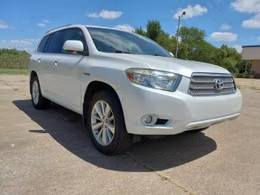
Цена Toyota Highlander начинается от 30 000 AED и достигает 210 000 AED. Итоговая стоимость на дороге может незначительно отличаться в зависимости от страховки, регистрации и дополнительных аксессуаров.
На графике — динамика средней цены модели на вторичном рынке за последний год. Эти данные помогут вам оценить выгодность покупки и спрогнозировать будущую стоимость авто.
Цены на AUTO.AE могут отличаться от фактической стоимости продажи. Данные основаны на нашей базе проданных автомобилей и актуальных объявлениях. Для точной оценки воспользуйтесь нашим инструментом.
How Often Should Toyota Highlander Rear-Drive Oil Be Changed?
Toyota Highlander does not have one rear-differential oil interval that applies to every vehicle carrying the name. The current UAE-market Highlander Hybrid uses an electrically driven rear axle. Imported petrol AWD versions may have a mechanical driveline, while front-wheel-drive examples have no separate rear drive unit. Correct service therefore starts with the VIN, original market and powertrain—not an assumed mileage figure. How Do You Identify the Rear-Drive System in a Toyota Highlander? An AWD badge says that the rear wheels can deliver traction; it does not describe how torque reaches them. A hybrid Highlander uses a dedicated electric unit at the rear axle and needs no propeller shaft from the front transaxle. A petrol AWD model from another market may use a transfer assembly, propeller shaft and conventional rear differential. A front-wheel-drive Highlander has neither rear driveline layout. Confirm the VIN, model code, model year and original sales market. Establish whether the vehicle is Hybrid AWD, petrol AWD or FWD. Inspect underneath: a propeller shaft indicates a mechanical connection, while high-voltage cables identify an electric rear drive. Do not transfer specifications from Grand Highlander or from a same-year vehicle sold in another region. Match the exact Toyota fluid designation and level procedure to the unit that is actually fitted. Body shape is not enough to select a lubricant. Vehicles from the same generation can use different powertrains and AWD architectures. When the car's history is uncertain, decode the VIN and photograph the unit identification before ordering oil or opening a plug. Electric Rear Drive Versus a Mechanical Differential The hybrid rear module combines an electric traction motor, reduction gearing and differential functions. Control software brings the rear axle into operation without a mechanical shaft from the engine. Its fluid works around a different set of materials and components, so a familiar hypoid gear-oil label is not sufficient proof of suitability. A mechanical AWD system sends torque through a rotating propeller shaft to the rear final drive. It may contain two separately filled service points: a transfer unit at the front and a differential at the rear. Replacing fluid in one does not automatically service the other. On an FWD Highlander, the rear suspension, hubs and brakes remain, but there is no oil-filled final drive. A workshop offering rear differential service for such a vehicle should be able to identify the housing, its service plugs and the applicable procedure. When Does a Highlander Rear Drive Need Its Fluid Checked? A mileage number detached from the exact variant is a poor decision rule. Use the schedule that belongs to the vehicle, its documented service history and its actual operating conditions. UAE heat, towing, sand, sustained high speed and heavy loads justify closer inspection, but they do not justify inventing a replacement interval. Fluid traces on the housing, subframe or around a plug should be cleaned and rechecked before the source is declared. A new whine, hum or load-related vibration calls for a level, mounting and condition check—not an unapproved thicker oil. An AWD, hybrid-system or overheating message requires fault-code diagnosis before mechanical work begins. After deep-water exposure, inspect breathers, connectors and possible contamination when the relevant procedure calls for it. With an unknown history, identify the assembly and inspect for leakage first; preventive replacement is sensible only when the correct fluid and level method are confirmed. A slight film around a joint is not automatically an active leak. Airflow can move residue from another component, and old service work may leave a stain. Level checking must be performed with the vehicle positioned, conditioned and measured as required for that specific unit. Stop driving when there is a confirmed significant leak, metallic noise, abnormal heat or an AWD warning. Hybrid rear-drive work also involves high-voltage precautions. Untrained personnel must not disconnect orange cables or open the electric drive assembly. New fluid cannot repair damaged gear teeth, bearings or mounts. Record exactly when a noise appears before service. If it starts immediately after a fluid change, verify the part number, level, plug sealing and signs of loss before assuming a new internal failure. Which Oil Belongs in a Toyota Highlander Rear Unit? There is no all-purpose Highlander fluid. The hybrid electric rear drive and a petrol model's mechanical differential both propel the rear wheels, but their lubrication requirements are not interchangeable. An FWD vehicle has no rear driveline fluid to replace. Why Model Year Alone Cannot Select the Fluid A single model year can include vehicles built for different regions with different engines and drivetrains. An oil application guide that asks only for make, model and year may combine an electric rear drive, a mechanical differential and an FWD vehicle. A matching viscosity number alone does not confirm additive or material compatibility. Mechanical AWD vehicles can also specify different products for the rear differential and the front transfer assembly. Their capacities and level-setting steps may differ. For the hybrid module, the phrase conventional axle oil is particularly unsafe unless supported by the exact service data. If trustworthy information for the VIN is unavailable, postpone draining the unit. Experimenting after the plug is removed can leave the vehicle immobilised without a verified way to refill it correctly. Checks to Complete Before Service Keep the vehicle level and provide safe access underneath. Match the VIN, model code, engine type and factory drive-system designation. Locate the unit identification and confirm that the plugs belong to that assembly. Make sure the fill plug can be opened before removing the drain plug. Prepare new sealing washers and the correct tightening torque. After filling, inspect for leaks and repeat the road test under the original conditions. Inspect drained fluid in good light. Fine dark paste on a magnet is different from needle-like swarf, large fragments or an obvious bronze sheen. Interpretation is design-specific, however; an electric drive should not be judged by the plug layout and debris expectations of a conventional axle. When researching a used vehicle, current listings can help show which powertrains and model years are available locally. This comparison remains only a starting point; the individual Highlander still needs VIN verification and an underbody inspection. Why Does a Toyota Highlander Hum at the Rear—and Is Oil Always to Blame? Noise perceived behind the seats does not prove that the rear drive is failing. Tyre, hub and even front-transmission sounds travel through the floor and can appear to come from another corner of the vehicle. Diagnosis should track road speed, drive or coast, steering input, temperature and surface type. What to Check Before Authorising a Repair Start by recording speed, throttle position, coasting, steering direction and vehicle temperature. Inspect tyres and hubs next because they are common and quick to verify. On a Hybrid AWD model, diagnostic data can show whether the electric rear unit was producing torque when the noise occurred. If the sound continues while the rear axle is inactive, the electric module should not automatically be the leading suspect. In a mechanical AWD system, a difference between acceleration and overrun helps direct attention toward gear contact or bearings, but the conclusion still requires level, backlash and fluid inspection. A vibration that starts after recent work should prompt checks of mounts, propeller shafts, drive shafts and wheels. Oil cannot balance a rotating part or repair a damaged support. Noise-suppressing additives may hide evidence and make later diagnosis harder. Before approving disassembly, ask the workshop to demonstrate the noise or leak, document the level check and identify the applicable fluid specification. That sequence avoids replacing a healthy assembly without overlooking genuine fluid loss. Conclusion The current UAE Toyota Highlander Hybrid AWD uses an electric rear drive and must not be serviced as a conventional mechanical axle. Imported petrol AWD and front-wheel-drive versions are different again. Identify the assembly by VIN first, then use only its specified fluid and procedure; one universal Highlander interval is not valid.
Does a Toyota Highlander Need Transfer Case Oil Changes?
There is no single answer for every Toyota Highlander. The current UAE Highlander Hybrid 2026 uses a 2.5-litre hybrid powertrain, eCVT, and AWD, with a separate electric motor driving the rear axle. That layout must not be serviced as conventional mechanical AWD with a transfer case. Imported petrol AWD versions, however, may use different hardware. First establish the generation, model year, original market, powertrain, and actual AWD design. Only then can you determine whether a separate torque-transfer unit exists, which fluid it needs, and whether scheduled replacement applies. The Highlander name and an AWD badge are not fluid specifications. Key point. Do not automatically schedule conventional transfer case oil replacement for the current Highlander Hybrid 2026 with eCVT and AWD. First confirm how rear-axle torque is produced on the individual vehicle. Identify the AWD System First Before ordering fluid, match the VIN, complete model code, model year, and original market to the physical layout. An underbody inspection should show whether the axles are linked by a propeller shaft or the rear wheels are driven by an electric module. These systems require different service decisions. Current UAE Highlander Hybrid 2026. The official model page specifies a 2.5-litre hybrid powertrain, eCVT, and AWD. Its rear drive is produced by a separate electric motor, so a generic “transfer case oil change” does not apply. Imported front-wheel-drive version. It may have transmission fluid and a final drive, but there is no mechanical unit distributing torque between the axles. Do not add transfer case service to the repair order. Imported petrol AWD version. This vehicle may transmit torque to the rear mechanically. Find the exact documentation from the VIN and model code, then check the torque-transfer unit and rear differential separately. Highlander Hybrid from another year or market. Do not apply current UAE information automatically. Verify any change in generation, electric drive housing, and service procedure for the exact configuration. Converted vehicle or unclear origin. Do not drain fluid by guesswork. Record the complete model-code plate and have a specialist identify the eCVT, rear electric drive, mechanical shafts, differentials, and plugs. How Hybrid AWD Differs From a Mechanical Transfer Case In conventional mechanical AWD, power passes from the transmission to both axles through a torque-transfer unit and propeller shaft. In the Highlander Hybrid, a separate rear electric motor drives the rear wheels when required. AWD therefore does not by itself prove that a conventional transfer case exists or needs a separate interval. The rear electric drive is still a real assembly with a housing, reduction gears, seals, and its own requirements. It must not be declared maintenance-free without checking the exact document, but transfer case oil for another version must not be poured into it by analogy. When the Driveline Needs an Unscheduled Inspection Unusual noise or fluid residue requires inspection even when no separate transfer case is fitted. Diagnose the assembly that is actually present: the front hybrid transaxle, rear electric drive, mechanical AWD gear unit, or a neighbouring component. A fluid change must not replace fault-finding. Fresh leakage appears. Clean the housing and shield, then inspect plugs, joints, breathers, and shaft exits. A second check after a short drive usually identifies the source more clearly. The vehicle has travelled through deep water. Moisture entering through a breather or damaged seal can cause cloudiness, foam, or emulsion. Correct the entry path and service the affected housing. The underbody has been struck. A distorted shield may contact the housing, while a damaged plug or crack can reduce the fluid level. Check for leakage and structural damage before further driving. A hum, vibration, or knock appears when torque changes. Possible sources include the eCVT, rear electric module, propeller shaft on a mechanical version, driveshafts, wheel bearings, or tyres. Locate the symptom in several operating states first. Service history is unknown. A note without a date, mileage, and exact product does not confirm what was done. Establish a new baseline only after identifying the assemblies, checking the level, and correcting leakage. Important. The rear electric drive, hybrid transaxle, mechanical transfer unit, and rear differential are different assemblies. Their fluids, procedures, and intervals are not interchangeable. What the Official Highlander 2026 Information Confirms According to toyota.ae, the Highlander Hybrid 2026 uses a 2.5-litre hybrid powertrain, eCVT, and AWD. Toyota’s official fourth-generation technical description explains that hybrid AWD uses a separate rear electric motor. This version must not be serviced using a universal mechanical transfer case schedule. Establish the exact procedure from the VIN, complete model code, model year, and original market. If the specific manual for the vehicle cannot be found, do not invent a universal interval or carry a specification over from a petrol AWD or another hybrid version. What to Service on the Current Highlander Hybrid Build the maintenance plan around the assemblies actually fitted. For the hybrid version, check the engine, front hybrid transaxle, and rear electric drive separately. The fluid designation, level method, reference capacity, and interval for one housing must not be applied to another. Heat, sand, urban congestion, sustained loads, and water exposure may justify closer inspection, but they cannot turn electric AWD into a mechanical transfer case. Read severe-service notes only for the exact version. When a matching document is unavailable, record workshop advice as preventive guidance rather than a Toyota factory interval. Avoiding Confusion Between Fluids Select fluid from the factory identity of the assembly. Then verify its type, viscosity and performance standard, level-setting method, sealing parts, and plug torque. Reference capacity helps with preparation, but the prescribed procedure establishes the final level. Do not put ordinary gear oil into the eCVT. A hybrid transaxle contains electrical components and requires the fluid specified for the exact version. Do not treat the rear electric drive as an ordinary rear differential or transfer case. Its housing and lubrication requirements must be established separately. Do not apply petrol Highlander AWD information to a Highlander Hybrid. A shared body name does not mean the torque follows the same path. Do not use the container capacity as the fill quantity. Residual fluid, temperature, and vehicle position affect the level, while overfilling can cause foaming and leakage. Assessing Noise and Fluid Traces Fluid on a shield may have travelled from a housing above it, while a hum can originate from tyres or wheel bearings. Record how the sound changes with road speed, drive torque, steering, and braking. After cleaning, inspect the front transaxle, rear drive unit, shafts, driveshafts, mounts, and housing breathers again. Practical Inspection Checklist ☐ Record the VIN, complete model code, model year, and original market. ☐ Confirm whether the powertrain is hybrid or petrol and identify the transmission. ☐ Determine whether rear-axle torque is delivered electrically or mechanically. ☐ Identify every housing and its plugs before ordering fluid. ☐ Do not combine the eCVT, rear electric drive, and mechanical transfer unit. ☐ Inspect shields, joints, breathers, and seals for leakage or impact evidence. ☐ If a serviceable housing is confirmed, loosen its fill plug before the drain plug. ☐ Use only the verified fluid and sealing parts required by the procedure. ☐ After the work, check the level, sealing, and result of a short road test. Mistakes to Avoid Scheduling transfer case oil service for every Highlander AWD. Hybrid electric drive and mechanical AWD use different hardware. Treating a rear electric motor as proof that no service is ever required. Check the requirements for the exact electric drive module. Copying an interval from a petrol version, another market, or another generation. A shared model name does not identify the assembly. Trying to mask a hum with thicker oil. Fluid cannot restore bearings, mounts, splines, reduction gears, or an electric module. Stopping at a fluid change after water, impact, or leakage. Correct the source first, restore the proper level, and perform a follow-up check. Conclusion For the current Toyota Highlander Hybrid AWD, check the front hybrid transaxle and rear electric drive rather than scheduling a conventional mechanical transfer case oil change. An imported petrol AWD version may use different hardware, so decide only after checking the VIN, model code, and actual torque path. Leakage, water, impact, or a new noise calls for diagnosis of the specific unit. Current offers for Toyota Highlander can assist with vehicle selection, but they do not replace verification of its driveline and service data.
How Often Should You Change the Transmission Fluid in a Toyota Highlander?
Transmission fluid removes heat, lubricates loaded surfaces, and supports hydraulic operation. In a conventional automatic, its condition affects clutch engagement and torque-converter operation. In a hybrid transaxle, it protects gears, bearings, and electrical components within the unit’s intended design. There is no single service interval that can be assigned to every Highlander without identifying the vehicle first. Generation, destination market, engine, driveline, and transmission type affect both the required fluid and the level-check procedure. The electronically controlled continuously variable transmission in a hybrid is not a belt-type CVT and follows its own requirements. 5 Signs Your Toyota Highlander Transmission Fluid Needs Inspection 1. Delayed engagement of D or R. A pause after selecting a range may relate to fluid level, hydraulic pressure, temperature, or a control fault. 2. Harsh or inconsistent shifts. If the familiar smoothness disappears, retrieve fault codes and assess the transmission before treating a fluid change as a universal cure. 3. Whine, hum, or unusual vibration. Noise under load calls for checks of the transmission, axles, wheel-end components, and—on applicable AWD models—other driveline units. 4. Evidence of leakage. Fluid around the pan, seals, or cooler circuit should be traced and the level verified before further driving. 5. Overheating or a dashboard warning. Towing, long climbs, hot weather, and slow traffic raise thermal load; a warning requires prompt attention. One Symptom Does Not Identify the Cause Low system voltage, engine faults, worn mounts, throttle issues, and AWD problems can create similar sensations. A sound diagnosis begins with fault-code retrieval, a leak inspection, and confirmation of temperature and fluid level using the procedure for the installed transmission. What Delayed Service Can Do How to Determine the Service Interval Begin with the VIN, model year, destination market, powertrain, and transmission code. Then consult the service information for that exact configuration to see whether it specifies replacement, periodic inspection, or separate provisions for severe use. An instruction to “inspect” should not automatically be rewritten as a mandatory replacement interval. When Earlier Inspection Makes Sense Earlier checks are sensible for regular towing, heavy passenger or cargo loads, repeated mountain driving, sand use, prolonged hot-weather congestion, and after water exposure. These conditions do not create one universal interval, but they increase the value of checking condition and sealing integrity. How to Select the Correct Fluid The specification matters more than the brand name on the bottle. Select the product from the VIN and the data for the installed unit. Fluid color does not prove compatibility: dye changes in service, and products with a similar appearance may have different friction characteristics. Conventional Automatic and Hybrid e-CVT Are Different A hydraulic automatic uses fluid for torque transfer and clutch control. The Highlander hybrid e-CVT uses a planetary power-split device and electric motor-generators, not a variator belt or chain. For that reason, a product labeled “CVT fluid” should never be selected merely because the vehicle description contains e-CVT. Total Capacity Is Not the Drain Quantity A routine drain leaves fluid in passages, cooling components, and internal assemblies. The refill amount depends on the work performed and on the specified checking temperature. Filling to the published total capacity after a partial drain can create an incorrect level; the final setting must follow the prescribed procedure. Why a Highlander May Shift Harshly Fluid is not the only possible cause. Shift feel can be affected by adaptive values, temperature, software, solenoids, hydraulic pressure, powertrain mounts, and engine operation. In a hybrid, a perceived surge may also coincide with transitions between electric drive and engine operation. Record the complaint, scan for faults, and rule out mechanical problems before service. A Practical Service Checklist □ Identify the vehicle. Record the VIN, year, engine, driveline, and transmission type. □ Inspect for leaks. Check the pan, seals, lines, and heat exchanger. □ Confirm the specification. Use only the fluid listed for the identified configuration. □ Follow the temperature procedure. Many units require level setting within a defined temperature range with the vehicle correctly positioned. □ Assess accessible components. When the procedure provides access, inspect the pan, magnets, and filter element. □ Perform a final road check. Confirm there are no leaks, warnings, or abnormal operating symptoms. Important. A machine-assisted fluid exchange is not a universal procedure for every Highlander. Choose the method according to unit condition and the requirements of the exact transmission. Do not mix incompatible fluids or add aftermarket treatments without a manufacturer instruction. Common Mistakes Buying fluid by model name alone. Highlanders bearing the same badge may have different transmissions and specifications. Applying automatic-transmission rules to a hybrid. The designs and checking procedures are not interchangeable. Confusing separate driveline fluids. Transmission, transfer-unit, and rear-final-drive fluids serve different assemblies; hybrid AWD layouts also vary by version. Setting the level without temperature control. The correct product cannot compensate for an incorrect level. Using service to mask a fault. Pronounced slipping, harsh engagement, or stored faults require diagnosis first. Conclusion The safe approach for a Toyota Highlander is to identify the exact transmission, account for the vehicle’s real workload, and follow the procedure written for that configuration. This keeps fluid service preventive instead of turning it into an experiment on an expensive assembly. If you are also comparing model years and trim levels, you can review current listings in the vehicle catalogue, then verify the fluid specification and service method separately against the VIN of each vehicle.
Вопросы и ответы о Toyota Highlander (FAQs)
В объявлениях могут быть представлены комплектации Toyota Highlander GLE, VXR, Premium, Limited и другие. Актуальный список зависит от выбранной страны, года выпуска и наличия автомобилей. Используйте фильтр «Комплектация», чтобы сравнить доступные варианты.
Пробег следует оценивать вместе с возрастом, состоянием и сервисной историей автомобиля. Сравните показатель с похожими машинами того же года и перед покупкой проверьте историю обслуживания и фактическое состояние автомобиля.
Сейчас на AUTO.AE представлены Toyota Highlander по цене от 30 000 до 210 000 AED. Цена зависит от года выпуска, пробега, комплектации, состояния и региональной спецификации. Данные рассчитаны по активным объявлениям и могут меняться.
У частного продавца цена может быть ниже, а шоурум может предлагать дополнительные услуги — например, финансирование, гарантию или помощь со страхованием. Условия различаются, поэтому проверяйте информацию в объявлении, документы автомобиля и данные продавца.
Проверьте регистрационную карту автомобиля Mulkiya, VIN на автомобиле и в документах, данные владельца, сервисную историю и сведения об авариях. Также уточните наличие действующего кредита, штрафов или других ограничений. Перед сделкой желательно провести независимую проверку.
Да. Можно договориться с продавцом о независимой технической проверке в выбранном сервисном центре. Диагностика поможет оценить состояние двигателя, трансмиссии, кузова, электроники и других узлов.
GCC Specs означает, что автомобиль изготовлен в спецификации для рынков стран Персидского залива. Такие версии обычно рассчитаны на местные климатические условия. Однако GCC Specs сама по себе не подтверждает состояние автомобиля и не означает наличие действующей гарантии — это нужно проверять отдельно.
Некоторые шоурумы предлагают финансирование. Если оно доступно, условия или ориентировочный ежемесячный платёж могут быть указаны в объявлении. Итоговая ставка и одобрение зависят от банка, первоначального взноса и данных покупателя.