
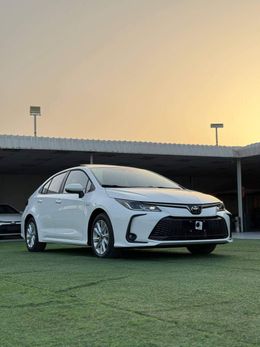


Кузов
Цены
Выгодно купить в


Toyota Corolla Седан
7 500 - 108 815 AED
Выгодно купить в
Toyota Corolla Хэтчбек 5 дв.
24 000 - 230 000 AED
Выгодно купить в
Toyota Corolla Универсал 5 дв.
46 773 AED
Выгодно купить в
В кредит
На гарантии
Обмен
С видео
Со скидками
Для экспорта
317 объявлений
Узнавайте о новых объявлениях первыми
Сохраняйте параметры поиска объявлений и находите нужные объявления быстрее
Цена Toyota Corolla начинается от 7 500 AED и достигает 230 000 AED. Итоговая стоимость на дороге может незначительно отличаться в зависимости от страховки, регистрации и дополнительных аксессуаров.
Toyota Corolla Седан
Выгодно купить в
Toyota Corolla Хэтчбек 5 дв.
Выгодно купить в
Toyota Corolla Универсал 5 дв.
Выгодно купить в
Toyota Corolla Автоматическая
Выгодно купить в
Toyota Corolla Вариатор
Выгодно купить в
Toyota Corolla Механическая
Выгодно купить в
Toyota Corolla Бензин
Выгодно купить в
Toyota Corolla Гибрид
Выгодно купить в
Toyota Corolla 2002
Toyota Corolla 2026
Выгодно купить в
Toyota Corolla 2025
Выгодно купить в
Toyota Corolla 2024
Выгодно купить в
Toyota Corolla 2023
Выгодно купить в
Toyota Corolla 2022
Выгодно купить в
Toyota Corolla 2021
Выгодно купить в
Toyota Corolla 2020
Выгодно купить в
Toyota Corolla 2019
Выгодно купить в
Toyota Corolla 2018
Выгодно купить в
Toyota Corolla 2017
Выгодно купить в
Toyota Corolla 2016
Выгодно купить в
Toyota Corolla 2015
Выгодно купить в
Toyota Corolla 2014
Выгодно купить в
Toyota Corolla 2013
Выгодно купить в
Toyota Corolla 2012
Выгодно купить в
Toyota Corolla 2011
Выгодно купить в
Toyota Corolla 2010
Выгодно купить в
Toyota Corolla 2008
Выгодно купить в
Toyota Corolla 2007
Выгодно купить в
Toyota Corolla 2002
Выгодно купить в
-Toyota Corolla Шарджа
Выгодно купить в
Toyota Corolla Абу-Даби
Выгодно купить в
Toyota Corolla Дубай
Выгодно купить в
Toyota Corolla Эр-Рияд
Выгодно купить в
Toyota Corolla Аджман
Выгодно купить в
Toyota Corolla Барка’
Выгодно купить в
Toyota Corolla Аль-Джубайл
Выгодно купить в
Toyota Corolla Маскат
Выгодно купить в
Toyota Corolla Рас-эль-Хайма
Выгодно купить в
Toyota Corolla Джидда
Выгодно купить в
Toyota Corolla Даммам
Выгодно купить в
Toyota Corolla Аль Мубарраз
Выгодно купить в
Toyota Corolla Сайхат
Выгодно купить в
Toyota Corolla Хобар
Выгодно купить в
Toyota Corolla Медина
Выгодно купить в
Toyota Corolla Мекка
Выгодно купить в
На графике — динамика средней цены модели на вторичном рынке за последний год. Эти данные помогут вам оценить выгодность покупки и спрогнозировать будущую стоимость авто.
Цены на AUTO.AE могут отличаться от фактической стоимости продажи. Данные основаны на нашей базе проданных автомобилей и актуальных объявлениях. Для точной оценки воспользуйтесь нашим инструментом.

Toyota Corolla brake pads do not have one replacement mileage for every vehicle. Their remaining thickness, wear pattern, and lining condition determine the decision. Rotors require thickness and runout measurements plus inspection of both friction surfaces. Driving pattern, generation, rear brake layout, and a hybrid powertrain can all change service life. Before diagnosis. Confirm the VIN, production year, model code, engine, and original market. Different Corolla generations may use rear discs or drums and either a mechanical or electric parking brake. Parts and wear limits from one version must not be transferred to another without verification. 4 Signs of Toyota Corolla Brake Wear The first change may appear before a warning is shown on the dashboard. Persistent noise, vibration, or a different pedal feel must be assessed as a system because similar symptoms can originate from pads, rotors, calipers, hubs, tyres, or suspension components. Record whether the symptom occurs with cold or warm brakes, under light pressure, or only during stronger deceleration. Grinding or a persistent squeal during braking. A brief sound after washing or damp parking may disappear after several gentle stops. If it repeats, inspect both pads, the wear indicator, rotor surface, dust shield, and the area for trapped sand. Pedal pulsation or steering-wheel vibration. Repeatable vibration at the same speed can result from lateral runout, rotor thickness variation, contamination at the mounting face, or hub play. Tyre and suspension faults must also be ruled out. The vehicle pulls while slowing. Unequal braking force can be caused by a sticking caliper, contaminated friction material, a damaged hose, or different component condition on the left and right. Tyre pressure and wear are part of the same inspection. Longer pedal travel or one hot wheel. A soft pedal, overheating smell, or a clear temperature difference requires immediate diagnosis. Possible causes include a leak, air in the system, a sticking piston, or a parking brake that does not release fully. Why Looking Through the Wheel Is Not Enough The outer pad is easier to see, but the inner pad can wear faster when a slide or piston does not move freely. Wheel spokes also hide part of the rotor surface. A reliable assessment requires removing the wheel, comparing both linings, and inspecting the inner face of the rotor. A left-to-right difference can reveal binding before the vehicle begins to pull noticeably. What Happens When Replacement Is Delayed Brake components do not provide a safe reserve until the next noise appears. Once the friction material approaches its limit, the assembly can deteriorate quickly after stop-and-go driving, a mountain route, or continued use with a binding caliper. Braking becomes less predictable. Overheated or nearly exhausted friction material handles repeated stops poorly, so familiar pedal pressure no longer produces the expected response. The pad damages the rotor. When the working material is gone, the metal backing cuts grooves and rapidly raises temperature. Fitting pads without evaluating the rotors will not correct the problem. The caliper operates outside its normal range. An overextended piston places extra load on the boot and seal. Contaminated slides increase misalignment and uneven wear. The car begins to pull. Unequal performance across one axle reduces stability during emergency braking and may accelerate tyre wear. Repair costs rise. A planned pad replacement can turn into rotor replacement, caliper work, or correction of damaged hub mounting surfaces. What to Measure Before Corolla Brake Replacement Use the inspection procedure and service limits for the exact year and version. Confirm the VIN and actual brake design before dismantling. Measure thickness with suitable tools rather than judging the rotor by the visible wear lip or the appearance of one side. Mileage can determine when to inspect, but it does not prove how much service life remains. Urban driving creates more brake cycles, while limited use can expose rotors to corrosion. The final decision should reflect measurements, the type of damage, and free movement of the mechanism. Fit pads as an axle set, and assess rotors as a pair after comparing their condition so braking force remains balanced. How to Avoid Mixing Parts from Different Corollas The Corolla name covers sedans, hatchbacks, and estates from several generations, while powertrain availability varies by market. Cars built in the same year may still have different rotors, calipers, and rear brakes. Record the VIN, model code, engine, drivetrain, wheel size, and installed hardware. A photograph of a similar component is not a substitute for confirming the part number. What Causes Squeal, Vibration, and Pulling One symptom does not identify one fault. A squeal may come from surface corrosion or contamination, vibration may originate at the rotor, hub, or wheel, and pulling may involve the brakes, tyres, or suspension. Diagnosis starts by reproducing the condition and continues with measurements. When a Film on the Rotor Is Normal A thin film can develop after washing or a damp night. It normally clears evenly after several gentle stops. If patchy contact, deep pitting, a pronounced wear lip, pulsation, or persistent noise remains, inspect and measure the surface. Repeated hard braking is not a repair method. Operating Conditions That Accelerate Corolla Brake Wear Service life depends on the number of stops, temperature, and time parked. Equal mileage therefore does not mean equal condition: an urban saloon, a highway car, and a hybrid that uses regenerative braking place different demands on the friction brakes. Driving style matters as well: early, progressive slowing limits heat, while frequent hard stops raise pad and rotor temperatures more quickly. Dense urban traffic. Frequent stops increase heating cycles. Hard acceleration toward the next signal also consumes brake material without a meaningful time benefit. High temperatures and dust. Sand contaminates exposed surfaces and may restrict mechanism movement. After difficult conditions, inspect boots and slides without cooling hot rotors with a water jet. Long descents. Holding speed continuously with the pedal overheats rotors and linings. Select a suitable range early and use powertrain braking within the guidance for the exact transmission. Hybrid versions. Regenerative deceleration can reduce use of the friction brakes. Mechanical wear may fall, but short trips and humidity can leave the working surfaces less frequently cleaned, so corrosion still requires attention. Parking in damp conditions. A long period of standing can affect rotors and the rear mechanism regardless of mileage. When driving resumes, check that the wheels release evenly and that the surface film clears. What to Check on a Used Corolla Recently fitted pads do not prove that the complete system is healthy. Measure the rotors, compare inner and outer linings, and inspect caliper movement, hoses, hubs, the rear mechanism, and the parking brake. During a safe road test, assess straight-line braking, pedal feel, and vibration without attempting dangerous emergency stops. Ask about overheating and previous caliper work because new consumables may have been installed before sale without correcting the cause of earlier uneven wear. How to Plan Brake Diagnosis and Service A consistent sequence helps identify the cause before new parts are installed and reduces the risk of repeated dismantling. Record measurements for each wheel separately so both sides of an axle can be compared and the values retained for the next inspection: Describe when the symptom occurs. Record speed, temperature, weather, parking time, and the point at which noise or vibration begins. Identify the vehicle. Confirm the VIN, model code, engine, original market, and rear brake layout before ordering components. Inspect both sides of the assembly. Compare the inner and outer pads, both rotor faces, boots, and evidence of overheating. Take measurements. Check thickness at several points and measure runout correctly, then compare the result with the limit for the exact version. Correct the underlying cause. Clean mounting faces and inspect the hub, slides, piston, and hydraulic components. Verify the result after assembly. Restore a firm pedal, rule out leaks, check that the wheels rotate freely, and bed in the parts safely according to their manufacturer instructions. Common Service Mistakes Buying parts by production year alone, without confirming the VIN, original market, and actual brake equipment. Judging wear through the wheel spokes, leaving the inner pad and inner rotor face unexamined. Installing pads on unmeasured rotors, ignoring thickness, runout, cracks, and friction-surface condition. Servicing only one side of the axle, creating a difference in component condition and braking force. Treating the absence of loud noise as proof of safety, without checking pedal feel, wheel temperature, and system warnings. Conclusion Service Corolla brakes according to measurements rather than a universal mileage interval. Inspect both pads, the rotors, calipers, and the rear mechanism fitted to the exact version. Before buying, compare vehicle condition with current listings and make a brake inspection part of the selection process.

For most Toyota Corolla owners, the correct starting point is not a mileage interval but a drivetrain check. Current UAE-market Corolla sedans are front-wheel drive and have no separate rear differential. Rear-unit service applies only to selected Corolla AWD variants sold elsewhere and to certain older four-wheel-drive imports. How Do You Know Whether a Toyota Corolla Has a Serviceable Rear Differential? The Corolla name covers many generations, markets and drivetrain layouts. In a conventional front-wheel-drive car, torque does not travel to the rear wheels, so there is no rear final-drive housing filled with gear oil. The front differential is built into the transmission or transaxle and shares the fluid specified for that assembly. Some Corolla Hybrid AWD models use a separate electric drive at the rear axle. Toyota documentation may still list Rear Differential Oil for these cars, but it adds the essential qualifier if applicable. Older imported Corolla 4WD models can use a mechanical rear differential. These arrangements must not be serviced from one generic instruction. Confirm the VIN, model code and original sales market. Verify any AWD or 4WD description against factory equipment data rather than relying on an advertisement badge. Inspect the rear axle: a front-wheel-drive Corolla has neither a differential housing nor driven half-shafts at the rear wheels. Distinguish an electrified hybrid rear drive from a conventional hypoid differential connected by a propeller shaft. Match the maintenance operation to the exact model year, market and powertrain document. If a workshop proposes a rear differential oil change for a standard UAE Corolla 1.6 or 2.0, ask it to identify the component and its fill plug first. Draining CVT fluid cannot be presented as rear differential service. It is a separate operation, with a different fluid and level-setting procedure. Which Corolla Versions Have No Separate Rear Differential? A sophisticated-looking rear suspension does not prove that a differential is present. A front-wheel-drive Corolla may have a subframe and multiple links, yet the engine still drives only the front transaxle. The rear hubs rotate without drive shafts, leaving no rear gear-oil reservoir to drain or refill. Do not transfer specifications from a Corolla Cross AWD or assume that petrol and hybrid Corolla models share a drivetrain. Two cars from the same model year can have different systems when sold in different countries. For a vehicle imported from North America, Japan or another region, the VIN takes priority over a familiar trim name. An underbody inspection resolves the question quickly. A conventional mechanical rear differential connects to both wheels through half-shafts and usually to the transmission through a propeller shaft. An electrified hybrid rear unit has high-voltage connections and needs no mechanical shaft from the engine. A front-wheel-drive Corolla has neither layout. What Happens If the Wrong Unit Is Serviced—or AWD Oil Is Ignored? The mistake can go in either direction. On a front-wheel-drive Corolla, the owner may pay for an operation that the car cannot require, or a transmission-fluid service may be mislabelled. On an applicable AWD model, the opposite error is possible: a genuine rear unit may be omitted even though its condition is listed in the maintenance schedule. A universal service package can create false confidence by adding a line item that does not correspond to any component on the vehicle. Low fluid in a serviceable rear drive reduces cooling and protection for bearings, gears or electric-drive components, depending on the design. An incorrect specification can affect bearings, seals and gear contact. One bottle is not automatically suitable for every Corolla AWD system. Trying to cure every rear noise with fresh oil delays diagnosis of tyres, wheel bearings, brake shields or an electric-drive fault. When a real leak exists, driving until a loud whine develops can turn a seal repair into an expensive unit repair or replacement. After a wet patch is found, clean the area, check the level by the prescribed method and re-inspect to confirm the source. Airflow can spread fluid across the rear subframe, so a stain near the axle is not proof of differential leakage. It may come from a shock absorber, brake system or corrosion-protection treatment. Do not continue a journey with a confirmed low level, metallic noise, abnormal housing temperature or an AWD warning. A hybrid electric rear drive also requires high-voltage safety procedures. A workshop must not treat it automatically as if it were a conventional live axle. Fresh fluid cannot rebuild pitted bearing races or damaged gear teeth. If a sound developed gradually and remains after correct service, measure play and locate the source. A heavier oil might alter the tone temporarily, but it can also conceal a problem while wear continues. Which Oil Is Correct for a Toyota Corolla Rear Drive? There is no universal Corolla answer. A front-wheel-drive version needs no rear fluid. For a Hybrid AWD model or an older four-wheel-drive car, identify the exact fluid from the VIN, transmission or axle code, and market-specific service data. Do not assign API GL-5 or a popular viscosity merely because the component is described as a differential. Why the Corolla Name Alone Cannot Select the Fluid The letters AWD do not describe the internals. In an older mechanical system, oil protects hypoid gears and bearings. In an electric rear drive module, the fluid may operate around reduction gears, an electric motor and electrical insulation materials. The compatibility requirements can therefore be fundamentally different. Even two mechanical differentials can vary in ratio, materials, plugs and level-setting method. A product must match the complete required specification, not just one viscosity number. Noise-control additives should not be used unless Toyota documentation explicitly permits them. If the only available answer comes from an oil seller's application list, verify it against primary service data and the unit code. A model-year selector may group several regions together. Waiting until the assembly is identified is safer than opening it and experimenting with fluid. Checks to Complete Before Draining Anything Place the car level and provide safe access to the rear axle. Match the VIN, model code, powertrain and factory drive-system designation. Confirm that the housing actually has manufacturer-provided service plugs. Verify that the fill plug can be opened before removing a drain plug. Inspect seals, connectors, breather and subframe; follow high-voltage precautions on a hybrid. After service, check for leaks and reproduce the original noise under the same conditions. Examine drained fluid under good lighting. Fine dark paste after a long interval is different from needle-like swarf, large fragments or a bronze sheen. Interpretation still depends on the design: do not expect an electric drive to use the same magnetic drain plug as a conventional axle unless its procedure says so. For a used Corolla with an unclear history, begin with a diagnostic inspection and photograph the unit identification. When comparing model years and equipment, browsing current listings can show which versions are common locally. An advertisement is only a starting point; the individual car still needs a VIN check and underbody inspection. Why Does a Toyota Corolla Hum at the Rear—and Is Oil Always Responsible? A rear hum often makes drivers suspect a differential even though most Corollas do not have one. Structure-borne noise travels through the floor, so a front drivetrain sound or a wheel bearing can seem to come from under the rear seat. Diagnosis should track how the sound changes with speed, load, steering input and road surface. What to Check Before Authorising a Repair Record the conditions first: road speed, vehicle temperature, acceleration, coasting, and left or right steering input. Then inspect the tyres and rear hubs. On a front-wheel-drive Corolla, these are much more plausible sources of a rear hum than a differential that does not exist. On an AWD version, compare scan data with the moment when the sound appears. If the rear axle is inactive while the hum continues, the drive unit should not automatically be the leading suspect. When noise coincides with electric rear-drive engagement, check fault codes, mounts, sealing and the specified fluid procedure. For an older mechanical 4WD differential, the difference between drive and coast is useful. A whine under power may point toward the loaded tooth face, while coast noise can relate to the opposite face or bearings. These clues guide testing; they do not replace play measurement and fluid inspection. If noise began immediately after service, verify the exact fluid number, quantity, level procedure and plug sealing. If it built up over months, an oil change alone is not a diagnosis. A disciplined sequence costs less than random parts replacement and avoids dismantling a healthy component. Conclusion Current UAE-market Corolla sedans have no rear differential oil to change. For an AWD or older 4WD car, verify the system by VIN, follow its market-specific schedule, and diagnose noise before servicing.

A transfer case oil change must not be assigned to a Toyota Corolla from the model name alone. The current UAE Corolla 2026 range presents 1.6 CVT and 2.0 Direct Shift-CVT versions, while the public material does not identify a separate four-wheel-drive configuration or a transfer case service item. If the vehicle has no separate unit, there is no transfer case oil to change. Begin by establishing the actual driveline layout. This is especially important for imported cars, uncommon derivatives, and modified vehicles: the Corolla badge does not guarantee the same set of assemblies. CVT fluid, transmission oil, and lubricant for a separate angle drive or transfer unit are not one product. Key point. The public information for the current UAE Corolla 1.6 CVT and 2.0 Direct Shift-CVT does not identify a separate transfer case. Do not schedule that service until the actual construction of the individual vehicle has been confirmed. Identify the Installed Assembly First Before buying fluid, match the VIN, complete model code, model year, original market, and actual underbody layout. An AWD label in a listing or a seller’s description is not identification. You need to verify the physical route by which torque is delivered and whether a separate housing with its own plugs exists. Current UAE Corolla 1.6 CVT. The official model information specifies a 1.6-litre engine and CVT, but it does not list a separate 4WD system or transfer case. Do not add that service to the repair order without different evidence for the individual VIN. Current Corolla 2.0 Direct Shift-CVT. The public specification describes the engine and transmission but contains no separate transfer-unit entry. CVT service must not be relabelled as a transfer case oil change. Imported vehicle carrying an AWD description. Determine whether the rear axle receives torque mechanically through a separate assembly or by another layout. Only then can the correct fluid, level procedure, and schedule be researched. Special, performance, or converted version. Do not carry ordinary-sedan data over to it, and do not apply information for another member of the model family to a standard Corolla. The documentation must match the installed driveline. Vehicle origin is unclear. Do not drain fluid by guesswork. Decode the VIN, photograph the complete model-code plate, and ask a specialist to identify the housings, shafts, breathers, and plugs underneath. Why an AWD Label Does Not Prove a Transfer Case Exists All-wheel drive can be implemented in different ways. A mechanical layout passes torque to the other axle through gears and a shaft; an electrified layout may drive the rear axle without a conventional mechanical connection to the front transmission. The term AWD therefore establishes neither the fluid type nor the presence of a serviceable housing. During an inspection, look for a separate torque-transfer unit, a propeller shaft, fill and drain plugs, a breather, and joints to neighbouring assemblies. Underbody shields and old residue can be misleading. Find a leak after cleaning rather than assuming that its source is the lowest wet point. When the Driveline Needs an Unscheduled Inspection Unusual symptoms still require diagnosis of the assemblies that are actually fitted, even when there is no separate transfer case. If a mechanical transfer unit is confirmed, an early check is reasonable after any event that could affect its level, sealing, or lubricant condition. Fresh fluid residue appears. Clean the transmission and shield, then inspect the plugs, case joints, seals, and breathers. Rechecking after a short drive helps reveal an active source. The car has travelled through deep water. Moisture can enter a serviceable housing through a breather or damaged seal. Cloudiness, foam, or pale emulsion calls for correction of the entry path and replacement of fluid in the affected assembly. The underbody has been struck. A distorted shield, cracked housing, or damaged plug can cause a slow loss of level. Check for leakage and unintended contact before the car returns to service. A hum, shudder, or knock appears as torque changes. The source may be the transmission, driveshafts, a propeller shaft where fitted, a differential, mounts, or wheel bearings. Locate it before deciding between repair and fluid service. Service history is unknown. A note without a date, mileage, and exact product does not confirm the work performed. Establish a new baseline only after the assemblies have been identified and checked for leakage. Important. If there is no separate transfer case, there is nothing to service in one. CVT fluid, transmission oil, and lubricant for another driveline assembly require their own specifications and procedures. What the Official Corolla 2026 Information Confirms According to toyota.ae, the current Corolla 2026 is presented with either a 1.6-litre engine and CVT or a 2.0-litre engine and Direct Shift-CVT. The public model page and specification do not identify a separate 4WD configuration or transfer case service operation. Those materials describe the current range but do not replace identification of an imported or special vehicle. Establish the exact procedure from the VIN, complete model code, model year, and original market. If the specific manual for the vehicle cannot be found, do not invent a universal interval, choose fluid from another Corolla, or treat a general catalogue as proof of the hardware. What to Do When There Is No Separate Transfer Case Do not put a nonexistent assembly into the maintenance plan. Instead, check the requirements for the components the car actually has: the engine, CVT or transmission, drive shafts, and other relevant units. Fluid designation, level-setting method, and interval are established separately for each one. Heat, sand, short journeys, and dense urban traffic can increase the duty imposed on real vehicle components, but they cannot create a transfer case where none is fitted. Read the severe-service notes for the exact configuration. If a matching document cannot be found, record workshop advice as preventive guidance rather than a Toyota factory schedule. Avoiding Confusion Between Driveline Fluids Choose fluid from the identity of the specific assembly, not from the vehicle make or the term AWD. Then verify the fluid type, viscosity and performance standard, level-setting method, seals, and plug torque. Reference capacity helps with preparation, but it does not replace the prescribed level check. Do not buy gear oil merely because the car is described as all-wheel drive. First confirm a separate mechanical housing and its specification. Do not put transfer case oil into a CVT or transmission. Similar locations and the broad term “driveline” do not make the fluids interchangeable. Do not apply requirements for a special Corolla, Corolla Cross, or another model to the ordinary sedan. A related name does not establish identical construction. Do not use the container capacity as the fill quantity. Residual fluid, temperature, and vehicle position affect the result, while overfilling can cause foaming and leakage. Assessing Noise and Fluid Traces Fluid on a shield may have travelled from an assembly above it, and a hum does not necessarily come from gears. Record whether the sound changes under acceleration, on overrun, in a turn, or during braking; compare its frequency with engine speed and road speed. After cleaning, inspect the driveline again and check the tyres, wheel bearings, driveshafts, mounts, and nearby housings. Practical Inspection Checklist ☐ Record the VIN, complete model code, model year, and original market. ☐ Confirm the installed engine, transmission type, and drive designation. ☐ Inspect the torque path underneath and look for a separate serviceable housing. ☐ Do not treat the CVT, final drive, and transfer unit as one assembly. ☐ Match every plug, breather, and seal to its housing before draining anything. ☐ Inspect shields, joints, and shaft exits for leakage or impact evidence. ☐ If a separate unit is confirmed, loosen its fill plug before the drain plug. ☐ Use only the verified fluid and the sealing parts required by the procedure. ☐ After the work, check the level, sealing, and result of a short road test. Mistakes to Avoid Scheduling transfer case oil service for every Corolla. The operation does not exist on a car without a separate unit. Treating an AWD label as a complete specification. It does not reveal the drive layout or identify a fluid. Copying an interval from another model or market. Closely related names can still cover different assemblies and schedules. Trying to mask a hum with thicker oil. Fluid cannot restore bearings, splines, mounts, or damaged gear teeth. Stopping at a fluid change after leakage, water, or an impact. Correct the source first, restore the proper level, and perform a follow-up check. Conclusion Plan a Toyota Corolla transfer case oil change only after confirming that a separate mechanical unit is actually fitted. The public information for the current 1.6 CVT and 2.0 Direct Shift-CVT sedans does not identify one, so service begins with driveline identification rather than an oil purchase. Leakage, water, an impact, or a new noise requires diagnosis of the real source. Current offers for Toyota Corolla can assist with vehicle selection, but the drive type and service data for each example still need confirmation from its VIN, records, and actual construction.
В объявлениях могут быть представлены комплектации Toyota Corolla Elite, Style, Import, Comfort и другие. Актуальный список зависит от выбранной страны, года выпуска и наличия автомобилей. Используйте фильтр «Комплектация», чтобы сравнить доступные варианты.
Пробег следует оценивать вместе с возрастом, состоянием и сервисной историей автомобиля. Сравните показатель с похожими машинами того же года и перед покупкой проверьте историю обслуживания и фактическое состояние автомобиля.
Сейчас на AUTO.AE представлены Toyota Corolla по цене от 7 500 до 230 000 AED. Цена зависит от года выпуска, пробега, комплектации, состояния и региональной спецификации. Данные рассчитаны по активным объявлениям и могут меняться.
У частного продавца цена может быть ниже, а шоурум может предлагать дополнительные услуги — например, финансирование, гарантию или помощь со страхованием. Условия различаются, поэтому проверяйте информацию в объявлении, документы автомобиля и данные продавца.
Проверьте регистрационную карту автомобиля Mulkiya, VIN на автомобиле и в документах, данные владельца, сервисную историю и сведения об авариях. Также уточните наличие действующего кредита, штрафов или других ограничений. Перед сделкой желательно провести независимую проверку.
Да. Можно договориться с продавцом о независимой технической проверке в выбранном сервисном центре. Диагностика поможет оценить состояние двигателя, трансмиссии, кузова, электроники и других узлов.
GCC Specs означает, что автомобиль изготовлен в спецификации для рынков стран Персидского залива. Такие версии обычно рассчитаны на местные климатические условия. Однако GCC Specs сама по себе не подтверждает состояние автомобиля и не означает наличие действующей гарантии — это нужно проверять отдельно.
Некоторые шоурумы предлагают финансирование. Если оно доступно, условия или ориентировочный ежемесячный платёж могут быть указаны в объявлении. Итоговая ставка и одобрение зависят от банка, первоначального взноса и данных покупателя.


