
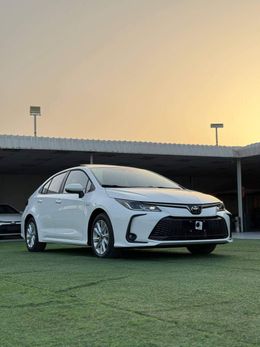


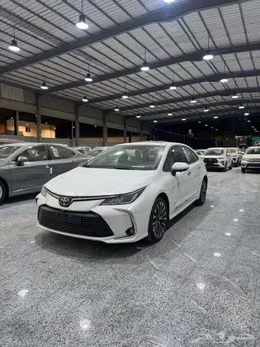

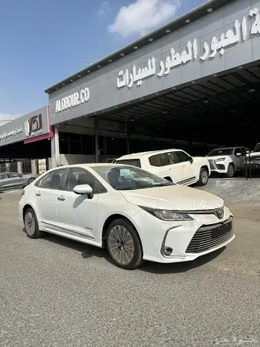

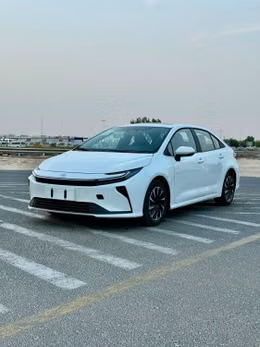

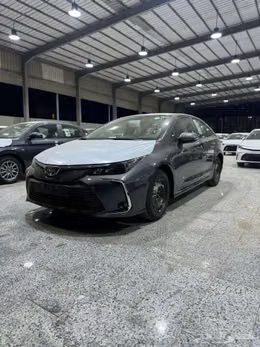


Кузов
Цены
Выгодно купить в


Toyota Corolla Седан
7 500 - 108 815 AED
Выгодно купить в
Toyota Corolla Хэтчбек 5 дв.
24 000 - 230 000 AED
Выгодно купить в
Toyota Corolla Универсал 5 дв.
46 773 AED
Выгодно купить в
В кредит
На гарантии
Обмен
С видео
Со скидками
Для экспорта
240 объявлений
Узнавайте о новых объявлениях первыми
Сохраняйте параметры поиска объявлений и находите нужные объявления быстрее
Цена Toyota Corolla начинается от 7 500 AED и достигает 230 000 AED. Итоговая стоимость на дороге может незначительно отличаться в зависимости от страховки, регистрации и дополнительных аксессуаров.
Toyota Corolla Седан
Выгодно купить в
Toyota Corolla Хэтчбек 5 дв.
Выгодно купить в
Toyota Corolla Универсал 5 дв.
Выгодно купить в
Toyota Corolla Автоматическая
Выгодно купить в
Toyota Corolla Вариатор
Выгодно купить в
Toyota Corolla Механическая
Выгодно купить в
Toyota Corolla Бензин
Выгодно купить в
Toyota Corolla Гибрид
Выгодно купить в
Toyota Corolla 2002
Toyota Corolla 2026
Выгодно купить в
Toyota Corolla 2025
Выгодно купить в
Toyota Corolla 2024
Выгодно купить в
Toyota Corolla 2023
Выгодно купить в
Toyota Corolla 2022
Выгодно купить в
Toyota Corolla 2021
Выгодно купить в
Toyota Corolla 2020
Выгодно купить в
Toyota Corolla 2019
Выгодно купить в
Toyota Corolla 2018
Выгодно купить в
Toyota Corolla 2017
Выгодно купить в
Toyota Corolla 2016
Выгодно купить в
Toyota Corolla 2015
Выгодно купить в
Toyota Corolla 2014
Выгодно купить в
Toyota Corolla 2013
Выгодно купить в
Toyota Corolla 2012
Выгодно купить в
Toyota Corolla 2011
Выгодно купить в
Toyota Corolla 2010
Выгодно купить в
Toyota Corolla 2008
Выгодно купить в
Toyota Corolla 2007
Выгодно купить в
Toyota Corolla 2002
Выгодно купить в
-Toyota Corolla Шарджа
Выгодно купить в
Toyota Corolla Абу-Даби
Выгодно купить в
Toyota Corolla Дубай
Выгодно купить в
Toyota Corolla Эр-Рияд
Выгодно купить в
Toyota Corolla Аджман
Выгодно купить в
Toyota Corolla Барка’
Выгодно купить в
Toyota Corolla Аль-Джубайл
Выгодно купить в
Toyota Corolla Маскат
Выгодно купить в
Toyota Corolla Рас-эль-Хайма
Выгодно купить в
Toyota Corolla Джидда
Выгодно купить в
Toyota Corolla Даммам
Выгодно купить в
Toyota Corolla Аль Мубарраз
Выгодно купить в
Toyota Corolla Сайхат
Выгодно купить в
Toyota Corolla Хобар
Выгодно купить в
Toyota Corolla Медина
Выгодно купить в
Toyota Corolla Мекка
Выгодно купить в
На графике — динамика средней цены модели на вторичном рынке за последний год. Эти данные помогут вам оценить выгодность покупки и спрогнозировать будущую стоимость авто.
Цены на AUTO.AE могут отличаться от фактической стоимости продажи. Данные основаны на нашей базе проданных автомобилей и актуальных объявлениях. Для точной оценки воспользуйтесь нашим инструментом.

The spark-plug replacement point for a Toyota Corolla cannot be determined from the model name alone. Engines, plug types and maintenance schedules vary by generation and market. The current 2026 Corolla for the UAE uses the four-cylinder 1.6-litre 1ZR-FE and 2.0-litre M20A-FKS petrol engines, so each engine has four spark plugs. Confirm the scheduled date using the VIN, engine code and documents for the specific vehicle. Inspect the system earlier if there are misfires, hard starting, hesitation under load or a flashing Check Engine light. When the history of a Corolla is unknown, save the fault data and assess the system before replacing parts according to one universal mileage figure. Important. The current 1.6- and 2.0-litre Corolla range uses spark plugs, not glow plugs. A Corolla Hybrid also has spark plugs in its petrol engine: the electrical side of the powertrain does not remove the need to service the internal-combustion engine. Which spark plugs are used in different Corolla versions A Corolla with an inline four-cylinder petrol engine has one spark plug in each cylinder. The exact specification depends on the engine and market. A similar appearance does not confirm compatibility: thread reach, seat type, heat range, resistance and electrode design all matter. When to inspect the plugs before scheduled replacement As the electrodes wear, the voltage required to create a spark rises. A weak point usually appears under heavy load before it becomes obvious at idle. The engine may therefore start normally but hesitate during acceleration or on an incline. Symptoms on a petrol Corolla extended cranking or uneven running immediately after starting; vibration at idle that becomes stronger when the air conditioner is switched on; hesitation during acceleration, overtaking or climbing an incline; P0300 or P0301-P0304 codes and a flashing Check Engine light; higher fuel consumption on the same route, at the same speed and load. Corolla Hybrid considerations In a hybrid version, the petrol engine starts and stops automatically. A brief misfire may be less noticeable because the electric motor provides part of the tractive effort. Stored codes, freeze-frame data and the quality of the engine start after a long standstill are therefore particularly useful. These symptoms do not prove that a spark plug is faulty. An ignition coil, injector, intake leak, intake deposits, low compression or low battery voltage can produce similar behaviour. How the Corolla ignition system works 1.6-litre 1ZR-FE engine Each spark plug has an individual ignition coil above it. The engine control unit selects the ignition timing and monitors cylinder contribution through changes in crankshaft speed. An enlarged gap, cracked insulator or contaminated coil boot increases the risk of voltage leakage under load. 2.0-litre M20A-FKS and hybrid versions The M20A-FKS also uses four ignition coils and four spark plugs, but the 1ZR-FE specification must not be transferred to it. In a Corolla Hybrid, the internal-combustion engine does not run continuously, yet its plugs perform the same task of igniting the mixture. Diagnosis must account for frequent automatic starts and transitions between electric and combined drive. What shortens spark-plug service life Before removing the ignition coils, clean the top of the engine and the plug wells. Sand must not enter a cylinder. Remove the plugs after the aluminium cylinder head has cooled and install them using the torque specified for the exact engine. What can happen if replacement is delayed An enlarged gap increases the load on the ignition coil. Misfires under load can develop into continuous rough running. Unburned fuel can overheat the catalytic converter. Repeated starting attempts add load to the starter and battery. Heavy deposits can make safe plug removal more difficult. On a hybrid, a subtle misfire may persist between short engine-running cycles. A new plug can fail quickly if a mixture, oil or compression fault remains. Critical warning. If the Check Engine light flashes and the engine vibrates strongly or the vehicle loses power, reduce the load and stop in a safe place. Driving with active misfires can damage the catalytic converter. Toyota Corolla maintenance guidance and specifications According to the information presented on toyota.ae, the 2026 Corolla is offered with 1.6- and 2.0-litre petrol engines. The 2026 Corolla specification sheet identifies these engines as the 1ZR-FE and M20A-FKS. There is no single interval or spark-plug specification for every Corolla. Confirm the interval, part number, gap and tightening torque by VIN and in the manual for the specific vehicle. If no direct document exists for the required year and market, the word “manual” is not a substitute for checking the parts catalogue and vehicle data. How to use the table Record the VIN, production year, destination market and engine code first. Treat the cylinder count as a starting point, not confirmation of a part number. Do not transfer plugs between the 1ZR-FE and M20A-FKS because both use four. For a hybrid, check the petrol-engine data rather than relying only on the Hybrid badge. When history is unknown, begin with diagnosis and inspection of the installed set. How to choose the correct set The thread diameter and reach, seat type, heat range, resistance, electrode material and terminal must all match. A spark plug must not be selected only from a photograph, socket size or a seller’s claim that it fits every Corolla. Checking a used Corolla A replacement record should include the date, mileage, part numbers and workshop invoice. When comparing current listings, check the engine code, cold-start behaviour, stored faults and operation under load separately. Cleared codes and recently fitted plugs without supporting records do not confirm the condition of the coils, injectors or cylinders. What a removed spark plug can reveal Inspection helps compare cylinders but does not replace diagnosis. Similar electrode colours can accompany different faults, and one unusual trace must be compared with fault codes, fuel trims and compression. Diagnosing a fault Save the DTCs and freeze-frame data before clearing the memory. Then confirm the engine code, compare cylinders and inspect the coils, power supply and plugs. Replace the set only after excluding faults that could quickly damage the new components. Diagnostic sequence Read the DTCs and save freeze-frame data before clearing the memory. Record temperature, engine speed, load and when the symptom appears. Confirm the engine code and correct cylinder numbering. Inspect the connectors, ignition coils, boots and plug wells. Compare plugs between cylinders without mixing up their locations. If a plug does not explain the fault, check the injector, mixture and compression. After repairs, perform a verification start or road test and scan again. Checklist before service ☐ Record the VIN, production year, market and engine code. ☐ Confirm the quantity and catalogue specification of the plugs. ☐ Save DTCs and freeze-frame data before disconnecting power. ☐ Allow the engine to cool and remove sand from the work area. ☐ Prepare the correct spark-plug socket and extension. ☐ Confirm the gap and tightening torque for the exact engine. ☐ Do not apply thread compounds unless the manufacturer specifically instructs it. ☐ Inspect the ignition coils, boots and connectors. ☐ After assembly, confirm smooth operation and the absence of new codes. Mistakes to avoid Ordering plugs using only the description “Corolla 1.6” or “Corolla 2.0”. Transferring a part number between the 1ZR-FE and M20A-FKS. Treating one interval as mandatory for every generation and market. Adjusting a fine electrode without approval for the exact plug type. Cleaning worn plugs and treating this as a complete replacement. Replacing parts after an active fault without checking coils and injectors. Clearing codes before saving the original conditions. Removing plugs from a hot aluminium cylinder head. Tightening plugs without torque control. Frequently asked questions about Toyota Corolla spark plugs How many spark plugs are fitted to a Corolla 1.6 The four-cylinder 1ZR-FE uses four spark plugs, one per cylinder. Confirm the exact specification by VIN and vehicle data. How many spark plugs are fitted to a Corolla 2.0 The M20A-FKS also uses four plugs, but the 1ZR-FE specification must not be transferred to this engine. Does a Corolla Hybrid have spark plugs Yes. The electric motor does not replace the petrol engine’s ignition system. Selection requires the year, market, VIN and engine code. Can the replacement point be determined from mileage alone No. Time, operating conditions, engine type and the confirmed date of the previous replacement all matter. Diagnose earlier if symptoms appear. Should all four plugs be replaced as a set During scheduled service, a complete matching set is normally installed. If one new plug quickly becomes contaminated, investigate that cylinder first. Does a P030X code always mean a faulty spark plug No. An ignition coil, injector, wiring fault, intake leak or compression loss can produce the same code. The code identifies a cylinder, not a finished diagnosis. Can the vehicle be driven with a flashing Check Engine light Normal driving under load should not continue. Active misfires can overheat the catalytic converter, so stop safely and arrange diagnosis. Should the plugs be replaced immediately after buying a used Corolla Not automatically. Review the records, cold start, stored faults and installed parts first. If the history is unknown, base the decision on diagnosis and the maintenance schedule. Conclusion The current Toyota Corolla 1.6 with the 1ZR-FE and 2.0 with the M20A-FKS each use four spark plugs. The same quantity does not mean the same specification. Determine the interval, gap and tightening torque from the VIN, engine and documents for the specific vehicle. When misfires occur, assess the plug together with the ignition coil, injector, mixture and compression; on a hybrid, also account for automatic petrol-engine starts.

A single fuel-filter replacement interval cannot be assigned to every Toyota Corolla without identifying its generation, engine and destination market. On many versions, the filtration section is incorporated into the in-tank module rather than serviced as a separate external cartridge. The decision therefore comes from the schedule for the individual vehicle, its service history and diagnostic results. When documentation is incomplete, assess fuel condition, pressure and pump operation before deciding whether the module should be opened. Important. Do not transfer an interval from another Corolla without checking applicability. The maintenance plan for the exact year, engine and destination market takes priority. Signs of a Clogged Fuel Filter on a Toyota Corolla A restricted filter reduces delivery reserve, but a worn pump, voltage loss, an air leak, contaminated injectors and ignition faults can create similar behaviour. The filter medium normally has no dedicated sensor that identifies blockage with certainty. Confirm the cause with measurements taken in the operating state that produces the complaint. ● The engine takes longer to start after an extended stop. Pressure may build more slowly than specified or fall rapidly after shutdown. Test the check valve, pump, injectors, electrical supply and battery as well as the filter. ● The Corolla responds slowly during an overtake or climb. Flow may be adequate in gentle driving and then fail to meet demand as load rises. Intake, exhaust and ignition problems must be excluded at the same time. ● Hesitation, rough idle or brief stalls begin to occur. Restricted delivery belongs on the diagnostic list, although sensors, coils, spark plugs and an intake leak can produce the same pattern. ● A louder or changing hum is heard from the tank area. The pump may be working against excessive restriction, operating with little fuel or wearing internally. Compare the sound with pressure, current and voltage before assigning a cause. ● The fault appears soon after refuelling. Water or fine sediment can load the medium quickly. Take a fuel sample and determine whether contamination remains at the bottom of the tank before installing new parts. In high ambient temperatures and dense traffic, record temperature, fuel level and driving time before the hesitation begins. Those conditions do not create a separate factory interval, but they help distinguish a heat-sensitive pump fault from a permanent flow restriction. Why Restriction Is More Noticeable During Acceleration At idle and steady speed, the engine needs a comparatively small fuel volume. Demand rises sharply during acceleration, and a loaded element may no longer provide the required flow. A stationary test can therefore look acceptable while a road recording reveals a pressure drop. Where the Corolla uses a high-pressure circuit, begin testing with supply from the tank. Inadequate low-side delivery can create a deviation further downstream even when the engine-driven pump remains serviceable. Testing in sequence prevents unnecessary replacement of expensive components. What Happens If You Do Not Replace the Fuel Filter on a Toyota Corolla? Filter resistance increases gradually, so early changes can be mistaken for driving conditions or fuel quality. The control system compensates for a limited period, but its authority is not unlimited. Delaying inspection adds load to the pump and can lead to loss of performance. Replacing the filter, however, will not correct an electrical fault or contamination left inside the tank. Delivery reserve narrows. Readings may remain acceptable at steady speed, while pressure stops following engine demand during acceleration. Fuel-trim correction increases. The control unit attempts to compensate and stores a fault when its usable range is exceeded. Freeze-frame data must be interpreted with a pressure test and intake inspection. The pump works under greater strain. Restriction increases load and heat, while a worn motor further reduces capacity. Record voltage and current at the same time as fuel pressure. The next delivery stage receives an unstable feed. On direct-injection versions, inadequate supply from the tank can resemble a high-pressure pump fault. Establish low-side performance first. Severe restriction can cause major power loss, a stall or a no-start condition. After a contaminated fill, inspect the remaining fuel, lines and injectors as well as the module so the replacement element is not exposed to the same material immediately. Fuel-system safety. Flammable vapour is present in the tank. Relieve pressure by the specified method, remove ignition sources and provide ventilation before opening it. A hybrid vehicle must be fully switched off. Which Fuel Filter Does Toyota Recommend for a Toyota Corolla? According to the information presented on toyota.ae, the 2026 Corolla is offered with 1.6- and 2.0-litre petrol engines and a continuously variable transmission. These details do not define the filter layout for earlier generations, hybrid variants or vehicles from other markets. Before ordering, match the VIN, model code, engine and document for the individual vehicle. Toyota specifies the component for the exact variant; there is no universal filter for every Corolla. Why an Interval from Another Corolla Does Not Apply Automatically A common model name does not guarantee an identical fuel system. Engine, injection type, tank, pump, level sender and supplied module content can change between generations and destination markets. Even matching engine capacity does not establish a shared maintenance requirement or part number. Scheduled work is determined from the document for the exact vehicle. An inspection entry must not be interpreted automatically as compulsory replacement. Conversely, the absence of a separate line does not prove unlimited service life after water entry, sediment contamination or damage to the filter medium. Open the system outside the schedule only for a confirmed reason: measurable flow restriction, module failure, contaminated fuel or another repair that requires access to the filtration section. Record the original readings before dismantling so the repair result can be evaluated afterwards. How to Choose a Fuel Filter for a Toyota Corolla Begin with the VIN, model code, engine designation and destination market. Corolla vehicles from one model year can differ in pump, connector, regulator, level sender and tank-cover attachment. A generic 'fits Corolla' description does not establish compatibility. ● Identify the powertrain before ordering. Petrol and hybrid versions can use different modules and pump-control strategies. A matching body shape or engine capacity does not guarantee the same component. ● Establish which parts are supplied separately. A catalogue may list the inlet strainer, filter housing, pump, regulator, level sender and seal individually or specify a larger assembly. Compare catalogue references rather than appearance alone. ● Check electrical and mounting details. Flange shape, terminal count, outlet direction and sender range must match the vehicle. A mismatch may become obvious only after the tank is opened and can extend vehicle downtime. ● Install a new tank-cover seal. A previously compressed ring loses its profile, and poor seating can cause fuel odour or leakage. Clean the mounting surface before opening the tank and inspect it after assembly. ● Do not order a complete module before testing. Measure pressure, pump voltage and current, residual pressure and fuel condition first. These checks help avoid replacing a sound assembly because of a poor connection or another fault. Clogged Fuel Filter and Toyota Corolla Engine Problems Run the diagnosis in the state that produces the deviation. Record fuel level, temperature, load, the most recent refuelling and stored faults. Then compare pressure, pump supply and engine-control data. A lean-mixture code or a complaint of weak acceleration is not enough to justify ordering a filter without further testing. Checks to Complete Before Replacement ● Establish the exact variant. Record the VIN, model code, engine, powertrain type and destination market. Model year and engine capacity alone are insufficient. ● Review previous work. Find the date, mileage, catalogue number and reason the tank was last opened. When records are missing, determine system condition through diagnosis. ● Preserve fault codes and freeze-frame data. Engine speed, load, fuel trims and temperature show when the deviation occurred. Clear memory only after the original information has been recorded. ● Assess the fuel. A sample from the tank can reveal water and sediment. When contamination is present, plan to clean the affected components instead of installing a filter into the same environment. ● Measure pressure under load. A stationary check may miss a drop that appears during acceleration. Compare the result with the specification for the exact engine and the correct test point. ● Check pump voltage and current. A poor ground, connector resistance or incorrect control can imitate a restricted filter. Record electrical and hydraulic values together. ● Test pressure retention. A rapid fall after shutdown may relate to a check valve, regulator or injector rather than loaded filter media. ● Prepare a safe work area. Relieve pressure by the specified method, remove flames and sparks, and provide ventilation. Switch a hybrid Corolla fully off and keep it out of READY mode. Common Toyota Corolla Fuel Filter Service Mistakes ● Assigning one mileage figure to every Corolla. Generations, engines and destination markets can use different operations and module designs. ● Ordering a filter from a photograph. A similar housing does not confirm the connector, regulator, level sender or flow capacity. ● Confusing the inlet strainer with the fine filter. Replacing one component does not mean that the entire module has been serviced. ● Replacing the high-pressure pump before testing tank supply. Low-side shortage can create a similar deviation under load. ● Washing disposable filter media. Solvent and compressed air damage its structure and cannot restore designed efficiency. ● Reusing the tank-cover seal. A ring that has lost its profile increases the risk of odour, leakage and repeat removal. ● Leaving contamination in the tank after poor fuel. Water and sediment will load the new element and bring the symptoms back. Confirm the Toyota Corolla fuel-filter schedule and module content by VIN, engine, model year and destination market. When the service history is unknown, begin with fuel quality, pressure and pump supply. Current listings show how widely Corolla model years and powertrains vary, but part compatibility still requires the catalogue for the individual vehicle.

Cabin-filter life in a Toyota Corolla depends on more than mileage. Air-conditioning operating time, dusty routes, use of fresh-air mode and the condition of the outside-air intake all matter. Inspect the element during scheduled maintenance and sooner if airflow weakens, the windscreen clears more slowly or a persistent odour develops. Important. Corolla has been produced in several generations, with petrol and hybrid powertrains and for different markets. Filter location, dimensions and access procedure may vary. Before buying a replacement, confirm the VIN, production year and the vehicle’s original specification. How to Tell When the Toyota Corolla Cabin Filter Needs Replacing One symptom does not prove that the filter is at fault. Compare airflow, air-door operation and odour in several modes. This avoids replacing a serviceable element when the restriction is at the intake, blower or evaporator. • Airflow no longer matches the blower setting. Compare output at low and medium speeds with the same distribution setting. If noise rises clearly but airflow barely changes, the filter may be creating excessive resistance. • The cabin takes longer to cool after parking. If the air-conditioning system is otherwise operating correctly, loaded pleats reduce the volume reaching the vents. This is easiest to notice during the first minutes of a hot-day journey. • Windscreen demisting becomes less effective. Reduced output increases the time needed to clear condensation. Also check recirculation operation, damp floor mats and the cleanliness of the inner glass surface. • An odour appears as soon as ventilation starts. A damp or dust-saturated element can retain smells, although the evaporator, drain and debris ahead of the filter are other possible sources. • Dust quickly returns to the dashboard. A gap around the frame, crushed pleats or the wrong filter size may be responsible. Some dust enters through open doors, so assess this sign together with the filter’s physical condition. Begin with identical ventilation settings. Compare fresh-air and recirculation output, then switch distribution between the centre vents, footwell and windscreen. If performance changes only in one position, inspect the relevant air door or duct. If airflow is weak in every mode, checking the filter is a sensible first action. When the element is removed, assess more than its colour. Hold it against the light and inspect the edges, seal, damp areas and contamination pattern. A dark strip along only one side may indicate poor sealing, while a distorted frame suggests an incorrect part or installation error. Relate the filter condition to the vehicle’s routes. Coarse sand near an edge more often reflects dusty parking areas or an exposed intake, while an even grey layer is typical of long ventilation use in traffic. This is not a complete diagnosis, but it explains why two cars with similar mileage can need different inspection frequencies. Why Urban Corolla Use Can Shorten Filter Life In dense traffic, the air conditioner may operate far longer than daily mileage suggests. Frequent use of recirculation reduces new outside-air intake, but it does not erase the load already captured by the filter. Dust from parking areas, roadworks and verges can fill the pleats even during short journeys. An extra inspection is worthwhile after a sand-laden wind, travel near construction activity or driving on an unpaved section. Immediate replacement is not always necessary: a dry, intact and moderately loaded filter may remain usable. Decide from airflow resistance, media condition and the schedule for the exact vehicle. Record the date, mileage and element condition to establish a practical inspection frequency. After several services, the history will show whether the filter becomes heavily loaded before the planned visit. This is more useful than a universal interval because it reflects real routes and climate-system operating time. What Happens If You Do Not Replace the Toyota Corolla Cabin Filter A loaded cabin filter mainly restricts ventilation. It is unrelated to the engine air filter and does not protect the intake; each component has its own job. The deterioration is usually gradual, which makes it easy for a driver to become accustomed to it. Actual airflow falls. The blower continues spinning, but less air passes through the dense layer of dust. Noise increases. Higher blower settings are used more often to achieve the same sense of cooling. Cooling becomes less even. Low airflow removes heat from sun-warmed cabin surfaces more slowly. Dust may bypass the filter. A gap, misalignment or crushed frame opens a route towards the climate-system housing. Demisting takes longer. Insufficient output weakens windscreen airflow, so the cause should be diagnosed rather than masked with maximum blower speed. Do not wait until ventilation performance becomes obviously poor. Gradual deterioration is easier to notice when airflow is compared periodically at the same blower setting. If a new element makes no difference, continue diagnosis of the blower, air doors, intake and evaporator. How to Choose a Cabin Filter for Toyota Corolla Start with the VIN, production year and original market. A shared model name does not guarantee the same filter: Corolla generations differ in housing design, frame shape and seal position. A photograph of the removed element is useful for comparison, but it cannot replace part-number confirmation. How to Check Toyota Guidance and Compatibility An official 2026 Toyota Corolla manual is available. It describes equipment across several specifications, so confirm that the illustrated arrangement applies to the individual vehicle. For another Corolla model year, use documentation for that version and verify the filter part number by VIN. The element must enter without severe bending and cover the full air passage. An undersized filter leaves an edge gap, while one that is too tall is crushed as the cover closes. The cover should latch with normal effort; never force an incompatible part into place. Photographing the old element before removal helps preserve its orientation. The image does not identify the part number, but it helps confirm how the filter and seal were positioned. Before final assembly, remove loose debris from the accessible housing without directing it towards the blower wheel. How to Choose the Filter Type and Read the Markings • Particulate filter. Captures sand, pollen and larger road particles with relatively low airflow resistance. • Activated-carbon filter. An additional layer can partly reduce outside odours but cannot clean an already contaminated evaporator or ductwork. • Multilayer filter. May retain finer particles more effectively when its dimensions and resistance suit the vehicle’s system. AIR FLOW and UP markings do not mean the same thing. AIR FLOW indicates the direction of air movement through the filter, while UP identifies the top of the element. Do not copy arrow orientation from another model. Compare the marking on the new part with the diagram for the specific Corolla and the position of the removed filter. After assembly, test several blower speeds. Low speed makes a whistle near the cover easier to hear, medium speed is useful for comparing output, and high speed confirms that the frame does not vibrate. Then test fresh-air mode, recirculation and windscreen demisting. Do not judge the result only by how cool the air feels. Outlet temperature depends on air-conditioning performance, while the filter mainly affects airflow volume and resistance. Compare output at identical settings before and after service; a new element should not add noise or prevent the cover from closing. Why a Dirty Cabin Filter Causes Bad Odours in Toyota Corolla A cabin filter acts only on air passing through it. It cannot remove deposits on the evaporator or clean the condensate drain. Replacing the element may reduce an odour retained by the media itself, but it will not solve a problem located farther along the air path. The moment the odour appears helps narrow the search. Dampness during the first seconds after start-up more often points to moisture in the housing or on the evaporator. A smell present only in fresh-air mode may enter through the intake. If it is unchanged in both modes, inspect internal surfaces and drainage. An air freshener is not a valid result check because it may temporarily mask a weak odour and make the source harder to locate. Assess the system without added fragrance, first with the air conditioner off and then while it operates. Dampness that returns after several journeys calls for climate-system inspection. What to Check If the Odour Remains • Inspect the outside-air intake. Remove leaves, sand and small debris that can hold moisture or restrict fresh airflow. • Examine the removed filter. Wet areas, a musty smell or an uneven contamination stripe require a cause to be found, not only a new element. • Assess condensate drainage. Moisture traces in the housing and recurring dampness indicate that the drain needs attention. • Compare fresh-air and recirculation modes. The difference helps show whether the smell enters from outside or develops within the climate system. • Check the result after assembly. If odour and weak airflow remain, diagnosis must continue beyond the filter housing. Cabin-Filter Service Mistakes on Toyota Corolla • Waiting for one universal mileage point. Two vehicles with the same mileage may have very different air-conditioning hours and dust exposure. • Ordering a filter from a photograph alone. Similar-looking elements can differ in height, frame design and seal position. • Washing disposable media. Water damages the fibre structure, while forceful compressed air distorts the pleats and cannot restore original efficiency. • Installing the element without checking the arrow. Wrong orientation and a folded edge reduce sealing quality and may cause noise. • Treating a new filter as the answer to every odour. If the symptom remains, inspect the evaporator, drainage and accessible duct sections. Conclusion. For Toyota Corolla, regular inspection under actual operating conditions is more useful than one interval for every generation. Select the filter by VIN, monitor airflow and odour, and diagnose the full ventilation system if symptoms remain. Current listings help compare model years and body versions before choosing a vehicle, but they do not replace checks of specification and maintenance history.
В объявлениях могут быть представлены комплектации Toyota Corolla Elite, Style, Import, Comfort и другие. Актуальный список зависит от выбранной страны, года выпуска и наличия автомобилей. Используйте фильтр «Комплектация», чтобы сравнить доступные варианты.
Пробег следует оценивать вместе с возрастом, состоянием и сервисной историей автомобиля. Сравните показатель с похожими машинами того же года и перед покупкой проверьте историю обслуживания и фактическое состояние автомобиля.
Сейчас на AUTO.AE представлены Toyota Corolla по цене от 7 500 до 230 000 AED. Цена зависит от года выпуска, пробега, комплектации, состояния и региональной спецификации. Данные рассчитаны по активным объявлениям и могут меняться.
У частного продавца цена может быть ниже, а шоурум может предлагать дополнительные услуги — например, финансирование, гарантию или помощь со страхованием. Условия различаются, поэтому проверяйте информацию в объявлении, документы автомобиля и данные продавца.
Проверьте регистрационную карту автомобиля Mulkiya, VIN на автомобиле и в документах, данные владельца, сервисную историю и сведения об авариях. Также уточните наличие действующего кредита, штрафов или других ограничений. Перед сделкой желательно провести независимую проверку.
Да. Можно договориться с продавцом о независимой технической проверке в выбранном сервисном центре. Диагностика поможет оценить состояние двигателя, трансмиссии, кузова, электроники и других узлов.
GCC Specs означает, что автомобиль изготовлен в спецификации для рынков стран Персидского залива. Такие версии обычно рассчитаны на местные климатические условия. Однако GCC Specs сама по себе не подтверждает состояние автомобиля и не означает наличие действующей гарантии — это нужно проверять отдельно.
Некоторые шоурумы предлагают финансирование. Если оно доступно, условия или ориентировочный ежемесячный платёж могут быть указаны в объявлении. Итоговая ставка и одобрение зависят от банка, первоначального взноса и данных покупателя.


