Willys Jeepster, 1949
Willys Jeepster
Willys Jeepster•
•11 просмотров
Номер шасси: 91493
Аукцион: Monterey 2015
Дата аукциона: 15 августа 2015 года
Лот №: F4
$40 700 | Продан
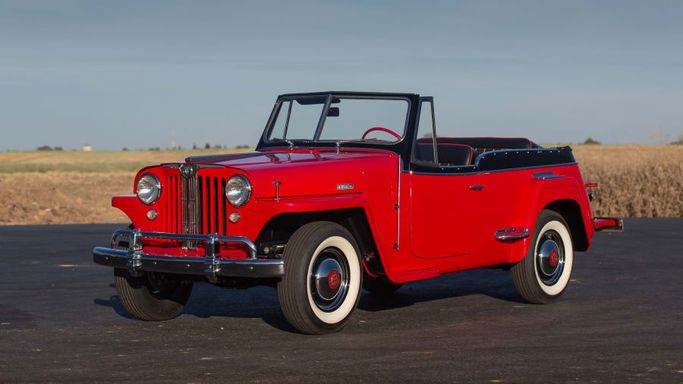
- Экстерьер: красный
- Интерьер: чёрный
- Двухслойная краска Ferrari Red
- Чёрный салон с клетчатыми вставками
- Рядный 4-цилиндровый двигатель с L-образной головкой, объём 134 куб. дюйма
- 3-ступенчатая механическая коробка передач с повышающей передачей
- Двигатель после капитального ремонта
- Головка блока отшлифована, установлены новые клапаны и сёдла выпускных клапанов
- Блок расточен, отхонингован и отшлифован
- Коленчатый вал отполирован
- Новые поршневые кольца
- Шатуны восстановлены до номинального размера
- Новые шатунные, коренные и распределительного вала подшипники, а также заглушки блока
- Все детали из нержавеющей стали отполированы, хромированные элементы повторно покрыты хромом
- Заменены все стёкла, резиновые уплотнители и уплотнители дверей
- Новые тент, ковровое покрытие и отделка салона на заказ
- Коробка передач и повышающая передача восстановлены компанией ATV MFG в Браш-Прери, штат Вашингтон
- Заменены детали рулевого управления: верхние и нижние втулки, наконечники рулевых тяг, комплект шкворней, комплект рулевого сектора, комплект серёг рессор, комплект шарниров карданного вала и кузовные опоры
- Приборная панель восстановлена
- Маховик отшлифован
- Новые сцепление и нажимной диск
- После реставрации пройдено 27 миль
Вторая мировая война прочно закрепила автомобиль общего назначения в сознании американцев. Надёжные и крепкие, как молот, джипы помогали Америке победить в войне во многих отношениях, а вернувшиеся домой солдаты ценили прочность своих машин. Это дало компании Willys-Overland, владельцам названия и конструкции Jeep, уникальную возможность выпускать гражданские джипы (CJ), а также универсалы и грузовики на базе Jeep. Идея оказалась успешной, однако председатель совета директоров Willys-Overland считал, что чего-то не хватает. Он хотел создать более молодёжный, спортивный, комфортабельный и весёлый автомобиль. Вместе с промышленным дизайнером Бруксом Стивенсом он разработал VJ, или Jeepster.
Впервые представленный 3 апреля 1948 года Jeepster не сразу завоевал расположение традиционных покупателей Willys, как на то надеялись, зато привлёк новых клиентов — что само по себе было любопытно. Автомобиль оснащался рядным 4-цилиндровым двигателем объёмом 134 куб. дюйма мощностью 62 л. с., 3-ступенчатой механической коробкой передач с опциональной повышающей передачей, барабанными тормозами на всех колёсах и единственной поперечной листовой рессорой в подвеске; предлагался он только с задним приводом. В 1948 году было продано более 10 000 машин, что убедило компанию продолжить выпуск. В 1949 году, пытаясь оживить интерес, Willys-Overland предложила новый двигатель VJ3-6 в качестве опции.


Рядный 6-цилиндровый двигатель объёмом 149 куб. дюймов мощностью 72 л. с. был лишь немногим мощнее четырёхцилиндрового, но работал заметно плавнее. Несмотря на более крупный двигатель и расширенный набор оснащения, продажи резко упали — до 2 960 машин, из которых лишь 653 были оснащены двигателем VJ3-6. Хотя было продано почти 6 000 VJ, компания продолжала выпускать их и в 1951 году. Этот Willys Jeepster 1949 года окрашен в яркий двухслойный цвет Ferrari Red с чёрной отделкой. В салоне VJ — новая чёрная обивка с клетчатыми вставками и новый тент. Все хромированные детали отполированы или повторно покрыты хромом, а все стёкла и уплотнители заменены.
Рядный 4-цилиндровый двигатель объёмом 134 куб. дюйма прошёл комплексное восстановление: головка и маховик отшлифованы, установлены новые клапаны и сёдла выпускных клапанов, блок расточен, отхонингован и отшлифован, коленчатый вал отполирован, установлены новые поршневые кольца, шатуны восстановлены до номинального размера, а также установлены новые шатунные, коренные и распределительного вала подшипники и заглушки блока. Двигатель соединён с 3-ступенчатой механической коробкой передач с повышающей передачей, восстановленной компанией ATV MFG в Браш-Прери, штат Вашингтон. Сцепление, нажимной диск, верхние и нижние втулки, наконечники рулевых тяг, комплект шкворней, комплект рулевого сектора, комплект серёг рессор, комплекты шарниров карданного вала и кузовные опоры — новые; детали рулевого управления также обновлены. После реставрации Jeepster прошёл всего 27 миль.