Chrysler 300G, 1961
Chrysler 300 Letter Series III (300G) Facelift
Chrysler 300 Letter Series III (300G) Facelift•
•18 views
Chassis No.: 8413129967
- Exterior: Mardis Gras Red
- Interior: Tan
- One of 1,280 300G Coupes produced
- 413/375 HP V-8 engine
- Dual carburetors
- Pushbutton automatic transmission
- Power steering
- Power brakes
- Mardi Gras Red with Tan leather interior
- Bucket seats and full-length console
- Air conditioning
- Power windows
- Full size wheel covers
- Whitewall tires
Considered one of the muscle car’s ancestors, the Chrysler 300 letter series essentially began in 1955 as a race car aimed at the Southeast’s NASCAR circuits, sold to homologate Chrysler's most powerful engine to date, the 331 CI FirePower Hemi V-8. Bolstered by hemispheric combustion chambers, twin 4-barrel carburetors, a race-profiled camshaft, solid lifters, stiffer suspension and a performance exhaust system, the “C300” reinforced its 300 HP rating.
With a deep belief in the aerodynamic benefits of tail fins, Chrysler designer Virgil Exner—the Frank Lloyd Wright of American auto design—embarked on a series of long-hood, short-deck, wedge-like designs, making Chrysler’s 300 Series sleeker and smoother than the competition. Exner’s “Forward Look” became a symbol of American forward thinking and taking automotive luxury design to a higher level. The 1961 Chrysler 300G coupe is the epitome of Exner’s work at Chrysler, and it was also the last year for the automaker’s Forward Look design program.


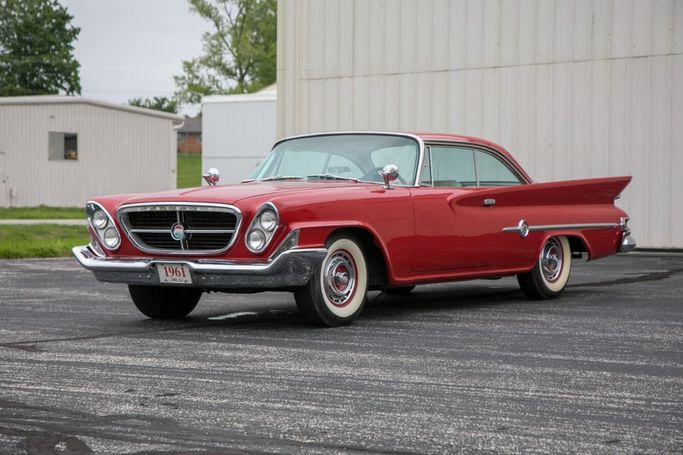
One of 1,280 Chrysler 300G coupes produced that year, this Mardi Gras red example wears its ‘61 redesign well with canted headlamps, an inverted grille shape, fin-mounted turn signals and tail lamps slotted above the rear chrome bumpers. A 413 CI V-8 rests between the frame rails, replete with dual long-runner, cross-ram intake with a pair of Carter carburetors. Rated at the factory at 375 HP and 465 lb-ft of twist, the 300G utilizes a TorqueFlite pushbutton-actuated 3-speed automatic transmission to motivate this “banker’s Hot Rod” riding on 15-inch steel wheels shod in wide whitewall tires and capped with “300” full-size wheel covers.
Power-assisted drum brakes help bring the 4,260-pound car to a halt, while 15.7:1 power steering makes navigating parking lots a breeze. Opening the finned doors reveal the plush tan leather interior, the four bucket seats split by a full-length center console, with black accents and aluminum trim. The futuristic dome-like instrument panel houses the layered speedometer, oil pressure, temperature, fuel level and ammeter gauges, plus four accessory switches. The car also carries one of the most expensive options available at the time: air conditioning, a $510 value in 1961.