


When to replace coolant in the Nissan Sunny
Nissan Sunny
Nissan Sunny•
•17 views
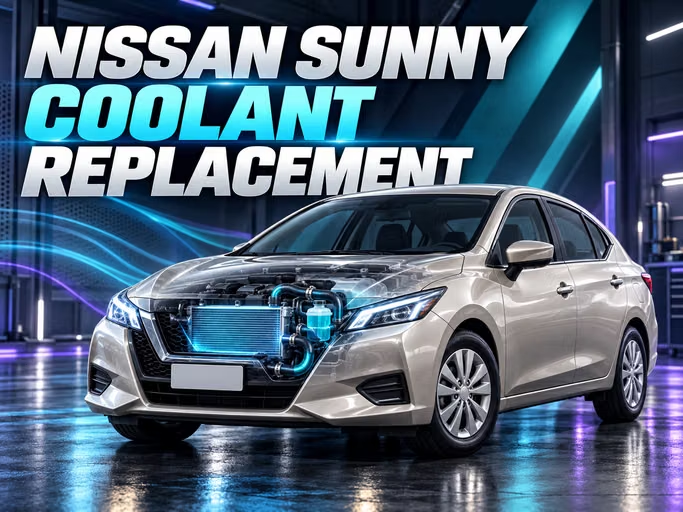
Replace the coolant in a Nissan Sunny according to the schedule for the specific vehicle, rather than waiting for a colour change or the start of summer. Planning requires the model year, engine, and date and mileage of the previous replacement. If coolant is disappearing or an overheating warning appears, establish the cause first: a fluid change alone cannot repair a fault.
When is replacement due?
Nissan’s regional guidance gives a general periodic service interval of 10,000 km or six months, whichever comes first. This does not mean the coolant needs replacing at every service. Coolant requires its own instruction in the schedule for your Sunny.
Details that determine the applicable schedule
Give the workshop the VIN, model year and engine details. For example, Nissan’s official description of the 2024 Sunny specifies a 1.6-litre petrol engine. The Sunny name alone does not justify transferring requirements between different years and versions.
Ask whether the schedule distinguishes the first coolant change from subsequent replacements. Have the next time and mileage limits recorded if both apply. Calendar time matters even when annual mileage is low.
Where to obtain confirmation
Use the owner’s manual and maintenance schedule for your version. The Nissan service recommendation page includes Sunny, model year, engine and time or mileage selections. If the results do not provide the required information, ask a service advisor to confirm it against the VIN.
Do not treat “level checked” as evidence of replacement. It only records a check. Confirmation of a coolant change requires the operation and details of the fluid used.
Topping up, replacement and repair are different jobs
Topping up restores the level but does not renew the entire coolant fill. Scheduled replacement removes old fluid and refills the system with a suitable product using the prescribed procedure. Repair addresses an identified cause of coolant loss or impaired cooling.
| Situation | What needs establishing | What to agree with the workshop |
|---|---|---|
| Scheduled replacement is due | Date and mileage of the previous change | Planned coolant replacement |
| Level has fallen again | Cause of coolant loss | Leak diagnosis |
| Film or sediment in the reservoir | Source of contamination | Repair and suitable cleaning |
| Engine has overheated | Cause of the temperature rise | System operation checks |
If service records are missing
Check the previous owner’s invoices: the work may have involved only top-ups or partial draining during repairs. Replacing a hose, radiator or pump does not, by itself, confirm that the entire coolant fill was renewed.
Do not start a new interval at the purchase date without a documented replacement. Discuss system condition and future servicing with the workshop. When comparing current offers, request maintenance records alongside mileage: tidy bodywork cannot tell you what was put into the cooling system.
Choosing suitable coolant
Ask for the exact product name and confirmation that it meets your Sunny’s requirements. A “universal” label without an applicability check is not enough. Keep the label, or a photograph of it, with the invoice.
Why colour is not a selection rule
GLYSANTIN’s guidance explains that colour does not identify coolant chemistry or technical properties. Mixing different formulations can reduce corrosion protection. Two fluids having the same colour does not establish compatibility.
Clear appearance does not establish remaining service life either: additives gradually lose effectiveness. If the existing fill is unknown, agree on a procedure for restoring the correct product instead of adding an arbitrary mixture.
Does the fluid need dilution?
Use ready-mixed coolant according to its label. Concentrate requires the specified ratio and water of suitable quality. Do not dilute premix by guesswork or increase concentration simply because the weather is hot.
Check total system capacity against the engine. The amount used during replacement can differ because some fluid remains inside. Ask for the product and quantity used to be recorded on the invoice.
Symptoms that should not be ignored
A repeatedly falling level, leak traces, unusual fluid appearance or a high-temperature warning need investigation. Note when the problem occurs: in traffic, at speed, after parking or immediately after servicing. These details help the technician reproduce the conditions associated with the fault.
Why fresh coolant does not always solve the problem
HELLA’s diagnostic guidance includes temperature reading accuracy, the fan, airflow through heat exchangers, the thermostat and the pump. If one of those components is at fault, simply replacing the coolant will not fix it.
Inspecting the radiator’s exterior and checking circulation inside the system address different questions. Ask for an explanation of the diagnostic findings before agreeing to new parts. Vehicle age alone does not establish that a radiator, pump or thermostat needs replacing.
Checking the level safely
Check on level ground after the engine has fully cooled, following the markings and procedure in the owner’s manual. Compare readings under consistent conditions. If the reservoir is empty, do not simply top up and continue normal driving: agree on further action with the workshop.
What coolant replacement includes
Before work starts, agree on the coolant, replacement method and final checks. Additional operations such as leak diagnosis, repairs and cleaning should be itemised on the work order. This makes service quotations easier to compare and shows what was actually done.
Filling and removing air
HELLA’s technical guidance explains that trapped air restricts circulation and can cause overheating. Following replacement, the system needs correct filling, air removal according to the vehicle procedure, and a leak-tightness check.
If oil, sediment or unsuitable coolant is present, establish the cause and select an appropriate cleaning process. Do not use sealant as a substitute for diagnosis. Ask whether the level needs rechecking after cooling and how the workshop will verify the repair.
Checks after servicing
☐ The invoice identifies the VIN and engine.
☐ Replacement date and mileage are recorded.
☐ The full coolant product name is listed.
☐ Operations and materials are itemised.
☐ Final system checks are confirmed.
☐ The next coolant replacement is scheduled.
If the level falls again or a warning returns, contact the workshop and describe the conditions in which it happened. Repeated top-ups without an established cause do not demonstrate a successful service.
Conclusion
Coolant replacement timing for the Nissan Sunny should follow its applicable schedule and documented history. Select a compatible product, distinguish topping up from a complete replacement operation, and investigate leaks. Retained records make future maintenance easier to plan and help assess the work performed.


