When to replace spark plugs and glow plugs in a Nissan Patrol
Nissan Patrol
Nissan Patrol•
•46 views
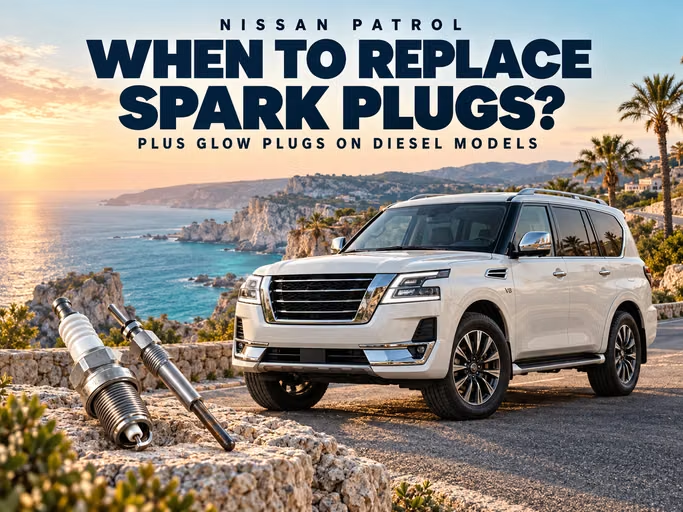
Replace spark plugs in a petrol Nissan Patrol according to the schedule for its engine. Diesel versions use glow plugs: investigate starting problems and replace faulty components following diagnosis and the manufacturer’s requirements. There is no single replacement interval for every Patrol generation.
The Patrol family includes petrol Y61 models, Y62 V6 and V8 engines, newer Y63 V6 engines and Y61 diesels. Before ordering parts, identify the generation, engine and model year. This is particularly important if the engine has been replaced or modified.
Which plugs the different Patrol versions use
In a Nissan Patrol, the engine determines the plug type. The Y62 4.0 V6 and 5.6 V8 use spark plugs. The Y63 3.8 V6 and 3.5 twin-turbo V6 also use spark ignition. Diesel Y61 models require a separate selection of glow plugs.
| Patrol version | Plug type | What to confirm |
|---|---|---|
| Y61, petrol | Spark plugs | Installed engine code |
| Y61, diesel | Glow plugs | Voltage and control system |
| Y62, 4.0 V6 | Spark plugs | Part number and schedule |
| Y62, 5.6 V8 | Spark plugs | Engine specification |
| Y63, 3.8 / 3.5 twin-turbo | Spark plugs | Version and model year |
Y61: petrol and diesel versions
A petrol Y61, such as the 4.8-litre version, needs spark plugs. A diesel Y61, including the ZD30, uses glow plugs. A listing described simply as “Patrol Y61 plugs” is not precise enough: confirm the engine code, part number and electrical specification. If the engine has been swapped, the VIN alone may not identify the correct parts.
Y62: 4.0 V6 and 5.6 V8
Select the Y62 plug set for the specific V6 or V8. The same manufacturer and electrode material do not establish compatibility. Geometry, heat range and gap must be correct. Check the maintenance interval against the vehicle’s documentation, rather than relying only on advice for another Patrol.
Y63: naturally aspirated and turbocharged V6 engines
The 3.8 V6 and 3.5 twin-turbo V6 both use spark plugs, but they are different powertrains. Do not automatically carry over a Y62 plug set or interval. For NISMO versions and engines with modified boost, confirm the exact specification and parts requirements.
When an unscheduled check is needed
Signs of an ignition problem
- The engine shakes noticeably at idle, particularly after starting.
- Acceleration brings repeated hesitation, loss of pulling power or an uneven rise in engine speed.
- Starting takes longer, the engine warning appears or misfire faults are stored.
These symptoms do not establish that the plugs are faulty. A coil, injector, intake leak, fuel pressure problem or mechanical engine fault can cause similar complaints. Vibration from engine mounts and jolts from the transmission must also be distinguished from combustion misfires.
Starting problems on a diesel Y61
Extended cranking after a long stop, rough running immediately after starting and white smoke can point to a glow-system problem. A weak battery, slow cranking, air in the fuel system or injector faults can cause similar symptoms. A warm engine starting normally does not prove that every glow plug is working.
Why plugs can fail before their scheduled replacement
A plug operates under high temperature and pressure. Electrode wear, contamination and insulator damage can disrupt ignition. If a new plug quickly develops deposits in the same cylinder, investigate the cause rather than simply fitting another set.
| Cause | Possible effect | Checks |
|---|---|---|
| Wear or incorrect gap | Unstable ignition | Service history and compatibility |
| Oil in a plug well | Insulation damage | Seals and coil boot |
| Oil consumption or injection fault | Firing-end deposits | Cylinder and injector |
| Engine modification | Changed plug operating conditions | Calibration and parts selection |
| Installation error | Thread or seat damage | Procedure and tightening torque |
Extended idling, short trips, driving on sand and towing affect engine operating conditions. They warrant attention to the vehicle’s condition but do not establish a universal shorter plug interval. If the calibration or forced-induction system has been modified, agree the parts specification and inspection plan with a specialist.
Why driving with misfires is risky
Severe misfires can send unburned fuel into the exhaust and overheat the catalytic converter. Power falls and acceleration becomes unpredictable. Low mileage since the last plug change does not rule out a faulty coil, damage to a new part or incorrect installation.
If rough running starts immediately after servicing, first check parts compatibility, coil connectors, boot seating and installation quality. Clearing the fault memory alone does not establish a repair. Check engine operation afterwards and confirm that active misfires do not return.
When to replace plugs and how to choose a set
Mileage, maintenance schedule and service history
Nissan’s normal-use maintenance schedule specifies replacement at 100,000 km for the relevant iridium/platinum plug category covering the applicable Y62 configuration. The [R] notation means mileage-based maintenance. Use this reference only after confirming that the schedule row and plug type apply to the individual vehicle.
Check the Y61 and Y63 intervals separately. Do not assign 100,000 km to every plug labelled “iridium” or treat this figure as a guarantee against faults. Rough running calls for earlier diagnosis. Where the vehicle’s own schedule specifies both mileage and time, observe whichever limit comes first.
The Nissan maintenance schedule lists spark plugs on pages M-8–M-9 and notes on M-31. Its Y62 note calls for earlier replacement if the stated gap limit is exceeded; that is a wear limit, not the installation gap for a new plug. Confirm the part number and fitting specifications by engine and VIN.
How the two plug types differ
| Parameter | Spark plugs | Glow plugs |
|---|---|---|
| Purpose | Spark ignition in a petrol engine | Heat to support diesel combustion |
| Selection | Geometry, heat range, gap | Geometry, voltage, control system |
| Checks | Misfires, insulator, electrodes | Supply, resistance, current |
| Replacement | Scheduled, or earlier if faulty | Engine schedule and diagnosis |
For a spark plug, check heat range, thread reach, seat and electrode gap. For a glow plug, operating voltage and compatibility with the control system are also essential. Matching threads alone do not prove suitability. Spark-gap instructions do not apply to a diesel heater.
What to ask when buying a used car
When browsing current listings for the Nissan Patrol, ask for records of plug replacement and engine repairs. Check petrol models for ignition misfires and diesel models for reliable starting after a long stop. Establish whether the original engine is fitted, whether it has been tuned and whether faults have recurred.
What removed spark plugs can reveal
Keep removed plugs in cylinder order. Compare them with each other and relate differences to fault codes and measurements. Insulator colour alone is not a conclusive diagnosis: similar marks can have different causes.
| Observation | Possible meaning | Next check |
|---|---|---|
| Heavy deposits on one plug | A local combustion problem | Cylinder and injection |
| Crack or flashover mark | Insulation damage | Plug, boot and coil |
| Oil outside above the seat | Leak into the plug well | Seals |
| Damaged electrode | Overheating or mechanical impact | Compatibility and cylinder condition |
Do not reinstall a damaged or dropped plug without assessing it; an insulator crack may be difficult to see. If oil is present, establish whether it is outside the plug in the well or on the firing end. These observations point to different checks.
Diagnosis and preparation for replacement
Petrol-engine diagnostic sequence
- Save fault codes and the conditions in which they occurred before clearing memory.
- Compare cylinder misfires with the condition of coils, connectors and plug wells.
- Check plugs and, where needed, the fuel system, intake sealing and cylinder condition.
- After repair, check for returning faults and record the mileage, date and installed parts.
Pre-work checklist
☐ Confirm engine type, part number and required quantity.
☐ Prepare the replacement procedure and specified tightening torque.
☐ Switch off the ignition and prevent accidental engine starting.
☐ Clean the access area and keep sand and debris out of the plug wells.
☐ For a diesel, assess thread condition and the risk of difficult removal.
Install plugs at the engine temperature specified in the procedure. Start them squarely and tighten to the prescribed torque. Do not lubricate threads unless explicitly instructed. Do not force a seized glow plug out at any cost: a broken section may require specialist extraction.
Common Patrol servicing mistakes
- Choosing plugs solely by the Patrol name or generation.
- Applying a Y62 interval to a Y61, Y63 or diesel engine.
- Treating a gap wear limit as the setting for a new plug.
- Changing heat range or connecting a glow plug to a battery without checking specifications.
- Clearing faults instead of checking coils, electrical supply, injection and engine condition.
Frequently asked questions about spark plugs
Should replacement wait until the engine hesitates
No. Follow the scheduled replacement even if the engine runs smoothly. If hesitation starts earlier, diagnose it first: buying a new set without investigation may not solve the problem.
Can iridium plugs be fitted and then forgotten
No. Electrode material does not replace catalogue-based selection or guarantee a particular service life. The plug must match the engine. Electrode wear, a damaged insulator or fouling may require attention before the scheduled mileage.
Must coils be replaced with the plugs
A healthy coil is not a consumable that must be replaced at every plug change. Base the decision on testing and the condition of its insulation, boot and contacts. Repeated failure in one cylinder also calls for checks of injection and mechanical condition.
Glow plugs in a diesel Nissan Patrol
When should they be checked and replaced
Difficult cold starting, rough running immediately after starting or glow-system faults call for a system check. Do not apply the petrol 100,000 km interval to glow plugs. Follow the engine’s schedule, electrical test results and component condition. With age-related wear, discuss replacing the set while assessing removal risks.
What should be checked before removal
Start with battery condition and cranking speed, then check the supply, fuses, relay or controller, wiring and plugs. The ZD30 uses a controlled glow relay: loss of power can affect several healthy heaters at once. Compare resistance and current readings with the specification for the engine, rather than a universal value.
Why do voltage and careful removal matter
Select the plug for the engine code and control system. Direct battery connection may damage an unsuitable heater. Follow the removal procedure and its force limits. If a new plug fails quickly, investigate glow control and fuel injection; replacing it again without finding the cause will not solve the problem.
Conclusion
For a Nissan Patrol, identify the engine first: petrol versions need spark plugs and diesels need glow plugs. Check the interval and part number against the individual vehicle’s documentation. Investigate hard starting or rough running before buying components, and retain the date, mileage and details of every service.