


When Should Nissan Pathfinder Brake Pads and Rotors Be Replaced?
Nissan Pathfinder
Nissan Pathfinder•
•21 views
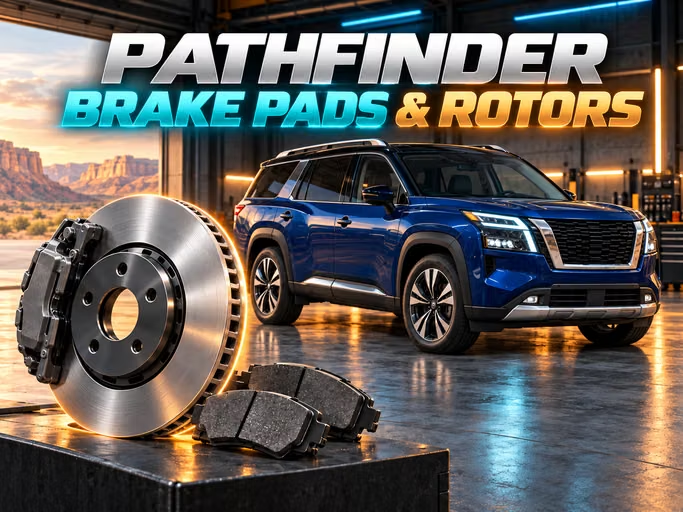
Replace Nissan Pathfinder brake pads and rotors according to inspection results and measurements. The same mileage can represent steady highway journeys or daily stops with passengers and luggage. On a heavy family vehicle, both axles deserve attention: a sound front brake assembly does not establish that the rear brakes are working correctly.
This article focuses on Pathfinder R52 and R53 models. Nissan’s regional R52 catalogue specifies ventilated disc brakes at the front and rear. Component dimensions, wear limits and the parking brake arrangement must be checked for the particular vehicle. Registration year and trim name do not replace identification by VIN.
What to Confirm Before Choosing Pads and Rotors
Record the VIN, generation, build date, engine and original market. The workshop should compare these details with the catalogue and the installed assembly. This matters on a used Pathfinder, which may have replacement calipers, different rotors or an aftermarket brake conversion.
Rotor selection involves thickness, height and mounting dimensions as well as outer diameter. For pads, verify the shape, part number and axle position. A front caliper set does not automatically fit the rear, and matching wheel sizes do not establish brake component compatibility.
- R52. Use the catalogue for the exact specification; visual similarity does not make newer-generation parts suitable.
- R53. The regional specification confirms front and rear ventilated discs and an electronic parking brake.
- R51 and earlier versions. Check the layout and service limits in the documentation for that generation.
- Modified vehicles. Identify the actual calipers, rotors and pads before selecting replacements.
Why There Is No Single Replacement Mileage
Brake life depends on stop frequency, speed before braking, vehicle load and the condition of moving components. Long descents and towing can increase thermal demand. Inspect at the vehicle’s scheduled service points and earlier when symptoms appear. Recording lining thickness helps track wear, but it cannot establish an exact remaining distance.
Findings That Can Justify Replacement
Assessment should cover friction material thickness and condition, rotor working surfaces and free caliper movement. A small outer lip or a squeal does not establish the repair scope. Measurements and diagnosis are needed; otherwise, replacement parts may develop the same problem as the old set.
- A pad has reached the wear limit for the fitted assembly, or the lining is damaged, separated or contaminated by a technical fluid.
- A rotor has reached its permitted minimum thickness, or measured geometry is outside the service limits.
- A rotor has cracks or working-surface damage that makes further use unacceptable.
- A faulty caliper or parking brake mechanism has caused overheating and damage; correct the fault and assess its consequences.
Metallic grinding, fluid leakage, smoke from a wheel, strong pulling or a sinking pedal calls for a safe stop and assistance. Do not investigate such a fault with repeated hard stops. New vibration during ordinary braking also warrants diagnosis, even when the vehicle still appears to stop normally.
Measurements to Request from the Workshop
Brembo’s guidance identifies minimum rotor thickness as MIN TH. Measure the working section at several points, clear of the outer lip. Ask for actual thickness and the permitted minimum to be recorded separately for front and rear rotors. A single millimetre value cannot cover every Pathfinder.
| Component | Check | What to record |
|---|---|---|
| Front and rear pads | Measure both linings in each caliper | Minimum remaining thickness, uneven wear and damage |
| Rotor working surfaces | Measure thickness at several points | Actual readings and MIN TH for each axle |
| Rotors and hubs with vibration | Check runout, thickness variation and mounting | Compliance with limits and possible causes of pulsation |
| Calipers and parking brake | Check movement, sealing and full release | Binding, leaks and mechanism faults |
The Inner Pad Needs Inspection Too
Only part of the assembly is usually visible through a wheel. An outer lining may look usable while the inner one is near its limit. A substantial difference within one caliper calls for checks of the slides, piston, dust boots and pad seats. Measure both sides of the vehicle, at the front and rear.
What Dashboard Warnings Tell You
The ABS lamp does not measure pad thickness. A parking brake warning does not automatically mean that new pads are required either. An absence of warnings does not replace inspection. Follow the vehicle instructions when a warning appears, and diagnose the relevant system to establish its cause.
Connecting Symptoms with Brake Checks
Describing when a complaint occurs helps diagnosis more than immediately requesting new rotors. Note the speed, brake temperature and where vibration is felt: steering wheel, pedal or body. If the problem followed repair, explain which parts were replaced and when. One symptom can have several causes.
| Symptom | Possible explanation | What to check |
|---|---|---|
| Noise after parking | Moisture or surface corrosion | Whether it clears with ordinary safe braking |
| Persistent squeal | Wear, contamination or lining vibration | Pad thickness, surfaces and fit |
| Metallic grinding | Critical wear or trapped debris | Stop normal use and seek assistance |
| Pulsation during braking | Rotor thickness variation or runout | Rotors, hubs and correct installation |
| Pulling or one overheating wheel | Binding, leakage or another fault | Free movement, sealing, tyres and balanced brake force |
When Vibration Starts After Service
Brembo’s noise and vibration guidance includes checks of hubs, calipers and hardware. Dirt on a mounting face or an assembly error can affect a new rotor. Before replacing it again, the workshop should measure runout and thickness variation and check the hub and evenness of pad contact.
What Increases Braking Demand on a Pathfinder
- frequent deceleration in dense urban traffic;
- repeated hard braking from high speed;
- long descents with passengers, luggage or a permitted trailer;
- a caliper or parking brake mechanism that does not release fully;
- leaks, damaged dust boots and contaminated linings;
- dirt and corrosion on slides and pad contact points;
- incorrect component specifications or installation errors.
Assess the brakes before a mountain journey or towing trip. Observe the vehicle’s loading and towing limits and select the appropriate transmission mode for descending as instructed. Hot weather alone does not establish replacement timing: actual condition and the absence of constant brake drag matter.
Rear Brakes and the Parking Brake Mechanism
Pathfinder R53 uses an electronic parking brake. Before replacing rear pads, the workshop must follow the procedure for the exact version, including service mode if required. Do not force a piston back without accounting for the actuator. On versions with a mechanical parking brake, inspect its linkage and working components separately: sound disc pads do not establish reliable parking-brake holding performance.
Brake Replacement Checklist
Ask for measurements and the reason for each component replacement to be recorded. This list helps agree on the service scope and confirm that identified faults are addressed alongside worn parts.
☐ Confirm the VIN, generation and installed brake specification.
☐ Describe squeal, vibration, pulling and changes in pedal travel.
☐ Investigate dashboard warnings and the causes of diagnostic faults.
☐ Measure inner and outer pads on both axles.
☐ Record every rotor’s thickness and permitted minimum.
☐ For pulsation, check rotor runout and thickness variation.
☐ Inspect calipers, slides, dust boots, hoses and connections.
☐ Confirm part numbers, axle position and required fitting hardware.
☐ Establish the correct parking brake service procedure.
☐ Check pedal feel and brake operation, and agree on bedding instructions.
Common Service Mistakes
- selecting pads from the model name and registration year alone;
- replacing one rotor or a single pad instead of an axle set;
- inspecting only a visible outer front pad;
- machining a rotor without checking permission and final thickness;
- using a mechanical parking brake procedure on an electric system;
- leaving binding or leakage unresolved after fitting new parts.
Conclusion
Nissan Pathfinder brake assessment should cover both axles and the parking brake mechanism. Base replacement on thickness, component condition and diagnosis, rather than mileage alone. A correctly matched set and correction of uneven-wear causes matter more than replacing components without measurements.
If you are choosing a used Nissan Pathfinder, current offers can help you compare vehicles. Request the brake repair history and arrange checks of the pads, rotors and parking brake before buying. The findings will help assess near-term service costs.


