


Mercedes-Benz A-Class When to Change Transfer Case Oil
Mercedes-Benz A-Class
Mercedes-Benz A-Class•
•61 views
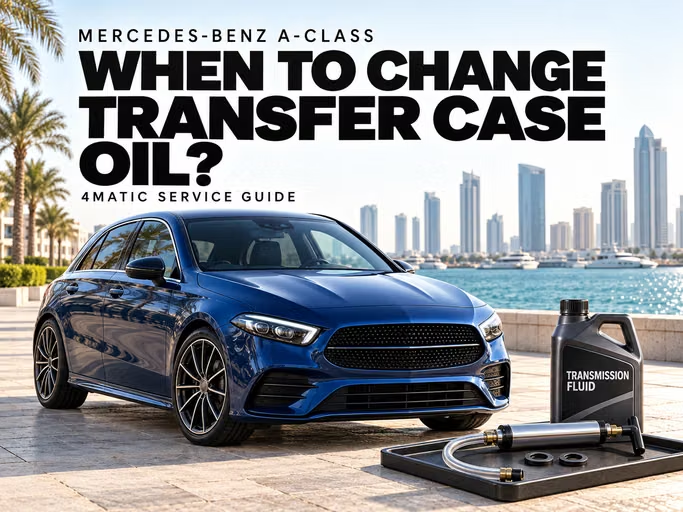
Start by checking the drive type on your Mercedes-Benz A-Class. A front-wheel-drive car has no unit sending torque to the rear wheels. On a 4MATIC version, servicing depends on the transmission design: in the compact system with 7G-DCT, the power take-off unit receives lubricant from the gearbox oil circuit.
A separate “transfer case oil change” therefore does not apply to every A-Class. The workshop should identify the installed assembly and explain the operation specified for it. One mileage interval for the entire model range is not a reliable guide.
Does Your A-Class Have a Separate Transfer Case
Mercedes-Benz’s 2017 technical description of its compact car family identifies the power take-off unit, or PTU, as integrated into the 7G-DCT and sharing its oil circuit. It directs torque towards the rear axle. This explains why maintenance of that unit is linked to the gearbox, even though it is often called a transfer case.
- Front-wheel drive. No all-wheel-drive transfer unit oil change is needed because that unit is not fitted. The gearbox still needs servicing to its own schedule.
- 4MATIC with 7G-DCT. Confirm the gearbox code and lubrication arrangement from the VIN. Where the circuit is shared, agree on the DCT service, including specified filters and level checks.
- Other gearboxes and AMG versions. Establish the exact derivative for W177, the V177 saloon, A 35 and A 45. Neither the 4MATIC badge nor the number of gears identifies every serviceable assembly.
Distinguishing the Power Take Off from the Rear Differential
The PTU is on the gearbox side and sends torque rearwards through the propeller shaft. The rear differential and rear-axle engagement mechanism form another part of the system. Ask the workshop to name each assembly in the estimate: work on the rear differential does not establish that the front power take-off was serviced.
When to Investigate an All Wheel Drive Problem
Before the visit, record when the symptom occurs: under acceleration, while coasting, when turning or after warm-up. Note any recent tyre or fluid changes. This helps the technician investigate likely causes without attributing every vibration to the transfer unit.
- A leak at the front of the driveline. Locate the source and check the level using the gearbox-specific procedure. In a shared circuit, oil loss affects more than the PTU alone.
- Judder when turning. Check tyre compatibility, pressures and wear first, then investigate the all-wheel-drive system and other chassis components.
- Humming or vibration at speed. Include wheel bearings, driveshafts, the propeller shaft and mountings in the assessment. An oil change does not establish that these parts are sound.
- A transmission warning or reduced drive. Record the message and the circumstances. Use the instructions for the particular vehicle and the diagnostic findings to determine the next steps.
Choosing Fluid for an A-Class 4MATIC Transmission
Mercedes-Benz sheet 231.1 lists the following DCT gearbox approvals on page 10. These are gearbox applications, not a universal fluid table for every 4MATIC component. Confirm applicability to the intended operation using the assembly code.
| Gearbox and model series | DCT fluid approval |
|---|---|
| 7G-DCT 724.0 in series 176 and 177 | MB 236.21 |
| 8F-DCT 724.1 in series 177 | MB 236.22 |
Source: sheet 231.1, page 10. Only the named gearboxes and model series are covered here. Other transmissions and separate circuits need their own checks; a DCT approval does not automatically apply to the rear differential.
Establishing the Service Interval
Request the VIN-specific service sheet and its additional operations. For a design with a shared oil circuit, use the specified service requirements for the relevant DCT. If a separate PTU oil change is proposed, ask which circuit is being serviced and which factory procedure applies.
Check mileage and time limits along with the previous replacement record. The approval sheet helps select fluid but does not set an interval. The absence of a separate “transfer case” entry does not mean that gearbox oil servicing can be omitted.
For use in the UAE, describe sustained driving in hot weather, dense urban traffic and performance use. Where history is missing, begin with an inspection and a review of the records. A recommendation to shorten the interval should have a basis in operating conditions or assembly condition.
What to Agree Before the Oil Change
The job order should identify the complete product name, required approval and intended operation. Colour, viscosity or an ATF label alone cannot establish suitability. Check the current approved-product list for the relevant Mercedes-Benz sheet.
- Confirm the quantity for the service change. A dry gearbox’s total capacity is not automatically the amount needed after routine draining.
- Agree on the specified filters and sealing parts, and the level-setting procedure. Follow the manufacturer’s conditions, including temperature where required.
- Ask why flushing, additives or an adaptation reset are needed if they are proposed. These operations should not be added to every oil change automatically.
Checking the Service Outcome
| Observation | What to clarify with the workshop |
|---|---|
| Two oil changes billed for a shared circuit | Which separate operations and quantities were actually involved |
| Judder remains | Whether tyres, controls and mechanical assemblies were checked |
| Fresh oil marks appear | Whether the source was found and the level rechecked |
| No complaints after servicing | Whether leak checks and road-test findings were recorded |
Owner Checklist
☐ Record the VIN, model year and exact A-Class derivative.
☐ Confirm front-wheel drive or the presence of 4MATIC.
☐ Establish the gearbox code and PTU lubrication arrangement.
☐ Check the schedule and previous replacement records.
☐ Agree on the fluid, quantity, filters and sealing parts.
☐ Describe symptoms and recent transmission work.
☐ Obtain an invoice with the date, mileage and completed operations.
☐ Confirm the findings from the leak check and road test.
☐ Record when the next service is due.
Common Servicing Mistakes
- Ordering a transfer case service for a front-wheel-drive car without checking its specification.
- Buying “universal 4MATIC oil” without a gearbox code and a confirmed approval for the intended circuit.
- Paying twice for the same change under “DCT oil” and “transfer case oil” without establishing the separate work involved.
- Expecting an oil change to cure every jolt. Tyres, transmission controls or mechanical components may be responsible.
Conclusion
On the A-Class, transfer case oil servicing starts with the drive type and gearbox design. Front-wheel-drive cars do not need this operation. Where a 4MATIC PTU shares the DCT oil circuit, check the gearbox service requirements and account separately for other all-wheel-drive units. A detailed job order helps prevent missed or duplicated work.
When reviewing current offers for the Mercedes-Benz A-Class, check transmission records as well as routine service stamps. The documented work should match the actual drive system and installed gearbox.


