


How often should you replace the fuel filter on a Mercedes-Benz A‑Class?
Mercedes-Benz A-Class
Mercedes-Benz A-Class•
•61 views
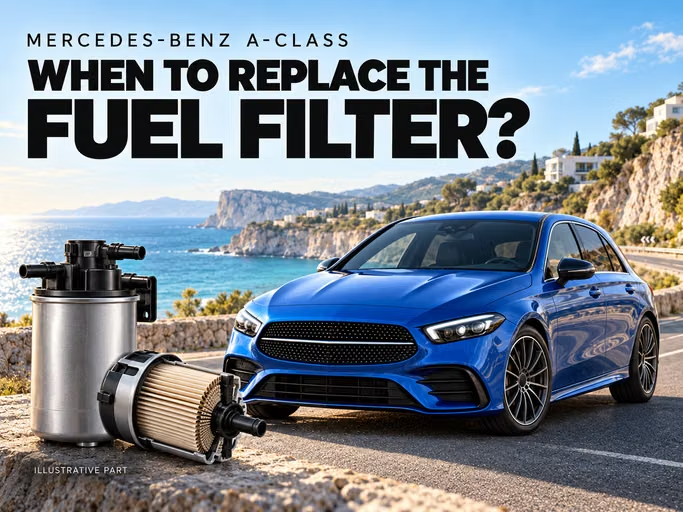
The fuel-filter replacement interval for a Mercedes-Benz A-Class depends on its engine, fuel-system specification and applicable maintenance schedule. A petrol A 200, a diesel A 200 d and an A 250 e plug-in hybrid should not automatically receive the same operation at the same mileage. Identify the vehicle by VIN first, then check its service documentation and repair history. If the car has running problems, diagnosing the cause is a separate step.
Signs of a clogged fuel filter on a Mercedes-Benz A‑Class
MANN-FILTER lists difficult starting, reduced power and uneven running among possible signs of fuel-filter trouble. These symptoms do not establish that the filter is responsible. On an A-Class, describe when a hesitation occurs: during starting, acceleration, a gear change or the combustion engine starting in a hybrid. The following observations can make the workshop visit more useful:
- Hesitation under acceleration. Does the loss of response happen with gentle throttle, on an incline or only under heavier demand? Do not deliberately repeat an unsafe manoeuvre to demonstrate the problem.
- Prolonged starting. Compare the first start after an overnight stop with a warm restart. Report slow engine cranking separately; a starting complaint should not automatically be attributed to the filter.
- A jolt at a specific moment. Note whether it coincides with a gear change or the A 250 e engine starting. This helps distinguish a possible supply problem from other explanations.
- A change after refuelling. Record the amount added and when the symptoms appeared, and keep the receipt. If the wrong fuel was added, do not continue trying to start the engine; arrange assistance.
- Warnings or restricted power. Photograph the message and record the operating conditions. A fuel-pressure fault code alone does not identify the component that needs replacement.
Higher fuel consumption without other observations is not enough to justify ordering a filter. Compare similar journeys and, for an A 250 e, consider how much driving was electric. Avoid clearing fault codes before diagnosis. The original data, fuel level, engine temperature and details of recent work help the technician investigate without replacing parts by trial and error.
Differences between powertrains
The Mercedes-Benz A-Class model page identifies the A 250 e as a plug-in hybrid. The wider family also includes petrol and diesel cars from different production years. An A-Class description or an AMG Line exterior package therefore does not identify its filter arrangement. The workshop needs the actual engine, fuel type and exact vehicle identification before planning the work.
For a diesel, establish the filter specification, connections and required air-removal procedure after repair. For a petrol version, first determine whether the filter is separately serviceable or part of an assembly. On an A 250 e, assess the complaint while the combustion engine is operating: smooth electric driving does not verify petrol delivery. Distinguish rough running after the engine starts from a jolt only during the transition between modes.
What happens if you do not replace the A‑Class fuel filter?
A lack of hesitation does not cancel a replacement that is due under the applicable schedule. Equally, high mileage alone does not justify replacing an expensive assembly without a specified operation or diagnostic reason. Restricted flow, contaminated fuel and faults elsewhere in the system are different problems with potentially different repair requirements.
- Reduced response may become more noticeable under load. A smooth idle cannot rule out insufficient delivery during acceleration. Checks should follow the engine-specific procedure rather than rely on the impression from a short drive.
- Starting and running may become unreliable. A severe supply problem can result in stalling or failure to start. Repeated prolonged cranking does not remove the cause and can complicate assessment of the vehicle.
- Contamination can affect injection components. Water and particles in fuel can cause corrosion and wear. However, the age of a filter does not prove that the pump or injectors are damaged; that conclusion requires separate evidence.
- Replacing the filter alone may be insufficient. If contaminated fuel remains in the tank, or another component caused the complaint, a new filter will not remove the source. Agree the investigation before deciding on cleaning and repairs.
- Repeated loss of power can create a driving hazard. If the engine stalls repeatedly, fuel leaks visibly or there is a strong fuel smell, stop safely and arrange assistance. Do not test the car by accelerating hard.
Which fuel filter does Mercedes-Benz recommend for the A‑Class?
The Mercedes-Benz descriptions of Service A and Service B do not list a fuel filter as a universal basic operation for every vehicle. For an A-Class, request the applicable work list and the genuine part reference identified by VIN. If an alternative is proposed, confirm its application through the manufacturer’s catalogue rather than relying on a general “for A-Class” label.
| What to establish | Why it matters | What should be confirmed |
|---|---|---|
| VIN and engine | One generation covers several specifications | Applicable schedule and parts listing |
| Petrol version | The filter may be part of an assembly | The actual serviceable component |
| Diesel version | Housing equipment and connections vary | Part number, sensors and seals |
| Hybrid system | Electric driving does not test engine fuel supply | Engine type and repair procedure |
| Service history | A service stamp does not list every replacement | Date, mileage and fitted part number |
How to establish the replacement interval
Give the workshop the VIN, production date, engine identification and fuel type. W176 and W177 help narrow the generation, but neither designation establishes a replacement interval. Versions with similar names can still use different parts and connections. An earlier A-Class needs its own documentation; do not transfer information from a newer car simply because the model name is the same.
Find the specific fuel-filter operation in the maintenance information applicable to the vehicle. If both time and distance limits are specified, apply them as instructed. A routine service reminder and an engine-oil interval are not, by themselves, fuel-filter intervals. On an A 250 e, limited combustion-engine mileage also does not cancel any calendar requirement that the schedule specifies.
Establish when the operation was actually completed, using the date, mileage and part number. A seller’s claim that “all filters were changed” may refer only to oil, engine-air and cabin filters. With incomplete records, agree an initial assessment. If symptoms began after refuelling, investigate the fuel and system condition without waiting for the next scheduled appointment.
How to choose a compatible replacement
The estimate should distinguish a separate filter from a complete assembly. For example, the MANN-FILTER listing for WK 820/15 identifies specific W176 diesel applications and fitment restrictions. It illustrates why exact matching matters; it is not a universal A-Class part recommendation. Check the following before ordering:
- VIN and engine applicability. An A 180 or A 200 badge is insufficient. Match the fuel type, production date and restrictions shown for the specific catalogue entry.
- The current part reference. If a newer number replaces the previous one, request confirmation of that relationship. Earlier repairs may also make it necessary to inspect the assembly actually fitted.
- Pipe fittings and electrical connections. A similar housing shape does not prove compatibility. Connections, mountings and any specified sensor or heating equipment must match.
- Seals and installation parts. Establish what the package includes and what the repair procedure requires separately. Any mandatory new seals should appear on the estimate before dismantling begins.
- Documentation for an alternative. The supplier should offer traceable parts and confirmed vehicle applicability. A familiar brand name cannot compensate for selecting the wrong version.
A clogged fuel filter and other A‑Class engine problems
Diagnosis starts with the circumstances of the complaint and stored codes. The workshop then checks the parameters specified for the engine, including supply, pressure and related electrical circuits. A jolt during a gear change, difficult diesel starting and rough running when an A 250 e engine starts call for different lines of investigation. Assess the fuel filter within the complete evidence, rather than treating it as the default explanation.
| Observation | Possible explanation | Workshop checks | What it does not prove |
|---|---|---|---|
| Hesitation on acceleration | Insufficient supply or another fault | Pressure and engine operation under load | That the filter is blocked |
| Difficult diesel starting | Supply, cranking speed or starting system | Starting conditions and engine parameters | That injectors need replacement |
| Jolt during a gear change | Engine or transmission operation | Timing of the jolt and data from both systems | That the filter is responsible |
| Trouble after refuelling | Contaminated or unsuitable fuel | A fuel sample and system condition | That one new part will fix it |
| Jolt as A 250 e engine starts | Engine operation or mode transition | Engine and hybrid-system data | That electric driving tests the filter |
Checklist before replacing the fuel filter
Review these points before approving the repair. They help establish a clear estimate and preserve useful vehicle information, particularly when the service history is incomplete.
☐ Identify the specification. Record the VIN, engine, production date, fuel type and any hybrid system fitted.
☐ Confirm the schedule. Identify the fuel-filter operation and the conditions that make it due on this vehicle.
☐ Review the history. Find the date, mileage and part number on the previous invoice; a service stamp alone is insufficient.
☐ Describe the complaint. Provide operating conditions, warning photographs and any link to recent refuelling or repairs.
☐ Keep the diagnostic results. Retain codes and measurements before they are cleared; ask what confirms restricted fuel delivery.
☐ Agree the repair scope. Check the part number, seals and any extra work required if contamination is found.
☐ Check the outcome. Confirm that there are no leaks and that the original complaint has been reassessed under safe conditions.
☐ Keep the paperwork. Obtain an invoice recording the date, mileage, operations carried out and the fitted component.
Common servicing mistakes
- Applying one interval to every A-Class. Petrol, diesel and plug-in hybrid versions should not be maintained using one assumption about their filters.
- Using AMG Line to identify the engine. Exterior styling does not replace checking the VIN, engine code and part application.
- Attributing every jolt to a blocked filter. Establish its relationship to gear changes, engine operation and diagnostic readings first.
- Washing a disposable component. A clean-looking part does not prove restored filtration and cannot replace a specified new filter.
- Ignoring fuel remaining in the tank. After contamination or misfuelling, replacing the filter alone may be insufficient.
- Improvising the priming process. Air removal and the first start after repair must follow the procedure for the particular fuel system.
- Treating a reset reminder as evidence of a repair. Records should show the actual work, date, mileage and fitted component details.
Conclusion
Establish the Mercedes-Benz A-Class fuel-filter interval from the exact vehicle specification and diagnose running problems before choosing parts. When buying, compare the engine specification with the maintenance records. As you review current listings, check which fuel-system operations are supported by invoices, as well as the mileage and equipment.


