


When to Replace Lexus ES Brake Pads and Rotors
Lexus RX
Lexus RX•
•19 views
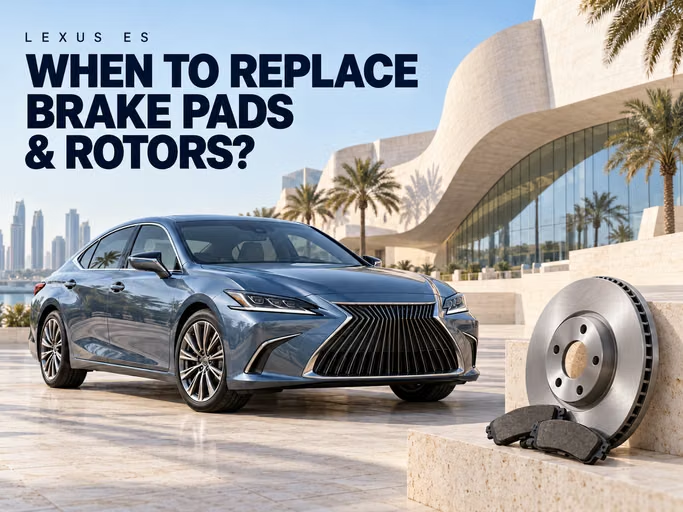
Replace Lexus ES brake pads and rotors according to inspection findings and measurements. There is no universal replacement mileage: steady motorway journeys and frequent urban stops place different demands on the brakes. On the ES 300h, regenerative braking supplies part of the deceleration, but the friction brakes still need inspection. New pads will not correct a sticking caliper or an incorrectly seated rotor.
This article focuses on the sixth- and seventh-generation petrol ES 250 and ES 350, and hybrid ES 300h. The seventh-generation description on global.toyota presents these powertrains separately. Select parts by VIN, build year and brake specification. Do not transfer part numbers or service procedures from these vehicles to newer generations, including electric ES versions.
How to Select Lexus ES Brake Components
Start with the VIN, build date and factory specification. Matching body names on an ES 250, ES 350 and ES 300h do not establish pad or rotor interchangeability. The F SPORT designation is no substitute for a catalogue check either. If a previous owner changed the calipers or fitted larger rotors, also identify the manufacturer and markings of the components actually installed.
For rotors, check diameter, working thickness, height and mounting dimensions. For pads, confirm shape, part number, axle and caliper compatibility. Rear brake selection must also account for the parking brake actuator. Wheel diameter alone cannot establish pad or rotor interchangeability.
- ES 250. Confirm the generation, drivetrain and part numbers for the specific VIN.
- ES 350. Cross-check build year, specification and installed brake kit.
- ES 300h. Verify hybrid fitment and the procedure for servicing its system.
- F SPORT and modified cars. Do not judge compatibility by appearance.
Why Mileage Does Not Set a Mandatory Replacement Point
Follow the inspection schedule for your ES and its operating conditions. Scheduled maintenance does not mean pads must be replaced at every visit. Ask for lining and rotor thickness to be recorded for each wheel: successive measurements show the rate of wear. Do not wait for the next service if noise, vibration or a change in pedal effort develops.
When Replacement Is Necessary
The workshop should explain why each component needs replacement. Pads are assessed for remaining friction material, integrity and contamination; rotors for thickness, surface condition and geometry. A serviceable rotor does not necessarily need replacement with every pad set. However, adequate thickness does not make cracks, damage or geometry outside the permitted limits acceptable.
- The lining has reached its wear limit, separated, suffered damage or become contaminated with oil or brake fluid.
- The rotor has worn to its minimum permitted thickness or has unacceptable cracks or damage.
- Runout or thickness variation exceeds the specification and cannot be corrected by an approved method.
- Binding or a leak has damaged components; the cause must be addressed alongside replacement.
Do not postpone diagnosis of metallic grinding. If the pedal sinks, fluid leaks, a wheel smokes, the vehicle pulls strongly or braking deteriorates noticeably, stop safely and arrange assistance. Do not investigate a fault through repeated hard braking.
Measurements to Request from the Workshop
The technical explanation on bremboparts.com identifies minimum rotor thickness as MIN TH. Measure at several points on the working surface, excluding the outer wear lip. Compare the lowest reading with the limit for that specific component. A front rotor specification for one ES cannot automatically be applied to the rear axle or another variant.
| Component | Check | What to record |
|---|---|---|
| Pads | Linings on both sides of each rotor | Lowest thickness, uneven wear and defects |
| Rotors | Working thickness at several points | Lowest reading and permitted minimum |
| Rotors and hubs with vibration | Runout, thickness variation and seating | Readings and compliance with limits |
| Calipers and parking brake | Piston operation, sealing and release | Leaks, binding and actuator condition |
Why the Outer Pad Does Not Tell the Whole Story
Looking through a wheel reveals only part of the brake assembly. Inspect linings on both sides of every rotor and compare left and right wheels on the same axle. Check caliper pistons, seals and dust boots; inspect slides where the design uses them. Uneven wear requires investigation. Leaving binding or contamination unresolved means that a new set alone will not restore proper operation.
Why the ES 300h Still Needs Brake Inspections
The ES update described on pressroom.lexus.com identifies both regenerative and hydraulic braking within the hybrid versions’ ECB system. Total mileage alone therefore cannot establish pad life, and a fixed lifespan should not be promised for a hybrid. Check lining thickness, both rotor faces and caliper movement. Low pad wear does not rule out corrosion, damage or uneven operation of the assemblies.
Symptoms to Describe to the Technician
Explain whether noise appears after parking, with light pedal pressure, after warming up or on a descent. Identify whether vibration is felt in the steering wheel, pedal or body. Pulsation during ABS activation does not by itself establish a rotor defect. Persistent vibration under ordinary braking needs diagnosis. No dashboard warning does not establish sufficient lining thickness.
| Symptom | Possible cause | What to check |
|---|---|---|
| Noise after parking | Moisture or surface corrosion | Whether noise persists; working surfaces |
| Persistent squealing | Wear, contamination or pad vibration | Linings, seating and fitting hardware |
| Metallic grinding | Critical wear or a foreign object | Stop normal use and seek service |
| Pulsation during ordinary braking | Rotor geometry or mounting issue | Thickness, runout, hubs and assembly |
| Pulling or a wheel overheating | Binding or another fault | Caliper, parking brake, hydraulics and tyres |
If Noise Appears After Service
The noise guidance on bremboparts.com highlights rotor seating on the hub, caliper condition and fitting hardware. After repair, check assembly, runout, fasteners and pad installation. If squealing persists, also ask the workshop to check service guidance applicable to the VIN. Do not prescribe another replacement before identifying the cause.
What Accelerates Wear and Increases Heat Load
- frequent acceleration and stopping in urban traffic;
- repeated heavy braking from high speed;
- repeated braking on descents with passengers and luggage;
- a binding caliper or a parking brake that does not fully release;
- oil or brake fluid contamination of the linings;
- damaged dust boots, corrosion or restricted movement of moving components;
- incompatible parts or fitting errors.
If your ES is used for daily passenger journeys or transfers, record measurements for each wheel. A change of route or driver can alter the wear rate. On descents, use the transmission modes specified in the vehicle instructions and avoid holding the brake pedal continuously. Hot weather alone does not set a new replacement interval: component condition and correct operation determine the work needed.
Why System Version and Parking Brake Type Matter
The 2021 technical announcement on global.toyota describes brake changes separately for petrol and hybrid ES versions. Account for the specific vehicle instead of applying one procedure to every car. Before dismantling, the workshop must identify the parking brake actuator and system preparation requirements. With EPB, follow the specified procedure, including service mode where required. After assembly, check pedal operation, complete release, parking brake holding and the absence of faults.
Pre-Replacement Checklist
Before approving replacement, ask to see the wear or defects. Record measurements for each wheel, the permitted limits and the reason for repair on the job sheet. If wear is uneven, specify the work needed to address its cause separately.
☐ Confirm the VIN, generation, powertrain and brake kit.
☐ Describe noise, vibration, pulling and changes in pedal travel.
☐ Check dashboard warnings and the causes of faults.
☐ Inspect linings on both sides of every brake rotor.
☐ Record rotor thickness and minimum permitted values.
☐ Where vibration occurs, check runout and thickness variation.
☐ Inspect calipers, hoses, seals and dust boots.
☐ Confirm part numbers and required fitting hardware.
☐ Confirm procedures for the electronics and parking brake actuator.
☐ Verify braking and obtain bedding-in instructions.
Common Service Mistakes
- ordering parts solely by the Lexus ES name and wheel size;
- replacing individual pads or a rotor on just one side of an axle;
- judging every lining by one visible outer pad;
- machining a rotor without checking permission and final thickness;
- treating the hybrid system as a reason to skip inspections;
- leaving a leak or binding unresolved after fitting new parts.
Conclusion
Replace Lexus ES pads and rotors when wear reaches its limit or unacceptable defects are found. Base the decision on measurements, inspection of both rotor faces and caliper checks. For the ES 250, ES 350 and ES 300h, account for generation, specification and system design. Regenerative braking does not remove the need for inspection, while correcting uneven wear helps prevent repeat repairs.
If you are considering a used Lexus ES, current offers can help you compare vehicles. Before buying, request the service history and an inspection of both brake axles with measurements. Establish how the vehicle was used: frequent urban passenger journeys may be more relevant to wear assessment than a single odometer reading.


