When to change brake fluid in a Land Rover Range Rover
Land Rover Range Rover
Land Rover Range Rover•
•11 views
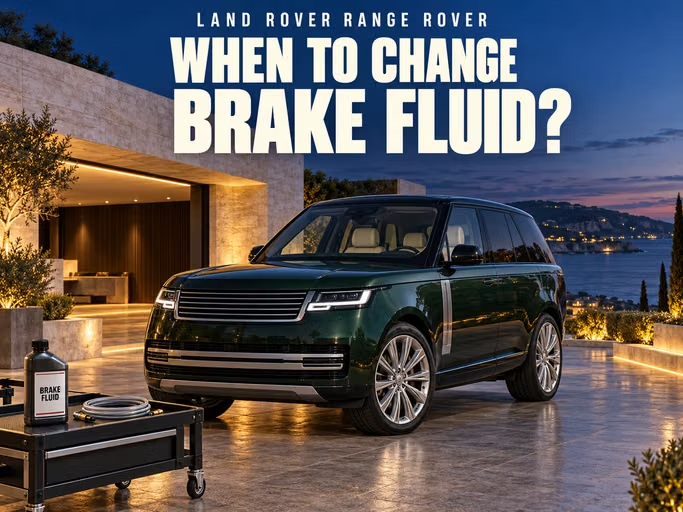
Illustrative cover. The vehicle and service accessories introduce brake maintenance; the image is not a technical diagram or a repair procedure for a particular specification.
Land Rover service document LRL 10 83 99 141 lists a brake fluid change every three years regardless of mileage for the Range Rover. This is a documented interval for vehicles covered by that publication, not a single rule for every Range Rover. Confirm the requirement for your vehicle using its VIN and service plan. A rapidly falling fluid level or a change in braking needs investigation before the scheduled date.
A Range Rover might spend weeks on short urban journeys before carrying the family and luggage along a mountain route. Low annual mileage alone says little about the brakes’ readiness for that change in use. The useful information is the last complete fluid-change date, the product used and the condition of the system. Here is how to establish those details and agree the work with a workshop.
Finding the correct interval for your Range Rover
The Fluid replacement section of the service booklet specifies the three-year interval separately from routine servicing operations. An engine oil change or a general inspection therefore does not establish that the brake fluid was changed. When reviewing a vehicle’s service history, look for the actual operation, its date and the recorded mileage.
Start by identifying the vehicle accurately. This article concerns the full-size Range Rover; do not select information for a Range Rover Sport, Velar or Evoque simply because the names are similar. Applicability also matters across generations, powertrains and special derivatives.
The official iGuide allows selection by model and model year or entry of the VIN. The manufacturer recommends using the VIN so that the information reflects the vehicle’s specification and market. Check the servicing and technical-fluid sections, and ask the workshop for the applicable schedule if anything remains unclear. A generation code helps with searching but does not replace identification of the individual vehicle.
Which date starts the service interval
For a vehicle that has already been serviced, establish the last documented complete replacement. Where several workshops have worked on the car, compare their invoices: one may record only a top-up, while another mentions bleeding after a repair. Ask whether the work covered the complete operation required by the manufacturer. Purchase, registration and a change of ownership do not renew the fluid.
If the history is unknown, do not simply schedule the next change for three years from today. Begin with an inspection and agree the initial maintenance required. After the work, retain a record of the date, mileage and exact fluid product. This is particularly useful when the car spends long periods parked and the mileage changes very little between visits.
Why low mileage does not remove the need for replacement
Glycol-based brake fluid absorbs moisture. The technical explanation on hella.com describes how this lowers its boiling point; substantial heating can then create compressible vapour bubbles that interfere with pressure transmission. A calendar deadline therefore matters even when the vehicle is used infrequently.
Gentle braking on a short urban journey does not test the system under every condition. Before a longer trip, check whether servicing is due and tell the workshop about the intended use. Leave enough time to address any findings: an inspection on the evening before departure may identify work that cannot be completed immediately.
Does hot weather mean an annual fluid change
The documents cited above do not establish a universal annual interval for every Range Rover simply because the climate is hot. The arduous driving conditions section in handbook LRL 10 02 61 142 includes sand, rough roads, extreme temperatures, towing and mountain driving. It calls for greater attention to servicing and advice from a specialist for these conditions.
In practice, describe how the vehicle is actually used when booking it in. If the workshop recommends an earlier change, ask for the reason: an applicable schedule, a test result, contamination or work following a repair. “Hot weather” alone does not explain the particular deadline selected and does not replace checking the brakes before a demanding journey.
Choosing the right brake fluid
The fluid specification table in Range Rover handbook LRL 10 02 61 142 recommends Land Rover brake fluid. If it is unavailable, the table allows low-viscosity DOT 4 meeting ISO 4925 Class 6 for topping up. That qualification matters: the passage is not blanket permission to use any DOT 4 product for a complete change in every generation.
Before purchasing fluid, ask the workshop to confirm the complete specification using the VIN. The large DOT 4 marking on the front of a bottle does not describe every requirement. Check the product’s technical data sheet and any restrictions for the vehicle derivative. A special version, modified brakes or uncertainty about what was previously filled requires individual verification.
Can a higher DOT number be treated as an upgrade
Do not choose a replacement on the assumption that a higher number must be better. Fluid requirements include viscosity and compatibility with the system, not just boiling point. If the workshop proposes a different product, ask for evidence that it meets the requirement for your particular vehicle. Descriptions such as “racing” or “for premium SUVs” are not an approval.
The maintenance section of an earlier Range Rover handbook explicitly rejects old fluid from opened containers and reuse of fluid drained from the system. Agree on fresh fluid from sealed packaging for scheduled work. Avoid treating an unidentified leftover bottle as a universal top-up supply: by the next appointment, its origin and storage conditions may be uncertain.
How much fluid will the service require
The quantity should be established from the applicable procedure and the condition of the system. Reservoir capacity, hydraulic-system capacity and the material consumed during replacement and bleeding are different figures. Without a specific vehicle and procedure, a promise that one particular bottle will always be enough is unreliable.
The estimate should identify the product, the material quantity and the labour. If repairs or contamination mean additional fluid is needed, agree the reason and cost before the work continues. The number of litres on an invoice alone cannot establish how thoroughly the procedure was completed.
Understanding a falling reservoir level
The Range Rover fluid-level instructions specify a level between MIN and MAX. They prohibit driving with the level below MIN and call for immediate qualified assistance if fluid loss is significant or pedal travel becomes unusually long. Use the instructions for your own version to establish reservoir access and checking conditions.
A small reduction can accompany brake-pad wear. Owners should not automatically assume that every drop is normal: the rate of change and any associated symptoms matter. Repeated top-ups without investigation can conceal a problem. Tell the technician when the change started and whether any brake work was carried out recently.
● The pedal becomes softer, its travel increases noticeably or it continues to sink while held.
● Braking effectiveness deteriorates or the vehicle behaves differently during braking.
● There are fluid traces, repeated level loss or a brake-system warning.
● Unusual pedal behaviour starts immediately after servicing or repair.
Can fluid condition be assessed by colour alone
No. The guidance from Bosch Car Service explains that visual inspection shows level and appearance but cannot establish whether the fluid remains suitable for use. A workshop can assess its condition with appropriate equipment. Ask it to record what was measured and the result, particularly when a test is being used to justify an early replacement.
A satisfactory result from one check does not cancel a mandatory change under the applicable schedule. Equally, dark fluid alone does not explain every braking complaint. The workshop’s conclusion should connect measurements with the vehicle’s history and the faults found, rather than relying on a photograph of the reservoir.
Agreeing the job with the workshop
When booking, establish that the service covers a complete change following the manufacturer’s procedure. Removing fluid only from the reservoir does not mean it has been renewed throughout the hydraulic system. Mention previous brake repairs and provide the available documents. Scheduled work on a sound system and correcting air entry after a repair can involve different operations.
On systems with ABS, the anti-lock braking system, some operations may require diagnostic control of the hydraulic unit. Do not transfer a bleeding sequence, equipment settings or ignition instructions from another model. The workshop needs the technical procedure applicable to the particular Range Rover.
- Identify the vehicle by VIN and confirm its schedule, fluid specification and required work.
- Investigate complaints, inspect the level and check for leaks; agree repairs where needed.
- Replace the fluid and remove air using the applicable service procedure.
- Verify the final level, check for leaks and assess brake-system operation.
- Record the date, mileage, product used and next maintenance deadline.
This list helps an owner check the scope of the service; it is not a DIY bleeding procedure. Ask for additional operations to be explained before they are performed. If parts are recommended, the work order should identify the defect and the agreed repair. A fluid change does not, by itself, mean that sound components also need replacement.
Questions about price and time
Compare quotations covering equivalent work. Ask whether fluid, bleeding, necessary diagnostic operations and final checks are included, and whether investigating an existing complaint is charged separately. If the vehicle has a service package, verify whether that particular operation is covered.
One quoted price for every Range Rover, without identifying the specification or inspecting the vehicle, offers little basis for comparison. Agree the total including taxes and how additional costs will be authorised. For timing, ask when the car will be ready after checks, rather than only how long the fluid-changing operation takes. This makes planning more useful than a blanket promise of “half an hour for everything”.
Checking a used Range Rover before purchase
When browsing current offers, compare appearance and equipment with documented maintenance. New pads and clean discs do not establish the age of the fluid. Request the records before the inspection so that the technician can review the history and identify gaps in advance.
The manufacturer’s Online Service History page states that vehicles from 2013 onwards benefit from the electronic record system. Where it is available for the car, request an up-to-date record and compare it with invoices. The existence of an electronic history does not prove that every operation was completed; the entries and their dates are what matter.
☐ The VIN on the service documents matches the vehicle.
☐ The last complete brake fluid change has a recorded date and mileage.
☐ The stated product matches the requirements of the particular specification.
☐ Previous top-ups, leaks and hydraulic-system repairs have an explained history.
☐ Inspection findings support a clear plan for initial maintenance.
If confirmation is missing, allow for the forthcoming maintenance when comparing cars. A seller’s promise to change the fluid before handover is more useful when supported by a document listing the completed work. Keep that document with the independent inspection findings after purchase, so that your own history starts with information you can verify.
Servicing mistakes to avoid
● Applying a schedule for a Range Rover Sport or another version without checking applicability.
● Relying only on mileage, fluid colour or the absence of warnings.
● Choosing fluid solely from the large DOT marking on the packaging.
● Treating a top-up or new pads as evidence of complete fluid replacement.
● Continuing to drive with a substantial loss of braking performance or fluid.
● Accepting a generic service entry that does not name the operation performed.
Conclusion
For a Range Rover, establish the applicable brake fluid interval and confirm when the last complete change took place. Three years is a documented example in Land Rover service literature that must be checked for the individual vehicle. Correct fluid selection, a complete procedure and a clear service record make future maintenance easier to plan. Brake faults require separate investigation regardless of the calendar.