When to replace the Range Rover Sport oil filter
Land Rover Range Rover Sport
Land Rover Range Rover Sport•
•10 views
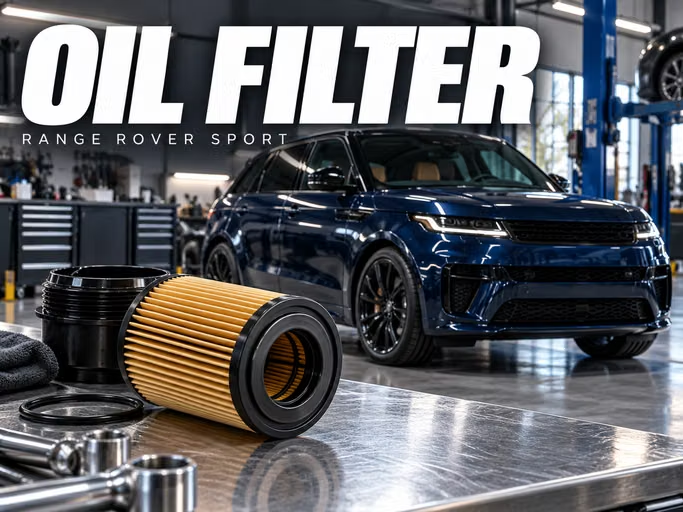
Article illustration. The filter is illustrative; select its design, part number and seals for the specific engine.
The Range Rover Sport oil filter is replaced together with the engine oil at the relevant scheduled service. Do not wait for unusual engine noise or a low-oil-pressure warning: those symptoms require investigation of a possible fault, rather than simply booking routine maintenance. Establish the deadline using the documentation for the particular vehicle, elapsed time and operating conditions.
The Range Rover Sport name covers different generations, petrol and diesel engines, and hybrid powertrains. Consequently, asking for “a filter for a Sport” is too vague. This article explains where to find the interval, why the exact engine matters and what to check after servicing. It concerns the Range Rover Sport specifically; do not automatically apply it to the full-size Range Rover, Velar or Evoque.
How to establish the replacement interval
The regional rangerover.com servicing page gives a scheduled-maintenance reference of 13,000 km or 12 months, whichever comes first. Treat this as starting information for planning a visit, rather than a single schedule covering every Sport generation. Confirm its applicability to your vehicle's model year, engine and original market specification before using the figure.
The manufacturer's oil-service description includes changing the oil and filter together. However, check the actual work due against the service plan: the general interval between workshop visits and the operations required at a particular visit are different things. If the documentation or a service message requires maintenance earlier, do not wait for the general mileage figure shown online.
Does mileage or elapsed time take priority
Use whichever condition comes first. For example, if 13,000 km or 12 months is the confirmed interval, an oil and filter change at 60,000 km gives a calculated mileage limit of 73,000 km. If the vehicle covers only 4,000 km over the year, the time limit still needs attention. This calculation illustrates the principle; it does not replace the individual schedule.
Count from a documented change, rather than the purchase date or the last reminder reset. An entry recording an oil top-up does not establish that a full service took place either. The invoice should identify the completed operations, date, mileage and materials used.
Where to find the requirements for your vehicle
The manufacturer recommends entering the VIN in iGuide. This provides information more closely aligned with the market and specification than selecting only a model and year. VIN means Vehicle Identification Number. To establish service deadlines, also consult the maintenance documentation and records of previous work.
If the engine has been replaced, the original VIN describes the vehicle as built. The workshop needs to know which unit is actually installed and which related components were changed. The same applies to a modified filter housing or other lubrication-system alterations: do not carry over the previous part number without checking.
Why filter selection depends on the engine
Similar-looking Range Rover Sports can require different service parts. A “3.0” description without the fuel type, engine design and model year is insufficient; a V8 badge does not identify a single filter application either. A trim name helps describe the vehicle but cannot replace an application catalogue.
For example, the 2026 model-year Range Rover Sport page separately lists P460e and P550e plug-in hybrids with a 3.0-litre six-cylinder petrol engine, and the Sport SV with a 4.4-litre V8. Even within one model year, the powertrain range varies. These details illustrate why precise identification matters, but do not establish a filter part number on their own.
| Vehicle description | Information still needed | What to check |
|---|---|---|
| Range Rover Sport 3.0 | Fuel type, engine design and model year | Application against the VIN and engine details |
| Range Rover Sport V8 or SV | Exact engine and build details | Filter and seals for that version |
| Plug-in hybrid | Petrol-engine specification | Its own maintenance requirements |
| Vehicle with a replacement engine | Documentation for the installed unit | Whether VIN-based selection matches the actual assembly |
The cartridge and housing are different parts
MANN-FILTER's technical description of oil filters distinguishes replacement elements from filters supplied in their own housing. When agreeing an estimate, establish exactly what is being replaced: a service element, complete filter, cap or damaged housing. A new element cannot repair a housing crack or damaged thread.
For an element-type assembly, check the required seals and their positions. A sealing ring must suit the particular assembly and occupy the specified groove. Do not select a part solely by diameter and height, or force it into position if the fit differs. Similar-looking identification on the packaging is not sufficient proof of compatibility either.
For a genuine filter or an alternative, request application-catalogue confirmation and the exact manufacturer's part number. If the technician proposes a substitute for the agreed item, establish the reason before installation. Keeping the identification details helps verify the invoice and investigate any questions that arise afterwards.
Must the cap be replaced at every service
The cap and housing do not become routine replacement parts simply because the filter element is being changed. Their replacement depends on the procedure for the specific engine and inspection findings. If the workshop identifies a defect, ask to see it and have the required parts explained. Seals should still be serviced as instructed, rather than retained merely because an old ring looks acceptable.
How operating conditions affect the deadline
For an urban vehicle, odometer mileage is only part of the picture. Short journeys, frequent stops and extended idling describe a different operating pattern from an uninterrupted highway trip. Explain the actual use to the workshop, particularly if the vehicle seldom covers long distances but spends considerable time with its engine running each day.
Land Rover's guidance on arduous conditions identifies dust and sand, off-road driving, extreme temperatures, towing and mountain routes as circumstances needing closer attention to maintenance. This list does not establish one universal shortened interval for every Sport. Confirm the appropriate schedule for your own vehicle.
Is a filter change required after every sand trip
One outing does not automatically mean the filter has reached the end of its service life. Frequency, duration, load and vehicle condition matter. Dust on the bodywork cannot indicate contamination inside the lubrication system. Check separately for damage and leaks after the trip; an underbody impact or fresh oil traces should not be left until the next routine service.
Before a long journey, compare the remaining service distance with the entire route, including the return. If 700 km remains until the agreed deadline and the trip totals 1,400 km, resolve the issue beforehand. Allow time to check the vehicle after servicing so that a leak does not first become apparent immediately before departure.
Can a hybrid wait if it often uses electric power
A plug-in hybrid retains a petrol engine, its oil and its filter. Electric journeys do not remove the engine's calendar-based maintenance requirements. Do not subtract electric mileage from total mileage yourself and use the result to extend servicing. Follow the powertrain's service plan and the vehicle's messages.
For a fully electric vehicle, these rules for the engine-oil filter of an internal-combustion engine do not apply. When booking work, identify the powertrain accurately rather than giving only the Range Rover Sport model name.
When diagnosis is needed instead of a routine change
A leak after servicing, a significant level change, unusual noise or a dashboard warning calls for investigation. None of these proves that the filter is responsible. Oil near its housing, for example, may be residue from the work or a fresh seal leak; cleaning and reinspection help distinguish them.
If a low-oil-pressure warning appears while the engine is running, stop safely and switch the engine off. The manufacturer's fluid-checking instructions call for qualified assistance and no restart until the cause has been rectified. Resetting a service reminder, adding oil without checking or fitting a new filter without diagnosis does not establish that the system is sound.
| Observation | What it means for the owner | Next step |
|---|---|---|
| Scheduled service is approaching | Agree the deadline and work required | Check the schedule and book a visit |
| Fresh oil traces after servicing | The source needs to be established | Contact the workshop and arrange assessment |
| Electronic oil-level measurement is unavailable | A level result has not been obtained | Check measurement conditions; do not top up blindly |
| Low-oil-pressure warning | A serious lubrication fault may exist | Stop safely, switch off and obtain assistance |
Can oil colour reveal the filter's remaining life
Dark oil does not indicate the filter's remaining life, and light-coloured oil does not establish that the filter is sound. Colour cannot show whether the element suits the engine or the seals are fitted correctly. Use the schedule and history to establish the deadline, and investigate the cause when a fault is suspected.
If servicing reveals a distorted element or unusual contamination, ask for the part and photographs to be retained. That is more useful than discarding the filter immediately and attributing everything to its age. A technician should determine whether further investigation is needed, taking account of engine condition and previous repairs.
What to check at the workshop and in the records
Ask for an itemised estimate covering the specified oil and quantity, filter, required seals, labour, level checks and leak checks. Final prices for different sets of operations cannot be compared directly. Agree any additional cap or housing replacement separately once its necessity has been established.
Filter access, tightening requirements and the level-checking procedure depend on the engine. Cleanliness while the housing is open, correct element installation and checks after reassembly all matter. Universal advice to tighten until it stops, or refill with exactly the amount drained, does not replace the specified procedure.
Collection checklist
☐ The invoice records the date, mileage, oil and filter part number.
☐ The level was checked using the procedure for this engine.
☐ No fresh leaks were found in the serviced area after checking.
☐ Removed protective panels and fasteners were refitted.
☐ The reminder was reset after the work and the next deadline recorded.
The manufacturer indicates that Online Service History is available for vehicles built from July 2013 onwards. Compare it with detailed invoices: a general service entry does not always identify the materials used. A missing entry needs clarification, rather than an automatic conclusion that the car was not maintained.
When considering a used Sport among current offers, request documents before the inspection. Look at the gaps between changes, filter-housing repairs and visits concerning leaks. Recent pre-sale servicing is useful, but it does not replace the history of previous years or an assessment of vehicle condition.
Can you replace only the filter or simply top up
At a scheduled oil change, service the filter at the same time as required by the maintenance plan. Replacing only the filter may form part of a repair, but it does not renew all the oil in the engine or reset its service life. Agree the next scheduled visit separately after such work.
Topping up maintains the level and is not a replacement for the complete procedure either. If substantially more frequent top-ups are needed, record the quantities and mileages, then discuss the change with the workshop. Do not try to compensate by filling above the permitted level or switching to a different oil without establishing the cause.
Conclusion
Replace the Range Rover Sport oil filter together with the oil at the relevant service, after checking the requirements for the particular engine. The regional 13,000 km or 12-month reference needs an applicability check. Accurate part selection, attention to actual use and checks after reassembly matter more than a promise of one universal interval. Retain the records, and treat a low-oil-pressure warning separately from an ordinary service reminder.