


When should you replace the Kia K4 fuel filter?
Kia K4
Kia K4•
•16 views
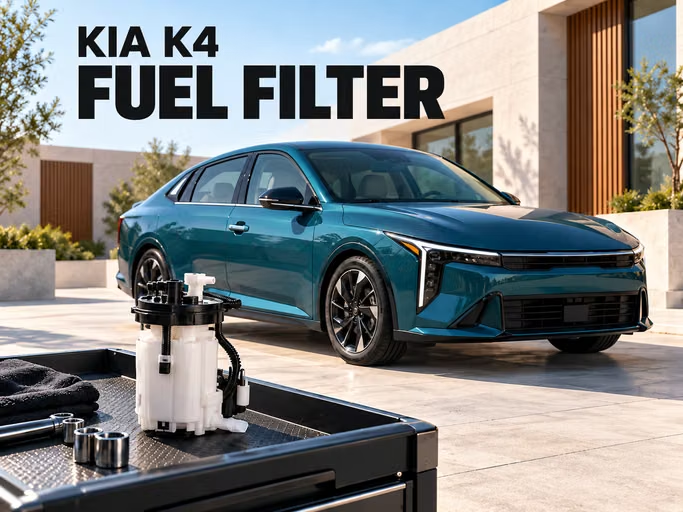
Do not add the Kia K4 fuel filter to every service visit’s replacement list without checking the schedule. The decision depends on the vehicle specification, service booklet and system condition. Follow the applicable schedule when the car runs correctly; hard starting, jerking or loss of power calls for diagnosis regardless of mileage.
Symptoms that should not wait for the next service
A fuel-delivery problem may appear only under particular conditions. Before visiting the workshop, note how the engine starts after parking, when hesitation occurs and whether you recently refuelled. That record is more useful than assuming the filter is due for replacement.
- Longer starting time. Note whether it happens in the morning, after a brief stop or with a hot engine.
- Loss of power during acceleration. Record the circumstances, but do not test the fault while overtaking.
- Jerking on the road. Note whether it coincides with a gear change.
- Unexpected engine stalling. If it recurs, stop safely and arrange assistance.
- Check Engine and rough running. Give the workshop any fault codes already retrieved.
None of these signs confirms a blocked filter on its own. Similar symptoms can involve the pump, electrical supply, ignition or other systems. Diagnosis should establish the cause rather than begin with a sequence of speculative parts replacements.
Why the K4 specification matters
The 2025 K4 specification on kia-uae.com lists 1.6- and 2.0-litre petrol engines with a six-speed automatic transmission. Provide the VIN and model year when booking service: a shared model name does not establish the same equipment or maintenance requirements.
Even matching engine capacity is insufficient for choosing parts. The catalogue must identify the exact vehicle specification. A fuel-module illustration explains the article topic; it does not replace a VIN-based check of the part number and assembly contents.
Why insufficient fuel delivery matters
Technical information on boschaftermarket.com links a blocked fuel filter with impaired fuel delivery, reduced power and possible engine stalling. When symptoms recur, normal operation between episodes does not establish that the cause has disappeared.
- Available power becomes unpredictable. Hesitation is especially unwelcome when joining a fast road.
- Starting takes longer. Repeated attempts do not correct the fault.
- The journey may end in a breakdown. Investigate recurring problems before a long trip.
- One new part may not solve everything. If contamination is confirmed, establish its source.
- Repairs without diagnosis add cost. Buying a filter and pump does not guarantee a cure.
Is there a fixed replacement interval?
The fuel-filter section of the K4 CL4 2025 manual describes an in-tank lifetime filter that generally needs no regular replacement. Fuel quality can change the servicing requirement: restricted delivery, power loss or hard starting calls for inspection and replacement when necessary.
| Situation | What to establish | Action |
|---|---|---|
| No running problems | VIN-matched service schedule | Follow the applicable schedule |
| Hard starting or loss of power | Cause of the fault | Diagnose before scheduled service |
| Problem after refuelling | When and what fuel was added | Keep the receipt and tell the workshop |
| Filter replacement proposed | Part, number and reason | Review the estimate before ordering |
| Unknown service history | Previous work and condition | Start with records and inspection |
The available schedule in that manual covers 2.0 MPI and 1.6 T-GDi versions, so it cannot be transferred wholesale to local K4 specifications. Confirm your vehicle’s requirements through its service booklet and VIN; no universal kilometre interval is established here.
Filter, strainer or module: what does the estimate cover?
Fuel filter and Fuel tank air filter are different items in the documentation: one filters fuel, the other concerns tank air. A quote may also list a strainer or a complete pump module. Ask the workshop to identify each item and provide its part number.
If the workshop proposes a complete module, ask why: inspection findings, individual-component availability and the repair procedure may affect the decision. “Preventive maintenance” without an explanation does not establish the need. Low mileage is no substitute for diagnosis when clear symptoms appear.
If you often make short trips, idle for long periods or drive in heavy traffic, discuss the appropriate servicing regime with the workshop. Do not derive a fuel-filter replacement interval from the engine-oil interval. Each operation needs its own applicable basis and conditions.
Ordering the right component
Start with the VIN, model year and engine identification. The estimate should separate diagnosis, parts and labour. Before ordering, establish which seals are required for reassembly, whether they are included and whether the price covers checks after the repair.
- Confirm catalogue fitment. “K4” or “2.0” alone is insufficient.
- Establish exactly what is being replaced: filter, strainer, pump or complete module.
- Compare the full scope of work. A low part price does not mean a low repair bill.
- Approve extra operations before they are performed. Tank cleaning needs a clear reason.
- Retain part numbers and the invoice. They can help with any later diagnosis.
Assessing the service outcome
The fuel-line guidance calls for leak and damage checks. After reassembly, ask the workshop to confirm leak-free connections and reassess the original complaint. Stable idling is insufficient if the fault appeared only after parking or under load.
| Observation | What is checked | What to report | What it does not prove |
|---|---|---|---|
| Hard starting | Starting and fuel delivery | Cold or warm engine | Filter is at fault |
| Loss of power | Operation under load | Acceleration conditions | Whole module is needed |
| Jerking | Engine and transmission | When it occurs | Fuel is the cause |
| Check Engine | Codes and related systems | When the light appeared | Pump needs replacement |
| Issue after repair | Assembly and original fault | Previous replacements | New part is defective |
Kia K4 owner checklist
Prepare the service booklet, previous repair records and a description of the symptoms. If the fault began after refuelling, retain the receipt and report how much fuel was added. The timing helps the investigation, but does not itself prove poor fuel quality.
☐ Confirm the VIN, model year and engine.
☐ Identify the schedule for your specification.
☐ Review previous servicing records.
☐ Record the circumstances of the fault.
☐ Share any diagnostic code results.
☐ Agree on the parts and total repair cost.
☐ Confirm leak-free assembly after repair.
☐ Obtain a record of the completed work.
Mistakes to avoid
- Using another K4 version’s schedule just because the model name matches.
- Treating “lifetime” as a guarantee against faults.
- Confusing the fuel filter with the fuel tank air filter.
- Assuming strainer replacement means the complete fuel module was renewed.
- Ordering a pump or filter based only on the Check Engine light.
- Treating a temporary improvement after an additive as proof of good condition.
- Ending the check at idle when the original complaint occurred on the road.
Conclusion
For the Kia K4, base fuel-filter replacement on the particular vehicle’s documents and inspection findings. Have poor running checked before the next scheduled service, and confirm assembly contents and part numbers before ordering. When reviewing current offers, pay attention to the service history: clear repair records are more useful than a general claim that everything has been replaced.


