


When to replace the Kia K4 engine air filter
Kia K4
Kia K4•
•13 views
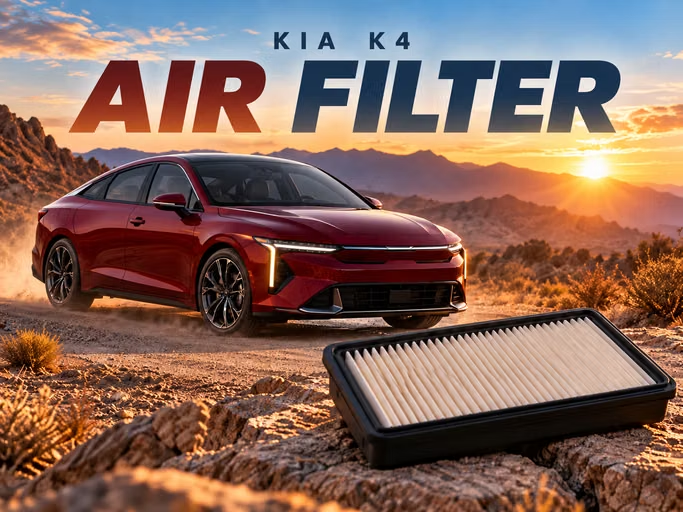
The Kia K4 engine air filter deserves attention even at low mileage. Construction dust, sand at road edges and unpaved parking approaches can add to intake contamination. Follow the schedule for the specific vehicle, and inspect a damaged or heavily contaminated element before its next planned service.
This article covers the intake-air filter in the current-generation K4 petrol sedan, not the cabin filter. It explains when to inspect the element, how to select a replacement and what to check during assembly. Model year, engine and delivery market matter for both parts selection and maintenance scheduling.
When to check the filter before scheduled servicing
Inspect the filter after a particularly dusty journey, intake work or buying a K4 with no service history. Examine the pleats, seal and housing. Even a new element cannot do its job if the lid is misaligned or air bypasses the filtering surface.
- Dust has densely filled the pleats. Compare the element’s condition with the maintenance requirements and assess whether replacement is needed.
- The media is torn or visibly crushed. Replace the damaged insert and check whether it was trapped incorrectly during assembly.
- The sealing edge has folded over. Air can bypass the media even with a new filter; restore correct seating.
- Dust is present beyond the filter. Check the housing and connections. Dirt may have passed through a gap or entered during disassembly.
- Whistling appeared after servicing. Check the lid, clips and any disconnected ducts; sound alone does not identify the cause.
How daily routes affect the filter
A city journey may stay on paved roads but still pass construction work or a dusty driveway. Air also enters the intake while the engine runs at a standstill. The odometer therefore does not describe the filter’s entire exposure.
Tell the workshop about regular dusty-road use and prolonged stationary engine operation. Check your version’s handbook for any additional inspection requirements. Do not assign every K4 the same shortened interval simply because of hot weather; consider the schedule and actual dust exposure.
Can cleaning postpone replacement
The 2026 K4 handbook on ownersmanual.kia.com prohibits washing the element described there and allows compressed-air cleaning during inspection. This is not blanket permission for every insert: first confirm your version’s manual and filter type. Cleaning cannot repair torn media or a damaged seal.
Symptoms that should not be blamed on the filter alone
The technical description on mann-filter.com explains that an engine air filter captures contaminants in intake air and protects the engine. However, hesitation, weak acceleration or changed fuel consumption does not identify it as the cause. Inspection reveals visible defects; persistent symptoms need diagnosis.
- An odour from the vents concerns a different system. Begin with ventilation and cabin-filter checks rather than replacing the engine air filter.
- Dark colour alone does not determine service life. Assess deposits, media integrity and the scheduled replacement requirements.
- A new element cannot repair a damaged housing. A crack, broken clip or misaligned lid needs separate attention.
Finding the Kia K4 replacement interval
Find the engine air filter in your K4 maintenance schedule. Match the model year, engine and delivery market. An inspection entry is not proof of replacement: the invoice should identify the work performed and the part fitted. If the schedule is missing, ask a workshop to identify it using the VIN.
Check your version’s handbook for separate dusty-use requirements. Where both time and distance limits apply, follow whichever comes first. The engine-oil interval does not define air-filter life, and figures from another Kia model’s schedule are not automatically applicable.
| What to establish | Why it matters |
|---|---|
| VIN, generation and engine | Find the correct schedule and catalogue application. |
| Installed filter’s part number | Match the part to the vehicle and housing. |
| Replacement date and mileage | Establish the actual time in service. |
| Dust on regular routes | Agree additional inspections. |
| Filter media type | Check whether cleaning is permitted. |
| Standard or modified intake | Account for the installation actually fitted. |
Choosing a filter for the Kia K4
The 2025 K4 specification published on kia-uae.com lists 1.6- and 2.0-litre petrol engines for the local market. Neither the model name nor displacement alone is enough to select a filter. Confirm the VIN, model year, engine code and catalogue application of the specific part number.
Check the frame shape, sealing edge and retention method. Do not order a K5 or other Kia filter simply because it looks similar. For a modified intake, identify its manufacturer and model. Reusable inserts need their own care instructions; ordinary elements must not be washed or oiled arbitrarily.
What to check when replacing the filter
Park the K4 on level ground, apply the parking brake and fully switch off the engine and ignition. Let hot components cool. Identify how the lid releases before taking it apart. Do not pull on ducts, wiring or connectors; use a workshop if access or fasteners are unclear.
| Finding | Possible cause | Action |
|---|---|---|
| Dense dust between pleats | High exposure or extended use. | Assess contamination and the need for replacement. |
| Torn media | Damage to the filter. | Replace the element and establish the cause. |
| Dust beyond the seal | Leakage or dirt introduced during access. | Check the frame, lid and housing. |
| Wet insert | Water has entered the intake. | Identify the source and how far water travelled. |
| Whistling after replacement | A connection may not be sealed. | Check assembly and intake ducts. |
| Odour from the vents | The source may be in ventilation. | Check the cabin filter and climate system. |
Checklist before installation and after assembly
☐ Confirm the VIN, engine and new element’s application.
☐ Park securely and apply the parking brake.
☐ Fully switch off the engine and ignition.
☐ Allow hot components to cool and clean the housing exterior.
☐ Release the lid and element fasteners as instructed.
☐ Inspect the pleats, seal and clean side of the housing.
☐ Remove debris without letting it enter the intake downstream.
☐ Seat the element evenly and check the lid fit.
☐ Restore connections and record date, mileage and part number.
Mistakes when servicing the K4 engine air filter
- Choosing a part by the K4 name alone. Confirm the engine, year and catalogue application; a similar appearance does not guarantee a sealed installation.
- Selecting a filter by 1.6- or 2.0-litre displacement alone. Matching engine capacity does not guarantee a suitable frame and seal; verify the application.
- Assuming every cleaning method is safe. Washing, oiling and compressed-air cleaning require confirmed instructions for the fitted filter type.
- Forcing the lid shut. First check element seating, seal position and compatibility with the housing.
- Checking engine operation with the filter removed. Fit the element, close the housing and restore all connections first.
- Promising a large fuel saving after replacement. A sound filter supports normal intake operation, but many factors affect consumption.
What to record after servicing
Record the date, mileage and part number. Specify what was done: inspection, replacement or manufacturer-prescribed maintenance of a reusable element. Keep details of housing damage and connection repairs. If dust reappears beyond the filter, this helps identify the source of contamination.
Conclusion
For the Kia K4, use the correct vehicle schedule, a compatible filter and a properly sealed housing. Dusty routes warrant attention to intake condition, while damage calls for replacement. Do not transfer intervals or cleaning methods from another model. Keep the date, mileage and part number to plan future maintenance.
When browsing current offers for the Kia K4, ask about engine-air-filter servicing. Invoices and a housing inspection help establish what work is needed after purchase.


