يوضح الرسم البياني ديناميكيات متوسط سعر الطراز في سوق السيارات المستعملة خلال العام الماضي. تساعدك هذه البيانات على تقييم جدوى الشراء وتوقع القيمة المستقبلية للسيارة.
قد تختلف الأسعار على AUTO.AE عن تكلفة البيع الفعلية. تستند البيانات إلى قاعدة بياناتنا من السيارات المباعة والإعلانات الحالية. للحصول على تقييم دقيق، استخدم أداتنا.
New or three-year-old Toyota Highlander — which is better value in the UAE?
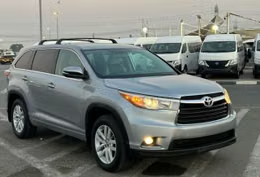
A used Toyota Highlander can reduce the purchase budget if its advantage survives inspection, transaction charges and necessary work. A new Highlander Hybrid starts at AED 205,900. Deciding whether the premium is worthwhile requires comparing complete costs, equipment and warranty coverage. Below, verified Toyota information and a hypothetical calculation for a 2023 model provide a method you can apply to your chosen vehicle. How much do new and used Highlanders cost? When checked in October 2026, toyota.ae listed the 2026 Highlander Hybrid from AED 205,900. The displayed version includes a 2.5-litre hybrid powertrain, an electronically controlled continuously variable transmission, or eCVT, all-wheel drive, leather seats and 20-inch wheels. Request a separate quotation covering registration-related costs and selected options. There is no single defensible used price without a sample of comparable vehicles. Match model year, grade and supply market, then look for similar mileage and condition. GCC denotes specifications for the Gulf Cooperation Council region; that designation alone does not establish service history or warranty eligibility in the UAE. When reviewing current offers, first identify vehicles intended for UAE registration. Export terms and prices from neighbouring countries cannot automatically be applied to a local purchase. Ask the seller for a written price identifying included charges. After inspecting the vehicle, use that figure in your own calculation. Why is the price gap different from three-year depreciation? The gap between two purchase options measures a difference in initial spending. Depreciation is assessed against the price paid for a comparable vehicle when new. Comparing today’s Highlander with a used GXR mixes age, equipment differences and changes in manufacturer pricing. The official 2023 GXR specification sheet listed AED 169,900 including VAT, excluding shipping and handling. That historical list price provides a comparison baseline, but does not reveal what an individual owner paid after discounts and additional services. It does not establish the vehicle’s current selling price either. A list price alone cannot establish a three-year depreciation percentage. Assessing the market requires comparable vehicles; assessing one transaction requires actual purchase expenditure and sale proceeds. A seller’s asking price must also be distinguished from the final transaction price. How do you calculate a used Highlander purchase budget? Add required transaction charges and inspection-related costs to the agreed price. For illustration, assume a 2023 GXR costs AED 140,000 and the buyer sets aside AED 5,000. These are hypothetical inputs, not an available offer, a market valuation or a recommended purchase price. The AED 60,900 gap applies only to this scenario. Insurance, registration, any seller fee and financing remain excluded. Add actual amounts to both options to produce comparable budgets. Each additional used-car expense reduces its advantage unless the new vehicle carries an equivalent expense. The AED 140,000 price and AED 5,000 reserve are assumptions, not market statistics. The reserve is not a Highlander repair estimate. Before buying, replace it with a quotation for necessary work and decide separately how much to retain for unexpected costs. When financing, compare total repayments, down payments and fees over the same term. A lower monthly payment may simply reflect a longer loan. Do not count the vehicle price again if it is already included in the down payment and loan repayments. What does paying more for a new Highlander provide? It provides a vehicle whose ownership history starts with you, plus manufacturer warranty coverage under the applicable terms. toyota.ae states three years or 100,000 km for passenger vehicles and eight years or 160,000 km for the hybrid battery, whichever limit is reached first. Battery coverage should not be confused with warranty coverage for the entire hybrid drivetrain. For a 2023 vehicle, the general warranty may be approaching expiry or may already have ended. The balance depends on the warranty start date, mileage and compliance with its terms, rather than model year alone. Confirm eligibility using the vehicle identification number, or VIN, before paying a deposit. An imported vehicle should not automatically be assumed to qualify for the local programme. Equipment also explains part of the premium. The 2023 GXR specification lists fabric seats and 18-inch wheels. Compare the features your family will actually use. If seven seats and everyday family transport are the priorities, a more expensive grade may offer less additional value than its price suggests. What should you check on a used Highlander Hybrid in the UAE? Inspect the individual vehicle, with attention to the hybrid system, cabin cooling and documentation. Heat and dust make the condition of these systems relevant to daily use, but those environmental factors alone do not demonstrate a fault. How should you check the hybrid system and service history? Arrange an assessment with a workshop experienced in Toyota hybrids. Request written results covering fault codes and battery parameters available through its diagnostic equipment. A dashboard without warning lights does not replace this assessment. Compare dates and mileages across service invoices, identify previous repairs and confirm warranty status directly with the organisation providing the coverage. What matters during inspection and a test drive? Check air-conditioning performance for every seating row, vehicle behaviour after warming up and any warning messages. Have a specialist examine body repairs, signs of water ingress, suspension, brakes and tyre condition. Significant findings should become a written estimate that can support a discussion about price. □ Match the VIN, supply market, grade and vehicle documents. □ Obtain service history and an independent inspection report. □ Check the body, hybrid system and air conditioning. □ Confirm the full price, seller fee and warranty terms in writing. When should you choose a new Highlander rather than a used one? A used Highlander makes sense when a meaningful budget advantage remains after inspection and additional expenditure, and its equipment meets the family’s needs. The buyer should still retain funds for servicing. Spending the entire available budget on the car leaves little room for subsequent costs. A new car is easier to justify when a particular specification, known history from the first journey and the maximum available manufacturer warranty period matter most. For multi-year ownership, add purchase, transaction charges, finance costs, maintenance and fuel, then subtract an assumed resale value. Test that last figure across several scenarios rather than treating it as guaranteed income. Conclusion. A three-year-old Highlander can offer substantial purchase savings. Base the decision on the complete price and inspection results. Paying more for a new vehicle makes sense when warranty coverage, equipment and ownership predictability matter more than retaining the difference in cash.
When Should You Replace Toyota Highlander Brake Pads and Rotors?
Toyota Highlander brake pads and rotors do not share one mandatory replacement mileage. Their condition is determined by friction-material thickness, wear uniformity, rotor thickness and runout, and caliper operation. The three-row SUV’s mass, passenger and cargo load, urban use, long descents, and regenerative braking on hybrid versions all affect service life. Before diagnosis. Confirm the VIN, production year, model code, powertrain, and original market. Highlander generations were offered with petrol and hybrid systems, different brake sizes, and different parking-brake arrangements. Service limits and procedures from one version must not be applied to another without verification. 4 Signs of Toyota Highlander Brake Wear A change in braking can appear before a dashboard message. Assess the conditions in which the symptom occurs, including speed, brake temperature, vehicle load, and pedal pressure. Pads, rotors, calipers, hubs, tyres, and suspension can create similar signs, so one sound or vibration is not a complete diagnosis. Grinding or a recurring squeal. A brief sound after washing or damp parking may clear after several gentle stops. If it returns, inspect the inner and outer pads, wear indicator, both rotor faces, dust shield, and the area for trapped sand. Pedal pulsation or steering-wheel shake. Repeatable vibration can result from lateral runout, rotor thickness variation, corrosion at the mounting face, or hub play. The wheel, tyre, and suspension must be checked at the same time. Pulling during braking. A Highlander may deviate from a straight line because of a binding caliper, contaminated lining, damaged hose, or unequal component condition across one axle. Tyre pressure and wear also require comparison. A soft pedal or one hot wheel. Increased pedal travel, an overheating smell, or a clear temperature difference requires immediate investigation. Possible causes include leakage, air in the hydraulic system, a sticking piston, or a parking brake that does not release completely. Why a Check Through the Wheel Is Incomplete The outer pad is easier to see through the wheel, although the inner pad may wear faster when a slide or piston does not move freely. Much of the inner rotor face also remains hidden. A reliable inspection requires wheel removal, comparison of both linings, examination of both rotor faces, and a left-to-right comparison. Why Delaying Replacement Creates More Damage Once the friction layer approaches its limit, brake condition can deteriorate faster than expected. A full passenger or cargo load, repeated stops, and a long descent increase heat, while a binding caliper accelerates uneven wear even when mileage is modest. Stopping consistency declines. Overheated or nearly exhausted lining material handles repeated braking poorly, so familiar pedal effort may no longer deliver the same response. The rotor surface is damaged. Once friction material is gone, the metal backing cuts deep grooves and raises temperature quickly. Pads alone cannot correct this damage. The caliper moves outside its normal range. An overextended piston adds stress to the boot and seal, while contaminated slides increase misalignment and the difference between pads. Pulling risk increases. Unequal force across an axle reduces the stability of a heavy, loaded vehicle and can contribute to tyre wear. The repair becomes more expensive. Delayed pad replacement can require new rotors, caliper work, and correction of runout at the hub mounting face. What to Measure Before Highlander Brake Replacement Use the dismantling procedure and service limits for the exact year, market, and version. The Highlander name alone does not prove that the brake assembly is identical. Measure rotor thickness at several points with suitable tools, and measure runout by the specified method after checking the mounting surface. Mileage helps schedule inspections but does not prove remaining service life. A Highlander that frequently carries passengers and luggage places different demands on its brakes than one used for steady highway travel. Replace pads as an axle set, and assess rotors as a pair after comparing measurements, damage, and free movement of the mechanism. How to Avoid Mixing Parts from Different Highlanders Used markets contain Highlanders from several generations, original markets, and powertrain types. Matching production years can still have different rotors, calipers, and electronic parking-brake hardware. Record the VIN, model code, engine, drivetrain, wheel size, and markings on the installed component. Visual similarity is not a substitute for part-number verification. What Causes Squeal, Vibration, and Pulling A single symptom can have several sources. Squeal may come from moisture, contamination, or a wear indicator; vibration may start at the rotor, hub, wheel, or suspension; pulling may involve the brakes or tyres. Reproduce the condition safely, then continue with inspection and measurements. When Surface Film Is Acceptable A thin, even film can form after washing or a damp night. It should normally clear after several gentle stops. If patchy contact, deep pitting, a pronounced lip, vibration, or persistent noise remains, the surface must be inspected and measured. Hard braking is not a repair method. Conditions That Accelerate Highlander Brake Wear Brake life reflects the number of stops, temperature, load, and time parked. For a Highlander, passengers, luggage, and any trailer approved for the exact version matter because extra mass increases the energy the brakes must absorb. Hybrid regeneration changes how often friction brakes work, but it does not remove the need to inspect them. Stop-and-go urban travel. Repeated acceleration and slowing create frequent heating cycles. The effect becomes more significant as the SUV’s actual load increases. Heat, dust, and sand. Contamination reaches exposed surfaces and may restrict slide movement. After difficult conditions, inspect boots and hardware without cooling hot rotors with water. Long descents. Holding the pedal continuously in a loaded vehicle raises temperature quickly. Select a suitable transmission mode early and use powertrain braking only within the guidance for the exact version. Hybrid operation. Regenerative deceleration can reduce mechanical wear, yet friction surfaces may clean themselves less often on short journeys. Low pad wear therefore does not rule out rotor corrosion. Extended damp parking. Rotor and rear-brake condition may worsen regardless of mileage. When driving resumes, confirm that the wheels release evenly and that surface film clears without persistent noise. What to Check on a Used Highlander Recently fitted pads do not prove the full assembly is healthy. Before purchase, measure the rotors, compare inner and outer linings, and inspect calipers, hoses, hubs, rear brakes, and the parking-brake mechanism. During a safe road test, assess straight-line stopping, pedal travel, and vibration. Ask about overheating, towing use, and earlier caliper repairs. How to Plan Brake Diagnosis and Service A consistent sequence helps identify the cause before new parts are installed. Record results for each wheel separately so the two sides of an axle can be compared and baseline values retained for the next service: Describe when the symptom occurs. Note speed, load, weather, brake temperature, and the moment when noise or vibration begins. Identify the vehicle. Confirm the VIN, model code, powertrain, original market, and actual rear-brake design. Inspect both sides of the assembly. Compare inner and outer pads, both rotor faces, boots, and evidence of overheating. Take measurements. Check rotor thickness at several points and measure runout, then compare the readings with the limits for the exact Highlander version. Correct the cause of wear. Clean mounting faces and inspect the hub, slides, piston, hoses, and other hydraulic components. Verify the result after assembly. Restore a stable pedal, rule out leaks, confirm free wheel rotation, and bed in new parts safely. Common Service Mistakes Selecting parts by production year alone, without checking the VIN, market, powertrain, and installed brake system. Judging wear through the wheel spokes, without removing the wheel or checking the inner pad and inner rotor face. Installing new pads on unmeasured rotors, ignoring runout, cracks, thickness, and friction-surface condition. Servicing only one side of an axle, creating a difference between the left and right brake assemblies. Treating quiet operation as proof of safety, without assessing pedal feel, wheel temperature, and dashboard warnings. Conclusion Service Highlander brakes according to measurements and condition rather than a universal interval. Inspect both pads, rotors, calipers, and the rear mechanism fitted to the exact version. Before buying, compare vehicle condition with current listings and make brake diagnosis a required part of the selection process.
How Often Should Toyota Highlander Rear-Drive Oil Be Changed?
Toyota Highlander does not have one rear-differential oil interval that applies to every vehicle carrying the name. The current UAE-market Highlander Hybrid uses an electrically driven rear axle. Imported petrol AWD versions may have a mechanical driveline, while front-wheel-drive examples have no separate rear drive unit. Correct service therefore starts with the VIN, original market and powertrain—not an assumed mileage figure. How Do You Identify the Rear-Drive System in a Toyota Highlander? An AWD badge says that the rear wheels can deliver traction; it does not describe how torque reaches them. A hybrid Highlander uses a dedicated electric unit at the rear axle and needs no propeller shaft from the front transaxle. A petrol AWD model from another market may use a transfer assembly, propeller shaft and conventional rear differential. A front-wheel-drive Highlander has neither rear driveline layout. Confirm the VIN, model code, model year and original sales market. Establish whether the vehicle is Hybrid AWD, petrol AWD or FWD. Inspect underneath: a propeller shaft indicates a mechanical connection, while high-voltage cables identify an electric rear drive. Do not transfer specifications from Grand Highlander or from a same-year vehicle sold in another region. Match the exact Toyota fluid designation and level procedure to the unit that is actually fitted. Body shape is not enough to select a lubricant. Vehicles from the same generation can use different powertrains and AWD architectures. When the car's history is uncertain, decode the VIN and photograph the unit identification before ordering oil or opening a plug. Electric Rear Drive Versus a Mechanical Differential The hybrid rear module combines an electric traction motor, reduction gearing and differential functions. Control software brings the rear axle into operation without a mechanical shaft from the engine. Its fluid works around a different set of materials and components, so a familiar hypoid gear-oil label is not sufficient proof of suitability. A mechanical AWD system sends torque through a rotating propeller shaft to the rear final drive. It may contain two separately filled service points: a transfer unit at the front and a differential at the rear. Replacing fluid in one does not automatically service the other. On an FWD Highlander, the rear suspension, hubs and brakes remain, but there is no oil-filled final drive. A workshop offering rear differential service for such a vehicle should be able to identify the housing, its service plugs and the applicable procedure. When Does a Highlander Rear Drive Need Its Fluid Checked? A mileage number detached from the exact variant is a poor decision rule. Use the schedule that belongs to the vehicle, its documented service history and its actual operating conditions. UAE heat, towing, sand, sustained high speed and heavy loads justify closer inspection, but they do not justify inventing a replacement interval. Fluid traces on the housing, subframe or around a plug should be cleaned and rechecked before the source is declared. A new whine, hum or load-related vibration calls for a level, mounting and condition check—not an unapproved thicker oil. An AWD, hybrid-system or overheating message requires fault-code diagnosis before mechanical work begins. After deep-water exposure, inspect breathers, connectors and possible contamination when the relevant procedure calls for it. With an unknown history, identify the assembly and inspect for leakage first; preventive replacement is sensible only when the correct fluid and level method are confirmed. A slight film around a joint is not automatically an active leak. Airflow can move residue from another component, and old service work may leave a stain. Level checking must be performed with the vehicle positioned, conditioned and measured as required for that specific unit. Stop driving when there is a confirmed significant leak, metallic noise, abnormal heat or an AWD warning. Hybrid rear-drive work also involves high-voltage precautions. Untrained personnel must not disconnect orange cables or open the electric drive assembly. New fluid cannot repair damaged gear teeth, bearings or mounts. Record exactly when a noise appears before service. If it starts immediately after a fluid change, verify the part number, level, plug sealing and signs of loss before assuming a new internal failure. Which Oil Belongs in a Toyota Highlander Rear Unit? There is no all-purpose Highlander fluid. The hybrid electric rear drive and a petrol model's mechanical differential both propel the rear wheels, but their lubrication requirements are not interchangeable. An FWD vehicle has no rear driveline fluid to replace. Why Model Year Alone Cannot Select the Fluid A single model year can include vehicles built for different regions with different engines and drivetrains. An oil application guide that asks only for make, model and year may combine an electric rear drive, a mechanical differential and an FWD vehicle. A matching viscosity number alone does not confirm additive or material compatibility. Mechanical AWD vehicles can also specify different products for the rear differential and the front transfer assembly. Their capacities and level-setting steps may differ. For the hybrid module, the phrase conventional axle oil is particularly unsafe unless supported by the exact service data. If trustworthy information for the VIN is unavailable, postpone draining the unit. Experimenting after the plug is removed can leave the vehicle immobilised without a verified way to refill it correctly. Checks to Complete Before Service Keep the vehicle level and provide safe access underneath. Match the VIN, model code, engine type and factory drive-system designation. Locate the unit identification and confirm that the plugs belong to that assembly. Make sure the fill plug can be opened before removing the drain plug. Prepare new sealing washers and the correct tightening torque. After filling, inspect for leaks and repeat the road test under the original conditions. Inspect drained fluid in good light. Fine dark paste on a magnet is different from needle-like swarf, large fragments or an obvious bronze sheen. Interpretation is design-specific, however; an electric drive should not be judged by the plug layout and debris expectations of a conventional axle. When researching a used vehicle, current listings can help show which powertrains and model years are available locally. This comparison remains only a starting point; the individual Highlander still needs VIN verification and an underbody inspection. Why Does a Toyota Highlander Hum at the Rear—and Is Oil Always to Blame? Noise perceived behind the seats does not prove that the rear drive is failing. Tyre, hub and even front-transmission sounds travel through the floor and can appear to come from another corner of the vehicle. Diagnosis should track road speed, drive or coast, steering input, temperature and surface type. What to Check Before Authorising a Repair Start by recording speed, throttle position, coasting, steering direction and vehicle temperature. Inspect tyres and hubs next because they are common and quick to verify. On a Hybrid AWD model, diagnostic data can show whether the electric rear unit was producing torque when the noise occurred. If the sound continues while the rear axle is inactive, the electric module should not automatically be the leading suspect. In a mechanical AWD system, a difference between acceleration and overrun helps direct attention toward gear contact or bearings, but the conclusion still requires level, backlash and fluid inspection. A vibration that starts after recent work should prompt checks of mounts, propeller shafts, drive shafts and wheels. Oil cannot balance a rotating part or repair a damaged support. Noise-suppressing additives may hide evidence and make later diagnosis harder. Before approving disassembly, ask the workshop to demonstrate the noise or leak, document the level check and identify the applicable fluid specification. That sequence avoids replacing a healthy assembly without overlooking genuine fluid loss. Conclusion The current UAE Toyota Highlander Hybrid AWD uses an electric rear drive and must not be serviced as a conventional mechanical axle. Imported petrol AWD and front-wheel-drive versions are different again. Identify the assembly by VIN first, then use only its specified fluid and procedure; one universal Highlander interval is not valid.
أسئلة وأجوبة حول Toyota Highlander (FAQs)
قد تشمل إعلانات Toyota Highlander الفئات التالية: GLE، VXR، Premium، وXLE، وغيرها. تعتمد القائمة الحالية على الدولة المختارة وسنة الصنع وتوفر السيارات. استخدم فلتر «الفئة» لمقارنة الخيارات المتاحة.
ينبغي تقييم المسافة المقطوعة إلى جانب عمر السيارة وحالتها وسجل صيانتها. قارن المسافة المقطوعة بسيارات مماثلة من سنة الصنع نفسها، وتحقق من سجل الصيانة والحالة الفعلية للسيارة قبل الشراء.
تتراوح أسعار الإعلانات الحالية لسيارة Toyota Highlander على AUTO.AE من ٣٠٬٠٠٠ إلى ٢٠٣٬٧٠٢ AED. يعتمد السعر على سنة الصنع والمسافة المقطوعة والفئة والحالة والمواصفات الإقليمية. تستند هذه البيانات إلى الإعلانات النشطة وقد تتغير.
قد يعرض البائع الخاص سعراً أقل، بينما قد يقدم معرض السيارات خدمات إضافية مثل التمويل أو الضمان أو المساعدة في التأمين. تختلف الشروط، لذا تحقّق من معلومات الإعلان ووثائق السيارة وبيانات البائع.
تحقّق من بطاقة تسجيل المركبة «الملكية» (Mulkiya)، ومن تطابق رقم الهيكل (VIN) على السيارة وفي الوثائق، وبيانات المالك، وسجل الصيانة، وسجل الحوادث. وتأكد أيضاً من عدم وجود قرض قائم أو مخالفات أو قيود أخرى على السيارة. ويُفضّل إجراء فحص مستقل قبل إتمام الصفقة.
نعم. يمكنك الاتفاق مع البائع على إجراء فحص فني مستقل في مركز خدمة من اختيارك. يساعد الفحص على تقييم حالة المحرك وناقل الحركة والهيكل والأنظمة الإلكترونية والمكوّنات الأخرى.
يعني مصطلح GCC Specs أن السيارة صُنعت وفق المواصفات المعتمدة لأسواق دول مجلس التعاون الخليجي. وعادةً ما تكون هذه الإصدارات مصممة لتناسب الظروف المناخية المحلية. لكن GCC Specs بحد ذاتها لا تثبت حالة السيارة ولا تعني وجود ضمان ساري؛ لذا يجب التحقق من حالة السيارة والضمان بشكل منفصل.
تقدم بعض معارض السيارات خيارات تمويل. وعند توفرها، قد تُذكر الشروط أو قيمة القسط الشهري التقديرية في الإعلان. تعتمد نسبة الفائدة النهائية والموافقة على البنك والدفعة الأولى وبيانات المشتري.