

















نوع الجسم
الأسعار
أفضل مكان للشراء
Toyota Fortuner دفع رباعي 5 أبواب
33,000 - 348,888 AED
أفضل مكان للشراء
تمويل السيارة
مع الضمان
التبادل ممكن
فقط مع فيديو
فقط مع خصومات
للتصدير فقط
463 إعلانا
كن أول من يعرف عن الإعلانات الجديدة
احفظ فلاتر بحثك لكي تجد الإعلانات التي تحتاجها بشكل أسرع.
يبدأ سعر Toyota Fortuner من 33,000 AED ويصل إلى 348,888 AED. قد تختلف التكلفة النهائية على الطريق قليلاً حسب التأمين والتسجيل والملحقات الاختيارية.
Toyota Fortuner دفع رباعي 5 أبواب
أفضل مكان للشراء
Toyota Fortuner أوتوماتيك
أفضل مكان للشراء
Toyota Fortuner بنزين
أفضل مكان للشراء
Toyota Fortuner ديزل
أفضل مكان للشراء
Toyota Fortuner 2026
أفضل مكان للشراء
Toyota Fortuner 2025
أفضل مكان للشراء
Toyota Fortuner 2024
أفضل مكان للشراء
Toyota Fortuner 2023
أفضل مكان للشراء
Toyota Fortuner 2022
أفضل مكان للشراء
Toyota Fortuner 2021
أفضل مكان للشراء
Toyota Fortuner 2020
أفضل مكان للشراء
Toyota Fortuner 2019
أفضل مكان للشراء
Toyota Fortuner 2018
أفضل مكان للشراء
Toyota Fortuner 2017
أفضل مكان للشراء
Toyota Fortuner 2016
أفضل مكان للشراء
Toyota Fortuner 2015
أفضل مكان للشراء
Toyota Fortuner 2014
أفضل مكان للشراء
Toyota Fortuner 2013
أفضل مكان للشراء
Toyota Fortuner 2012
أفضل مكان للشراء
Toyota Fortuner 2008
أفضل مكان للشراء
Toyota Fortuner دبي
أفضل مكان للشراء
Toyota Fortuner الشارقة
أفضل مكان للشراء
Toyota Fortuner الرياض
أفضل مكان للشراء
Toyota Fortuner المسكات عنب طيب الشذا
أفضل مكان للشراء
Toyota Fortuner الدمام
أفضل مكان للشراء
Toyota Fortuner أبوظبي
أفضل مكان للشراء
Toyota Fortuner رأس الخيمة
أفضل مكان للشراء
Toyota Fortuner عجمان
أفضل مكان للشراء
Toyota Fortuner مكة المكرمة
أفضل مكان للشراء
Toyota Fortuner المدينة المنورة
أفضل مكان للشراء
Toyota Fortuner بركاء
أفضل مكان للشراء
يوضح الرسم البياني ديناميكيات متوسط سعر الطراز في سوق السيارات المستعملة خلال العام الماضي. تساعدك هذه البيانات على تقييم جدوى الشراء وتوقع القيمة المستقبلية للسيارة.
قد تختلف الأسعار على AUTO.AE عن تكلفة البيع الفعلية. تستند البيانات إلى قاعدة بياناتنا من السيارات المباعة والإعلانات الحالية. للحصول على تقييم دقيق، استخدم أداتنا.

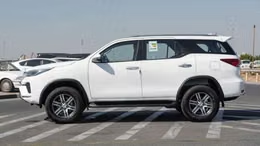
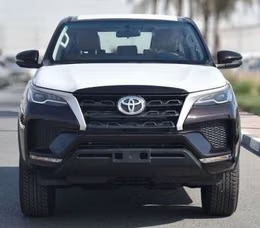
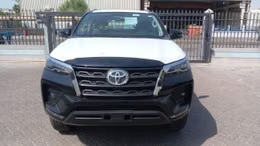
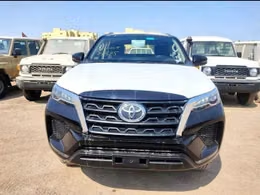
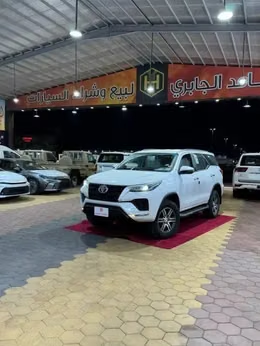
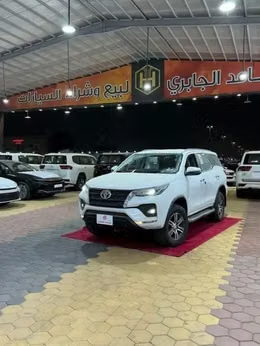
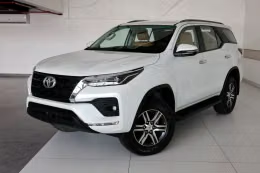
The EXR, GXR and VXR designations are more than just letters in a listing. They help buyers understand how much comfort, technology and decorative equipment they are getting for their money. However, Toyota Fortuner equipment has varied by model year, engine, destination market and individual dealer. The badge therefore provides a starting point for comparison, but does not replace an inspection of the vehicle. EXR — entry-level trim: practical equipment without most premium features. GXR — mid-level trim: a balance of everyday comfort, equipment and price. **VXR — top-level trim: the most comprehensive package of comfort, interior finish and driver-assistance systems. Choosing a trim can be more difficult than choosing a colour. Wheel size affects ride comfort and tyre prices, the engine determines performance and fuel consumption, while cameras, climate control and upholstery shape everyday usability in the UAE. Below is a clear comparison from the practical version to the best-equipped one, helping buyers avoid paying for features they do not need. Which Fortuner trim is better — GXR, VXR or EXR? There is no universal winner. On most vehicles that follow the trim hierarchy commonly used in the Gulf states, EXR is the entry level, GXR is the mid-range version and VXR is the top trim. However, the same badge does not guarantee the same equipment: a newer GXR may be more convenient than an older VXR, while a well-kept EXR with a transparent history may be a better buy than a richly equipped vehicle rebuilt after an accident. Compare the model year, engine and regional specification first. Then assess safety, climate control, cameras and seats. Only after that should the trim name influence the decision. Following the 2020 facelift, the Fortuner received more modern styling and updated electronics in selected markets, so a newer GXR can often feel more up to date than a pre-facelift VXR. What is the difference between Fortuner EXR and GXR? EXR and GXR most often appeal to buyers seeking a sensible balance between price and usefulness rather than maximum equipment. In the current range, EXR is usually the entry-level version with a 2.7-litre engine, while GXR is the more powerful 4.0-litre V6 version. On imported vehicles and models from other years, however, these names may represent different equipment packages. Buyers should therefore compare not only the badge, but also the engine, model year, VIN specification and option list. 2026 Toyota Fortuner EXR: front three-quarter view. Confirm the model year, engine and actual equipment using the VIN and documents. A smaller wheel diameter can be an advantage on UAE roads. A taller tyre sidewall absorbs joints and uneven surfaces more effectively, while a replacement set of tyres is usually cheaper. Larger wheels make the vehicle look more expensive, but reduce sidewall height and transmit impacts more noticeably into the cabin. Cloth should not automatically be treated as a disadvantage. It heats up less in the sun and is not as slippery. Leather or high-quality synthetic leather is easier to clean after sand, children's crumbs and drinks, but without ventilation the surface quickly becomes hot in summer. In extreme heat, seat ventilation matters more than the prestige of the material itself. Verdict. For work trips, a limited budget and straightforward use, EXR is usually a sensible starting point. For a mix of family and city driving, GXR often provides the best balance. Pay extra for specific features — cameras, climate control, seats and safety — rather than for the letters on the body alone. What does the Fortuner VXR trim include? VXR traditionally sits at the top of the Toyota range and turns the Fortuner from a practical body-on-frame SUV into a more comfortable family vehicle. It is intended for buyers who value a powerful engine, enhanced safety and the most extensive factory equipment. VXR specifications have changed between model years and markets, so every feature listed below must be confirmed on the individual vehicle. Powertrain. VXR is often associated with the more powerful engine in markets where several engines were offered. The current official UAE range includes 2.7-litre and 4.0-litre V6 petrol versions; verify the displacement and output of the individual vehicle against its documents. Exterior equipment. Depending on the model year, features may include 18- or 19-inch alloy wheels, full LED headlights, daytime running lights, headlight washers, a chrome grille, roof rails and side steps. Larger wheels improve the appearance, but increase tyre costs and may make the ride firmer. Cabin. Upper trims commonly feature leather upholstery, power-adjustable front seats, driver's-seat memory, heated and ventilated front seats, keyless entry and three-zone climate control. Ventilation is particularly useful during UAE summers, while seat memory is convenient when two drivers share the vehicle. Multimedia. Depending on the model year, equipment may include a larger touchscreen, Apple CarPlay, Android Auto, additional USB ports, navigation and a premium JBL audio system or an equivalent setup. A HUD — Head-Up Display — projects speed and guidance into the driver's field of view, but it is not available on every version. Safety. Selected regional versions offer adaptive cruise control, blind-spot monitoring, rear cross-traffic alert and Toyota Safety Sense — Toyota's suite of active-safety systems. It may include collision warning, automatic braking and lane-departure control. Confirm availability through the controls, VIN specification and a functional test. Check separately which features are genuinely factory-installed. Used vehicles may have a replacement head unit, aftermarket cameras, reupholstered leather seats or an exterior body kit. Such modifications may resemble the features of an expensive trim, but do not prove that the vehicle is a VXR and can sometimes complicate electrical diagnostics. Factory equipment is easier to establish from the original specification, component markings and vehicle history. During the test drive, assess not only the number of features but also how they work: smooth seat adjustment, the absence of dashboard errors, camera image quality, correct sensor operation, cruise-control speed holding and the absence of unusual noise from large wheels. A high specification is valuable only when all equipment works properly; repairs to uncommon electronics can quickly erase the benefit of an attractive price. Front view of the Fortuner EXR. Check parking sensors, cameras and driver-assistance systems on the individual vehicle. The key UAE test is climate-system performance under load. After the vehicle has been parked in the sun, assess how quickly the first, second and third rows cool down, how effectively the roof-mounted air vents work and whether seat ventilation provides a real benefit. For a family, a properly working air conditioner matters more than a decorative package or expensive audio system. The VXR's larger wheels enhance its appearance, but may reduce ride comfort and increase tyre costs. A panoramic roof, premium audio and decorative elements are matters of personal comfort. Paying extra makes sense when the owner will actually use these features and is prepared for their maintenance. VXR suits drivers who value technology and do not want to compromise on comfort in extreme heat. Its advantage, however, should come from useful features — ventilation, cameras and safety systems — rather than chrome and the trim name alone. Fortuner Prestige or Comfort — which is better for a family? Prestige and Comfort are not permanent factory trim levels in Toyota's current public range. Dealers and sellers may use these names for option packages, special editions or intermediate equipment within a familiar trim. Until the original specification or invoice is available, treat them as marketing descriptions. For a family vehicle, check the functions that affect every journey: Cooling. Strong rear air conditioning, clean filters and effective front-seat ventilation are more useful than decorative trim at temperatures approaching +50°C. Parking. A reversing camera makes manoeuvring easier, while a genuine surround-view system is particularly helpful in tight Dubai and Abu Dhabi car parks. Check image clarity and every viewing angle. Seven seats. The third row is best suited to children or short journeys. Check access with a child seat installed and the amount of luggage space left when the seats are raised. Practical upholstery. Leather and synthetic leather are easier to clean, while cloth heats up less. The right choice depends on where the vehicle is parked, the children's ages and how often the car is used. Safety. Check the number of airbags, ISOFIX mounts — the international rigid child-seat anchorage standard — blind-spot monitoring and Toyota Safety Sense functions, an active-safety suite with collision warning and lane monitoring. The package name does not confirm that the equipment is present. A white Fortuner in a dealer showroom. Vehicles that look alike may differ in multimedia, cameras, upholstery and safety systems. A well-equipped GXR or verified VXR often suits a large family best: the benefits of rear cooling, cameras and easy-to-clean upholstery are noticeable on every school run and on journeys between the emirates. For one driver or a couple, EXR may be more rational, with fewer expensive options, potentially more compliant tyres and the same basic body practicality. Fuel savings from an entry-level trim cannot be assumed. Consumption depends more heavily on the engine, traffic, tyre pressure, load and driving style. Compare vehicles with the same engine under similar operating conditions. For a large family in the UAE, the difference between EXR and VXR is measured not only in dirhams, but also in how comfortable children are on the rear rows during a long journey across the country. Indicative price ranges for 2023–2025 vehicles in the UAE market: All prices are approximate and based on market data available at the time of writing. The actual price depends on the model year, specification, mileage and condition of the vehicle. How to make the best choice EXR. The best option for buyers who need a reliable and comparatively affordable SUV for work, city driving and straightforward journeys. GXR. The best balance of price and comfort for most buyers, provided that the equipment list confirms the required features. VXR. The choice for buyers who want the greatest available power, technology and convenience and are prepared to maintain the additional equipment. Before paying a deposit, photograph the VIN, find the specification for the exact model year, test climate control on every row, cameras, power-adjustment functions and smartphone connectivity, inspect tyre size and age, and request the service and insurance history. This process is more reliable than comparing badges. The option list within the same trim may vary by model year. To view actual vehicles and compare their specifications, open the current Toyota Fortuner listings and verify every description against the documents and the vehicle's actual equipment. Use the official Toyota Fortuner specifications to verify new factory configurations. The public range may be organised by engine rather than by the EXR, GXR and VXR designations.

Three personalities in one SUV: the economical 2.7, the versatile V6 and the torque-rich diesel. Choosing an engine for the Toyota Fortuner is not about deciding which powertrain is good or bad. The right answer depends on how the vehicle will be used. The 2.7-litre petrol engine keeps the purchase price down and suits relaxed city driving. The 4.0-litre V6 feels more confident on motorways and with a full load. The 2.8-litre diesel produces the most torque and is convenient where low-speed traction matters. In the UAE, heat, constant air-conditioning use, high-speed motorways and sand also influence the choice. The practical comparison below avoids a one-size-fits-all answer: it explains who can live with the 2.7, when the V6 is worth the extra cost and where the diesel performs best. All prices are approximate and based on market data available at the time of writing. Actual prices depend on model year, trim, mileage and vehicle condition. Fortuner engines at a glance 2.7 petrol — for a limited budget, relaxed city driving and low annual mileage. Its strengths are simplicity and more affordable maintenance; its weakness is modest reserve power for overtaking and driving with a full load. 4.0 V6 — for motorway driving, frequent trips with passengers, confident overtaking and fast dune driving. It is the most versatile option, although stronger performance comes with higher fuel consumption. 2.8 diesel — for low-rpm torque, long journeys, towing and technical off-road driving. It uses fewer litres of fuel but demands more attention to the fuel system, cooling system and operating conditions. Toyota Fortuner 2.8 Diesel: 200 hp, 500 Nm and four-wheel drive. Is the Fortuner V6 worth the extra cost? Yes, if you regularly use the capabilities of a large body-on-frame SUV. On Sheikh Zayed Road, the E11 and intercity motorways, the V6 accelerates more comfortably beyond 100 km/h, overtakes with greater confidence and feels less strained with a full load. The 2.7 also gains speed, but it needs more time and more frequent downshifts. According to toyota.ae, the Fortuner 2.7 produces 164 hp and 245 Nm, while the 4.0 V6 delivers 235 hp and 376 Nm. The difference is noticeable beyond acceleration alone. The V6 needs high revs less often, so it works more effortlessly under the same load. When does the V6 justify the premium? Frequent motorway driving. There is enough power for quick lane changes and overtaking without a long run-up. A full load. With passengers, luggage and the air conditioner running, the difference from the 2.7 becomes especially clear. Regular desert trips. The V6 maintains speed more easily on soft sand and regains momentum more quickly after a climb. Long-term ownership. The naturally aspirated 1GR-FE is known for longevity; vehicles with a transparent service history often exceed 400,000 km without an engine overhaul. When is the 2.7 the more sensible option? If the vehicle spends most of its time in the city, normally travels without a full load and will not be used for serious desert driving, the V6's potential may go unused. In relaxed driving, the 2.7 handles everyday tasks while costing less to buy and service. A realistic combined-consumption reference is about 11–13 L/100 km for the 2.7 and 13–15 L/100 km for the V6; in dense urban traffic, the V6 may use 14–16 L/100 km. Actual consumption depends on tyres, load, speed, traffic and driving style. For new vehicles, the price gap between the 2.7 and 4.0 versions is around AED 26,000, while on the used market it often falls within AED 15,000–25,000. Before deciding, compare vehicles of the same year and a similar specification: differences in trim and condition can outweigh the engine premium. Which Fortuner engine is more reliable — the 2.7 or 4.0 V6? Both petrol engines are successful naturally aspirated Toyota units. Both use timing chains and avoid a turbocharger and complex diesel injection equipment. Under demanding conditions, however, they operate under different loads. Power and torque. The 2.7 produces 164 hp and 245 Nm, while the 4.0 V6 delivers 235 hp and 376 Nm. The V6 has substantially more reserve for overtaking, climbs and a full load. Performance under load. The four-cylinder 2.7 needs to be held at higher revs more often. The V6 completes the same work more comfortably and operates near its limit less frequently. Scheduled maintenance. The 2.7 costs less because it requires less oil and fewer spark plugs. Consumables for the V6 are more expensive, although service intervals are comparable. Age-related weak points. On high-mileage 2.7 engines, check oil consumption and compression. On the V6, inspect the water pump, ignition coils, gaskets and cooling-system condition. Service life. Both engines can cover high mileages with regular maintenance, but the V6 copes better with the sustained load of a heavy SUV. 4.0 V6: long service life with proper maintenance The 1GR-FE engine is also used in the Land Cruiser Prado. It is valued for its robust design and ability to operate reliably in a hot climate when the cooling system is maintained. Typical age-related expenses include the water pump, coils and rubber seals. The V6 has six spark plugs, a larger oil capacity and higher fuel consumption, so routine maintenance costs more. Its reserve power, however, reduces the need to keep the engine under constant strain on motorways and with passengers aboard. 2.7: simpler and cheaper, but more often pushed to its limit The four-cylinder 2TR-FE can also cover high mileages. Maintenance is cheaper: fewer spark plugs, less oil and easier access to components. The Fortuner is heavy, however, so the engine often has to run at high revs during overtaking, climbs or sand driving. If choosing between two vehicles in the same condition for long-term ownership, the V6 is preferable. If the budget is limited and the vehicle is intended for relaxed city use, a well-maintained 2.7 is a more rational choice than a neglected V6. Before buying, look beyond the odometer: check for fault codes, monitor engine temperature and assess transmission operation on the road. Which Fortuner engine is best for off-road driving? Desert driving involves two distinct modes. The first is slow, technical progress, where the vehicle carefully negotiates soft sections and climbs. The second is fast dune driving, where maintaining momentum is critical. Different engines suit these tasks. 2.8 diesel: torque from low revs In its current version, the 1GD-FTV turbodiesel produces about 200 hp and 500 Nm. Torque is the turning force the engine sends to the wheels. The earlier its strong torque becomes available, the easier it is for the vehicle to move off under load and crawl through a difficult section without excessive revs. This makes the diesel convenient on slow sandy sections, rocky tracks and when towing. It does not tolerate neglected maintenance, however. In hot weather, clean radiators, a properly functioning intercooler, suitable oil and timely fuel-filter replacement are especially important. For a more specific reference, consult the Toyota Fortuner II Facelift generation catalogue. In this version, the 2.8-litre diesel produces up to 200 hp and 500 Nm and is paired with four-wheel drive. This combination is designed for pulling power and sustained load rather than sports-car acceleration. 4.0 V6: the best choice for fast dunes On soft sand, speed can matter more than idle-speed torque. The V6 revs freely, recovers engine speed faster after a gear change and helps preserve momentum on a climb. It is the most predictable option for dune bashing and dynamic desert trips. Reserve power does not remove the need for preparation: reduce tyre pressure, monitor temperature, disable intrusive electronic aids only when necessary and never enter the desert alone. Why is the 2.7 unsuitable for serious sand driving? The 2.7 can handle light dirt roads and access tracks to a campsite. On deep dunes, however, it lacks reserve power and torque: the driver holds high revs for longer, the transmission shifts more often and temperatures rise. If desert trips are more than an occasional outing, the 2.7 is the weakest option of the three. The practical choice is simple: choose the diesel for slow, controlled off-road driving and the V6 for speed and excitement on the dunes. The seven-seat cabin increases the load on the engine: with passengers aboard, the difference between the 2.7 and the more torque-rich versions becomes clearer. 2.8 diesel or 4.0 V6 — which uses less fuel? Measured in litres, the diesel wins convincingly. In real-world use, a Fortuner 2.8 typically consumes about 10–11 L/100 km in the city and 8–9 L/100 km on the motorway. The 4.0 V6 uses approximately 14–16 L/100 km in the city and 11–12 L/100 km on the motorway. The cost per kilometre depends on more than consumption. In the UAE, diesel can cost more than Special 95 petrol. For example, in August 2026, according to emarat.ae, diesel was AED 3.80 per litre and Special 95 was AED 3.49 per litre. At these prices, 100 urban kilometres cost roughly AED 40–42 in the diesel and AED 49–56 in the V6. The diesel retains an advantage, but it is smaller than a comparison of litres alone suggests. What changes the total cost of ownership? The diesel saves fuel, particularly on motorways and at high annual mileages. Diesel maintenance costs more because high-quality oil, fuel filters, injectors, the turbocharger and, on some versions, the diesel particulate filter all require attention. The V6 consumes more petrol, but its naturally aspirated design is simpler and more predictable over long-term ownership. Low annual mileage reduces the diesel's benefit. If the vehicle covers 10,000–15,000 km a year, one major fuel-system repair can erase the fuel savings. The diesel suits a driver who covers long motorway distances, tows or regularly needs strong torque. For mainly short urban trips and moderate annual mileage, the V6 is often the more straightforward ownership proposition. Which Fortuner should you choose? For the lowest purchase price, choose the 2.7 if you accept relaxed performance and do not plan serious off-road driving. For a versatile long-term Fortuner, look for a 4.0 V6 with a documented history. It is better suited to motorways, full loads and fast dunes. For strong pulling power and high annual mileage, consider the 2.8 Diesel, but carefully inspect the fuel system, turbocharger, cooling system and emissions equipment. For most UAE owners, the V6 remains the sweet spot: it is substantially quicker than the 2.7 and more straightforward to maintain than a modern diesel. The best vehicle is not necessarily the most powerful, however. Compare prices, mileage and service history first, then select the engine that matches your actual routes and needs.

The Toyota Fortuner remains one of the most sought-after body-on-frame seven-seat SUVs in the UAE. Buyers value its four-wheel drive, durable construction and strong resale demand, but the same model year does not always mean the same value: generation, engine, regional specification, mileage and service history all matter. The guide below will help you quickly match your budget with the right vehicle. All prices are approximate and based on market data available at the time of writing. The advertised price may change and may differ from the final transaction price after inspection and negotiation. How Much Does a Toyota Fortuner Actually Cost in Dubai? A reasonable budget for a sound example is AED 70,000 to AED 160,000 or more. The lower end usually applies to older or high-mileage vehicles, while the upper end covers newer V6 models, higher trim levels and new vehicles. Price Range for New 2025–2026 Models The official price of the 2026 Fortuner starts at AED 128,900 for the version with a 2.7-litre petrol engine, four-wheel drive and a six-speed automatic transmission. The 4.0 V6 version is listed at AED 154,900. Their stated outputs are 164 hp and 235 hp, respectively. Price Range for Used 2015–2024 Models On the used-car market, it is useful to distinguish between the full range of asking prices and a realistic budget for a well-maintained GCC-spec vehicle with a clear history. The lowest price often indicates high mileage, an imported specification, an Export only listing or upcoming repairs. GCC-spec means that the vehicle was intended for Gulf markets. This designation does not guarantee identical equipment, national certification or transfer of the dealer warranty. Export only means that the vehicle is offered for export. Confirm whether it can be registered normally in the UAE before paying a deposit ● 2015–2018. Asking prices range from approximately AED 39,000 to AED 101,000, while a realistic budget for a well-maintained vehicle is around AED 60,000–95,000. Better-kept examples are more common in the AED 70,000–95,000 range. For a 2015 vehicle, always confirm the generation. ● 2019–2021. Most listings fall within approximately AED 73,000–103,000; a reasonable working budget is around AED 80,000–115,000. Condition and mileage matter more here than a one-year difference in age. ● 2022–2024. Asking prices range from approximately AED 77,500 to AED 155,000, while a realistic budget is around AED 95,000–155,000. The ranges overlap because of differences in engine, trim level, GCC status and mileage. In the current selection, asking prices are approximately AED 39,000–95,485 for 2015 vehicles, AED 87,161–137,000 for 2023 vehicles and AED 91,446–155,000 for 2024 vehicles. These are asking prices, not guaranteed transaction prices. To check the range when you are ready to choose, you can compare available vehicles. Exterior view. Confirm the model year, trim level and specification using the vehicle identification number and documents. Why Do Fortuner Prices Range from AED 70,000 to AED 160,000? Age is not the only factor behind the difference. Generation, powertrain, equipment, origin, mileage and the quality of previous use all affect the final price. Two listings can therefore be compared fairly only when their basic specifications are similar. Generation and Age The first generation was produced from 2005 to 2015. A completely redesigned second-generation model has been on the market since 2015. Because of this transition, vehicles registered in the same year may have either the old or the new body; the registration date in the Mulkiya alone does not explain the difference. Mulkiya is the UAE vehicle registration card. It contains the main registration details, but it does not replace a VIN check, service-history review or confirmation of the actual model year. The 2020 update brought more modern styling, multimedia and additional driver-assistance systems in selected markets. In GCC countries, facelifted vehicles may be registered as either the 2020 or 2021 model year, so the VIN, production date and actual equipment remain decisive. VIN stands for Vehicle Identification Number, a unique 17-character identifier. It is used to match the vehicle to its documents and check its history. Engine, Trim Level and Regional Specification A new V6 costs approximately 20% more than the 2.7-litre version even before optional packages. On the used market, the more powerful engine also commands a premium when condition is comparable. EXR, GXR and VXR designations are common in the UAE; GX, GXL, VX and LTD are associated with other regional markets and international deliveries. The same badge does not guarantee identical equipment. Leather upholstery, a sunroof, powered features, LED lighting, cameras and expanded safety systems increase appeal. Aftermarket screens, body kits and wheels, by contrast, rarely return their full cost at resale and can sometimes complicate inspection. Mileage, Condition and History A 2020 vehicle with 60,000 km, original paint and a complete set of service invoices may cost more than a 2021 example with 180,000 km and repaired bodywork. In UAE conditions, the cooling system and air conditioning, leaks, suspension condition, four-wheel-drive operation, underbody and signs of intensive desert driving deserve particular attention. Documented maintenance supports resale value; questionable mileage and concealed repairs reduce it. What Should You Consider Across Gulf Markets? Prices in the UAE, Saudi Arabia, Oman, Qatar, Kuwait and Bahrain cannot be compared directly. Dubai offers a broad selection and many export listings. In Saudi Arabia, age restrictions and energy-efficiency requirements affect the resale prospects of imported vehicles. In the smaller markets of Oman, Qatar, Kuwait and Bahrain, a rare engine or equipment level can shift the average price more noticeably. General GSO requirements are supplemented by each country's rules, including different emissions standards. A vehicle from a neighbouring country should therefore be assessed by its VIN, country of first sale, service history and eligibility for registration in the UAE—not by price alone. GSO stands for GCC Standardization Organization, which develops common standards for Gulf countries. Compliance with its requirements does not replace checking the registration rules of a specific country. Engine bay: before buying, inspect the cooling system, leaks, maintenance history and signs of non-standard repairs. How Much Does a 2015 Toyota Fortuner Cost in the UAE? For a well-maintained 2015 vehicle with a documented history, AED 70,000–85,000 is a reasonable benchmark. The full range of asking prices is much wider, at approximately AED 39,000–95,485. A low price usually reflects the older body style, high mileage, a non-GCC specification, export status or previous repairs. A price near the upper limit is justified only by excellent condition and generous equipment. This model year can suit a limited budget, but only after the generation has been identified correctly. The first-generation body trails newer vehicles in interior design, electronic features and fuel economy. The second generation is more modern, but its price should still reflect the actual production date, mileage and history. Interior: trim wear, electronic functions and actual equipment affect resale demand. Should You Buy a New 2026 Fortuner or a Used 2023 Model? Choose a new vehicle for the full warranty, transparent history and minimal risk. A used 2023 model offers better value when its engine and equipment are comparable, it passes an independent inspection and it delivers meaningful savings after all post-purchase costs are included. Price. A new 2.7-litre version costs AED 128,900, while the 4.0 V6 costs AED 154,900, making the V6 approximately 20% more expensive. Asking prices for 2023 vehicles range from around AED 87,161 to AED 137,000. Compared with a new 2.7-litre model, the least expensive 2023 listing is approximately 32% cheaper, while the most expensive is about 6% dearer. The new V6 sits above the entire range: the difference is around 44% versus the minimum price and 12% versus the maximum. These percentages are general guides; compare matching engines, trim levels and specifications before deciding. Warranty. The stated warranty for a new vehicle is three years or 100,000 km. A 2023 vehicle may have only the remaining portion of that coverage; the term depends on the date of first registration and compliance with the servicing conditions. Engineering. Both versions belong to the facelifted second-generation family. The newer model year means no wear and current equipment, but not a fundamentally different platform. Risk and depreciation. A new vehicle has a known history, but its owner absorbs the depreciation of the first few years. A used-car buyer saves on that initial depreciation but must rule out concealed accidents, intensive off-road use and missed services. Compare like-for-like engines and regional specifications. If a verified 2023 alternative is less than 5–7% cheaper than a comparable new vehicle, buying from an authorised dealer will usually be more compelling. Savings of approximately 13–16% or more after inspection, fees and the first service can justify choosing the used vehicle. What Do Owners Report About Driving in the UAE? Owner feedback does not determine market value, but it can help estimate future costs and understand day-to-day characteristics. 4.0 V6 engine. Owners choose it for its power reserve on highways and in sand. One owner reports fuel consumption of around 13–14 litres per 100 km on the highway with the air conditioning on, rising to 15 litres when fully loaded. This is an individual result, not a guaranteed figure. Suspension and noise insulation. The body-on-frame construction suits rough roads and off-road driving, but the vehicle can feel firm over speed bumps. Owners also note noticeable noise at higher speeds. Urban use. The high seating position improves visibility, but the vehicle's size makes parking more difficult in older parts of Dubai and in tight car parks. Reliability. Owners of relatively recent vehicles report no major faults, but their experience does not replace an inspection of the individual vehicle. UAE climate. The air conditioning and cooling system receive positive feedback. These systems should still be tested under load when buying a used vehicle. Before choosing a model year and engine, it is useful to review the experiences of different Toyota Fortuner owners and compare them with your own routes, mileage and fuel budget. Which Toyota Fortuner Model Year Should You Choose? With a budget of up to AED 80,000, focus mainly on vehicles from 2015–2019 and retain a reserve for inspection and age-related maintenance. At AED 85,000–115,000, well-maintained second-generation vehicles from 2019–2022 form the most rational search range. At AED 120,000–155,000, low-mileage 2023–2024 vehicles should be compared directly with a new vehicle. There is no universally best model year. The practical choice is the newest sound GCC-spec vehicle with a documented history that still leaves room in the budget for insurance, registration and the first service. For many buyers, a verified 2023 vehicle is the sweet spot; when its price approaches the dealer price, paying more for a new one is the safer option. Want to know which option best suits your family, driving conditions and routes? Open the latest listings and compare model year, engine, GCC status, mileage and vehicle condition.
قد تشمل إعلانات Toyota Fortuner الفئات التالية: EXR، GXR، VXR، وComfort، وغيرها. تعتمد القائمة الحالية على الدولة المختارة وسنة الصنع وتوفر السيارات. استخدم فلتر «الفئة» لمقارنة الخيارات المتاحة.
ينبغي تقييم المسافة المقطوعة إلى جانب عمر السيارة وحالتها وسجل صيانتها. قارن المسافة المقطوعة بسيارات مماثلة من سنة الصنع نفسها، وتحقق من سجل الصيانة والحالة الفعلية للسيارة قبل الشراء.
تتراوح أسعار الإعلانات الحالية لسيارة Toyota Fortuner على AUTO.AE من ٣٣٬٠٠٠ إلى ٣٤٨٬٨٨٨ AED. يعتمد السعر على سنة الصنع والمسافة المقطوعة والفئة والحالة والمواصفات الإقليمية. تستند هذه البيانات إلى الإعلانات النشطة وقد تتغير.
قد يعرض البائع الخاص سعراً أقل، بينما قد يقدم معرض السيارات خدمات إضافية مثل التمويل أو الضمان أو المساعدة في التأمين. تختلف الشروط، لذا تحقّق من معلومات الإعلان ووثائق السيارة وبيانات البائع.
تحقّق من بطاقة تسجيل المركبة «الملكية» (Mulkiya)، ومن تطابق رقم الهيكل (VIN) على السيارة وفي الوثائق، وبيانات المالك، وسجل الصيانة، وسجل الحوادث. وتأكد أيضاً من عدم وجود قرض قائم أو مخالفات أو قيود أخرى على السيارة. ويُفضّل إجراء فحص مستقل قبل إتمام الصفقة.
نعم. يمكنك الاتفاق مع البائع على إجراء فحص فني مستقل في مركز خدمة من اختيارك. يساعد الفحص على تقييم حالة المحرك وناقل الحركة والهيكل والأنظمة الإلكترونية والمكوّنات الأخرى.
يعني مصطلح GCC Specs أن السيارة صُنعت وفق المواصفات المعتمدة لأسواق دول مجلس التعاون الخليجي. وعادةً ما تكون هذه الإصدارات مصممة لتناسب الظروف المناخية المحلية. لكن GCC Specs بحد ذاتها لا تثبت حالة السيارة ولا تعني وجود ضمان ساري؛ لذا يجب التحقق من حالة السيارة والضمان بشكل منفصل.
تقدم بعض معارض السيارات خيارات تمويل. وعند توفرها، قد تُذكر الشروط أو قيمة القسط الشهري التقديرية في الإعلان. تعتمد نسبة الفائدة النهائية والموافقة على البنك والدفعة الأولى وبيانات المشتري.


