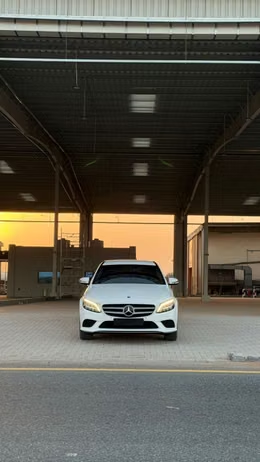
أسعار فئات Mercedes-Benz C-Class في دول مجلس التعاون الخليجي (GCC)
يبدأ سعر Mercedes-Benz C-Class من 9,000 AED ويصل إلى 336,256 AED. قد تختلف التكلفة النهائية على الطريق قليلاً حسب التأمين والتسجيل والملحقات الاختيارية.
يوضح الرسم البياني ديناميكيات متوسط سعر الطراز في سوق السيارات المستعملة خلال العام الماضي. تساعدك هذه البيانات على تقييم جدوى الشراء وتوقع القيمة المستقبلية للسيارة.
قد تختلف الأسعار على AUTO.AE عن تكلفة البيع الفعلية. تستند البيانات إلى قاعدة بياناتنا من السيارات المباعة والإعلانات الحالية. للحصول على تقييم دقيق، استخدم أداتنا.
When to replace spark plugs and glow plugs in a Mercedes-Benz C-Class
The spark plug replacement interval for a Mercedes-Benz C-Class depends on its engine and vehicle-specific service schedule. Investigate misfires before the scheduled date if symptoms appear. For a diesel, glow plug servicing depends on the variant’s requirements and the condition of the system. There is no single replacement mileage for every C-Class: the name covers different engines and hybrid powertrains. This article covers W205 and W206 saloons with combustion engines. The table gives examples of four-cylinder W206 versions. Earlier C-Class models and Mercedes-AMG variants require separate parts checks: the model name alone does not establish plug quantity or part numbers. Before ordering, record the VIN, the vehicle identification number, and confirm the engine. Important. The word Hybrid does not identify the plug type. The C-Class range includes both petrol and diesel hybrids. Plugs belong to the combustion engine; the electric motor does not use them. Which plugs different C-Class versions use The C-Class range includes petrol, diesel and plug-in hybrid versions. The Mercedes-Benz technical specifications identify fuel type and cylinder count. The table below gives W206 examples from different model years, rather than a single current line-up. Availability depends on the year and original market specification. Petrol engines A spark plug receives high voltage from the ignition coil and creates a spark inside the cylinder. Electrode wear makes ignition more demanding, so hesitation can first appear during acceleration. Smooth idling does not establish that combustion will remain stable under load. Petrol and diesel hybrids The petrol C 300 e uses spark plugs, while the diesel C 300 de uses glow plugs. The ability to charge a traction battery does not make their engines alike. Distinguish the normal engine start during a change of operating mode from repeated jolts, misfires and fault codes. Diesel engines A diesel does not use a spark plug to ignite fuel: ignition occurs in air heated by compression. Glow plugs add heat during starting and, depending on the control strategy, afterwards. They also help the engine run steadily while warming up. Signs that the plugs need checking Petrol engine misfires • The engine runs unevenly after starting or develops a shake at warm idle. • Repeated hesitation appears during acceleration when it was previously absent. • Starting takes longer, accompanied by uneven running and an engine warning. Symptoms do not identify a plug as the cause. A technician needs to distinguish combustion misfires from vibration through engine mounts, and ignition faults from injection or intake leaks. If the problem occurs only when a hybrid’s engine joins in, record the temperature, driving mode and load. Glow system problems On a diesel, difficult starting after parking, rough initial running and glow circuit faults justify a check. These complaints can accompany glow plug faults, but wiring, the controller or its power supply may be responsible. In warm weather, starting can seem almost normal despite a stored fault. Why plugs can fail early Replacing a part does not remove whatever damaged it. If a new plug quickly becomes fouled or the fault returns to the same cylinder, further diagnosis is needed. Comparing cylinders and repair history is more useful than judging one removed part in isolation. Frequent short trips, extended idling and dusty conditions deserve attention when planning maintenance. They do not establish one shortened plug interval for every C-Class. Check the schedule’s special operating requirements and agree additional work according to engine condition. Why diagnosis should not be delayed Severe misfires can send unburned fuel into the exhaust and overheat the catalytic converter. Acceleration also deteriorates. Pressing the accelerator harder to overcome hesitation increases load without correcting the fault. A glow fault needs a different approach: identify the affected circuit and check its control. A diesel running smoothly once warm does not prove its glow plugs are sound. Equally, one fault code does not establish that every plug and the controller must be replaced. Important. If the engine warning flashes, the car shakes severely or power drops sharply, stop accelerating and pull over safely. If severe misfiring continues, arrange diagnosis and recovery instead of driving on under load. How to establish the interval and select the parts The schedule and ASSYST PLUS reminder ASSYST PLUS displays the time or distance until servicing; it does not measure individual plug wear. Replacement requires the relevant operation in your engine’s schedule, including any time limit. Maintenance principles are explained in the C-Class W206 owner’s manual; confirm the actual interval and the document’s applicability using the VIN and model year. A Service A or Service B entry without an itemised work record does not confirm plug replacement. Ask for an invoice showing the date, mileage and fitted part numbers. With a plug-in hybrid, do not subtract electric mileage from the odometer to invent a new interval; any such method must come from the applicable schedule. For a diesel, establish separately whether scheduled glow plug replacement is specified. If it is not, base the decision on system checks. A proposal to replace a functioning set preventively should explain both the reason and the removal risks. What to verify before buying A plug for a W205 does not automatically suit a W206 because both cars carry a C 300 badge. Electrode material, including iridium, is not proof of compatibility either. Check the current part number, official supersessions, geometry and operating specifications. Obtain the gap and tightening torque from the procedure for that engine. How to assess an unknown service history When comparing current listings for the Mercedes-Benz C-Class, ask about the last plug replacement as well as the latest service. An invoice for work on a hybrid’s electrical system does not establish that its engine was serviced. If records are missing, start by identifying the schedule and checking the car; a missing entry is not proof of failure. What removed plugs can reveal Keep removed petrol spark plugs in cylinder order. Differences between them can guide diagnosis, but appearance alone cannot settle the cause. Fault codes, the conditions that trigger misfiring and measurement results also matter. Do not remove glow plugs merely for a visual inspection whenever starting is poor. Begin with electrical tests specified for the engine. If removal is necessary, assess seizure risk and tip integrity: a broken plug requires investigation of where its missing fragment is located. Diagnosis and preparation for replacement The diagnostic sequence Save fault codes and their operating conditions. Establish whether the symptom occurs at the first start, after warm-up or under load. Check the power supply and accessible connections. Inspect petrol coils and plug wells, or diesel plug circuits and the glow controller. Perform the engine-specific tests. Where necessary, examine injection, intake sealing and the mechanical condition of the cylinders. After repairs, reproduce the complaint conditions and check for returning faults. Record the fitted parts, date and mileage. Pre-work checklist ☐ Confirm the engine, part numbers and plug quantity by VIN. ☐ Prepare the correct tools and removal and tightening procedure. ☐ Prevent an automatic engine start; a silent hybrid is not necessarily switched off. ☐ Clean the work area and protect open holes from sand. ☐ Agree additional work after checking the associated components. For spark plug installation, correct tightening matters: both insufficient and excessive torque can damage a plug or impair its operation. The procedure determines engine temperature, thread condition and whether lubricant is permitted. Glow plug removal has separate force limits. Using a longer lever on a seized plug risks breakage. Work on a hybrid’s high-voltage system belongs with a trained specialist. Selection and installation mistakes • Treating the C 300 e and C 300 de as using the same plug type. • Copying a plug set or interval from a W205 to a W206 based on the badge. • Adjusting the gap or lubricating threads without procedural approval. • Connecting an unidentified glow plug directly to the battery. • Clearing faults before recording data and replacing every coil without testing. Frequently asked questions about spark plugs Is there one replacement mileage for every C-Class No. Requirements differ by engine and model year. Observe any time limit in the schedule as well. Severe misfiring needs diagnosis regardless of how far away scheduled replacement is; a healthy engine should follow its applicable schedule. Can a C 300 e have longer spark plug intervals Only if the documentation for that version permits it. Electric driving does not authorise the owner to disregard a time limit or double the replacement mileage. Spark plugs remain necessary whenever the petrol engine runs. Must coils be replaced with the spark plugs Not automatically: assess the coils separately. If testing finds a damaged boot or another fault, agree the repair on that evidence. A healthy coil set does not become a routine replacement item merely because the plugs are due. Frequently asked questions about glow plugs Does a C 300 de use glow plugs Yes. The C 300 de combines a diesel engine with electric drive, so its combustion engine has a glow system. The C 300 e is a petrol hybrid with spark plugs. Parts selection needs the full variant designation, model year and VIN. Do glow plugs need to work in a hot climate Yes. Warm weather can make starting easier and mask symptoms, but it does not repair a circuit fault. Assess the system through its faults and operating conditions, not simply whether the car started that morning. Why can a fault return after replacement Possible causes include an unsuitable plug, poor contact, damaged wiring or a faulty controller. Distinguish an old stored record from a recurring active fault. Erasing the code alone does not establish that the system works. Should one plug or the whole set be replaced Decide after checking the other circuits and assessing the parts. Age and access may justify replacing the set, but one failed plug does not mean all have failed. Ask which test results support the proposed work. Conclusion Begin C-Class plug servicing by identifying the engine, fuel and generation. Petrol versions, including the C 300 e, use spark plugs; diesels, including the C 300 de, use glow plugs. Then check the schedule and replacement history. If the engine runs poorly, establish the cause before choosing parts by VIN. This reduces the risk of ordering incompatible parts or replacing healthy components.
How often should you replace the fuel filter on a Mercedes-Benz C‑Class?
Replace the fuel filter on a Mercedes-Benz C-Class when the schedule for that particular vehicle requires it, or when diagnosis confirms a fault. The same C 200 badge can cover different fuel-system designs across model years. You need the VIN, engine details and service history to establish the correct approach. Neither a service reminder nor a high odometer reading provides one universal replacement interval for every C-Class. Important. There is no single fuel-filter interval for every C-Class. Scheduled work depends on the vehicle specification. A fuel-delivery fault or suspected contamination needs a separate assessment, even when the next routine service is still some way off. Signs of a clogged fuel filter on a Mercedes-Benz C‑Class Restricted fuel flow may become more noticeable during acceleration than at idle. The symptom guidance from MANN-FILTER includes reduced power and starting problems. These are reasons to investigate, but they can also have other causes. Before booking a workshop visit, record the conditions associated with each symptom: Hesitation when accelerating. Note whether the car jerks on hills, during overtaking or even with gentle throttle input. Do not deliberately recreate a loss of power in a dangerous traffic situation. Longer starting time. Compare a cold start, a restart with the engine warm and a start after overnight parking. These differences help the technician choose the relevant tests. Reduced power or stalling. Explain whether the problem is constant or disappears after restarting. A temporary improvement does not establish that the filter or fuel supply is healthy. A link to recent refuelling. Keep the receipt and record how much fuel was added and when the symptoms began. If the wrong fuel was added, stop further starting attempts and arrange assistance. A dashboard warning. Photograph the message. A fuel-pressure fault code records a detected deviation; by itself, it does not identify the filter as the failed component. Higher fuel consumption on its own is a weak reason to replace a filter. Trip patterns, temperature, load and other vehicle faults can affect consumption. Repeatable observations are more useful: fuel level, parking duration, engine temperature and the type of acceleration involved. Leave fault codes intact until the initial assessment so the workshop can review the information recorded when the fault occurred. Differences between powertrains Mercedes-Benz technical data for the C-Class distinguishes petrol mild-hybrid models from the C 300 e plug-in hybrid. Electrical assistance does not remove the combustion engine’s fuel system. Service selection therefore starts with the actual engine fitted to the car, rather than the word Hybrid in a listing or on a workshop invoice. For a diesel C-Class, establish the filtration requirements and any sensors, heating or water-separation features fitted to that system. On a petrol model, confirm whether the filter is serviced separately or as part of a larger assembly. With a plug-in hybrid, assess the complaint while the combustion engine is operating: smooth electric driving provides no test of fuel-filter flow. What happens if you do not replace the C‑Class fuel filter? Do not postpone a confirmed scheduled replacement until the car starts hesitating. Where the schedule does not call for a separate filter replacement, however, a proposal to replace an expensive assembly needs a clear reason. When a fault exists, its cause matters as much as timing: restricted flow and contaminated fuel call for different investigations. Acceleration may deteriorate. A supply that supports smooth idling can become insufficient as engine load rises. A brief stationary check may therefore fail to reproduce the problem reported by the driver. Starting may become unreliable. A severe shortage of fuel can be associated with stalling or failure to start. Repeated lengthy starting attempts do not clear the underlying problem or replace proper testing. Contamination can harm injection components. Water and abrasive particles can damage the fuel system. Filter age alone does not prove that the pump or injectors have already suffered damage; their condition needs separate assessment. A new part may not complete the repair. Contamination left in the tank or lines can continue to cause trouble after a filter change. Testing the fuel and system determines whether cleaning or further work is necessary. The car may lose power while driving. With repeated stalling, a strong fuel smell or a visible leak, stop safely and arrange assistance. Driving to the workshop is not suitable for every fuel-system fault. Safety. Pressure can remain in the system after the engine is switched off. Do not disconnect fuel lines for a home test or use your hand to search for a leak. A hybrid can start its engine automatically; preparation for repairs and work near high-voltage components must follow the prescribed procedure. Which fuel filter does Mercedes-Benz recommend for the C‑Class? Mercedes-Benz offers genuine parts matched to the vehicle. Its published Service A and Service B descriptions do not list fuel-filter replacement as a universal item in those core packages. A service-package name therefore does not prove that the filter was replaced, or that replacement is due now. Ask for the additional maintenance requirements applicable to your particular C-Class. How to establish the replacement interval Start with the VIN, the vehicle identification number, and confirm the engine code. W204, W205 and W206 identify saloon generations, but a generation designation is not a substitute for identifying the exact specification. The first registration date may also differ from the production date, which can affect parts applicability. Next, find the fuel-filter operation in the service documentation for that vehicle. If it specifies both elapsed time and distance, apply both conditions as instructed. Do not transfer an engine-oil interval to the fuel filter. A figure from a general parts listing or maintenance article cannot replace the schedule for the exact version you own. If the history is incomplete, request earlier invoices showing the date, mileage and fitted part number. “All filters changed” is not sufficiently specific. When there is no reliable record, agree an initial assessment and any necessary maintenance with the workshop. Suspected contaminated fuel requires a condition-based investigation without waiting for the next routine service reminder. How to choose a compatible replacement The estimate should say what is being replaced: a separate filter, a replaceable element or a complete assembly. These options involve different costs and procedures. Check the following before ordering: VIN-based applicability. A C-Class description, matching engine capacity and a similar appearance do not guarantee fitment. The catalogue entry must match the engine, production date and any further application restrictions. The current part number. If a number has changed, ask for confirmation that the new reference supersedes the old one. This is particularly useful when earlier repairs have left an unexpected component on the car. Connections and equipment. Check connectors, pipe fittings, mounting points and any specified sensors. A housing of the right size with different equipment is not automatically an equivalent replacement. Seals and installation hardware. Establish which items must be renewed under the repair procedure. Reusing a seal that should be replaced can result in a leak and a second repair visit. Aftermarket traceability. An alternative needs documented applicability and a reliable supplier. Matching dimensions, a familiar brand name or a “for Mercedes” description alone cannot establish the required specification. A clogged fuel filter and other C‑Class engine problems Useful diagnosis starts with the complaint and stored codes, followed by measurements specified for the engine. The workshop compares requested and actual pressure, checks the supply to the high-pressure pump where fitted, and investigates other possible causes. A low-pressure code does not justify replacing the filter, pump and injectors in sequence without evidence. Checklist before replacing the fuel filter Discuss these points before approving the estimate. They help distinguish scheduled maintenance from fault finding and leave a clear record of the work for the next owner. ☐ Identify the specification. Record the VIN, engine, production date, fuel type and any hybrid system fitted. ☐ Confirm the schedule. Identify the fuel-filter operation and the conditions that make it due on this vehicle. ☐ Review the history. Find the date, mileage and part number on the previous invoice; a service stamp alone is insufficient. ☐ Describe the complaint. Provide operating conditions, warning photographs and any link to recent refuelling or repairs. ☐ Keep the diagnostic results. Retain codes and measurements before they are cleared; ask what confirms restricted fuel delivery. ☐ Agree the repair scope. Check the part number, seals and any extra work required if contamination is found. ☐ Check the outcome. Confirm that there are no leaks and that the original complaint has been reassessed under safe conditions. ☐ Keep the paperwork. Obtain an invoice recording the date, mileage, operations carried out and the fitted component. Common servicing mistakes Assigning one interval to every C-Class. Cars from the same generation can still have different fuel systems and maintenance requirements. Using electric driving to judge the filter. Smooth running with a plug-in hybrid’s combustion engine switched off does not verify its fuel system. Replacing a part on one pressure code alone. First establish where the deviation occurs and which tests support the diagnosis. Washing a disposable filter. Cleaning does not prove that filtration performance has been restored and does not replace a required new element. Skipping checks after a suspect fill-up. A new filter does not correct contaminated or unsuitable fuel remaining in the tank. Using an improvised priming method. Air removal and the first start after repair must follow the procedure for the specific version. Treating a reset reminder as completed maintenance. The actual operations and fitted parts should be documented on the service invoice. Conclusion Establish the Mercedes-Benz C-Class fuel-filter interval from the VIN and applicable service documentation, and diagnose running problems before choosing parts. When buying a car, examine its maintenance history as carefully as its mileage. As you compare current listings, check the exact specification and request invoices for fuel-system servicing.
How often should you replace the Mercedes-Benz C-Class cabin air filter
Replace the Mercedes-Benz C-Class cabin air filter according to the service plan for your vehicle, and inspect it sooner if airflow weakens, a persistent smell develops or moisture is found. One replacement mileage cannot cover every C-Class: filtration components and maintenance requirements depend on the specification. If the last replacement date is unknown, start with a VIN check and inspection rather than trying to estimate remaining life from the element's appearance. Applicability. The construction details below refer to the C-Class W206 saloon in the May 2021 manual. Check parts and access procedures separately for the W204, W205, coupes, cabriolets and other variants. Registration year is not a substitute for model year and production date when selecting parts. How to tell when the Mercedes-Benz C-Class cabin air filter needs replacing A loaded filter does not always announce itself with a smell. Air delivery often changes first: the fan becomes more noticeable, but the familiar flow from the vents is missing. Test the system while parked, when you can compare settings without distraction. Open the vents, select face-level distribution and choose a manual fan speed. This keeps automatic adjustments from changing the conditions during the comparison. • Airflow is weaker at the same fan setting. Inspect the filtration and air path, but do not treat this as a diagnosis: flap or blower problems can produce a similar effect. • The air is cold but the cabin cools slowly. Delivery may be restricted. If the flow is strong but warm, investigate cooling performance and climate control operation. • Mustiness appears when ventilation starts. Note whether it follows a long parking period, disappears after a few minutes or depends on fresh-air intake. • Inspection reveals torn media, crushed pleats or wet patches. Mileage is secondary in this situation: replace the damaged element and investigate why it reached that condition. • The windscreen takes longer to clear. Alongside restricted airflow, incorrect settings or excess cabin moisture may be involved; check mats and upholstery too. Do not judge the filter solely by its colour. Carbon media can be dark when new, while dust may collect within the pleats without a conspicuous surface crust. Compare the inspection findings with changes in airflow and the service record. A photograph of the removed element documents its condition, but cannot provide a precise estimate of its remaining service life. How to establish the replacement interval and account for dust Pages 316–317 of the C-Class W206 manual call for more frequent maintenance in arduous conditions, including heavy dust and frequent recirculation. The cabin filter is among the listed items. That section does not give it a single shortened replacement interval. In practice, agree the timing against the vehicle's service plan and actual use. A car passing construction work every day and one used occasionally on cleaner roads may load their filters differently at the same mileage. Low annual distance does not remove the need for maintenance: elapsed time and the condition of the system also matter. At the next service, ask for a record identifying which filter was inspected or replaced, its part number and the next review date. Tell the technician if ventilation is used extensively while parked. A service reminder should not be interpreted as a filter-contamination reading. New symptoms justify inspection even when the display still shows time or distance remaining before general maintenance. If the vehicle's documented history begins with your purchase, establish a baseline first. Retain the invoice, mileage and any housing inspection findings. A later inspection then gives you useful evidence for discussing more frequent checks instead of choosing an arbitrary number. An additional inspection between replacements does not authorise extending any mandatory interval in the applicable service plan. What happens if you do not replace the Mercedes-Benz C-Class cabin air filter As contamination collects in the filter media, the ventilation system may struggle to deliver its usual airflow. The driver gradually increases fan speed and becomes accustomed to the noise. In hot weather this can feel like weak air conditioning, although the air path deserves an early check. Lowering the temperature setting does not clean the media or correct the way it sits in the housing. • Cooling feels less effective. With insufficient airflow, chilled air takes longer to circulate between seating positions. • Comfort comes with additional noise. Increasing fan speed may mask a restriction without removing it. • Tears or gaps around the frame allow some air to bypass the media. Strong airflow therefore does not prove that filtration is working correctly. • Damp contamination can sustain an unpleasant smell. An unresolved water source may soon leave the new element in the same condition. A filter replacement is not a universal air-conditioning repair. It cannot fix a refrigerant leak, compressor fault or failed flap actuator. Separate the complaint into two questions: how much air reaches the cabin, and how effectively that air is cooled. This helps target the investigation and avoids ordering a refrigerant recharge solely because the airflow feels weak. Important. Do not restore airflow by removing the filter or driving with its housing open. The system should operate with the intended elements and properly sealed covers. If a correctly fitted, compatible replacement does not restore normal delivery, continue the diagnosis. Which cabin air filter should you choose for the Mercedes-Benz C-Class The C 180, C 200 or C 300 badge is not enough to order a replacement. Establish generation, body style, production date and climate equipment through the VIN. Ask the supplier to confirm both the part number and package contents: a product advertised as a cabin filter may cover only one of several items requiring attention. Which filtration components should be checked on the W206 Page 147 of the cited W206 manual describes the cabin filter working together with a pre-filter in the engine compartment. Mercedes-Benz recommends maintenance by a qualified specialist workshop. Do not automatically apply this arrangement to other generations. The ventilation pre-filter is not the engine intake air filter. If an invoice says only 'air filter', ask which component it identifies: work on the engine intake does not establish that cabin filtration was checked. List each agreed element separately on the work order so that replacing one cassette is not mistaken for inspecting the complete system. The removed part is a useful secondary reference, but not conclusive fitment evidence. An incorrect filter may already have been installed. The new element should not need its frame trimming or depend on severely crushed media to stay in place. If the geometry differs, investigate compatibility before attempting to adapt the part to the housing. How to choose the media and assess the installation • Particle-filter media is designed to capture airborne particles. Use it only where compatibility with the relevant filter position is confirmed. • A combination element containing activated carbon also helps reduce certain odours and gaseous contaminants. It does not provide complete protection from exhaust or eliminate a source of dampness. • Assess additional coatings together with the product's technical documentation. A claim of enhanced filtration cannot compensate for gaps, a poor seal or incorrect dimensions. The job involves more than a new part. Inspect the housing, carefully remove accessible debris and investigate wet marks. Leaves should not be pushed further into the ducts as the old element is removed. Avoid washing disposable filters or cleaning them with a powerful air jet: looking cleaner after treatment does not establish that the media retains its intended properties. AIR FLOW identifies the direction of airflow, whereas UP identifies the top of the element where that marking is provided. They are different instructions. Confirm orientation using the replacement manufacturer's guidance and the housing arrangement. After closing the cover, check that seals are not folded over, fasteners are engaged and removed trim is correctly aligned. Compare the result using the same settings as before the work. Check several fan speeds, the available climate zones and any new whistling. If delivery has not improved, do not immediately buy another filter: have the remaining air path inspected. The maintenance record should show the installed part number and the actual operations completed; a filter change is not evidence that the full service was performed. Why does the Mercedes-Benz C-Class still smell after a filter change The filter is only one possible source of a smell. A replacement does not remove evaporator deposits, clear drainage or dry carpets. If the complaint remains, record exactly when it occurs. Differences between the first start after parking, fresh air and recirculation can guide the investigation, although they do not establish a final diagnosis on their own. Checklist for a recurring smell ☐ Compare fresh air and recirculation at the same fan speed away from obvious external odour sources. ☐ Remove portable air fresheners and switch off any fitted fragrance system while assessing the smell. ☐ Inspect the accessible area at the base of the windscreen and check for damp carpets. ☐ Share the observations with the technician and request a moisture-source check if the new filter becomes wet or the smell quickly returns. Do not apply perfume or household cleaners to the filter. They can introduce another smell and make the original cause harder to identify. Arrange evaporator cleaning separately using a procedure suited to the vehicle. A pronounced fuel, burning or exhaust smell needs its own diagnosis and should not be dismissed as routine filter contamination. Mistakes C-Class owners should avoid • Selecting parts using only the model name and registration year. • Treating replacement of the engine air filter as maintenance of cabin filtration. • Buying another cassette for a recurring smell without investigating water and contamination. • Accepting an 'air conditioning serviced' entry as proof of particular operations. • Resetting the general service reminder after replacing just one consumable. When comparing current listings for the C-Class, test the climate system during the inspection and request the latest maintenance paperwork. Look beyond a statement that the air is cold: the replaced-parts list, absence of dampness and operation in different modes all help. These checks provide a clearer starting point for assessing the vehicle before purchase and planning its initial maintenance. Conclusion Replace the Mercedes-Benz C-Class cabin air filter according to the vehicle's service plan and inspect it sooner if airflow changes or moisture appears. Select parts by VIN, establish the complete filtration arrangement and check the result after fitting. A recurring smell is a reason to find the cause, rather than cover it with another air freshener.
أسئلة وأجوبة حول Mercedes-Benz C-Class (FAQs)
قد تشمل إعلانات Mercedes-Benz C-Class موديلات 2003–2025 الفئات التالية: C 300 4MATIC، C 200، C 300، وC 200 4MATIC، وغيرها. تعتمد القائمة الحالية على الدولة المختارة وسنة الصنع وتوفر السيارات. استخدم فلتر «الفئة» لمقارنة الخيارات المتاحة.
ينبغي تقييم المسافة المقطوعة إلى جانب عمر السيارة وحالتها وسجل صيانتها. قارن المسافة المقطوعة بسيارات مماثلة من سنة الصنع نفسها، وتحقق من سجل الصيانة والحالة الفعلية للسيارة قبل الشراء.
تتراوح أسعار الإعلانات الحالية لسيارة Mercedes-Benz C-Class موديلات 2003–2025 على AUTO.AE من ٩٬٠٠٠ إلى ٣٣٢٬٩٧٤ AED. يعتمد السعر على سنة الصنع والمسافة المقطوعة والفئة والحالة والمواصفات الإقليمية. تستند هذه البيانات إلى الإعلانات النشطة وقد تتغير.
قد يعرض البائع الخاص سعراً أقل، بينما قد يقدم معرض السيارات خدمات إضافية مثل التمويل أو الضمان أو المساعدة في التأمين. تختلف الشروط، لذا تحقّق من معلومات الإعلان ووثائق السيارة وبيانات البائع.
تحقّق من بطاقة تسجيل المركبة «الملكية» (Mulkiya)، ومن تطابق رقم الهيكل (VIN) على السيارة وفي الوثائق، وبيانات المالك، وسجل الصيانة، وسجل الحوادث. وتأكد أيضاً من عدم وجود قرض قائم أو مخالفات أو قيود أخرى على السيارة. ويُفضّل إجراء فحص مستقل قبل إتمام الصفقة.
نعم. يمكنك الاتفاق مع البائع على إجراء فحص فني مستقل في مركز خدمة من اختيارك. يساعد الفحص على تقييم حالة المحرك وناقل الحركة والهيكل والأنظمة الإلكترونية والمكوّنات الأخرى.
يعني مصطلح GCC Specs أن السيارة صُنعت وفق المواصفات المعتمدة لأسواق دول مجلس التعاون الخليجي. وعادةً ما تكون هذه الإصدارات مصممة لتناسب الظروف المناخية المحلية. لكن GCC Specs بحد ذاتها لا تثبت حالة السيارة ولا تعني وجود ضمان ساري؛ لذا يجب التحقق من حالة السيارة والضمان بشكل منفصل.
تقدم بعض معارض السيارات خيارات تمويل. وعند توفرها، قد تُذكر الشروط أو قيمة القسط الشهري التقديرية في الإعلان. تعتمد نسبة الفائدة النهائية والموافقة على البنك والدفعة الأولى وبيانات المشتري.