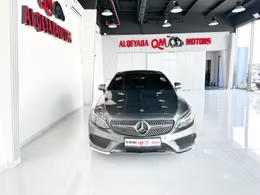
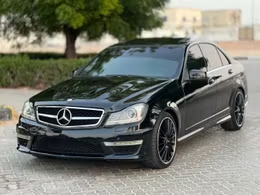
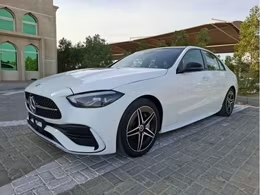
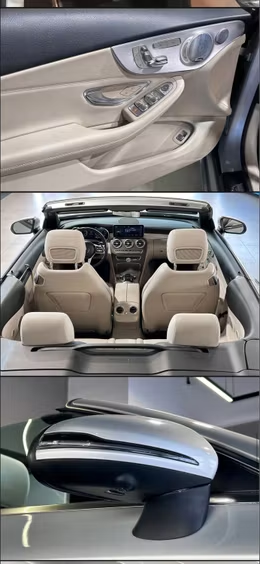
أسعار فئات Mercedes-Benz C-Class في دول مجلس التعاون الخليجي (GCC)
يبدأ سعر Mercedes-Benz C-Class من 9,000 AED ويصل إلى 336,256 AED. قد تختلف التكلفة النهائية على الطريق قليلاً حسب التأمين والتسجيل والملحقات الاختيارية.
يوضح الرسم البياني ديناميكيات متوسط سعر الطراز في سوق السيارات المستعملة خلال العام الماضي. تساعدك هذه البيانات على تقييم جدوى الشراء وتوقع القيمة المستقبلية للسيارة.
قد تختلف الأسعار على AUTO.AE عن تكلفة البيع الفعلية. تستند البيانات إلى قاعدة بياناتنا من السيارات المباعة والإعلانات الحالية. للحصول على تقييم دقيق، استخدم أداتنا.
When to change transmission fluid in a Mercedes-Benz C-Class
The transmission fluid change interval for a Mercedes-Benz C-Class comes from the service requirements for that specific vehicle. Mileage and age matter, as do the installed transmission, its version and its maintenance history. If a change is already due, smooth shifting is no reason to postpone it. Across the C-Class range, you will find earlier automatics, 7G-TRONIC, 9G-TRONIC and special transmission versions. They cannot automatically share the same fluid or parts kit. This guide explains how to plan servicing, select ATF — automatic transmission fluid — and recognise when diagnosis needs to come first. At a glance. Before booking a fluid change, confirm the transmission code and VIN-specific service requirements. Ask the workshop to identify the fluid approval and scope of work. A C 180, C 200 or C 300 badge is not enough to select service parts. 5 signs that the transmission should be checked A new or worsening change in the way the car drives warrants investigation. A driving sensation alone cannot establish fluid condition: different faults can produce similar symptoms. A noticeable pause after selecting a mode. If the car takes longer than usual to move after selecting D or R, record whether it happens after parking, when cold or after a drive. This helps the workshop check transmission control, pressure and fluid level. Repeated jolts during shifts. Note whether they occur while accelerating, slowing down or stopping. Powertrain mounts and engine operation also need consideration; the source of a jolt is not always inside the transmission. Engine speed rises before the car accelerates. Possible slipping should not be dismissed as normal fluid ageing. Avoid hard acceleration and arrange diagnosis, especially if there is a loss of drive. Vibration under light load. Shuddering on a smooth road may call for a torque-converter lock-up check, where fitted. It needs to be distinguished from misfires and wheel or driveline vibration. An oil leak or warning message. Have the leak source inspected and keep the exact display message. With a major leak, overheating or an inability to drive normally, stop somewhere safe and follow the vehicle messages and manual. Assessing ATF colour and smell Darkening alone does not determine when a change is due. Colour depends on the product, and clear ATF can still have the wrong approval. A burnt smell, deposits and metal particles must be assessed alongside fault codes and inspection findings. Clear evidence of wear requires investigation. What transmission fluid problems can cause How to establish the transmission fluid change interval Find the transmission fluid and filter change operation in the service list for your C-Class. Check its mileage and time conditions and its applicability to the engine and transmission, then compare these with the last documented service. A general maintenance stamp does not identify which additional operations were completed. After buying a car without service records Start by identifying the unit, checking for leaks and arranging diagnosis. An unknown history proves neither that repairs are needed nor that the transmission is healthy. Tell the workshop about prolonged traffic use, heavy loads and any overheating. Advice to shorten the interval because of operating conditions should be distinguished from the factory schedule. Important. Do not apply one interval to every C-Class or to another transmission from the same generation. If the unit has been replaced, the workshop needs to compare the VIN data with the transmission actually fitted. How to select ATF for your C-Class What to establish about the installed transmission The unit code and equipment data are more precise than the model badge. Even an identical number of gears does not establish the same fluid approval. The table highlights differences to consider; it does not replace vehicle-specific selection. Check approval applicability in Mercedes-Benz sheet 231.1, then verify the product in the corresponding approved-fluid list. A “recommended for” claim is not equivalent to official approval. Approval numbers are not a quality scale: a higher number does not establish universal compatibility. Why the number of litres is not enough The quantity depends on the service method and the specified points from which ATF is drained. Dry fill capacity differs from the amount used in a routine change. After filling, check the level at the specified temperature and operating conditions. Replacing only the amount drained would not reveal a previous underfill. Organising a C-Class transmission service Agree the parts list before work begins. Depending on the design, the filter is replaced separately or with the pan; seals, plugs and fasteners must follow the repair procedure. When symptoms are present, retain the diagnostic findings before intervention. Afterwards, check for leaks and assess transmission operation in safe conditions. Important. A hybrid C-Class requires the safety precautions specified for its electrified powertrain. On a 4MATIC, check transfer unit and differential servicing separately. A transmission fluid change does not automatically cover these components. Checklist before collecting the car ☐ The work order identifies the VIN and the transmission version fitted. ☐ Symptoms, inspection results and the reason for replacement are recorded. ☐ The exact ATF product and required manufacturer approval are specified. ☐ The replacement filter, seals and any other parts are listed. ☐ The level has been set correctly and there are no leaks after the work. ☐ Transmission operation has been checked; unresolved issues are recorded. ☐ The date, mileage, refill quantity and next service due point are retained. Fluid selection and servicing mistakes • Buying ATF by container colour or advice intended for another C-Class. • Mixing fluids without confirming compatibility under the specified procedure. • Prescribing machine flushing or additives before assessing the transmission. • Resetting adaptations without a reason specified by the manufacturer. • Expecting fresh fluid to repair worn friction elements or hydraulic components. Conclusion Begin C-Class servicing with the installed transmission details and a documented history. Then establish the interval, ATF approval and scope of work. These checks help prevent unsuitable fluid and incomplete servicing, while emerging symptoms call for timely diagnosis. When buying a car, compare current listings and request the documents for its last ATF change. They should identify specific work and products, rather than simply confirm that routine maintenance took place.
When to Replace Coolant in a Mercedes-Benz C-Class
Mercedes-Benz C-Class coolant replacement should follow the service requirements for the specific vehicle. You need its generation, engine, build date and previous maintenance history. Leaks, contamination or overheating require attention before the scheduled service. This guide explains how to select the fluid, establish why replacement is needed and check the outcome with the workshop. At a glance. Begin with three questions: when was the coolant completely renewed, which product is installed and which schedule applies to your C-Class? An absence of dashboard warnings does not answer them. A top-up after a repair does not necessarily establish that the entire fill was renewed. Official C-Class Coolant Replacement Requirements Do not choose an interval using the model name alone. Service requirements can differ between generations and powertrains, while previous repairs may affect the next maintenance decision. First establish that the information applies to the car, then compare its requirements with the date and mileage of the last documented replacement. This matters particularly when a vehicle has changed owners several times. Record the reason for the recommendation on the job order. If the workshop proposes replacement because of age, ask it to identify the applicable limit. If the reason is contamination or leakage, ask about the inspection findings. This helps distinguish scheduled maintenance from correcting an earlier repair or addressing a newly diagnosed fault. What the W205 Manual Confirms The October 2020 C-Class W205 manual, on printed page 439, specifies a 50–55% concentrate range and refers to operating-fluid requirements 310.1. The section calls for regular replacement by a specialist workshop but gives no numerical time or mileage interval. These details belong to that edition; they are not a schedule for every C-Class. The reference 310.1 should not be treated as a sufficient bottle description for purchasing coolant. The workshop still needs to establish a suitable product for the actual car and its existing fill. Where technical information permits several materials, the selection should remain documented rather than depending only on whichever container happens to be available. Versions That Need Separate Checks Check W204, W205 and W206 vehicles individually. Sedan information should not automatically be extended to every coupe or estate bearing the C-Class name. Also confirm the engine, production date, AMG derivative and any hybrid system. The VIN, or vehicle identification number, helps select service information but does not replace checking the conditions under which that information applies. Resolve conflicting information before the work begins. A listing may contain an incomplete trim description, while an old invoice may omit the fluid name. Passing those gaps to the next technician without explanation creates avoidable uncertainty. Ask the workshop to distinguish confirmed details from information that remains unknown. Signs That Call for an Earlier Inspection A scheduled replacement interval concerns maintenance of a functioning system. Leakage, overheating and contamination need a different sequence: establish the cause, then determine the repair and fluid work. Even recent coolant does not rule out a damaged hose or circulation problem. Consider the car’s behaviour and your observations as well as the date of the previous visit. • The level repeatedly falls. Note top-up dates and approximate quantities; a continuing pattern matters more than one isolated reading. • Fluid marks appear underneath the car or around connections. They help direct inspection, but the source may be above the point where the liquid collected. • A temperature warning is displayed. Follow the vehicle instructions instead of trying to reach the workshop regardless of the warning. • Foreign particles or an oily film are visible in the reservoir. Discuss contamination diagnosis before authorising a flush and refill. • Cabin heating changes or unusual circulation noises appear after repairs. Explain when the symptom began and whether it returns. One symptom does not prove a particular component has failed. A low-level message, for example, must be considered alongside the actual condition of the system. Avoid ordering an expensive part solely because someone described a similar incident online. Ask which test supports the diagnosis on your own vehicle. Observing the Level Safely Check a fully cooled car on level ground using its own manual. Compare photographs taken under equivalent conditions. A hot-fluid reading cannot be directly compared with a cold reading; doing so can create a misleading impression of loss. Do not fill above the prescribed mark simply to create a reserve. Never open a hot cooling system. If steam appears or an overheating warning is displayed, stop safely and follow the vehicle message, arranging assistance when needed. On a hybrid, establish that the powertrain is switched off. A silent engine does not mean the car is fully inactive or ready for maintenance. Important. If the level falls again after a top-up, the cause has not been resolved. Do not conceal the pattern by repeatedly adding fluid or waiting for the next routine service. With overheating, a safe stop and assessment of the fault take priority. Selecting the Correct Coolant Selection depends on the vehicle requirements and the exact product designation. Colour may help distinguish visible fluids but is not sufficient evidence of compatibility. A photograph of the reservoir cannot reliably identify an unknown mixture. If the previous owner kept a bottle, check whether that product was actually used for the most recent fill. Ask the workshop to record its selected material before starting. This makes a later top-up easier to arrange and avoids an invoice containing only the word “coolant”. Keep a photograph of the label with the job record. A receipt for a bottle establishes its purchase, but does not, by itself, prove that its contents were installed in the car. Concentrate and Ready-to-Use Fluid Confirm the supplied form: concentrate and premixed coolant require different handling. Do not automatically dilute a ready-to-use product. For concentrate, agree the required water quality and final mixture. If the system was cleaned beforehand, retained water can also affect the resulting concentration and must be considered during filling. Material preparation should reflect the complete agreed job. Simply adding new fluid to the reservoir may not be enough to restore the correct mixture. Decisions about draining and cleaning should account for the known fill and any contamination found. Experimenting with several products to achieve a particular colour is not an appropriate selection method. Use in UAE Conditions Traffic, high outside temperatures and extended air-conditioning use make cooling-system condition particularly relevant to the driver. However, they do not create a universal requirement for annual replacement in every C-Class. An earlier service should have a specific reason that the workshop can explain and document. Inspection should also consider external contamination of the heat exchangers. Fresh coolant does not clean those surfaces or restore a faulty fan. Mention if the complaint mainly develops in slow traffic. Do not try to confirm that pattern yourself by leaving the vehicle stationary while its engine temperature continues to rise. Consequences of an Old or Unsuitable Fill Coolant provides protection that cannot be assessed from clarity alone. GLYSANTIN explains that corrosion-inhibiting additives gradually lose effectiveness. Its general guidance should not replace the service requirements for a C-Class. A vehicle-specific decision needs both those requirements and information about the product actually present in the system. The table outlines possible consequences of different conditions. It does not mean that every old fill has already damaged the engine, and it cannot establish a repair from the reservoir’s appearance. Determine which condition has actually been found, how significant it is and what is needed to restore correct operation. The service cost depends on more than the coolant. Diagnosing a leak, replacing a damaged component and repairing overheating damage are different scopes of work. Ask for them to be separated in the quotation. If substantial engine repairs are proposed, obtain the test results and a list of confirmed damage before comparing workshop offers. Arranging Replacement and Checking the Result Prepare a short history for the workshop: when you bought the car, whether warnings appeared, which repairs were performed and how much fluid was added. If only the most recent visit is known, say so. An accurate statement that records are missing is more useful than assuming the coolant must have been changed with everything else. Agree the boundaries of the operation. In a system with several circuits, the job order should state which are included. Work involving cooling for high-voltage components needs appropriately qualified personnel. Owners should not have to remove protective parts or guess the purpose of reservoirs to help select a service. System Capacity and the Actual Refill The full reference capacity is not the quantity required for every replacement. Some fluid can remain inside the system during an ordinary drain. The technician must account for the procedure and the residue rather than adding the full published amount on top. A single litre figure for every C-Class would therefore be a misleading purchasing guide. The completed job order should record the actual material quantity, product name and operations performed. Ask separately how leakage, air removal and the level after cooling were checked. Those details help assess the result and establish what to do if a dashboard message returns after collection. Collection Checklist ☐ Match the vehicle and engine to the job-order details. ☐ Confirm the reason for replacement and the next due point. ☐ Obtain the product name and confirmation of its suitability. ☐ Check the circuits covered and the completed operations. ☐ Ask for the results of leak and level checks. ☐ Retain the date, mileage and actual material quantity. ☐ Establish whom to contact if a warning returns. After service, observe the car during normal use. A returning warning, fresh leakage or a clear change in temperature behaviour warrants contact with the workshop. Do not begin by adding a different coolant yourself. Explain that the work was recently completed and agree a safe way to have the concern checked. When shopping for a C-Class, compare current listings alongside the records for each individual car. Documented cooling-system maintenance is more useful than an assurance that the fluid lasts forever. A pre-purchase inspection can help establish whether the car needs routine replacement or an underlying fault must first be repaired. Conclusion Replace C-Class coolant according to the requirements for your version, its history and system condition. Confirm fluid suitability, retain the job record and monitor the cold level. Investigate leakage or overheating before deciding on further maintenance.
Mercedes-Benz C-Class brake fluid replacement
Brake fluid replacement for a Mercedes-Benz C-Class is generally planned around a two-year service cycle. Confirm the due date using the schedule for your version and the previous replacement record. Time-based servicing still matters when the car covers little distance. A sinking pedal, a leak or reduced braking performance needs separate investigation before the next scheduled service. Applicability. The approval refers to the C-Class W205 saloon manual issued in March 2020. Before work begins, check the VIN, year, engine, transmission, drivetrain and original market. Other versions require their applicable documentation. Signs that the brakes need checking Watch for specific changes in system behaviour. When booking an inspection, explain whether the problem occurs as soon as you set off or only after the brakes warm up. Arrange a check in these situations: The pedal needs to travel farther to produce the usual deceleration. The pedal slowly sinks while steady pressure is applied. After repeated braking, stopping performance is worse than with cold brakes. The reservoir level falls and fluid traces appear on pipes, connections or near the wheels. A brake system or low fluid warning appears on the dashboard. If a low fluid warning appears. The W205 manual instructs the driver to stop with regard to traffic conditions, discontinue driving and consult a qualified workshop. Do not top up the fluid yourself. Arrange recovery if there is a leak, a sinking pedal or loss of braking performance. Why replacement is based on time Fluid in the hydraulic circuit gradually absorbs moisture. This lowers its boiling point, allowing vapour pockets to form under intense heat. Pressure transmission deteriorates and pedal travel can increase. That symptom alone does not identify the cause: other brake faults can produce similar complaints. Fluid clarity is not a sufficient guide. Colour cannot establish its age or confirm its working properties. A condition measurement helps the workshop assess the system, but does not justify extending the manufacturer’s specified interval at will. For a C-Class used mainly on short trips, elapsed time deserves as much attention as mileage. If the previous replacement is undocumented, arrange an inspection and service to establish a known starting date. A pad replacement or engine oil service is not evidence that the brake fluid was renewed. Replacement interval and required approval Mercedes-Benz includes brake fluid exchange in its official Service B description, with repeat visits approximately every two years or at the specified mileage. That cycle helps with planning, but the C-Class schedule should be checked using the VIN and service documentation. A service reminder alone does not describe every operation that is due. The C-Class W205 saloon manual issued in March 2020 specifies MB-Freigabe or MB-Approval 331.0 on printed page 437. Before buying fluid, check that the document applies to your car. Requirements for another generation or a special version need separate confirmation. How to check the selected fluid Identify the required approval first, then verify that the particular product is approved. A DOT marking alone does not establish compliance with every Mercedes-Benz requirement. A higher number on the bottle does not automatically make that fluid a suitable substitute. The workshop needs enough fresh fluid from sealed packaging before starting. The amount depends on the exchange procedure and any repairs performed. Reservoir capacity is not a filling specification for the whole system, and a bottle opened long ago should not be used when its storage conditions are uncertain. Using a C-Class in a hot climate Summer driving, busy urban traffic and mountain routes call for attention to the entire brake system. Heat does not justify inventing a mandatory interval in place of the service schedule. An additional inspection before a journey with long descents is a sensible precaution for those conditions. Traffic and mountain roads In urban use, check pad wear and the condition of discs and hoses as well as the fluid. Before a descent, reduce speed and use the transmission modes described in the manual. Continuous pressure on the pedal increases the thermal load on the wheel brakes. If braking performance falls after the system heats up, do not resume driving simply because the pedal later feels familiar again. The cause needs to be established. Vibration, metallic noise and pulling to one side also require diagnosis: changing fluid cannot resolve every brake defect. Generations and equipment differences W204, W205 and W206 cars require their applicable documentation. Body style, engine, drivetrain and fitted brake equipment all matter. Regeneration in a hybrid C-Class does not replace the hydraulic brakes or remove their servicing requirements. For AMG models, verify that the instructions and fluid approval apply to that particular version. What a complete replacement should involve Confirm that the job covers renewal throughout the specified circuits, rather than just extraction from the reservoir. Bleeding order, equipment pressure and diagnostic functions come from the repair documentation. A universal sequence cannot be assumed for every C-Class. Check the vehicle identity and previous service records. Inspect the brake system and investigate any warnings or leaks. Agree the necessary repairs and prepare approved fluid. Renew the fluid and remove air using the procedure for the fitted system. Check for leaks, verify the level and test brake operation before a controlled road test. Record the date, mileage, product, approval and operations on the invoice. Choosing a workshop Ask which C-Class generations the workshop services and whether it has the required repair instructions. What matters is its ability to complete the prescribed procedure and verify the result, rather than the equipment’s brand name. Work following replacement of hydraulic components may differ from a routine fluid exchange. What to check on a used C-Class When comparing cars, current listings help identify suitable versions, but service history needs documentary evidence. Use this short checklist before buying: ☐ There is a separate record of a complete brake fluid replacement. ☐ The recorded date and mileage allow the next service to be planned. ☐ The product and approval are stated and match this vehicle version. ☐ Any hydraulic repairs since the last replacement have been identified. ☐ Accessible system components have been inspected and braking concerns investigated. Mistakes to avoid Postponing replacement because annual mileage is low. Assuming new pads prove that the fluid was serviced. Choosing a product by its DOT marking without checking approval. Treating a top-up or reservoir cleaning as a complete exchange. Ignoring a falling level and continuing to drive after topping up. Conclusion For a C-Class, the last brake fluid service date matters as well as mileage. Check the two-year reference against the car’s schedule, and use the confirmed 331.0 approval for the W205 discussed here. A complete exchange should end with system checks and a record of the work. Brake faults require attention regardless of when the next service is due.
أسئلة وأجوبة حول Mercedes-Benz C-Class (FAQs)
قد تشمل إعلانات Mercedes-Benz C-Class من موديل 1978 الفئات التالية: C 300 4MATIC، C 200، C 300، وC 200 4MATIC، وغيرها. تعتمد القائمة الحالية على الدولة المختارة وسنة الصنع وتوفر السيارات. استخدم فلتر «الفئة» لمقارنة الخيارات المتاحة.
ينبغي تقييم المسافة المقطوعة إلى جانب عمر السيارة وحالتها وسجل صيانتها. قارن المسافة المقطوعة بسيارات مماثلة من سنة الصنع نفسها، وتحقق من سجل الصيانة والحالة الفعلية للسيارة قبل الشراء.
تتراوح أسعار الإعلانات الحالية لسيارة Mercedes-Benz C-Class من موديل 1978 على AUTO.AE من ٩٬٠٠٠ إلى ٣٣٢٬٩٧٤ AED. يعتمد السعر على سنة الصنع والمسافة المقطوعة والفئة والحالة والمواصفات الإقليمية. تستند هذه البيانات إلى الإعلانات النشطة وقد تتغير.
قد يعرض البائع الخاص سعراً أقل، بينما قد يقدم معرض السيارات خدمات إضافية مثل التمويل أو الضمان أو المساعدة في التأمين. تختلف الشروط، لذا تحقّق من معلومات الإعلان ووثائق السيارة وبيانات البائع.
تحقّق من بطاقة تسجيل المركبة «الملكية» (Mulkiya)، ومن تطابق رقم الهيكل (VIN) على السيارة وفي الوثائق، وبيانات المالك، وسجل الصيانة، وسجل الحوادث. وتأكد أيضاً من عدم وجود قرض قائم أو مخالفات أو قيود أخرى على السيارة. ويُفضّل إجراء فحص مستقل قبل إتمام الصفقة.
نعم. يمكنك الاتفاق مع البائع على إجراء فحص فني مستقل في مركز خدمة من اختيارك. يساعد الفحص على تقييم حالة المحرك وناقل الحركة والهيكل والأنظمة الإلكترونية والمكوّنات الأخرى.
يعني مصطلح GCC Specs أن السيارة صُنعت وفق المواصفات المعتمدة لأسواق دول مجلس التعاون الخليجي. وعادةً ما تكون هذه الإصدارات مصممة لتناسب الظروف المناخية المحلية. لكن GCC Specs بحد ذاتها لا تثبت حالة السيارة ولا تعني وجود ضمان ساري؛ لذا يجب التحقق من حالة السيارة والضمان بشكل منفصل.
تقدم بعض معارض السيارات خيارات تمويل. وعند توفرها، قد تُذكر الشروط أو قيمة القسط الشهري التقديرية في الإعلان. تعتمد نسبة الفائدة النهائية والموافقة على البنك والدفعة الأولى وبيانات المشتري.