


When should Toyota RAV4 brake pads and rotors be replaced?
Toyota RAV4
Toyota RAV4•
•69 مشاهدة
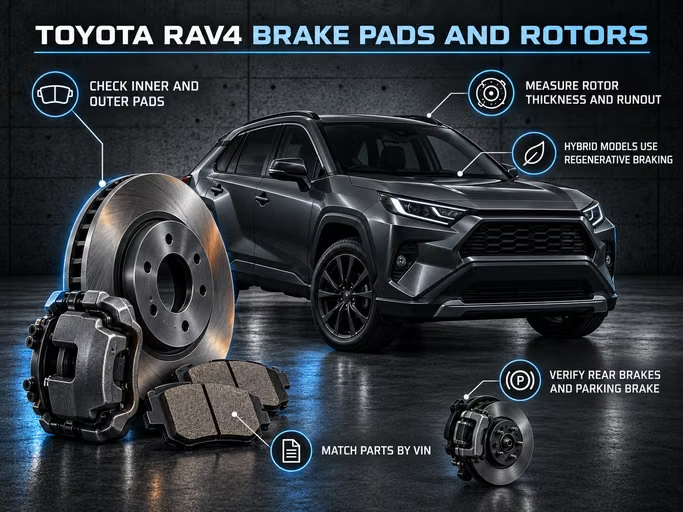
Equal mileage does not produce equal brake wear on every Toyota RAV4. The number of stops, vehicle load, descents, road dust and regenerative braking on hybrid models all affect component life. The maintenance schedule sets inspection points, while measurements and a complete-system check determine whether repair is needed.
When a Toyota RAV4 needs an unscheduled brake inspection
Noise, vibration and pulling do not identify one part by themselves. Pads, rotors, a hub, a caliper, a tyre or suspension may produce similar behaviour. Record the speed and load at which the symptom appears, then compare both sides of the axle.
- A new squeal or grinding sound appears. A brief high note can come from a wear indicator, trapped grit or pad hardware. Metallic grinding calls for an immediate stop to routine use because the backing plate may be contacting the rotor.
- The pedal or steering wheel vibrates under braking. Repeatable pulsation calls for rotor runout and thickness-variation measurements. The hub mounting face, wheel and suspension should be inspected at the same time.
- The RAV4 changes direction or one wheel becomes hot. Restricted piston, slide or hose movement can hold a pad against the disc. Compare remaining material, temperature and free wheel rotation on the left and right.
- The pedal feels softer or stopping distance grows. Pad thickness alone does not explain these changes. Diagnosis must include circuit sealing, brake fluid, booster operation and electronic brake controls.
Why delaying RAV4 brake repair increases risk
A crossover may face frequent urban stops, carry passengers and luggage, or descend a long mountain road. Each situation changes friction-part temperature and load. Hybrid regeneration reduces conventional-brake use during only some deceleration events.
- Heat capacity declines. Thin lining provides less insulation for the piston and fluid. Pedal response can change sooner during repeated hard stops, especially when the vehicle is fully loaded.
- The rotor face is scored. Once usable lining is gone, the pad backing cuts deep grooves into the disc. The repair may then require rotors and fitting hardware as well as pads.
- Rolling resistance rises. A binding caliper keeps the lining against the disc and heats the wheel without pedal input. Excess temperature ages boots and lubricant and can affect the hub and tyre.
- Brake-force balance deteriorates. A left-to-right difference is particularly hazardous on wet, sandy or uneven surfaces. Driver-assistance systems cannot remove a mechanical restriction.
- The work scope expands. Driving through pulling, grinding or continuous heat may damage the rotor, slides and nearby parts. New pads will not last if the original cause remains.
Toyota guidance for RAV4 brake checks
Toyota owner manuals call for brake-pad inspection when the wear indicator produces a warning sound. Continuing after the lining is exhausted can damage the rotor and impair braking. Use the limits and procedure for the RAV4's exact year, market and powertrain.
| Assembly | Inspection points | Reason for action |
|---|---|---|
| Front pads | Material on both pads, wear balance, cracks, contamination, indicator and component movement. | A limit is reached, noise persists, material is damaged or the two sides wear differently. |
| Front rotors | Multiple thickness readings, face runout, grooves, rust, hot spots and variation around the disc. | A dimension is outside its limit, permitted correction cannot remove the damage or the surface is uneven. |
| Rear brakes | Lining, disc face and dimensions, caliper movement, boots and parking-brake mechanism. | Limit wear, binding, overheating, damage or incorrect parking-brake operation is found. |
| Hydraulics and controls | Hoses, pipes, fluid, pedal travel, booster, warning lamps and hybrid electronic functions. | Repair leakage, unusual pedal movement or a system fault before fitting consumables. |
How to select Toyota RAV4 pads and rotors
RAV4 covers several generations, petrol and hybrid powertrains, different wheel sizes and multiple driveline layouts. Similar-looking vehicles can use different discs, calipers and parking-brake mechanisms. Begin the parts search with the VIN and catalogued number.
- Verify each axle separately. Model year and engine size do not define the front and rear kits on their own. Use the VIN to confirm the brake package, shims, springs and fasteners.
- Consider lining behaviour. A daily-use crossover needs stable friction after heating, consistent pedal response and controlled noise. An unknown compound can shorten rotor life or change braking feel.
- Match rotor dimensions. Check diameter, overall height, nominal and minimum thickness, ventilation and bolt-hole arrangement. An identical outline does not prove correct fitment.
- Service the complete axle. Replace left and right pads together. Measure both rotors at equivalent points and use the applicable limits and component maker's instructions to decide on machining or replacement.
- Identify the rear-brake design. Some RAV4 versions require a specified service procedure for the electric parking brake before caliper disassembly. Confirm the method from the VIN and manual.
Current listings for the Toyota RAV4 can help establish its generation, powertrain and production year. Pads, rotors and fitting hardware still require VIN confirmation for the selected vehicle.
Why noise or vibration can remain after replacement
New parts cannot correct a contaminated hub, restricted slides or incorrectly positioned hardware. Uneven friction-material transfer can also cause pulsation. A return inspection should use measurements and identify the cause instead of simply fitting another consumable set.
| Behaviour | Possible source | Next action |
|---|---|---|
| Squeal with light pressure | Indicator, grit, contamination, shims or glazed lining | Measure both pads and inspect the rotor and slide movement |
| Metallic grinding | Usable lining is gone or a hard object is trapped | Stop routine driving and inspect pads, disc and caliper |
| Pedal or steering vibration | Runout, disc-thickness variation, hub debris, wheel or suspension | Measure the assemblies and confirm the symptom safely |
| Vehicle pulls | Unequal force, binding, a tyre or a suspension component | Compare both sides of the axle |
| One wheel heats up | The pad does not release; piston, slide or hose movement is restricted | Check free travel and neighbouring parts |
| Soft pedal or warning | Air, leakage, fluid, booster or electronic control | Suspend routine use until diagnosis is complete |
How operating conditions change RAV4 brake wear
One route may combine congestion, motorway sections, dusty access roads and extended descents. There is no universal shortened replacement interval for this mix. New symptoms and a record of each measurement provide better evidence. For a valid comparison, use the same measuring points and inspection conditions. If wear suddenly accelerates, check caliper travel, tyre condition, wheel alignment and the vehicle's usual route.
- Frequent city stops. The pads complete many heat cycles during a short journey. In this use, compare inner and outer lining more carefully and verify that the slides move freely.
- Long descents and a full load. Passengers and luggage increase the energy that the brakes must dissipate. Use the transmission mode specified for descents and avoid continuous light pedal pressure.
- Hybrid operation. During gentle deceleration, the motor returns some energy to the battery and the disc brakes may engage less often. Inspection remains necessary because limited use does not prevent corrosion or contamination.
- Sand and unpaved roads. Particles reach slides and shims, while dirt can conceal the visible surfaces. After such travel, check for new sounds, free rotation and wheel-temperature differences.
- Moisture and washing. A light surface film often clears after several controlled brake applications. Persistent noise, deep corrosion or pulsation needs inspection, and hot rotors should not be cooled abruptly with water.
Brake diagnosis and service sequence
- Record the operating conditions. Note speed, load, journey length, steering position and pedal effort when the symptom begins. On a hybrid, identify whether it occurs during regenerative deceleration or firmer braking.
- Inspect both pads in every caliper. A view through the wheel does not reveal the complete set. If the hidden lining is thinner, investigate the piston, slides and flexible hose.
- Compare all four wheels. Measure front and rear rotors, inspect the boots and test the parking brake using the procedure for that version. Do not treat an electric actuator as a mechanical unit without consulting the manual.
- Document the measurements. Record each pad's remaining material, rotor thickness and runout together with the limits used. The figures make the next wear-rate comparison meaningful.
- Correct the source of uneven operation. Clean the hub, restore piston and slide movement and examine hoses and protective boots before installing parts. Otherwise, the replacement set can develop the same fault.
- Bed the components in. Follow the pad and rotor maker's procedure. Avoid unnecessary hard stops, allow cooling time and confirm predictable braking in a safe area after the work.
- Assess a pre-owned RAV4 carefully. Balanced wear, measured rotor thickness, absence of overheating and a documented service history all matter. Also check brake fluid, parking-brake operation and whether the fitted parts match the vehicle specification. Corrosion on one side, blue heat marks or a pronounced lip on the disc call for further diagnosis. A lift, measuring tools and a controlled road test are needed before purchase.
Common RAV4 brake-service mistakes
- Relying on hybrid regeneration. Friction brakes still carry hard stops and events when regeneration is limited.
- Ordering by model year alone. Market, driveline and wheel differences can change the brake package; verify it by VIN.
- Installing pads without measuring rotors. New lining cannot correct a disc below limit, excessive runout or deep scoring.
- Working on one side of an axle. Fit friction parts as an axle set and correct unequal wear.
- Ignoring pedal changes or warnings. Stop routine driving until hydraulic, booster and electronic checks are complete.
Conclusion
Use measured condition to decide when Toyota RAV4 pads and rotors need replacement. Noise, pulling, wheel heat, vibration or pedal changes demand diagnosis before routine driving. Records from earlier inspections help reveal accelerated or uneven wear before it becomes severe.


