


Which Toyota Fortuner drivetrain should you choose — RWD, AWD or 4x4?
Toyota Fortuner
Toyota Fortuner•
•20 مشاهدة
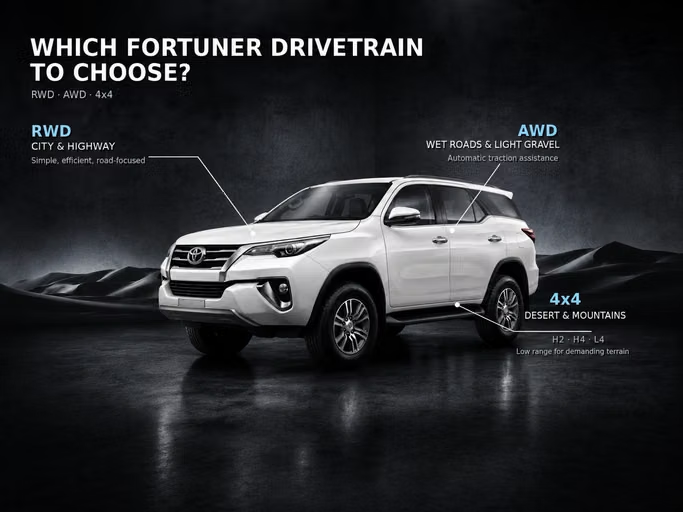
The drivetrain determines whether the Toyota Fortuner will be a comfortable city vehicle or a capable tool for sand and mountain terrain. RWD is suited to paved roads, AWD automatically helps distribute torque on slippery surfaces, while selectable 4x4** with low-range gearing is intended for serious off-road use. However, there is an important caveat in the UAE market: official Toyota UAE specifications for the 2026 Fortuner list the model as 4x4, whereas advertisements sometimes label the same type of drivetrain as AWD. Therefore, the choice should be based not on a single filter, but on the transfer-case modes actually fitted to the vehicle.
The price difference between rear-wheel-drive and four-wheel-drive versions on the used and import markets may reach approximately AED 10,000–20,000. All prices in this article are approximate and based on market data available at the time of writing; the advertised price and the final transaction price may differ.
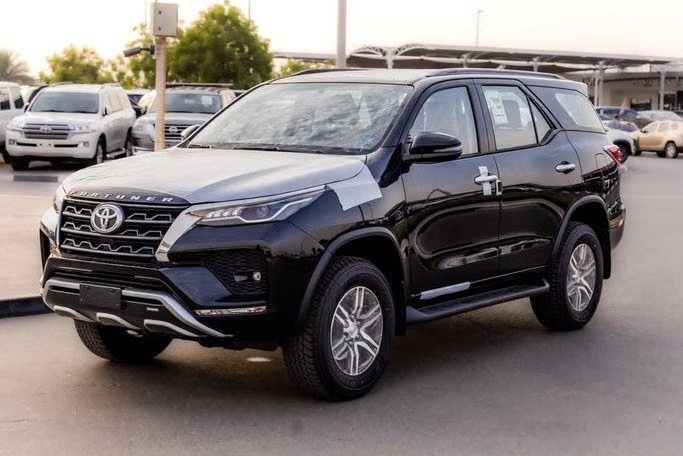
Toyota Fortuner II Facelift 2026: the type of four-wheel-drive system cannot be reliably identified from the exterior — check the controls and VIN.
Which Fortuner drivetrain is best for the desert in the UAE?
For regular dune driving, the right choice is 4x4 with low-range gearing. On loose sand, traction at both axles is important, while L4 allows the vehicle to move slowly and under control without forcing the transmission to compensate for insufficient grip through constant wheelspin. RWD may cope with firm ground, but its off-road capability is significantly more limited. Conventional AWD without low range is suitable only for easier sections.
Many newcomers assume that AWD and 4x4 are the same. For dune bashing and desert expeditions, the wording in an advertisement matters less than the presence of a transfer case, H2/H4/L4 modes and a functioning front-axle engagement system. Before attempting a demanding route, you also need the correct tyre pressure, a shovel, a compressor, suitable recovery points and experience driving on sand.
What do H2, H4 and L4 mean?
| Mode | Drivetrain | When to use it |
|---|---|---|
| H2 | Rear-wheel drive, high range | Dry paved roads, city driving and highways. It reduces drivetrain load and prevents wind-up between rigidly connected axles. |
| H4 | Four-wheel drive, high range | Loose or slippery surfaces where additional traction is required. Avoid tight turns on dry pavement. |
| L4 | Four-wheel drive, low range | Slow, controlled driving on demanding loose terrain. Select it only using the prescribed stopping and neutral procedure. |
Do not use H4 or L4 for tight turns on dry paved roads. The front and rear wheels follow different paths, and a rigidly connected drivetrain cannot compensate for that difference, causing wind-up, jerking and accelerated wear. Toyota's official guidance on H2/H4/L4 confirms that L4 should be selected after stopping the vehicle and shifting to neutral.
Do you need 4x4 if the Fortuner is used only in the city?
No — if you are choosing between technically comparable vehicles and are certain that you will not drive in sand, there is no reason to pay extra specifically for off-road capability. In normal conditions on Sheikh Zayed Road, H4 offers no advantage: the Fortuner should remain in H2. A rear-wheel-drive version also has fewer components that require maintenance.
However, the official UAE Fortuner range may not offer a choice between RWD and 4x4: both current 2026 petrol versions are specified as 4x4. In that case, assess the engine, trim, condition and price instead of searching for a separate AWD variant that is not confirmed by the specifications. During winter rain, sound tyres, sensible speed and a safe following distance remain the priorities; four-wheel drive does not shorten braking distance.
Is the Fortuner's four-wheel-drive system reliable?
Yes. Under normal use, the Fortuner's part-time 4x4 system is considered simple and durable: the vehicle runs in H2 most of the time, while the driver engages the front axle and low range when required. However, no system can be promised to last forever. The reliability of a used vehicle depends on regular maintenance, how often it was driven in sand, the condition of its seals and whether the previous owner used the modes correctly.
Key inspection points include the front driveshaft boots and joints, axle and transfer-case seals, propeller-shaft connections, wiring and the 4WD engagement actuator. Sand, overheating, impacts to the underside and long periods without using four-wheel drive increase the risk of a seized mechanism or leaks.
| Inspection point | What to check | Why it matters |
|---|---|---|
| CV boots | Cracks, escaping grease and sand contamination. | A damaged boot can quickly lead to an expensive CV-joint replacement. |
| Seals and breathers | Oil film or wet trails on the axle housing and transfer case. | The fluid level and the source of any leak must be checked. |
| 4WD engagement actuator | Whether the indicator confirms the selected mode after the correct procedure. | Persistent flashing or failure to confirm the mode requires diagnostics. |
| Axle and transfer-case oil | The service schedule for the vehicle's market, plus additional checks after sand, water or heavy loads. | A 40,000 km reference is a reason to inspect, not a universal guaranteed interval. |
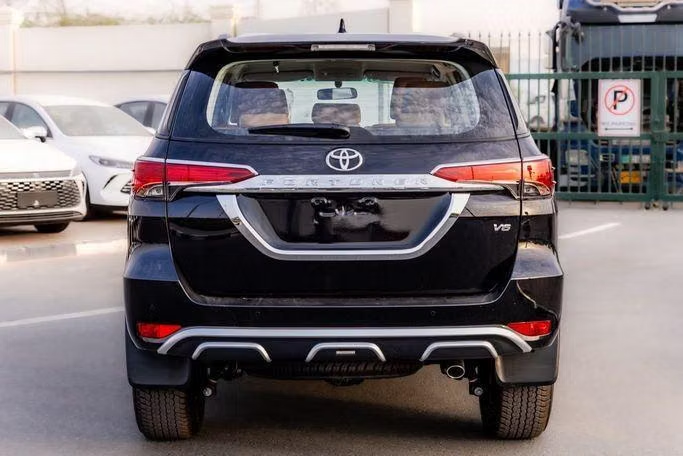
Rear view of the Fortuner: during an underbody inspection, look for dry axle housings and transfer case, as well as the absence of impacts to the protective panels.
How should you check a Fortuner's four-wheel-drive system before buying?
Carry out the test on a safe area with a loose surface or at a workshop. Do not drive in circles in H4/L4 on dry paved roads or lift one wheel with a jack: this creates unnecessary load and a risk of the vehicle falling. Testing under load requires a lift, a technician and the procedure specified for the particular trim.
Step 1. Verify the specification. Check the VIN, identification plate, service book and controls. The word AWD in an advertisement does not prove that the vehicle has an automatic AWD system. An H2/H4/L4 selector indicates selectable 4x4. Also confirm whether the vehicle has a rear differential lock, DAC or other off-road functions, as equipment varies by market and version.
Step 2. Inspect the underside. Look for cracks and traces of grease on the front driveshaft boots, oil leaks around the axles and transfer case, damaged connectors, dents in protective panels, play in the propeller shafts and signs of fresh washing over older dirt. An even, dry film may be acceptable; a wet trail of oil warrants a more detailed inspection.
Step 3. Check H2. During a normal test drive, there should be no humming, clicking, vibration under acceleration or binding in turns. Tyres of the same model with similar wear reduce unnecessary load on the drivetrain.
Step 4. Engage H4 as instructed. Follow the prescribed procedure on a straight section of loose surface. The indicator may flash while the mechanism completes the shift, then it should remain steadily illuminated. If it continues to flash, a warning appears or the mode fails to engage after brief straight-line movement, computer diagnostics are required.
Step 5. Check L4. Come to a complete stop, hold the brake and shift the automatic transmission to N. Engage L4 and wait for a steady indicator. At low speed, the vehicle should respond more strongly to the accelerator and provide more engine braking. Grinding, impacts or failure to engage are serious warning signs.
Step 6. Listen to the drivetrain. Check for humming under load and on overrun, repeated clicking with the wheels turned, propeller-shaft vibration and clunks when changing direction. A slight change in sound in H4 may be normal, but crunching and metallic grinding are not.
Step 7. Arrange an independent inspection. A specialist can read 4WD/ABS fault codes and inspect the actuators, play, fluids and components on a lift. For a vehicle that has been driven on dunes, this is more valuable than a brief demonstration by the seller.
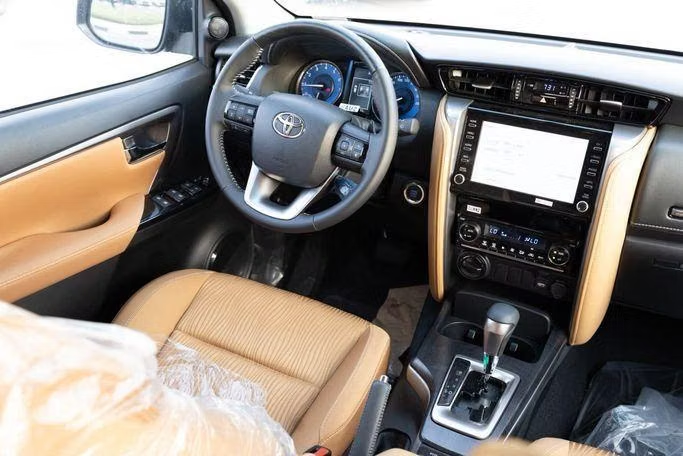
Toyota Fortuner 2026 interior: before buying, locate the 4WD selector and verify the indication for every mode in accordance with the owner's manual.
Which drivetrain should you choose?
| Drivetrain | Best suited to | Key condition |
|---|---|---|
| RWD | City and highway driving; no planned off-road use. | Choose only a verified rear-wheel-drive version. It is the simplest and most economical scenario. |
| AWD | Wet roads and light gravel. | The VIN and documents must confirm an automatic system. Do not rely on it in deep dunes without low range. |
| 4x4 | Desert routes, Ras Al Khaimah mountain plateaus and regular driving away from paved roads. | Confirm H2/H4/L4 operation, maintenance history and the absence of severe-use damage. |
The main practical conclusion: 4x4 is not essential for the city, but it is necessary for serious desert driving. However, AWD and 4x4 labels may be used inconsistently in the UAE market, so the decision should be made only after checking the vehicle's actual drivetrain.
A four-wheel-drive version may cost approximately AED 10,000–20,000 more than a comparable rear-wheel-drive vehicle. All prices are approximate and based on market data available at the time of writing. Current price ranges can be checked in the Toyota Fortuner listings, comparing the year, VIN, specification, drivetrain modes and condition.


