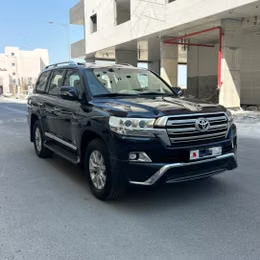
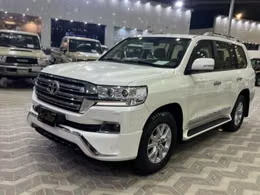
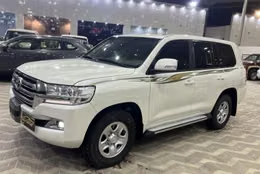
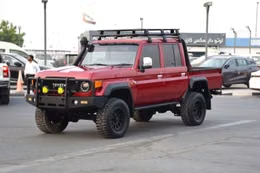
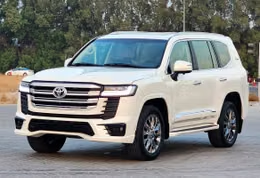
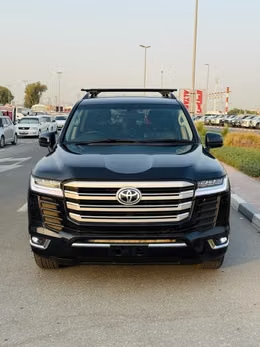
Цена Toyota Land Cruiser начинается от 12 500 AED и достигает 697 775 AED. Итоговая стоимость на дороге может незначительно отличаться в зависимости от страховки, регистрации и дополнительных аксессуаров.
На графике — динамика средней цены модели на вторичном рынке за последний год. Эти данные помогут вам оценить выгодность покупки и спрогнозировать будущую стоимость авто.
Цены на AUTO.AE могут отличаться от фактической стоимости продажи. Данные основаны на нашей базе проданных автомобилей и актуальных объявлениях. Для точной оценки воспользуйтесь нашим инструментом.
Used Toyota Land Cruiser in the UAE: GCC specification or import?
Choose a used Toyota Land Cruiser in the UAE by its verified history, exact specification and complete purchase cost. A GCC designation identifies regional specification but does not replace inspection. An imported vehicle may differ in powertrain, equipment and servicing arrangements. Establish those differences before paying a deposit, particularly when an attractive price creates pressure to decide quickly. What does GCC mean, and does it establish UAE provenance? GCC stands for Gulf Cooperation Council. In a vehicle description, it indicates specification for markets in that region. It is neither a trim level nor a country of manufacture. A Gulf-market vehicle may originally have been sold outside the UAE, so GCC specification and purchase through an authorised UAE dealer need separate evidence. Request the original purchase invoice, first-registration details and service history. Match the vehicle identification number, or VIN, on the car and its documents. If the seller claims an Al-Futtaim Toyota supply history, confirm it directly with the dealer using the VIN. Labels, multimedia language and an installed body kit can inform an inspection but cannot replace supply documents. Also establish whether the vehicle is offered for UAE use or export only. When reviewing current offers, compare the same model family with similar age and mileage. Export-sale terms should not automatically be treated as the final terms of a local purchase. Why can the Land Cruiser name describe different vehicles? Land Cruiser covers several families, so matching names do not establish matching engineering. Toyota distinguishes the 300, 250 and 70 Series in its model-family overview. Comparing an LC300 with an LC250 can look like a GCC-versus-import bargain when much of the difference actually comes from the vehicle itself. For example, toyota.ae presents a 2026 Land Cruiser version with a 3.5-litre twin-turbo V6 producing 409 hp and a ten-speed automatic. The Canadian 2025 Land Cruiser has an i-FORCE MAX hybrid system combining a 2.4-litre turbo engine with an eight-speed automatic and producing 326 system hp. These are specific official examples, not universal specifications for local and imported Land Cruisers. If you want an LC300, make that a requirement before shortlisting. Then establish the engine, seating capacity and features you need. Even identical grade lettering in two countries does not remove the need to compare equipment. Will an imported Land Cruiser have warranty coverage? Confirm coverage for the individual vehicle and contract. toyota.ae lists three years or 100,000 km for passenger vehicles. Those published terms do not establish the remaining coverage on a used example or confirm eligibility for a vehicle brought from another market. Before buying, request the coverage start date, remaining time and mileage, exclusions and the organisation paying for repairs. A warranty claim in a sales description may refer to a seller’s contract or third-party policy. Check payout limits, covered components and repair-authorisation procedures. Obtain the answer in writing against the VIN. Check service packages separately: prepaid scheduled maintenance and warranty repairs serve different purposes. For an unusual imported version, identify a workshop willing to maintain it and ask about component lead times. Claims that everything fits from a standard Land Cruiser need checking against the exact variant’s catalogue. Which records help establish the vehicle’s history? Seek a continuous history covering first sale, registrations, servicing and repairs. Imported vehicles also need origin and import documents. If the vehicle passed through an auction, request its lot number and original photographs. Refusal to provide documents before a deposit prevents the buyer from testing the explanation for a low price. In Dubai, the Roads and Transport Authority, or RTA, offers a Technical Vehicle Status Report. When checked in October 2026, the listed base charge was AED 120: AED 100 for the report plus AED 20 in fees. Owner consent is required. RTA explicitly states that the report excludes accident data; additional information about imports may carry extra charges. An RTA report does not replace accident-history checks or an independent inspection. Compare available records with the seller’s documents and the vehicle’s physical condition. Check that dates and mileages follow a consistent sequence. Convert miles and kilometres into one unit before comparing records. Discuss unexplained gaps before payment, even when the cabin and bodywork look well cared for. What should you inspect on a Land Cruiser in UAE conditions? The inspection should establish the individual vehicle’s condition and the quality of previous work. Regional specification does not prove sound condition after years of use. Engine cooling and cabin climate control matter in hot weather; frame, underbody and suspension condition deserve attention after off-road use. How should cooling and road behaviour be assessed? Ask a specialist to check cooling systems for contamination, leaks and modifications. Assess air conditioning in all fitted zones once the vehicle has warmed up, including stops during the drive. Verify claims about upgraded GCC cooling against the specification instead of assuming every version shares the same engineering differences. During the test drive, observe transmission shifts, unusual noises, warnings and temperature stability. Have a specialist assess four-wheel drive and off-road modes according to the exact vehicle’s requirements. Do not test differential locks on unsuitable surfaces merely to assess a purchase. How should previous repairs and equipment be assessed? Have an independent specialist examine structural alignment, body repairs, signs of water ingress and safety-system operation. Fresh cabin trim or a new body kit does not explain previous damage. Findings should appear in a written report with an estimate for corrective work. Check cameras, parking functions, multimedia and fitted driver-assistance features. For an imported version, ask to see the functions you need operating in the UAE. A button or menu entry alone does not establish regional service availability. When is an imported Land Cruiser genuinely better value? When its provenance is clear, condition is verified and the advantage survives all additional costs. Include the vehicle price, inspection, registration-related charges, insurance, necessary work and immediate servicing. For an import awaiting local registration, confirm registration eligibility and the applicable payments for that vehicle separately. □ Confirm the family, engine, grade and original supply market. □ Match the VIN, documents, mileage and available repair history. □ Obtain an independent report and estimate for necessary work. □ Confirm warranty, insurance and the complete cost in writing. There is no universal appropriate discount for an import. Its adequacy depends on identified expenses and future servicing arrangements. Retain documents and inspection results for resale: the next buyer will also need to understand the vehicle’s origin and condition. Conclusion. A sound used Land Cruiser combines the right specification with a verifiable history and manageable costs. Paying more for a local vehicle needs specific benefits in documentation, condition and coverage. An import makes sense when those questions are resolved and the complete calculation confirms the saving.
When should brake pads and rotors be replaced on a Toyota Land Cruiser 200?
For the Land Cruiser 200, the maintenance schedule sets inspection intervals rather than mandatory replacement mileage for brake pads and rotors. Toyota recommends regular brake-system checks as part of scheduled maintenance, with more frequent inspections on dusty roads, under heavy loads, while towing or during prolonged low-speed driving. Replacement is decided from measurements and the parts' actual condition. Key rule. Do not confuse an inspection interval with part life. Check the brake system on the scheduled-maintenance cycle and more often in severe service. Replace parts only after measurements or when clear fault symptoms are present. 4 signs of worn brake pads and rotors on a Land Cruiser 200 A sound or sensation does not identify one faulty component with certainty. A squeal may come from the built-in wear indicator, a trapped grain of sand or a vibrating shim, while judder may originate at the hub, wheel or suspension rather than the rotor. Treat every repeatable symptom as a reason to inspect the complete system, not as a reason to replace parts at random. Metallic squeal or grinding. A steady high-pitched squeal during braking may occur when the wear-limit indicator contacts the rotor. Harsh grinding points to a more serious stage: the friction material may be gone. Continued driving can then ruin the rotor quickly, so the vehicle should be inspected without delay. Pedal pulsation or steering-wheel judder. If vibration returns during normal braking and changes with speed, measure rotor runout and thickness variation, then inspect the hub, wheel fastening and suspension. Pulsation during an emergency stop may simply be normal ABS operation, which is why the conditions matter. Pulling to one side or uneven braking. Possible causes include a sticking piston or slide pin, different inner and outer pad wear, friction-surface contamination, or a tyre or suspension fault. Replacing only the most worn item will not restore balance or correct the root cause. Longer pedal travel or stopping distance. Delayed bite, a soft pedal, an overheated-brake smell or noticeably weaker deceleration requires urgent inspection. In addition to the pads and rotors, check fluid level and condition, hydraulic integrity, calipers, the brake booster and the electronic systems. Why delaying brake-pad and rotor replacement is dangerous The LC200 is a heavy body-on-frame SUV, so its brakes must dissipate substantial energy whenever the vehicle slows. Deterioration may be difficult to notice while the friction material still has usable thickness. Once the service limit is reached, however, rotor damage and heat transfer to neighbouring components can develop quickly. Repeated stops become less consistent. A thin pad transfers heat to the caliper more quickly and copes less effectively with a series of hard stops. Pedal effort may rise after repeated braking while the vehicle's response becomes less predictable. The rotor develops deep scoring. When the usable pad material is gone, the metal backing plate cuts grooves into the working surface. A rotor that could have remained serviceable with timely maintenance may then need replacement together with the new pads. Thermal stress increases. A dragging caliper or patchy contact creates local hot spots. This accelerates ageing of the dust boots and grease, heats the hub and brake fluid, and increases the likelihood of vibration. The fault affects neighbouring components. A binding brake continually loads the wheel, tyre and bearing, raises rolling resistance and can increase fuel consumption. Installing pads without repairing the mechanism offers only a temporary result. The safety margin shrinks. The vehicle may slow acceptably in gentle driving yet perform poorly on a descent, with a trailer or during an emergency stop once the brakes are hot or worn. Do not wait for grinding to become constant. Toyota's maintenance guidance for the LC200 brake system Toyota's manual directly links persistent squealing or grinding with possible pad wear and advises having the pads checked as soon as possible. Continuing to drive after the friction material is worn away allows the metal backing plate to damage the rotor. For the front brakes, Toyota also recommends measuring rotor thickness whenever the pads are replaced and warns that operating beyond the wear limits is unsafe. Source: English-language Land Cruiser manuals and warranty information at Toyota Owners. Before service, select the manual for the vehicle's model year and confirm the applicable wear limits by VIN. Rotor dimensions and part numbers must not be carried over from another version without verification. Important: inspection frequency follows the maintenance schedule and operating conditions; it is not an automatic replacement rule. A pad can wear unevenly at low mileage if a caliper sticks, while a sound set may last longer in gentle use. Both sides still need a visual inspection and proper measurements. How to choose brake pads and rotors for a Land Cruiser 200 The LC200 received several updates during its production life, and brake equipment can vary by year, supply market and version. Safe selection therefore starts with the VIN. A matching model name, engine or pad outline does not prove that the shape, thickness and operating characteristics suit the individual vehicle. Exact part number. Confirm it by VIN in a current catalogue. The front and rear axles use different components, and differences can also exist between early vehicles and later facelifts. Friction-material specification. The pad must retain the intended friction when hot, remain compatible with the rotor and deliver predictable response. An unknown, excessively hard compound can increase noise and accelerate rotor wear. Rotor geometry. Check diameter, nominal thickness, overall height, ventilation, mounting holes and any required installation direction. A visual resemblance is not enough to establish safe compatibility. Complete axle repair. Replace the left- and right-hand pads together. Measure and compare both rotors; when replacement is required, they are normally installed as a pair to keep braking force symmetrical. Parking brake and fitting hardware. The LC200 uses a drum-in-disc parking brake. When the rear axle is serviced, inspect its shoes, the internal drum surface, springs and adjustment, as well as the shims, indicators, dust boots and slide pins of the service brake. The generation and facelift can be checked initially in the Toyota Land Cruiser 200 catalogue. This page helps identify 2015–2021 vehicles, but final selection of pads, rotors and fitting hardware must still be completed by VIN. Why does an LC200 squeal, vibrate or brake unevenly? Noise or vibration after a repair does not automatically mean that the new parts are defective. The cause may be corrosion or debris on the hub face, lateral runout, sticking slide pins, incorrectly fitted shims or uneven friction-material transfer. Identify the source of the symptom before choosing the repair. How heat, sand and heavy use affect the brakes A hot climate does not create one universal replacement mileage, but it increases the importance of temperature control. Dusty roads, congested traffic, dune driving, towing and long descents are especially relevant in the region. Under these conditions, the brake system should be inspected more frequently than in gentle use on clean roads. Congested traffic. Frequent stops in a heavy vehicle heat the front brakes more than steady-speed driving. Adequate following distance and smooth, anticipatory deceleration reduce unnecessary heat cycles. Sand and off-road driving. Abrasive particles can reach the working surfaces, while stability systems may brake individual wheels. After a demanding route, check for abnormal noise, damaged boots and a large temperature difference between wheels. Towing and full loads. Additional mass sharply increases the energy that the brakes must absorb. Select an appropriate speed before a descent, use engine braking and avoid holding the pedal continuously. Water after heavy braking. Do not direct cold water at a very hot rotor immediately after an intensive drive. The sudden temperature change places unnecessary stress on the metal; allow the assembly to cool naturally. Humidity and long-term parking. A thin film of surface rust often clears after a few gentle stops. Deep corrosion, continuing noise or new pulsation needs an inspection. Practical inspection and replacement checklist Record when the symptom appears. Note road speed, brake temperature, pedal effort, vehicle load and the exact moment when noise or vibration begins. This helps separate a fault from ABS operation and shortens diagnosis. Inspect the inner and outer pads. A view through the wheel spokes is insufficient. The inner pad can wear much faster because of a sticking piston or slide pin even while the outer pad still looks healthy. Obtain the actual measurements. A useful repair order records remaining friction material, each rotor's thickness, lateral runout and the limits for the exact version. 'They still have some life left' is not a measurement. Correct the cause of unequal wear. Before fitting new parts, check caliper movement, the hub face, dust boots, shims and mounting surfaces. Otherwise, the new set can quickly repeat the same fault. Service the parking brake correctly. Toyota states that the drum-in-disc system requires periodic bedding-in and must also be bedded in after its shoes or drum are replaced. Carry out this work using the specified Toyota procedure. Bed in the service brakes correctly. After repair, avoid a series of unnecessary emergency-level stops and prolonged clamping of hot pads while stationary. Follow the parts manufacturer's procedure without compromising road safety. Inspect a pre-owned vehicle. Photographs in the Land Cruiser listings may reveal only major scoring or corrosion. Before purchase, obtain measurements, a safe road test and an inspection of the calipers and parking brake. Common maintenance mistakes Replacing parts by mileage alone. The same 40,000 km can mean relaxed motorway use or daily stop-and-go driving with a full load. The schedule determines when to inspect; condition determines when to replace. Fitting new pads to an unmeasured rotor. Deep scoring, runout or thickness below the limit will not disappear with new friction material. The replacement pads may develop uneven contact and vibration very quickly. Replacing only one side. Different thicknesses and friction characteristics on the same axle produce unequal braking force. Install pads as a complete axle set and service the rotors symmetrically. Forgetting the parking-brake shoes. The rear disc brake and the parking-brake mechanism perform different tasks. Replacing the rear service pads does not remove the need to inspect the shoes and drum surface inside the rotor. Blaming a soft pedal only on pad wear. Longer travel may be caused by air, a leak, overheated fluid or another component fault. This symptom requires urgent inspection of the whole system. Conclusion Land Cruiser 200 brake pads and rotors should be replaced according to their measured condition and inspected on a schedule that reflects how the vehicle is used. Dusty roads, heavy loading, towing and prolonged low-speed driving call for more frequent checks. Wear-indicator noise, grinding, vibration, pulling or weaker braking requires an unscheduled diagnosis. Select parts by VIN and fit them as a complete axle set.
How Often Should You Change the Differential Oil in a Toyota Land Cruiser 200?
For the Toyota Land Cruiser 200, the official schedule calls for inspecting the front and rear differential oil every 20,000 km and replacing it every 40,000 km. Inspect it sooner after water crossings, regular sand driving, towing, or prolonged high-load use. Reference capacity is 1.90 L at the front and 4.15–4.20 L at the rear. Key distinction. The LC200 permanent four-wheel-drive system has separately serviced front and rear differentials, plus a transfer case containing the centre differential. Oil does not circulate between these assemblies. Transfer case oil is therefore not a substitute for differential oil, and identical mileage does not mean that the service procedure is the same. How Can You Tell When the Land Cruiser 200 Differential Oil Needs Changing? The oil level and condition are assessed through service openings in the differential housings; there is no dedicated dipstick or dashboard warning. It is better to combine the maintenance schedule with an inspection of the plugs, seals, and drained oil than to wait for noise. On an older LC200, the load accumulated over previous years matters as much as the odometer reading. The next service interval has arrived. Inspect the oil at 20,000 km and replace it at 40,000 km, then repeat the cycle. If there is no record of the previous change, begin by checking the level and oil condition. Colour alone does not determine service life, but water, a burnt smell, or large particles require attention regardless of mileage. A steady speed-related whine has appeared. Noise that changes between acceleration and overrun may point to the ring-and-pinion gears or differential bearings. Tyres, wheel hubs, and propeller shafts can create a similar hum. Isolate the source on the road and on a lift before deciding whether routine service is sufficient or mechanical repair is required. Oil traces are visible on the housing. Inspect the drain and fill plugs, axle-shaft seals, and pinion seal. Clean an oily housing so that any fresh leak can be identified. Even a slow loss matters on a heavy SUV: at a low level, the upper bearings and part of the gear teeth receive less splash lubrication. The fluid has become pale and opaque. A milky appearance usually indicates water. It can enter after a deep crossing, through a damaged breather, or during pressure washing around the axle ventilation points. Topping up is not enough: correct the entry path, replace the oil, and assess the internal components for corrosion. Hard particles are present on the magnet. An even layer of grey metallic paste can result from normal wear. Large shiny flakes, needle-like swarf, or chips require inspection of the gear teeth and bearings. Fresh oil removes contamination, but it cannot restore a damaged surface or a correct gear contact pattern. When to Shorten the Inspection Interval Sand increases differential load through high rolling resistance, reduced tyre pressure, and frequent changes in traction. Low-range operation, long climbs, a heavy trailer, and sustained driving at full load add more heat. Under these conditions, assess the oil according to actual use rather than waiting automatically for the next scheduled mileage point. An unscheduled inspection is also advisable after replacing seals, repairing an axle shaft, opening a differential, or working on the locking mechanism. The workshop should confirm the fill quantity, LT or LX oil type, condition of the sealing washers, and plug torque. Recheck the housing for leaks after a short distance and record the work. What Happens If You Do Not Change the Land Cruiser 200 Differential Oil? The hypoid ring-and-pinion set transmits substantial torque through teeth that both roll and slide against each other. It therefore needs GL-5 oil with extreme-pressure additives. Ageing oil does not cause an immediate failure, but it gradually weakens the protective film, transfers heat less effectively, and turns suspended wear material into an abrasive. The oil first loses its performance reserve. Heat and mechanical load deplete the additive package while metal accumulates in the fluid. Nothing may be noticeable in gentle road use, yet protection can already be reduced when the vehicle tows or travels over loose ground. Operating temperature then rises. Contaminated oil removes heat less effectively and forms a stable film more slowly at the contact surfaces. Long climbs, dune driving, and repeated transitions between acceleration and engine braking are particularly demanding because the loaded face of the teeth keeps changing. Clearance and noise increase. Wear in the bearings and ring-and-pinion surfaces alters gear position. Pitting, scoring, and spalling can develop as the contact pattern moves. At this stage, an oil change helps reveal the condition but does not remove the mechanical cause of a persistent whine. Seals and the LSD can develop problems. Overheating accelerates seal ageing and raises the likelihood of leakage. If the rear axle contains a limited-slip differential, the wrong oil can change the behaviour of its friction elements and cause grabbing, shuddering, or noise while cornering. A rebuild may eventually be required. Continued use with water, insufficient oil, or large metal debris can damage gears, bearings, and the casing. Scheduled maintenance then becomes bearing-preload and contact-pattern adjustment, ring-and-pinion replacement, or replacement of the complete differential assembly. Important. Do not use thicker oil as a way to hide a whine. The sound may become quieter, but worn teeth and bearings remain damaged, while cold-start lubrication can deteriorate. If a sudden whine, vibration, leak, or unusual heat appears, avoid high-load use until the cause has been diagnosed. Which Differential Oil Does Toyota Specify for the Land Cruiser 200? The Land Cruiser 200 owner’s manual specifies Toyota Genuine Differential Gear Oil 75W-85, GL-5, or an equivalent gear oil. LT is used in the front differential and a conventional rear differential. A rear limited-slip differential requires LX oil of the same viscosity and performance grade. The locking hardware affects capacity, while the presence of an LSD determines whether LT or LX is required. LSD means limited-slip differential. Capacities are reference values: set the final level using the procedure in the owner’s manual. Confirm the rear differential configuration and oil applicability for the specific vehicle. Toyota’s Official Differential Oil Maintenance Schedule Under the official Land Cruiser 200 maintenance schedule, the front and rear differential oil is inspected at 20,000 km, replaced at 40,000 km, inspected again at 60,000 km, and replaced again at 80,000 km. The sequence then repeats. The published schedules show the same pattern for the listed 4.6-litre petrol and 4.5-litre diesel versions from 2007–2021. An inspection covers leaks, oil level, and oil condition. If water, leakage, or debris from component damage is found, replace the oil and correct the cause rather than waiting for the next 40,000 km interval. How to Change the Differential Oil Correctly Start with the fill plug. Remove it before draining the oil. If the threads are damaged or the plug is seized, restore refill access first. Otherwise, the differential can be left empty and the vehicle cannot be moved safely under its own power. Keep the vehicle level. Vehicle position affects the level relative to the fill opening. Raising only one side can result in underfilling or overfilling, so use a level surface or a lift that keeps the vehicle in its normal attitude. Drain warm oil into a clean container. After a short drive, particles remain suspended and leave the housing more effectively. Check the fluid for a burnt smell and emulsion, and assess the amount and size of metal on the magnetic plug. Filter the drained oil through a clean mesh if closer inspection is needed. Select the oil for the differential design. LT 75W-85 GL-5 is used in assemblies without an LSD; a rear limited-slip differential requires LX 75W-85 GL-5. Renew the sealing washers, clean the threads, and tighten the plugs to the torque in the repair information. Carry out a final check after refilling. Set the level using the manual procedure, clean the housing, and complete a short drive. A second inspection will reveal fresh oil around the plugs, axle-shaft seals, or pinion seal. Record the date, mileage, and product used for the next service. Information about the generation, engine options, and body style can be checked in the Toyota Land Cruiser 200 catalog. The exact rear differential equipment must still be identified before selecting the oil and fill quantity. Old Differential Oil: Why Does a Land Cruiser 200 Whine While Driving? A whine develops when rotating gears or bearings create persistent vibrations. A low level or degraded oil can make the sound more noticeable, but it does not prove that the fluid is the only cause. Compare the noise under different operating conditions, then inspect the differentials, propeller shafts, wheel hubs, and tyres. The sound grows louder under power. First assess the loaded face of the ring-and-pinion teeth, the pinion bearing, and bearing preload. If the whine appeared after a repair, inspect the adjustment and contact pattern. A different oil brand cannot compensate for an assembly error or altered gear position. The whine is louder on overrun. When the vehicle enters engine braking, the load moves to the opposite face of the teeth. This can indicate excessive clearance, bearing wear, or ring-and-pinion adjustment. Compare the sound under power, at steady throttle, and while coasting at the same speed. The tone or volume changes while cornering. A wheel bearing, the tyres, or differential components may be responsible. On an LSD-equipped vehicle, grabbing or shuddering during a slow manoeuvre is an additional reason to verify the oil type and inspect the limited-slip mechanism. Noise is accompanied by vibration. Inspect the propeller shafts, universal joints, splined connections, mounts, and wheels. A differential can whine without a strong vibration, so the combination of symptoms broadens the search. Changing axle oil will not correct imbalance or play elsewhere in the driveline. The problem began after a water crossing or leak. Check the level and look for emulsion first. Water reduces the oil film’s load-carrying capacity and starts corrosion, while insufficient oil disrupts splash lubrication inside the housing. Do not continue towing or driving on difficult terrain before inspection. What to Inspect Before Deciding on a Repair Begin with tyre pressures and wear patterns, then check wheel-hub play, propeller-shaft joints, and evidence of leakage. Listen to the front and rear differentials under power and on overrun. Inspect the drained oil separately: large swarf, shiny fragments, or water matter more than a dark colour alone. After an oil change, repeat the test on the same route at the same speed. If the whine remains, do not move through progressively thicker oils and additives. Measure clearances and inspect the bearings, preload, and gear contact pattern. Early diagnosis may limit the repair to a seal or individual bearing before the gears are damaged. Conclusion For the Toyota Land Cruiser 200, the baseline is to inspect the front and rear differential oil every 20,000 km and replace it every 40,000 km. The front holds about 1.90 L and the rear 4.15–4.20 L. Inspect the oil sooner after water contamination, leakage, heavy use, or the onset of a whine.
Вопросы и ответы о Toyota Land Cruiser (FAQs)
В объявлениях могут быть представлены комплектации Toyota Land Cruiser 2017 GXR, VXR (7 seats), VXR, LX и другие. Актуальный список зависит от выбранной страны, года выпуска и наличия автомобилей. Используйте фильтр «Комплектация», чтобы сравнить доступные варианты.
Пробег следует оценивать вместе с возрастом, состоянием и сервисной историей автомобиля. Сравните показатель с похожими машинами того же года и перед покупкой проверьте историю обслуживания и фактическое состояние автомобиля.
Сейчас на AUTO.AE представлены Toyota Land Cruiser 2017 по цене от 95 000 до 195 867 AED. Цена зависит от года выпуска, пробега, комплектации, состояния и региональной спецификации. Данные рассчитаны по активным объявлениям и могут меняться.
У частного продавца цена может быть ниже, а шоурум может предлагать дополнительные услуги — например, финансирование, гарантию или помощь со страхованием. Условия различаются, поэтому проверяйте информацию в объявлении, документы автомобиля и данные продавца.
Проверьте регистрационную карту автомобиля Mulkiya, VIN на автомобиле и в документах, данные владельца, сервисную историю и сведения об авариях. Также уточните наличие действующего кредита, штрафов или других ограничений. Перед сделкой желательно провести независимую проверку.
Да. Можно договориться с продавцом о независимой технической проверке в выбранном сервисном центре. Диагностика поможет оценить состояние двигателя, трансмиссии, кузова, электроники и других узлов.
GCC Specs означает, что автомобиль изготовлен в спецификации для рынков стран Персидского залива. Такие версии обычно рассчитаны на местные климатические условия. Однако GCC Specs сама по себе не подтверждает состояние автомобиля и не означает наличие действующей гарантии — это нужно проверять отдельно.
Некоторые шоурумы предлагают финансирование. Если оно доступно, условия или ориентировочный ежемесячный платёж могут быть указаны в объявлении. Итоговая ставка и одобрение зависят от банка, первоначального взноса и данных покупателя.