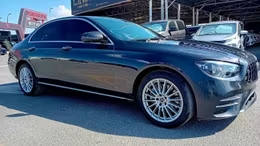
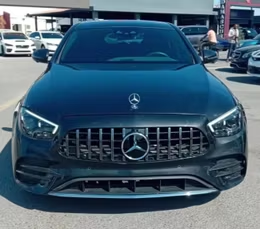
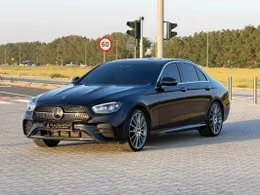
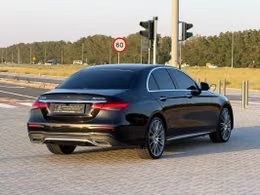
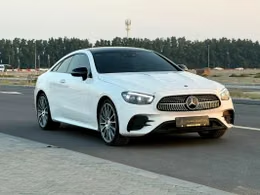
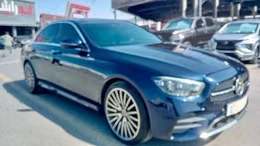
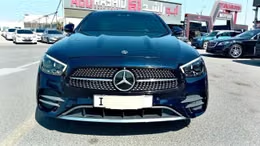
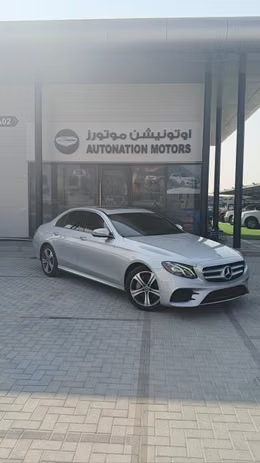
Mercedes-Benz E-Class 350 V (W213, S213, C238) Рестайлинг
Черный
•
Левый руль
2.0 л, 299 л.с., Бензин
AWD
AT
Седан
Японская
2021 Mercedes-Benz E-Class E 350 - Pristine Japanese Spec
مرسيدس E 350 موديل : 2021 الممشى : 25950 كم مواصفات ياباني اللون الخارجي : اسود اللون الداخلي : اسود .................... السعر 110000 درهم (غير شامل قيمة الضريبة المضافة ) موقعنا الشارقة سوق الحراج معرض رقم (285) للمزيد من المعلوما
2021
25 950 км
Малый пробег
110 000 AED
Выделение цветом
Отличный способ привлечь внимание к вашему предложению среди остальных - оно будет более заметным в результатах поиска.
Mercedes E450, Model: 2019
مرسيدس E450موديل : 2019 الممشى : 147000 كم مواصفات ياباني اللون الخارجي : ابيض اللون الداخلي : اسود .................... السعر 98000 درهم (غير شامل قيمة الضريبة المضافة ) موقعنا الشارقة سوق الحراج معرض رقم (285) للمزيد من المعلومات يرجى التواصل على الأرقام التالي
2019
147 000 км
98 000 AED
Выделение цветом
Отличный способ привлечь внимание к вашему предложению среди остальных - оно будет более заметным в результатах поиска.
Mercedes-Benz E-Class 250 V (W213, S213, C238) Рестайлинг
Mercedes-Benz E-Class other
•
Золотистый
•
Левый руль
2.0 л, 211 л.с., Бензин
RWD
AT
Седан
Корейская
Гарантия: сентябрь 2027 г.
2021
34 000 км
112 000 AED
Новый
еще 2 фото
Mercedes-Benz E-Class 300 VI (W214, S214)
Mercedes-Benz E-Class E 300 4MATIC AMG Line
•
Белый
•
Левый руль
2.0 л, 258 л.с., Бензин
AWD
AT
Седан
Корейская
2025
16 000 км
230 000 AED
еще 5 фото
Mercedes-Benz E-Class 300 V (W213, S213, C238) Рестайлинг
Mercedes-Benz E-Class Import
•
Черный
•
Левый руль
2.0 л, 258 л.с., Бензин
RWD
AT
Седан
Корейская
2021
90 000 км
97 000 AED
еще 2 фото
Mercedes-Benz E-Class 350 V (W213, S213, C238) Рестайлинг
Черный
•
Левый руль
2.0 л, 299 л.с., Бензин
AWD
AT
Седан
GCC
2022
42 000 км
99 000 AED
еще 18 фото
Mercedes-Benz E-Class 350 V (W213, S213, C238) Рестайлинг
Белый
•
Левый руль
2.0 л, 299 л.с., Бензин
AWD
AT
Седан
2021
106 800 км
145 921 AED
еще 17 фото
Mercedes-Benz E-Class 300 IV (W212, S212, C207) Рестайлинг
Серебристый
•
Левый руль
3.5 л, 252 л.с., Бензин
AWD
AT
Седан
2015
107 889 км
60 000 AED
еще 25 фото
Mercedes-Benz E-Class 450 V (W213, S213, C238) Рестайлинг
Белый
•
Левый руль
3.0 л, 367 л.с., Бензин
AWD
AT
Кабриолет
2021
96 500 км
175 301 AED
еще 4 фото
Mercedes-Benz E-Class 300 V (W213, S213, C238)
Mercedes-Benz E-Class E 450 4MATIC Sport
•
Белый
•
Левый руль
2.0 л, 245 л.с., Бензин
RWD
AT
Седан
Корейская
2019
130 000 км
82 000 AED
еще 11 фото
Mercedes-Benz E-Class 200 V (W213, S213, C238)
Mercedes-Benz E-Class other
•
Черный
•
Левый руль
2.0 л, 184 л.с., Бензин
RWD
AT
Седан
Европейская
2019
190 000 км
83 000 AED
еще 8 фото
Mercedes-Benz E-Class 300 V (W213, S213, C238) Рестайлинг
Белый
•
Левый руль
2.0 л, 320 л.с., Гибрид
AWD
AT
Седан
Европейская
2022
48 000 км
169 000 AED
еще 9 фото
Mercedes-Benz E-Class 350 V (W213, S213, C238) Рестайлинг
Mercedes-Benz E-Class other
•
Черный
•
Левый руль
2.0 л, 299 л.с., Бензин
AWD
AT
Седан
Mercedes-Benz E 350 2021 Model
Interior
- AUX audio in
- Air conditioning
- Alarm
- CD player
- DVD player
- MP3 interface
- Power seats with memory
Exterior
- Moonroof
- Off-road kit
- Off-road tyres
- Performance tyres
- Premium paint
- Roof rack
- Sport package
- Sport suspension
Saf
2021
83 197 км
119 000 AED
Выделение цветом
Отличный способ привлечь внимание к вашему предложению среди остальных - оно будет более заметным в результатах поиска.
Цена Mercedes-Benz E-Класс начинается от 15 500 AED и достигает 850 000 AED. Итоговая стоимость на дороге может незначительно отличаться в зависимости от страховки, регистрации и дополнительных аксессуаров.
На графике — динамика средней цены модели на вторичном рынке за последний год. Эти данные помогут вам оценить выгодность покупки и спрогнозировать будущую стоимость авто.
Цены на AUTO.AE могут отличаться от фактической стоимости продажи. Данные основаны на нашей базе проданных автомобилей и актуальных объявлениях. Для точной оценки воспользуйтесь нашим инструментом.
When to replace spark plugs and glow plugs in a Mercedes-Benz E-Class
Replace Mercedes-Benz E-Class spark plugs according to the schedule for the particular engine, and investigate misfires before the next scheduled replacement. Diesel glow plug servicing depends on the variant’s requirements and diagnostic findings. There is no single interval for every E-Class: the model name covers different generations, engines and hybrid systems. This article focuses on W213 and W214 saloons used daily and encountered on the used-car market. The four-cylinder examples below refer to the W214. Earlier cars, six-cylinder engines and AMG variants require their own parts checks. Start with the VIN, the vehicle identification number, rather than relying solely on the boot badge. Important. The word Hybrid does not identify the plug type. The E-Class range includes both petrol and diesel hybrids. Plugs belong to the combustion engine; the electric motor does not use them. Which plugs different E-Class versions use The Mercedes-Benz technical specifications distinguish the E 200, E 220 d, E 300 e and E 300 de by fuel and hybrid type. These four W214 versions each have four cylinders. The table identifies the systems; it does not replace a vehicle-specific part-number check. Availability varies with the original market specification. Petrol engines A spark plug receives high voltage from the ignition coil and creates a spark inside the cylinder. Electrode wear makes ignition more demanding, so hesitation can first appear during acceleration. Smooth idling does not establish that combustion will remain stable under load. Petrol and diesel hybrids Inspect petrol ignition on an E 300 e and diesel glow control on an E 300 de. Connecting the car to a charger does not change that distinction. A brief engine start during a change of operating mode can be normal hybrid behaviour, but repeated jolts and fault codes need investigation. Diesel engines A diesel does not use a spark plug to ignite fuel: ignition occurs in air heated by compression. Glow plugs add heat during starting and, depending on the control strategy, afterwards. They also help the engine run steadily while warming up. Signs that the plugs need checking Petrol engine misfires • The engine runs unevenly after starting or develops a shake at warm idle. • Repeated hesitation appears during acceleration when it was previously absent. • Starting takes longer, accompanied by uneven running and an engine warning. Symptoms do not identify a plug as the cause. A technician needs to distinguish combustion misfires from vibration through engine mounts, and ignition faults from injection or intake leaks. If the problem occurs only when a hybrid’s engine joins in, record the temperature, driving mode and load. Glow system problems On a diesel, difficult starting after parking, rough initial running and glow circuit faults justify a check. These complaints can accompany glow plug faults, but wiring, the controller or its power supply may be responsible. In warm weather, starting can seem almost normal despite a stored fault. Why plugs can fail early Replacing a part does not remove whatever damaged it. If a new plug quickly becomes fouled or the fault returns to the same cylinder, further diagnosis is needed. Comparing cylinders and repair history is more useful than judging one removed part in isolation. In heat, dust and urban traffic, keep intake servicing up to date and repair leaks promptly. Ambient temperature alone is not a reason to impose the same shortened plug interval on every E-Class. Agree additional checks according to usage and engine condition. Why diagnosis should not be delayed Severe misfires can send unburned fuel into the exhaust and overheat the catalytic converter. Acceleration also deteriorates. Pressing the accelerator harder to overcome hesitation increases load without correcting the fault. A glow fault needs a different approach: identify the affected circuit and check its control. A diesel running smoothly once warm does not prove its glow plugs are sound. Equally, one fault code does not establish that every plug and the controller must be replaced. Important. If the engine warning flashes, the car shakes severely or power drops sharply, stop accelerating and pull over safely. If severe misfiring continues, arrange diagnosis and recovery instead of driving on under load. How to establish the interval and select the parts The schedule and ASSYST PLUS reminder ASSYST PLUS helps plan a service visit; it does not measure the physical wear of each plug. Replacement requires the schedule entry for your engine, including mileage and any time limit. Check the owner’s manual and VIN-specific service documentation. A Service A or Service B entry without an itemised work record does not confirm plug replacement. Ask for an invoice showing the date, mileage and fitted part numbers. With a plug-in hybrid, do not subtract electric mileage from the odometer to invent a new interval; any such method must come from the applicable schedule. For a diesel, establish separately whether scheduled glow plug replacement is specified. If it is not, base the decision on system checks. A proposal to replace a functioning set preventively should explain both the reason and the removal risks. What to verify before buying “Iridium” describes a material, not compatibility with an E-Class. Parts that look alike may have different thermal and electrical specifications. Confirm the current part number and any official supersession; obtain the gap and torque from the applicable procedure rather than a generic chart for a similar thread. How to assess an unknown service history When comparing current listings for the Mercedes-Benz E-Class, ask about the last plug replacement as well as the latest service. An invoice for work on a hybrid’s electrical system does not establish that its engine was serviced. If records are missing, start by identifying the schedule and checking the car; a missing entry is not proof of failure. What removed plugs can reveal Keep removed petrol spark plugs in cylinder order. Differences between them can guide diagnosis, but appearance alone cannot settle the cause. Fault codes, the conditions that trigger misfiring and measurement results also matter. Do not remove glow plugs merely for a visual inspection whenever starting is poor. Begin with electrical tests specified for the engine. If removal is necessary, assess seizure risk and tip integrity: a broken plug requires investigation of where its missing fragment is located. Diagnosis and preparation for replacement The diagnostic sequence Save fault codes and their operating conditions. Establish whether the symptom occurs at the first start, after warm-up or under load. Check the power supply and accessible connections. Inspect petrol coils and plug wells, or diesel plug circuits and the glow controller. Perform the engine-specific tests. Where necessary, examine injection, intake sealing and the mechanical condition of the cylinders. After repairs, reproduce the complaint conditions and check for returning faults. Record the fitted parts, date and mileage. Pre-work checklist ☐ Confirm the engine, part numbers and plug quantity by VIN. ☐ Prepare the correct tools and removal and tightening procedure. ☐ Prevent an automatic engine start; a silent hybrid is not necessarily switched off. ☐ Clean the work area and protect open holes from sand. ☐ Agree additional work after checking the associated components. For spark plug installation, correct tightening matters: both insufficient and excessive torque can damage a plug or impair its operation. The procedure determines engine temperature, thread condition and whether lubricant is permitted. Glow plug removal has separate force limits. Using a longer lever on a seized plug risks breakage. Work on a hybrid’s high-voltage system belongs with a trained specialist. Selection and installation mistakes • Treating the E 300 e and E 300 de as using the same plug type. • Copying a plug set or interval from another E-Class generation. • Adjusting the gap or lubricating threads without procedural approval. • Connecting an unidentified glow plug directly to the battery. • Clearing faults before recording data and replacing every coil without testing. Frequently asked questions about spark plugs Is there one replacement mileage for every E-Class No. Requirements differ by engine and model year. Observe any time limit in the schedule as well. Severe misfiring needs diagnosis regardless of how far away scheduled replacement is; a healthy engine should follow its applicable schedule. Can an E 300 e have longer spark plug intervals Only if the documentation for that version permits it. Electric driving does not authorise the owner to disregard a time limit or double the replacement mileage. Spark plugs remain necessary whenever the petrol engine runs. Must coils be replaced with the spark plugs Not automatically: assess the coils separately. If testing finds a damaged boot or another fault, agree the repair on that evidence. A healthy coil set does not become a routine replacement item merely because the plugs are due. Frequently asked questions about glow plugs Does an E 300 de use glow plugs Yes. The diesel engine in this hybrid uses a glow system. The E 300 e instead has a petrol engine with spark plugs. Parts ordering therefore needs the full variant identification, not just the word hybrid. Do glow plugs need to work in a hot climate Yes. Warm weather can make starting easier and mask symptoms, but it does not repair a circuit fault. Assess the system through its faults and operating conditions, not simply whether the car started that morning. Why can a fault return after replacement Possible causes include an unsuitable plug, poor contact, damaged wiring or a faulty controller. Distinguish an old stored record from a recurring active fault. Erasing the code alone does not establish that the system works. Should one plug or the whole set be replaced Decide after checking the other circuits and assessing the parts. Age and access may justify replacing the set, but one failed plug does not mean all have failed. Ask which test results support the proposed work. Conclusion Start E-Class plug servicing by identifying the fuel, engine and generation. Petrol versions, including the E 300 e, need spark plugs; diesels, including the E 300 de, use glow plugs. Then check the schedule and service history, and investigate the cause of any running problem. This approach helps select compatible parts and avoids replacing healthy components by guesswork.
How often should you replace the fuel filter on a Mercedes-Benz E‑Class?
Replace the fuel filter on a Mercedes-Benz E-Class according to the schedule for that vehicle, or after a fault has been confirmed. There is no single interval covering every E 200, E 220 d and hybrid variant: the engine, production year, original market and fuel-system design matter. High mileage alone and a service reminder are not substitutes for this information. If rough running starts after refuelling, establish what is in the tank before deciding how much work is needed. Important. There is no single fuel-filter interval for every E-Class engine. Confirm scheduled work using the vehicle details. Contaminated fuel and delivery faults need a separate investigation, even when the next routine service is not yet due. Signs of a clogged fuel filter on a Mercedes-Benz E‑Class Restricted fuel delivery may first become noticeable during acceleration, when the engine needs more fuel. A pump, injector, ignition or boost fault can produce similar symptoms. Driver observations therefore help direct the investigation; they do not establish that the filter needs replacing. • Acceleration becomes uneven. Note whether hesitation occurs only under load or during gentle driving too. Do not reproduce the fault by overtaking: a workshop can examine the relevant parameters under controlled conditions. • Starting takes longer. Explain whether this happens with a cold engine, after a hot restart or following an overnight stop. These differences help the technician investigate pressure build-up, pressure retention and other starting faults. • Engine power is restricted. Reduced power does not prove a blockage. The workshop should compare the complaint with stored faults, engine load and actual fuel-system readings at the time of the event. • Rough running follows a fuel stop. Keep the receipt and record how much fuel was added. If the wrong fuel is suspected, do not restart the engine; arrange an assessment and recovery first. • An engine warning appears. A low-pressure fault code describes an abnormal condition, not a failed component. Save the freeze-frame information and associated readings before anyone clears the fault memory. For an everyday E-Class, note any connection with fuel level, a long period parked or recent repairs. A complaint that begins immediately after servicing warrants a check of the connections and work performed. Hot weather and traffic alone do not justify inventing a shorter replacement interval for every fuel filter. Differences between powertrain types The technical data on the Mercedes-Benz website distinguish petrol and diesel E-Class models from the E 300 e and E 300 de plug-in hybrids. The latter uses a diesel engine: the word hybrid does not automatically mean a petrol fuel system. The availability of these variants in the model range also does not establish the specification of an individual vehicle. On a plug-in hybrid, assess the combustion engine while it is actually running. Smooth electric driving does not test the fuel filter, and a brief delay before the engine starts may be normal powertrain control. For a diesel, the investigation also considers air ingress and water contamination. Water sensing, heating and filter servicing arrangements must be checked for the fitted assembly. What happens if you do not replace the fuel filter on a Mercedes-Benz E‑Class Do not postpone a confirmed scheduled replacement or a repair for restricted delivery. However, the absence of an interval in the documents available to you means neither unlimited service life nor an automatic need for a complete pump module. Establish the operation specified for that particular installation first. Power may drop when it is needed. Adequate delivery at idle does not establish adequate flow during acceleration. Repeated hesitation calls for investigation before further driving with high engine loads. Starting and running can become unpredictable. A substantial restriction may cause rough running or stalling. Do not assume another normal fuel stop will make an established fault disappear. Contamination may affect other components. Water and hard particles are especially concerning in diesel injection equipment. If contamination has travelled further into the system, a fresh filter does not repair possible pump or injector damage. The repair may need repeating. Contaminated fuel remaining in the tank can impair delivery again. Before fitting the replacement, determine whether the tank needs cleaning and the lines require inspection. Continued driving may be unsafe. A leak, strong fuel smell, repeated stalling or severe loss of power calls for a safe stop and assistance. A future scheduled service is not a suitable response to an active fault of this kind. Safety. Pressure can remain after the engine is switched off. Do not disconnect fuel lines to test delivery yourself or search for a leak with your hand. A hybrid may start its engine automatically; system isolation and work near high-voltage components require the specified procedure. Which fuel filter does Mercedes-Benz recommend for the E‑Class Mercedes-Benz recommends genuine parts designed for the individual vehicle. Its official service page describes the core Service A and Service B operations, but does not list the fuel filter in those summaries as a compulsory replacement at every visit. A Service B stamp therefore does not confirm that it was changed: check the itemised invoice and applicable maintenance schedule. How to establish the replacement interval Start with the VIN, the vehicle identification number, and the engine code. W212, W213 and W214 distinguish saloon generations, but each includes different powertrains. Registration year can also differ from production date. An estate, coupe or cabriolet needs documentation for its own configuration, rather than a schedule selected solely because it says E-Class. Look for the specific fuel-filter operation in the manual and maintenance documentation. Where both distance and elapsed time are specified, follow the conditions in that schedule. If the interval cannot be confirmed, ask the workshop to identify the applicable maintenance plan from the vehicle details. Do not borrow a figure from an article about another engine or generation. When buying a car with an incomplete history, request records showing the date, mileage and part number. ASSYST PLUS is a service reminder, not a sensor measuring filter contamination; a reset counter does not prove work was completed. For a car parked for long periods or driven mainly on electricity, assess the fuel condition separately without assigning a universal fuel storage limit. How to choose a compatible replacement Establish the construction first: whether the filter is serviced separately, belongs to a larger assembly and needs other parts renewed with it. A filter, a pickup strainer and a fuel pump have different functions. A seller being unable to find a separate filter is not sufficient justification for ordering a complete pump module. • Match the VIN and engine. The same E 200 badge or advertised engine capacity does not guarantee compatibility with your production year. • Check part-number supersessions. A newer number must be an approved replacement for the earlier one. A verbal claim that it fits every E-Class is insufficient. • Compare connections and equipment. Diesel assemblies may differ in electrical connectors, heating and sensors. Similar external dimensions do not establish an identical design. • Confirm the contents of the kit. Select seals, retainers and fasteners using the repair procedure. Do not reuse a mandatory replacement item simply to reduce the bill. • Assess aftermarket parts through documented fitment. Check the original-part cross-reference, technical suitability, manufacturer and supplier. A photograph and a low price cannot establish these points. Clogged fuel filters and engine problems on a Mercedes-Benz E‑Class Diagnosis must separate inadequate delivery to the engine from high-pressure and control faults. The workshop checks stored codes, electrical supply, sealing and available readings using the engine-specific procedure. There is no universal pressure specification for every E-Class: each measurement must be compared with the correct value for that system and operating condition. Checklist before replacing the fuel filter Review these points with the technician before authorising the repair. They help avoid replacing a serviceable assembly and create a maintenance record that can be checked later. ☐ Identify the vehicle. Record the VIN, engine, production date, fuel type and hybrid system where fitted. ☐ Check the maintenance plan. Find the applicable operation and previous replacement records, rather than relying on a general service stamp. ☐ Describe the complaint. Include engine temperature, fuel level, load and any link to the latest fuel stop. ☐ Preserve diagnostic evidence. Obtain fault codes and measurement results before the memory is cleared. ☐ Assess fuel quality. If contamination is suspected, agree on sample inspection and the necessary cleaning work. ☐ Confirm the cause. Ask what supports filter replacement and which other possible faults have been checked. ☐ Agree on the scope. Confirm the part number, seals and specified procedure for filling or priming after installation. ☐ Check the outcome. Confirm there are no leaks, reassess the original complaint and keep an invoice recording the mileage. Common servicing mistakes • Assuming every hybrid uses petrol. An E 300 de needs documentation for its particular diesel fuel system. • Replacing the filter on a fault code alone. A pressure deviation requires checks of supply, regulation and possible leakage. • Giving an entire generation one interval. The same body generation does not guarantee the same engine, filter or schedule. • Washing a disposable element. Where replacement is specified, cleaning does not establish restored filtration performance. • Ignoring the source of contamination. A new filter does not correct wrong fuel or remove contaminants left in the tank. • Priming the system by guesswork. Air removal and the first start after repair depend on the particular fuel-system design. • Treating a reminder reset as maintenance. The history should record the actual operations and parts fitted. Conclusion For a Mercedes-Benz E-Class, the replacement interval and method depend on the exact variant. Follow the confirmed schedule and investigate the cause of any running problem before ordering parts. When comparing current listings, look beyond mileage and equipment: detailed fuel-system service records are an important part of assessing each car.
How often should you replace the Mercedes-Benz E-Class cabin air filter
Replace the Mercedes-Benz E-Class cabin air filter according to the service schedule for the individual vehicle, and arrange an earlier inspection if airflow deteriorates or the element becomes wet or damaged. There is no single interval covering every generation. If the service history is unclear, identify the filtration components by VIN and assess their condition first. Waiting for the next service reminder or copying another owner's interval is a less reliable starting point. Applicability. This article covers cabin filtration maintenance for the E-Class. W212, W213 and W214 saloons, estates, coupes and cabriolets may use different parts, equipment and access procedures. Confirm the VIN, model year and climate control specification before ordering. The cover illustration is not an installation diagram. How to tell when the Mercedes-Benz E-Class cabin air filter needs replacing A change in familiar ventilation performance is a useful reason to investigate. In automatic mode, the climate system adjusts fan speed and air distribution, so comparing the temperature setting alone tells you little. Open the centre vents and select the same manual fan speed and airflow direction. Assess whether delivery has changed from the way the system previously operated in similar conditions. • The fan sounds louder but airflow remains weak. Loaded filter media can restrict delivery, although a blower or flap problem can produce similar complaints. • The cabin takes longer to cool despite cold air at the vents. Check the volume of air being delivered. If airflow is strong but warm, the investigation needs to extend beyond the filter. • A musty smell appears when the climate system starts. Note how long it lasts and whether switching between fresh air and recirculation changes it. • Inspection reveals wet pleats, tears or a crushed edge. A wet or damaged element needs attention regardless of mileage, together with an investigation into the cause. • The windows take longer to clear. Alongside the filter, check the demisting settings and possible sources of moisture, including wet mats, upholstery and leaks. A problem affecting only one vent or one side of the cabin does not establish that a shared filter is blocked. First check the vent opening and the settings for the relevant zone. A left-to-right temperature difference also needs its own assessment: a new filter cannot repair a flap actuator or a climate control fault. How to establish the interval for your vehicle The official Mercedes-Benz service page includes cabin dust or combination filter replacement in its description of Service B. That list belongs to a particular service programme, however. Its published mileage should not be applied to every E-Class without checking eligibility. The schedule matched to your VIN and delivery market remains the relevant reference. Ask the workshop for the cabin filter replacement requirement as well as the date of the next general service. Establish which element the advice covers, what has already been replaced and whether there is a record showing the part number. A service indicator alone does not establish that the filter media is clean. A service entry without an itemised list of operations is also an incomplete replacement history. For frequent driving on dusty roads or near construction sites, discuss an additional inspection between scheduled replacements. Long periods of ventilation use while parked are not reflected in distance travelled either. These conditions deserve consideration, but do not justify inventing one shortened interval for all cars. Keep the inspection date, mileage and technician's findings to build a more useful picture of how quickly the filter loads up. What happens if you do not replace the Mercedes-Benz E-Class cabin air filter Contamination builds gradually, making reduced airflow easy to accept as normal. In hot weather, an owner may lower the temperature setting and increase fan speed even though the restriction is in the air path. Those adjustments do not remove dust from the media. Check the filter particularly when the system previously handled similar conditions without the extra fan noise. • Air delivery decreases. Even with effective cooling, less air moving through the cabin can make it take longer to feel comfortable. • Ventilation becomes less comfortable to use. A higher fan setting may bring more noise without the expected improvement in airflow. • Damage or a poor seal can allow air to bypass the media. Strong airflow in that situation does not establish that filtration is working properly. • Damp contamination can sustain an unpleasant smell. Unless the source of moisture is addressed, the problem may return after replacement. A dirty filter does not establish that the compressor will fail or that the air conditioning needs a refrigerant top-up. Cabin filtration and the refrigerant circuit perform different jobs. If a recharge is proposed in response to weak airflow, ask for the air-path inspection findings first. Where delivery is normal but cooling is inadequate, the refrigerant circuit and system controls require their own diagnosis. Important. Do not drive without the filter as a way to restore airflow. Removing it takes away the intended protection against contamination. The proper repair uses a compatible element, an intact housing and correction of the cause of the restriction. Which cabin air filter should you choose for the Mercedes-Benz E-Class Start with the VIN, rather than the E-Class name on the box. The same engine designation, registration year or similar bodywork does not guarantee the same climate system. The supplier should confirm fitment and explain which components the package contains. If a newer part number replaces an older one, have that supersession checked in the catalogue. How to check compatibility and the contents of the kit Do not assume that every E-Class generation has the same number of filtration elements or the same access point. Establish the kit required for the individual specification. Consult your vehicle's manual for climate operating guidance, and use an installation procedure matched to the actual assembly when dismantling trim. A blanket instruction that the filter is always behind the glovebox is not suitable. Use the old filter as a secondary comparison, rather than the sole reference: a previous owner may already have fitted the wrong item. Check frame height, seal placement and edge shape. If the replacement needs excessive bending or the cover takes unusual force to close, stop and recheck both fitment and orientation. How to choose the media and check installation • A particle filter captures airborne particles. It still needs confirmed vehicle compatibility; a lower price alone is not a reason to substitute it for a specified combination element. • An activated-carbon or combination filter can also reduce certain odours and gaseous contaminants. It does not remove every smell or replace cleaning of contaminated climate components. • Assess additional coatings against the product documentation. A marketing label cannot compensate for incorrect dimensions, an ineffective seal or poor installation. Before fitting the replacement, the technician should inspect the accessible housing and remove debris without pushing it further into the ducts. Signs of moisture need investigation. Do not force the new filter over leaves or leave an edge folded over: the defect may become difficult to see once the cover is closed, and air may bypass the media. Distinguish AIR FLOW from UP markings. The first identifies the direction of airflow; the second identifies the top of the part where that marking is used. Do not decide orientation simply from the position of the lettering or the way the old element was fitted. After reassembly, repeat the earlier checks on the same settings, compare airflow, listen for whistling and confirm that the cover and trim are secure. Retain the installed part number, date and mileage on the service invoice. Do not reset the overall service reminder solely because a filter has been replaced if the remaining service work has not been completed. The maintenance record needs to reflect the operations actually performed, otherwise the next workshop will have a less reliable history to work from. Why does the Mercedes-Benz E-Class still smell after a filter change A new filter does not clean the evaporator, restore condensate drainage or dry wet upholstery. A smell after replacement therefore does not always indicate a poor-quality element. Identify when it appears: on start-up, only with fresh air, after rain or all the time. If the car has a fragrance system, temporarily switch it off so it does not obscure the assessment. Checklist when the smell returns ☐ Compare fresh air and recirculation at the same fan speed in a location without obvious external odours. ☐ Switch off the fragrance function if fitted and note whether the character of the smell changes. ☐ Check the accessible intake area near the windscreen and look for damp carpets; do not dismantle inaccessible components without the correct procedure. ☐ Tell the technician about a wet filter, recurring smell and the conditions in which it appears; request a cause assessment before another replacement. Do not apply perfume or household disinfectants to the filter media. They make the outcome harder to assess and are not automatically compatible with system materials. If the evaporator needs cleaning, select a method appropriate to the vehicle's construction. A distinct fuel, burning or exhaust smell calls for separate diagnosis; it should not be dismissed as a routine symptom of an old cabin filter. Mistakes to avoid when servicing the E-Class • Copying the filter kit and replacement interval from another generation without checking the VIN. • Judging remaining life solely by colour: carbon media can be grey when new. • Washing a disposable element or using a powerful air jet instead of replacing it. • Covering a smell with fragrance while leaving moisture and drainage problems unresolved. • Treating any air-conditioning service entry as proof that the cabin filter was replaced. When comparing current listings for the E-Class, consider documented maintenance alongside mileage. During an inspection, operate the climate system in several modes, check the available zones and ask for evidence of the latest filter replacement. A strong cabin fragrance is not proof of a fault, but evaluating the system without masking products is more informative. Conclusion For the Mercedes-Benz E-Class, cabin filter replacement should follow the applicable service plan and the condition of the system. Match the kit to the VIN, check airflow and seating, and investigate moisture or contamination when a smell returns. Proper maintenance ends with a check of the result, rather than simply fitting a new element.
Вопросы и ответы о Mercedes-Benz E-Class (FAQs)
В объявлениях могут быть представлены комплектации Mercedes-Benz E-Класс 2010–2025 E 200, E 200 4MATIC, E 450 4MATIC Sport, E 300 Luxury и другие. Актуальный список зависит от выбранной страны, года выпуска и наличия автомобилей. Используйте фильтр «Комплектация», чтобы сравнить доступные варианты.
Пробег следует оценивать вместе с возрастом, состоянием и сервисной историей автомобиля. Сравните показатель с похожими машинами того же года и перед покупкой проверьте историю обслуживания и фактическое состояние автомобиля.
Сейчас на AUTO.AE представлены Mercedes-Benz E-Класс 2010–2025 по цене от 18 216 до 850 000 AED. Цена зависит от года выпуска, пробега, комплектации, состояния и региональной спецификации. Данные рассчитаны по активным объявлениям и могут меняться.
У частного продавца цена может быть ниже, а шоурум может предлагать дополнительные услуги — например, финансирование, гарантию или помощь со страхованием. Условия различаются, поэтому проверяйте информацию в объявлении, документы автомобиля и данные продавца.
Проверьте регистрационную карту автомобиля Mulkiya, VIN на автомобиле и в документах, данные владельца, сервисную историю и сведения об авариях. Также уточните наличие действующего кредита, штрафов или других ограничений. Перед сделкой желательно провести независимую проверку.
Да. Можно договориться с продавцом о независимой технической проверке в выбранном сервисном центре. Диагностика поможет оценить состояние двигателя, трансмиссии, кузова, электроники и других узлов.
GCC Specs означает, что автомобиль изготовлен в спецификации для рынков стран Персидского залива. Такие версии обычно рассчитаны на местные климатические условия. Однако GCC Specs сама по себе не подтверждает состояние автомобиля и не означает наличие действующей гарантии — это нужно проверять отдельно.
Некоторые шоурумы предлагают финансирование. Если оно доступно, условия или ориентировочный ежемесячный платёж могут быть указаны в объявлении. Итоговая ставка и одобрение зависят от банка, первоначального взноса и данных покупателя.