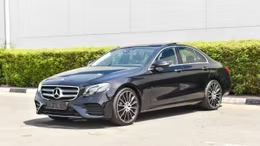
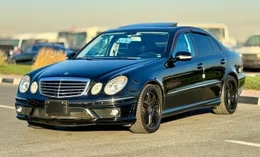
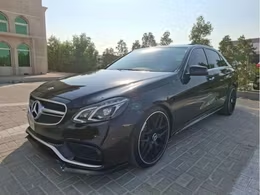
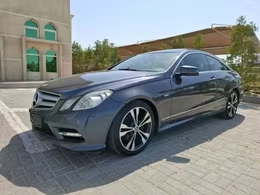
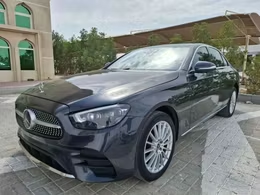
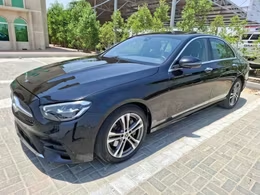
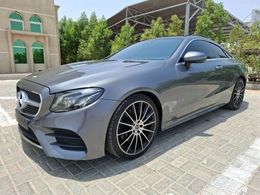
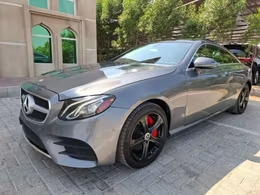
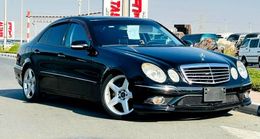
Цена Mercedes-Benz E-Класс начинается от 15 500 AED и достигает 850 000 AED. Итоговая стоимость на дороге может незначительно отличаться в зависимости от страховки, регистрации и дополнительных аксессуаров.
На графике — динамика средней цены модели на вторичном рынке за последний год. Эти данные помогут вам оценить выгодность покупки и спрогнозировать будущую стоимость авто.
Цены на AUTO.AE могут отличаться от фактической стоимости продажи. Данные основаны на нашей базе проданных автомобилей и актуальных объявлениях. Для точной оценки воспользуйтесь нашим инструментом.
When to change transmission fluid in a Mercedes-Benz E-Class
Change the automatic transmission fluid in a Mercedes-Benz E-Class according to the service schedule for its exact specification, taking both mileage and time into account. If there is no record of the previous change, identify the installed transmission and assess its condition first. Do not wait for harsh shifts or slipping before arranging scheduled maintenance. E-Class models from different years use different transmissions, fluids and service procedures. A badge such as E 200 or E 300 does not identify the correct ATF, or automatic transmission fluid. This guide covers warning signs, fluid selection and the questions to ask before booking a service. At a glance. Identify the transmission code, confirm the service interval and establish the required ATF approval. An engine oil change record does not prove that the transmission was serviced too. 5 signs that the transmission needs checking Look for changes under comparable temperatures and familiar driving conditions. A single symptom can have several causes, so a fluid change should not be treated as a ready-made repair. A delay when selecting D or R. If an unfamiliar pause develops, tell the workshop whether it occurs after an overnight stop or once the car is warm. Fault codes, fluid level and hydraulic operation need checking. A jolt during a gear change. Note the gear and load at which it happens. Diagnosis may also need to cover engine management and powertrain mounts, rather than the transmission alone. Rising engine speed without matching acceleration. Repeated slipping calls for diagnosis. Avoid pressing the accelerator harder to make the car pick up speed. Shuddering at a steady speed. On torque-converter transmissions, the lock-up function is one of the checks. Engine, wheel and driveline faults must also be ruled out. A leak or a display warning. An inspection is needed to identify the source of an oily patch. With a major leak, overheating or loss of drive, stop safely and follow the vehicle messages and the manual. What the fluid appearance can tell you Colour cannot establish the precise remaining life of ATF or confirm that it is compatible. A burnt smell and visible debris must be assessed alongside transmission behaviour, fault codes and the condition of the pan. Do not select new fluid by matching the colour of the old fluid. Why fluid level and ATF selection matter How to establish the transmission fluid change interval Request the service list for the VIN, model year and original market. Identify the transmission operation, its mileage or time requirement, and the work it includes. Requirements can differ between E-Class specifications; a single interval for the entire model range would be misleading. When the service history is incomplete Compare the mileage with invoices, inspect the transmission and arrange diagnostic checks. For a car that spends long periods in urban traffic, discuss load and operating temperatures with the workshop. If earlier replacement is proposed because of heat and usage, ask for the factory interval and the reason for that recommendation to be recorded separately. Important. A scheduled service reminder does not replace a record of completed work. The service entry should identify the transmission operations, fluid used and parts replaced separately. How to choose the transmission fluid Identify the transmission before choosing an approval Selection uses the complete code of the installed unit and, where needed, its serial number and equipment codes. The E-Class range includes the following variants. This table shows what to clarify; it is not a VIN-specific application catalogue. Cross-check the approval against Mercedes-Benz sheet 231.1, then verify the actual product in the corresponding approved-fluid list. A claim that a product is “suitable for Mercedes-Benz” does not by itself establish manufacturer approval. The quantity depends on the work performed A service refill differs from the capacity of a dry transmission. The amount of ATF depends on the specified drain points, pan removal and other operations. Set the level at the conditions and temperature required for that unit; the amount drained is not a substitute for a level check. Preparing an E-Class for transmission servicing Before work starts, agree which parts are included: a separate filter or a pan assembly, seals, plugs and fasteners as required by the repair procedure. If there are complaints, record the transmission behaviour before intervention. Afterwards, check for leaks and assess operation on the road if the vehicle condition allows it. Important. Work on a hybrid must follow the safety requirements for its powertrain. On a 4MATIC, check the transfer unit and differential requirements separately: changing ATF does not mean the entire driveline has been serviced. Work order checklist ☐ Record the VIN and identification details of the installed transmission. ☐ Describe symptoms and when they occur; retain diagnostic results. ☐ Confirm the schedule and the date and mileage of the previous service. ☐ Specify the ATF product and its verified approval for this unit. ☐ List replacement parts and the agreed service method. ☐ Check fluid level, leaks and transmission operation after the change. ☐ Keep the date, mileage, refill quantity and completed work on record. Mistakes to avoid • Choosing fluid solely by the model name or number of gears. • Treating a higher approval number as a universal replacement for an earlier one. • Prescribing flushing or additives without assessing transmission condition. • Resetting adaptations at every fluid change without a procedural reason. • Continuing to drive with slipping in the hope that topping up will fix it. Conclusion For an E-Class, follow a clear sequence: identify the transmission, confirm the service interval, select an approved fluid and check the level using the correct procedure. If its behaviour has already changed, start with diagnosis — fresh fluid cannot repair mechanical wear. When choosing a car, compare current listings and request records of previous transmission work. An entry naming the ATF approval and replacement parts is more useful than a general claim that the gearbox has been serviced.
When to Replace Coolant in a Mercedes-Benz E-Class
Replace Mercedes-Benz E-Class coolant according to the service requirements for the specific vehicle. Leaks, contamination and cooling-system repairs need separate assessment. The correct timing depends on the generation, engine and maintenance history. Low mileage or a clean-looking fluid does not establish remaining service life. Start with the vehicle documents and the last recorded coolant service. At a glance. Before booking, confirm the interval, coolant approval and filling capacity against the VIN, and identify the circuits included in the work. Check the date of the last complete replacement and keep the selected product details with the job order. A top-up is different from a complete coolant replacement. When Your E-Class Cooling System Needs Attention Cooling-system checks should not be limited to scheduled service visits. If a low-level message returns after several journeys, the first question is where the fluid is going. Carrying a spare bottle may help replenish a loss, but it does not resolve its cause. Keep a record of the circumstances so the workshop can investigate a developing pattern rather than treating every visit as an unrelated event. Look for changes from your own car’s normal behaviour. Fan noise after a demanding journey does not, by itself, establish a fault. A warning message combined with rising temperature, visible leakage or an unstable level is more informative. Never deliberately reproduce an overheating event simply to demonstrate the complaint to a technician. • A low-coolant message returns after topping up. Photograph the warning and record when fluid was added and how much was used. • Damp areas or dried deposits appear around the reservoir, hoses or connections. These identify places to inspect, although liquid may have travelled from another component. • Temperature rises in traffic or after sustained load. New coolant cannot replace checks of circulation, fan operation and heat exchangers. • Visible fluid contains oily traces, particles or pronounced cloudiness. Establish the source of contamination before choosing a cleaning procedure. • Gurgling, altered cabin heating or another level drop develops after cooling-system work. Filling quality and leak checks deserve attention. Checking the Level Safely Use level ground and a fully cooled vehicle when making observations. Follow the markings on the correct reservoir and the instructions for your car. Dated photographs taken under comparable conditions are useful; images of a hot system and a cold system do not provide a reliable comparison. Do not fill above the specified level to create an extra reserve. Do not open a hot reservoir because pressure may remain inside. If steam appears or an overheating warning is displayed, stop safely and follow the vehicle’s instructions. A short remaining distance to the workshop is not a reason to ignore the warning. With a hybrid, make sure the vehicle is switched off: a silent engine does not establish that the powertrain is inactive. Why Appearance Cannot Replace Service Records Coolant operates in a system where material compatibility and protective properties matter. The coolant manufacturer explains that corrosion inhibitors lose effectiveness over time and that colour does not identify a product’s chemical properties. Clear-looking fluid therefore does not prove that its useful service life remains intact. For an owner, reconstructing the maintenance sequence is more useful than judging the reservoir by appearance. One invoice may cover a hose replacement and a small top-up; another may record radiator removal; a third may document a complete fluid renewal. These events leave different amounts of the previous fill in place. The invoice total or a newly installed component cannot reveal the final mixture on its own. When buying a used E-Class, ask for records that identify both the material and the operation. A fluids inspection is not evidence of replacement. If the seller remembers only the bottle colour, the history remains unconfirmed. Arrange an inspection and agree the next steps rather than assuming the coolant is recent because it looks clean. Important. Repeated leakage, overheating and contamination need their own diagnosis. Scheduled coolant replacement does not repair a faulty pump, damaged hose or fan-control problem. The cause of the complaint should be established before the vehicle is returned to normal use. Choosing Coolant for a Mercedes-Benz E-Class Begin by identifying the vehicle accurately. The workshop needs its VIN, build date, engine and powertrain configuration. The E-Class name and engine displacement may not be enough when service information distinguishes production dates or specific components. Cars that look similar can still require different materials and procedures. Ask for the exact product name and applicable Mercedes-Benz approval to be written on the job order. Wording such as “suitable for” and “manufacturer approved” needs checking rather than being treated as identical evidence. Match the actual fluid to the vehicle requirements instead of relying solely on a retailer’s suggestion or the colour of a label. Premixed Coolant or Concentrate Confirm the supplied form before working out how many containers are needed. A ready-to-use product is used according to its instructions; concentrate requires the specified dilution and suitable water. Do not automatically add water to a premix. If fluid remains after draining or cleaning, the technician must account for that residue when preparing the final fill. Do not increase the concentration simply in an attempt to improve hot-weather cooling. The mixture should meet both the vehicle requirements and the product instructions. Equally, an absence of freezing weather does not justify using ordinary water as a permanent substitute. Ask what mixture will remain in the system and how the workshop will verify that it was prepared correctly. Generation and Powertrain Differences Information for a W212 should not automatically be applied to a W213 or W214. Check applicability separately for AMG models and plug-in hybrids. This article provides a framework for arranging maintenance, rather than a technical procedure for every derivative. A document for a different engine or production period does not become suitable merely because its cover says E-Class. Identify the purpose of each reservoir before adding anything. Where a vehicle has several cooling circuits, work on one does not establish that all the others were serviced. Cooling work involving high-voltage components requires appropriately qualified personnel. Owners do not need to remove protective parts or disconnect lines to identify the system; the workshop should establish its configuration from the proper information. Official Service Requirements and Filling Quantity Determine replacement timing from the service requirements for the specific E-Class and compare those requirements with its maintenance history. Ask the workshop to identify the relevant schedule entry and explain which vehicle details were used to select it. Advice for a different derivative is insufficient. A coolant interval quoted for another Mercedes-Benz model is also inadequate evidence on its own. Building a Clear Maintenance Plan Ask the workshop to match the VIN to the service requirements and identify the basis for its recommendation. Where both mileage and time limits apply, it should explain how those limits are used. Compare them with the confirmed date of the previous complete replacement. If the history is missing, first agree an inspection, fluid selection and the scope of the work. For UAE use, consider traffic conditions, air-conditioning use and the external condition of the heat exchangers. Heat alone does not establish a mandatory annual coolant change. If a workshop recommends an earlier replacement, ask whether the reason is fluid condition, a repair or a specific service requirement. A clear explanation makes the recommendation easier to assess. Why the Quantity Can Vary The reference capacity of a cooling system may differ from the amount drained during a particular procedure. Fluid can remain inside components and lines. The full published capacity must therefore not simply be poured on top of an unknown residue. Planning the material quantity requires the engine-specific data, vehicle equipment and prescribed filling method. A useful quotation separates the fluid, diagnosis, leak repairs and any necessary additional operations. When comparing offers, establish whether they include leak checks, air removal and a cold-level check. A cheaper drain-and-refill quotation may cover a different scope of work. Compare what will actually be done before judging the final price. What to Check During and After Replacement Before the appointment, gather invoices, warning photographs and top-up records. Mention recent repairs even if they do not seem connected to the current complaint. The technician needs to know when the level change began and what happened beforehand. A clear sequence helps avoid another fluid replacement without resolving the underlying problem. An old or unsuitable fill can create risks, but one symptom does not identify a failed component. The following table summarises possible consequences and areas for assessment. It is not a list of faults that every E-Class will develop, and it cannot replace an inspection of the actual car. Workshop Checklist ☐ Confirm the engine, generation and service requirements using the VIN. ☐ Separate documented complete replacements from top-ups. ☐ Record the exact product, applicable approval and supplied form. ☐ Identify the circuits covered and the air-removal procedure. ☐ Agree diagnosis of any leakage or contamination found. ☐ Obtain the results of the final level and leak checks. ☐ Keep the date, mileage, material quantity and completed operations. What to Observe After Collection Ask when and under what conditions the workshop wants the level checked after collection. Watch for returning warnings, fresh deposits and changes in normal temperature behaviour. If the message comes back, contact the workshop with the earlier job details. Repeated top-ups should not be accepted as the normal conclusion of a coolant replacement without investigation. The completed job record is useful at the next service and when selling the car. It should identify the work performed as clearly as it identifies the fluid. If you are comparing E-Class cars before buying, assess current listings alongside vehicle condition and documented cooling-system history. Low mileage does not replace those records. Conclusion Plan E-Class coolant replacement around vehicle-specific requirements and documented history. Confirm the schedule, fluid and circuit before booking. Investigate leaks or overheating first, then retain the service record and check the cold level after the work.
Mercedes-Benz E-Class brake fluid replacement
Plan Mercedes-Benz E-Class brake fluid replacement around a two-year service cycle, checking the schedule for the individual car. Low mileage is no reason to postpone a time-based service. A sinking pedal, a leak or a clear loss of braking performance calls for diagnosis first. Applicability. The approval below is confirmed for the 2017 model-year E-Class W213 sedan. Before servicing, check the VIN, year, engine, transmission, drivetrain and original market. Other generations and special versions require their applicable documentation. Signs that the brakes need attention Describe any change precisely: when it started, whether the brakes were hot and how the pedal behaved. Arrange an inspection if: The pedal travels farther before the car starts to slow down. The pedal gradually sinks while steady pressure is maintained. Normal pedal pressure becomes insufficient after repeated hard braking. The reservoir level drops or wet traces appear near connections or wheels. A low brake fluid message or brake system warning appears. When to stop. With a low fluid warning, a leak, a sinking pedal or a clear loss of braking performance, stop safely and arrange recovery. Do not attempt to restore safe operation by topping up and continuing the journey. Why age matters more than fluid appearance Brake fluid transmits pressure from the pedal to the wheel brakes. It absorbs moisture over time, lowering its boiling point. Under intense heat, vapour pockets can form and interfere with pressure transmission. Healthy pads and discs therefore do not mean that fluid servicing can be skipped. An E-Class used only occasionally still needs attention to elapsed time. Clear fluid in the reservoir does not prove that it is fresh or has an adequate boiling margin. A condition check can support diagnosis, but it does not override the replacement schedule for the car. Topping up and replacement serve different purposes. The level can change as pads wear, while a rapid fall requires a leak inspection. Repeatedly filling the reservoir conceals the cause and does not renew the fluid at the wheel brakes. Replacement timing and Mercedes-Benz approval Mercedes-Benz includes brake fluid exchange in its Service B description, with subsequent visits approximately every two years or at the specified mileage. This is a planning reference; confirm the applicable E-Class schedule using the VIN and service records. An entry stating only “service completed” does not establish that the fluid was replaced. The 2017 model-year E-Class W213 sedan manual specifies MB-Freigabe or MB-Approval 331.0 in the brake fluid section on printed page 347. This requirement applies to the vehicle described there and should not be extended to every E-Class version without checking. What to look for on the container Start with the approval required by the vehicle documentation, then verify the approval of the particular product. A DOT designation identifies a fluid class but does not replace Mercedes-Benz requirements. A marketing statement such as “suitable for” is also different from an official approval. Use fresh fluid from a sealed container for servicing. An open bottle with an unknown storage history is a poor choice for the next replacement. Ask the workshop to establish the quantity required in advance: reservoir capacity is not the amount needed for a complete exchange. Operating an E-Class in the UAE Hot weather makes brake condition especially relevant, but does not by itself establish a different fluid replacement interval. Regular inspections matter for daily use, and an additional check is sensible before a route with long descents. This is a practical precaution for the driving conditions, not a separate manufacturer schedule. Urban journeys and long descents With frequent stops, monitor pad wear and the condition of discs and hoses. On a descent, use the transmission modes permitted by the manual to avoid holding the brake pedal continuously. Choose an appropriate speed before the descent, allowing for the load in the car. If braking deteriorates when hot, cooling down alone does not prove that the system is sound. The cause may be the fluid, overheated friction components or another fault. Grinding, vibration and pulling under braking also warrant inspection rather than automatically prescribing a fluid change alone. Different generations hybrids and AMG versions For W212, W213 and W214 cars, the E-Class name alone is insufficient to select a procedure. The year, brake equipment and powertrain matter. Regenerative braking on a hybrid does not remove the need to service the hydraulic system. AMG versions require their own applicable instructions, including bleeding procedures and any diagnostic functions. What a complete replacement involves When agreeing the work, confirm that fluid will be renewed throughout the circuits covered by the prescribed procedure. Extracting the contents of the reservoir is not a full exchange. The repair instructions determine equipment pressure, the working sequence and whether a diagnostic tool is required. Identify the version by VIN and check the previous service date. Inspect for leaks and wear, and investigate dashboard messages. Resolve identified faults and prepare fluid with the required approval. Exchange the fluid and remove air using the instructions for the fitted system. Check the level, leak tightness and pedal operation before a controlled road test. Record the date, mileage, product used and operations completed. Can a general workshop handle the job A universal bleeding sequence does not account for every E-Class brake configuration. The job requires suitable equipment, repair information and a way to verify the result. If these are unavailable, choose a workshop experienced with your generation. The owner’s manual explains requirements but does not replace workshop instructions. Checking the service history of a used E-Class When reviewing current listings, compare the claimed service history with records for the individual car. Before buying, check the following: ☐ The date and mileage of the last full fluid replacement are documented. ☐ The invoice identifies the product and its confirmed approval. ☐ Any hydraulic work since the last service is known. ☐ The reservoir, accessible connections and areas near the wheels have been inspected. ☐ Dashboard messages and the owner’s braking concerns have been investigated. Mistakes to avoid Relying on mileage alone and ignoring the replacement date. Treating a reset service reminder as proof that the work was done. Buying fluid solely by its colour or DOT marking. Calling a small reservoir extraction a complete replacement. Continuing to drive with a falling level and relying on top-ups. Conclusion Start E-Class brake fluid servicing by checking the last replacement date and the requirements for your version. The two-year reference helps with planning; approval 331.0 is confirmed here for the 2017 model-year W213 sedan. A complete exchange ends with system checks and a service record. Signs of a fault require attention before the next scheduled service.
Вопросы и ответы о Mercedes-Benz E-Class (FAQs)
В объявлениях могут быть представлены комплектации Mercedes-Benz E-Класс 1988–2025 E 200, E 200 4MATIC, E 450 4MATIC Sport, E 300 Luxury и другие. Актуальный список зависит от выбранной страны, года выпуска и наличия автомобилей. Используйте фильтр «Комплектация», чтобы сравнить доступные варианты.
Пробег следует оценивать вместе с возрастом, состоянием и сервисной историей автомобиля. Сравните показатель с похожими машинами того же года и перед покупкой проверьте историю обслуживания и фактическое состояние автомобиля.
Сейчас на AUTO.AE представлены Mercedes-Benz E-Класс 1988–2025 по цене от 15 500 до 850 000 AED. Цена зависит от года выпуска, пробега, комплектации, состояния и региональной спецификации. Данные рассчитаны по активным объявлениям и могут меняться.
У частного продавца цена может быть ниже, а шоурум может предлагать дополнительные услуги — например, финансирование, гарантию или помощь со страхованием. Условия различаются, поэтому проверяйте информацию в объявлении, документы автомобиля и данные продавца.
Проверьте регистрационную карту автомобиля Mulkiya, VIN на автомобиле и в документах, данные владельца, сервисную историю и сведения об авариях. Также уточните наличие действующего кредита, штрафов или других ограничений. Перед сделкой желательно провести независимую проверку.
Да. Можно договориться с продавцом о независимой технической проверке в выбранном сервисном центре. Диагностика поможет оценить состояние двигателя, трансмиссии, кузова, электроники и других узлов.
GCC Specs означает, что автомобиль изготовлен в спецификации для рынков стран Персидского залива. Такие версии обычно рассчитаны на местные климатические условия. Однако GCC Specs сама по себе не подтверждает состояние автомобиля и не означает наличие действующей гарантии — это нужно проверять отдельно.
Некоторые шоурумы предлагают финансирование. Если оно доступно, условия или ориентировочный ежемесячный платёж могут быть указаны в объявлении. Итоговая ставка и одобрение зависят от банка, первоначального взноса и данных покупателя.