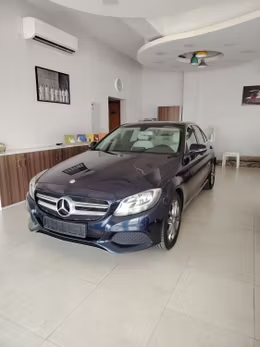
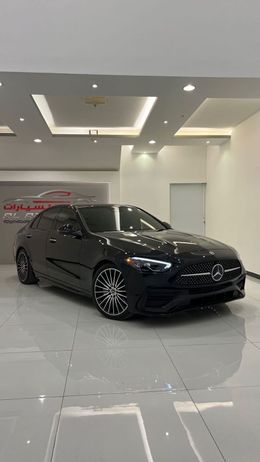
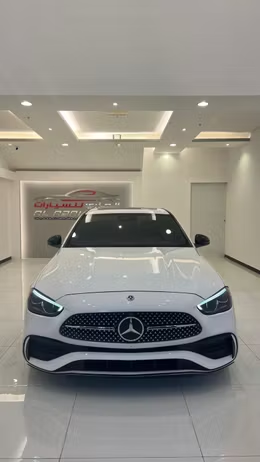
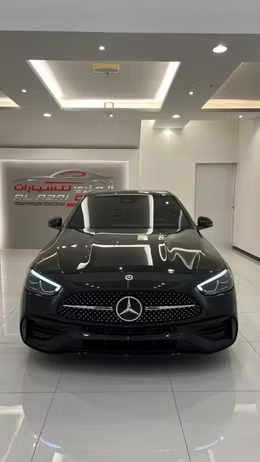
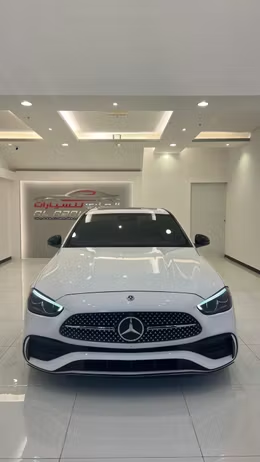
Цена Mercedes-Benz C-Класс начинается от 9 000 AED и достигает 336 256 AED. Итоговая стоимость на дороге может незначительно отличаться в зависимости от страховки, регистрации и дополнительных аксессуаров.
На графике — динамика средней цены модели на вторичном рынке за последний год. Эти данные помогут вам оценить выгодность покупки и спрогнозировать будущую стоимость авто.
Цены на AUTO.AE могут отличаться от фактической стоимости продажи. Данные основаны на нашей базе проданных автомобилей и актуальных объявлениях. Для точной оценки воспользуйтесь нашим инструментом.
When Should Mercedes-Benz C-Class Brake Pads and Rotors Be Replaced?
Mercedes-Benz C-Class brake pads and rotors do not have one replacement mileage that suits every car. Service life changes with the generation, fitted brake package, vehicle weight and powertrain, route profile, braking style, temperature, and caliper condition. Mileage is a reason to inspect; measured wear and physical condition determine replacement. Diagnosis should cover the inner and outer pads, both faces of each rotor, wear sensors, pistons, slides, hubs, and the vehicle's behaviour under braking. Replacing only the most obvious worn component without finding the cause can leave taper wear, overheating, or runout and allow the complaint to return. In brief. Replace pads and rotors when usable material or geometry reaches the limit for the exact component, or when cracking, deep corrosion, overheating, contamination, or a mechanical fault makes continued use unsafe. A wear message matters, but it does not describe every wheel or both faces of every rotor. Identify the C-Class Version First The C-Class name spans several generations and body styles, standard and performance variants, rear- and all-wheel drive, and mild- or plug-in hybrid powertrains. W204, W205, and W206 brake dimensions, calipers, sensors, and repair limits are not interchangeable. Even within one generation, the engine, wheel package, and factory options can change the fitted hardware. Before ordering components, record the VIN, full model designation, chassis code, build date, engine, drivetrain, and wheel size. Then compare those details with the markings and construction of the installed assembly. The official C-Class page presents the current model line, but it cannot identify the brake package on an individual car. W206. Confirm the powertrain, drivetrain, wheel size, and any factory performance package. W205 and earlier generations. Use their own dimensional limits and service procedure. Mercedes-AMG and sport variants. Do not transfer rotor or pad dimensions from a standard version without a VIN check. Modified car. Match components to the calipers, rotors, and wheels that are actually installed. How Regeneration Affects a Hybrid C-Class In a plug-in hybrid, the electric drive can provide part of routine deceleration. Pad thickness may reduce more slowly, but the friction brakes also have fewer opportunities to clear moisture and light corrosion from the rotors. Inspect the complete swept area on the inboard and outboard faces; generous lining thickness alone does not prove that the brake assembly is healthy. When the Components Actually Need Replacement The manual for the individual vehicle helps interpret system messages, but it does not replace repair data for the installed brake assembly. Check minimum rotor thickness, permitted runout, and lining limits against the VIN and exact part. One value must not be transferred between C-Class generations or specifications. Usable friction material is close to the specified limit, damaged, or covered by a vehicle wear warning. Rotor thickness, thickness variation, or axial runout is outside specification after correct measurement. A swept face has cracking, deep grooves, substantial corrosion, heavy heat marking, chips, or contamination. Uneven wear accompanies a fault in the caliper, slides, hardware, or hub and the component cannot be retained safely. A wear sensor does not monitor every lining or measure a rotor. Depending on specification, it reports only the designed monitoring point. An inner pad in another caliper, an inboard rotor face, or a restricted slide can deteriorate without a separate warning. Key rule. Replace pads as a complete axle set. Assess and service rotors in axle pairs so the left and right sides retain comparable friction conditions. Correct the cause of taper wear, overheating, or runout before new components are fitted. What to Check After Removing the Wheels A view through the spokes is not enough because it reveals only part of the outboard side. With the wheels removed, record measurements for each corner, compare the inner pad with the outer pad, and compare the left side of an axle with the right. Differences Between Pads Matter More Than an Average A much thinner inner pad can point to piston operation or restricted return, while accelerated outer-pad wear can indicate slide or fit problems. Tapered material requires a free-movement check. Delamination, cracking, backing-plate damage, and brake-fluid contamination are judged separately from thickness. A Rotor Needs More Than a Visual Check An outer lip is not a measurement, and a clean outboard face does not confirm the inboard surface. Resurfacing can be considered only after checking starting thickness and the permitted finished dimension. Cracks, deep corrosion, heavy heat marking, or an out-of-limit size will normally require replacement of the axle pair. How to Investigate Noise and Vibration Before dismantling, record the conditions in which the symptom appears: with cold or warm brakes, after washing or parking, under light deceleration, or during heavy use. For vibration, note whether it is strongest through the steering wheel, pedal, or body. This directs the diagnosis but does not replace inspection. Why a New Rotor May Not Cure Pulsation Repeat vibration can result from transferred pad material, thickness variation, corrosion between rotor and hub, bearing play, or uneven wheel-fastener torque. A new rotor mounted against a contaminated face can develop runout again. Confirm the cause with a micrometer and dial indicator rather than pedal feel alone. Conditions That Accelerate C-Class Brake Wear frequent hard braking, sustained speed, and operation with a heavy load; urban routes with repeated stops and extended dense traffic; long descents with continuous pedal pressure; high ambient heat, dust, and sand around boots and slides; extended parking after washing or moisture reaches the swept surfaces; tight pad movement, a binding piston, damaged boot, or unsuitable lubricant; aftermarket wheels and modifications that change mass, cooling, or brake load. Hot weather does not create a separate replacement interval, but it reduces cooling margin during demanding use. After overheating, inspect pads, rotors, boots, hoses, brake fluid, and free wheel rotation. Fresh friction material cannot correct a binding caliper. Rear-Brake Work Requires the Correct Service Mode Do not force an electronic parking-brake actuator back with ordinary tools without the prescribed procedure. The sequence for moving it into the installation position depends on the version. After assembly, check instrument messages, parking-brake operation, pedal feel, and the required basic system functions. Diagnosis and Service Checklist This sequence moves from vehicle identification to measurement, correction of the cause, and safe final verification. It suits scheduled service and the assessment of a used C-Class. ☐ Record the VIN, model designation, chassis code, powertrain, drivetrain, and wheel size. ☐ Define the complaint and the conditions that produce noise, vibration, pull, or heat. ☐ Read brake-system messages and retain diagnostic information before dismantling. ☐ Remove the wheels and measure the inner and outer pads in every caliper. ☐ Measure rotor thickness at several points and compare it with the exact part limit. ☐ Check thickness variation, runout, hub cleanliness, and bearing play. ☐ Inspect pistons, boots, slides, hardware, hoses, and parking-brake mechanism. ☐ Select pads, rotors, sensors, and single-use hardware by VIN and installed assembly. ☐ Assemble to the correct procedure and tighten the wheels evenly. ☐ Complete the required bedding process and verify pedal, warnings, and braking. Mistakes to Avoid selecting parts from the C-Class name or wheel size alone; replacing one pad or repairing only one side of an axle; judging a rotor without measurement and an inboard inspection; installing new components before correcting hub corrosion or restricted caliper movement; clearing warnings before repair and final verification are complete; conducting a road test with leakage, an unsafe pedal, or an overheated wheel. Important. Metallic grinding, strong pull, one overheated wheel, leakage, a brake-system warning, or a clear loss of performance calls for a safe stop and diagnosis. Do not drive normally or begin a road test until safe pedal feel and correct system operation have been restored. Conclusion Mercedes-Benz C-Class brake pads and rotors should be replaced according to measured condition and the limits for the exact component, not one universal mileage. Confirm the VIN and brake package, compare every pad, measure both rotor faces, inspect calipers and hubs, and correct the cause of uneven wear. When considering a used C-Class, current listings help compare generations and specifications, but photographs and stated mileage do not prove brake condition. Review service history, inspect the car on a lift, use measuring tools, and complete a safe road test after the initial diagnosis.
When to Change Mercedes-Benz C-Class Transfer Case Oil
For an all-wheel-drive C-Class, establish the transfer case oil-change schedule from the service data for its installed transmission. The 4MATIC name alone is not enough to select an interval. A rear-wheel-drive car has no all-wheel-drive transfer case: only the assemblies actually fitted require servicing. Start by checking the factory specification against the VIN and identifying the transmission code. If leakage, judder or noise prompted the visit, diagnosis comes first. Replacing fluid without establishing the cause does not guarantee that the fault will disappear. Key point. Identify the fitted assembly before deciding what fluid it needs and when to service it. An approval identifies a suitable lubricant, but does not by itself establish an interval or a separate lubrication circuit. Identify the All-Wheel-Drive Configuration in Your C-Class The C-Class spans several generations and transmission arrangements. W203, W204, W205 and W206 identify saloon series, but service data require a closer match using the VIN, model year and full assembly code. The year of first registration is not a substitute for this check. Rear-wheel drive. No all-wheel-drive transfer case oil change is needed because that unit is not fitted. Check gearbox and rear differential requirements separately. 4MATIC. Identify the transfer unit design and its lubrication arrangement. These determine what the service operation involves. AMG and hybrid versions. Use information for the exact derivative. Neither a 4MATIC+ designation nor an electric powertrain component replaces transmission identification. What the Job Order Should Specify Ask for gearbox, transfer case and differential work to be listed separately. Each item should identify the fluid and procedure. Also establish how transfer unit servicing relates to a gearbox oil change on this particular car: a general entry for “all fluids” does not explain the relationship. When to Arrange a Diagnostic Check Record when the symptom appears: the speed, temperature, acceleration or steering conditions. Note whether tyres, wheels or fluids had recently been changed. This sequence helps the technician choose checks without assuming that the transfer case is responsible. A leak has appeared. Locate its source and assess the fluid loss first. A mark on an underbody panel does not identify the leaking assembly. The car judders when turning. Check the approved tyre combination, pressures and wear on all wheels before investigating other driveline components. The car has crossed deep water. Discuss inspection for damage and water entry. A clear dashboard does not rule out contamination. Humming or vibration has developed. Include wheels, bearings, drive components and mountings in the assessment. A sound alone cannot establish a transfer case fault. Important. Severe driveline impacts, substantial oil loss or difficulty moving require you to stop driving and arrange an assessment. Do not expect fresh fluid alone to repair a damaged assembly. Which Oil Is Approved for the C-Class Transfer Case The official Mercedes-Benz sheet 231.1 gives the following C-Class transfer case examples on page 12. Before buying fluid, match the transmission code as well as the vehicle series. These examples apply only to the listed series and assembly combinations. Verify requirements separately for W204, other transmissions and special derivatives. Listing two approvals is not an instruction to mix fluids. How to Check the Service Schedule Request the service sheet for your VIN. Establish whether the specified operation is a transfer case oil change, an inspection or a level check. Where both time and mileage limits apply, account for both. A routine service reminder alone does not describe every additional operation. Sheet 231.1 helps establish fluid applicability but does not set an oil-change interval. An approval number therefore cannot justify one mileage limit for every C-Class. If service history is missing, begin with an inspection and agreement on the procedure for the installed version. For use in the UAE and Gulf region, tell the workshop about sustained loads in hot weather, dense urban traffic and water exposure. Earlier servicing advised after inspection should have a stated reason and should not be presented as a universal factory schedule. What to Check When Selecting Fluid and Fill Quantity Match the required approval to the complete product name and its confirmed application. Fluid colour, an ATF label or similar viscosity does not replace that check. Differential oil is not automatically suitable for a transfer case, and an approved gearbox fluid is not universal across all-wheel-drive assemblies. Request the quantity for the specific service operation. Total dry capacity and the amount needed for a routine change can differ. Confirm the level-check method and specified conditions, including temperature where required. Adding exactly the amount drained does not always restore the correct level. Check whether new sealing parts are needed and that the tightening procedure is followed. Extra additives or flushing need justification rather than being included automatically. How to Assess the Service Outcome Owner’s Checklist ☐ Record the VIN, model year, vehicle series and transmission code. ☐ Confirm whether 4MATIC is fitted and identify the assembly. ☐ Clarify the reason for replacement and the applicable operation. ☐ Agree on the approval and complete name of the chosen fluid. ☐ Verify the fill quantity, level check and sealing requirements. ☐ Give the technician details of symptoms and previous work. ☐ Obtain a record of the date, mileage and completed operations. ☐ Confirm there is no leakage and discuss the follow-up road test. ☐ Agree on the next inspection or service timing. Servicing Mistakes Selecting oil from the C-Class name alone. Even within one generation, applicability depends on the assembly. Copying a schedule from another 4MATIC version. Sharing a drive type does not establish the same procedure or interval. Mixing fluids by colour or an ATF label. Similar appearance says nothing about compatibility. Using additives for judder without checking its cause. Tyres or mechanical components may be responsible. Conclusion C-Class transfer case servicing begins with identifying the transmission from the vehicle data. Confirm the applicable approval, procedure and timing, and obtain a diagnosis if driveline symptoms are present. An oil-change entry should have a clear outcome: what was found, what was done and what was checked afterwards. When reviewing current offers for the Mercedes-Benz C-Class, compare the detail in each service history. Assembly-specific records are more informative than a general “service completed” entry.
When to change transmission fluid in a Mercedes-Benz C-Class
The transmission fluid change interval for a Mercedes-Benz C-Class comes from the service requirements for that specific vehicle. Mileage and age matter, as do the installed transmission, its version and its maintenance history. If a change is already due, smooth shifting is no reason to postpone it. Across the C-Class range, you will find earlier automatics, 7G-TRONIC, 9G-TRONIC and special transmission versions. They cannot automatically share the same fluid or parts kit. This guide explains how to plan servicing, select ATF — automatic transmission fluid — and recognise when diagnosis needs to come first. At a glance. Before booking a fluid change, confirm the transmission code and VIN-specific service requirements. Ask the workshop to identify the fluid approval and scope of work. A C 180, C 200 or C 300 badge is not enough to select service parts. 5 signs that the transmission should be checked A new or worsening change in the way the car drives warrants investigation. A driving sensation alone cannot establish fluid condition: different faults can produce similar symptoms. A noticeable pause after selecting a mode. If the car takes longer than usual to move after selecting D or R, record whether it happens after parking, when cold or after a drive. This helps the workshop check transmission control, pressure and fluid level. Repeated jolts during shifts. Note whether they occur while accelerating, slowing down or stopping. Powertrain mounts and engine operation also need consideration; the source of a jolt is not always inside the transmission. Engine speed rises before the car accelerates. Possible slipping should not be dismissed as normal fluid ageing. Avoid hard acceleration and arrange diagnosis, especially if there is a loss of drive. Vibration under light load. Shuddering on a smooth road may call for a torque-converter lock-up check, where fitted. It needs to be distinguished from misfires and wheel or driveline vibration. An oil leak or warning message. Have the leak source inspected and keep the exact display message. With a major leak, overheating or an inability to drive normally, stop somewhere safe and follow the vehicle messages and manual. Assessing ATF colour and smell Darkening alone does not determine when a change is due. Colour depends on the product, and clear ATF can still have the wrong approval. A burnt smell, deposits and metal particles must be assessed alongside fault codes and inspection findings. Clear evidence of wear requires investigation. What transmission fluid problems can cause How to establish the transmission fluid change interval Find the transmission fluid and filter change operation in the service list for your C-Class. Check its mileage and time conditions and its applicability to the engine and transmission, then compare these with the last documented service. A general maintenance stamp does not identify which additional operations were completed. After buying a car without service records Start by identifying the unit, checking for leaks and arranging diagnosis. An unknown history proves neither that repairs are needed nor that the transmission is healthy. Tell the workshop about prolonged traffic use, heavy loads and any overheating. Advice to shorten the interval because of operating conditions should be distinguished from the factory schedule. Important. Do not apply one interval to every C-Class or to another transmission from the same generation. If the unit has been replaced, the workshop needs to compare the VIN data with the transmission actually fitted. How to select ATF for your C-Class What to establish about the installed transmission The unit code and equipment data are more precise than the model badge. Even an identical number of gears does not establish the same fluid approval. The table highlights differences to consider; it does not replace vehicle-specific selection. Check approval applicability in Mercedes-Benz sheet 231.1, then verify the product in the corresponding approved-fluid list. A “recommended for” claim is not equivalent to official approval. Approval numbers are not a quality scale: a higher number does not establish universal compatibility. Why the number of litres is not enough The quantity depends on the service method and the specified points from which ATF is drained. Dry fill capacity differs from the amount used in a routine change. After filling, check the level at the specified temperature and operating conditions. Replacing only the amount drained would not reveal a previous underfill. Organising a C-Class transmission service Agree the parts list before work begins. Depending on the design, the filter is replaced separately or with the pan; seals, plugs and fasteners must follow the repair procedure. When symptoms are present, retain the diagnostic findings before intervention. Afterwards, check for leaks and assess transmission operation in safe conditions. Important. A hybrid C-Class requires the safety precautions specified for its electrified powertrain. On a 4MATIC, check transfer unit and differential servicing separately. A transmission fluid change does not automatically cover these components. Checklist before collecting the car ☐ The work order identifies the VIN and the transmission version fitted. ☐ Symptoms, inspection results and the reason for replacement are recorded. ☐ The exact ATF product and required manufacturer approval are specified. ☐ The replacement filter, seals and any other parts are listed. ☐ The level has been set correctly and there are no leaks after the work. ☐ Transmission operation has been checked; unresolved issues are recorded. ☐ The date, mileage, refill quantity and next service due point are retained. Fluid selection and servicing mistakes • Buying ATF by container colour or advice intended for another C-Class. • Mixing fluids without confirming compatibility under the specified procedure. • Prescribing machine flushing or additives before assessing the transmission. • Resetting adaptations without a reason specified by the manufacturer. • Expecting fresh fluid to repair worn friction elements or hydraulic components. Conclusion Begin C-Class servicing with the installed transmission details and a documented history. Then establish the interval, ATF approval and scope of work. These checks help prevent unsuitable fluid and incomplete servicing, while emerging symptoms call for timely diagnosis. When buying a car, compare current listings and request the documents for its last ATF change. They should identify specific work and products, rather than simply confirm that routine maintenance took place.
Вопросы и ответы о Mercedes-Benz C-Class (FAQs)
В объявлениях могут быть представлены комплектации Mercedes-Benz C-Класс C 300 4MATIC, C 200, C 300, C 200 4MATIC и другие. Актуальный список зависит от выбранной страны, года выпуска и наличия автомобилей. Используйте фильтр «Комплектация», чтобы сравнить доступные варианты.
Пробег следует оценивать вместе с возрастом, состоянием и сервисной историей автомобиля. Сравните показатель с похожими машинами того же года и перед покупкой проверьте историю обслуживания и фактическое состояние автомобиля.
Сейчас на AUTO.AE представлены Mercedes-Benz C-Класс по цене от 9 000 до 332 974 AED. Цена зависит от года выпуска, пробега, комплектации, состояния и региональной спецификации. Данные рассчитаны по активным объявлениям и могут меняться.
У частного продавца цена может быть ниже, а шоурум может предлагать дополнительные услуги — например, финансирование, гарантию или помощь со страхованием. Условия различаются, поэтому проверяйте информацию в объявлении, документы автомобиля и данные продавца.
Проверьте регистрационную карту автомобиля Mulkiya, VIN на автомобиле и в документах, данные владельца, сервисную историю и сведения об авариях. Также уточните наличие действующего кредита, штрафов или других ограничений. Перед сделкой желательно провести независимую проверку.
Да. Можно договориться с продавцом о независимой технической проверке в выбранном сервисном центре. Диагностика поможет оценить состояние двигателя, трансмиссии, кузова, электроники и других узлов.
GCC Specs означает, что автомобиль изготовлен в спецификации для рынков стран Персидского залива. Такие версии обычно рассчитаны на местные климатические условия. Однако GCC Specs сама по себе не подтверждает состояние автомобиля и не означает наличие действующей гарантии — это нужно проверять отдельно.
Некоторые шоурумы предлагают финансирование. Если оно доступно, условия или ориентировочный ежемесячный платёж могут быть указаны в объявлении. Итоговая ставка и одобрение зависят от банка, первоначального взноса и данных покупателя.