Aston Martin DB6, 1966
Aston Martin DB6
Aston Martin DB6•
•5 просмотров
Chassis No.: DB62448R
- Engine: Inline 6-cylinder
- Transmission: Manual
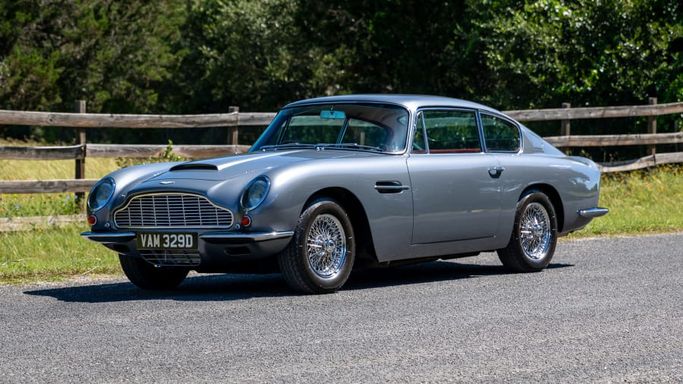
- Exterior: Oyster Shell Gray
- Interior: Red
- The DB6 was introduced in 1965 as the successor to the iconic DB5 and was produced until 1971, with 1,788 examples built
- Right-hand-drive example, chassis no. DB6/2448/R
- Delivered on February 2, 1966, to its first owner, John Robert Stockford, in Aberdeen, Scotland and registered as JRS 390
- Meticulous bare metal restoration around 2012 by specialist Mike Gassman of Waynesboro, Virginia
- Cosmetically refreshed in 2015
- Prepared for endurance rallying in 2016, with nearly $200,000 in maintenance receipts
- Three-time Great American Race participant
- 3995cc DOHC inline 6-cylinder engine, no. 400/2394
- Triple SU HD8 carburetors
- Rated at 282 HP and 280 lb-ft of torque
- ZF 5-speed manual transmission
- Steel superstructure with aluminum body panels
- Kammback tail styling with a higher roofline and longer wheelbase than the DB5
- Oyster Shell Gray with its original Red leather interior
- Independent double-wishbone front suspension with coil springs and a live rear axle with trailing arms, coils and Armstrong Selectaride adjustable rear shocks
- 4-wheel Girling disc brakes
- Chrome wire wheels with modern tires
The Aston Martin DB5’s starring role in the James Bond movies created a silver screen icon and boosted sales to levels Aston Martin had never known before, but the DB6 proved even more popular. As the authoritative British magazine The Motor noted in its 1966 review: “All the DB series have been Grand Tourers in their respective way, but the DB6 is a Very Grand Tourer.” The DB6 rode on a slightly longer wheelbase than the outgoing DB5 and was two inches longer overall, with a more raked windshield and a two-inch higher roofline.
With improved head room and leg room in the rear, The Motor rated it a “legitimate four-seater.” Moreover, adaptations to Touring of Milan’s Superleggera construction technique saved weight, with the DB6—also alloy-bodied like the DB5—coming in just 17 pounds heavier to preserve the 145 MPH top speed. With that in mind, the remodeled truncated rear featured a Kamm-tail trunk spoiler that reduced tail lift at high speed. The famed 3995cc/282 HP inline-6 was carried over from the DB5, as was the ZF 5-speed manual transmission. One of just 1,788 DB6s built through to 1971, this early car from 1966 is right-hand drive, as was approximately 85% of production.


It was treated to a bare-metal restoration around 2012, cosmetically refreshed in 2015 and then was prepared for endurance rallying in 2016, and features almost $200,000 in maintenance receipts. It has since participated in The Great American Race three times. As a “Very Grand Tourer,” the Aston was aptly suited to an event that tests reliability and navigation precision—at legal speed over public roads—along with how much scenic beauty you can absorb in crossing our continent.


Authoritative international classic car magazine Octane reckons the DB6 “even better than the DB5.” Back in 1966 Autocar magazine noted, “The DB6 is expensive and exclusive but the value matches the price.” And in today’s world—and certainly compared with its screen-icon predecessor—the DB6 represents an even better value proposition.